Categories
Self-Hosted AI Agents Agent Orchestration AI Coding Agents Local LLM Multi-Agent Systems AI Workspace LLM Cost TrackingDeveloper links
Deskforce
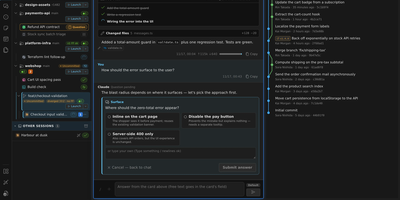
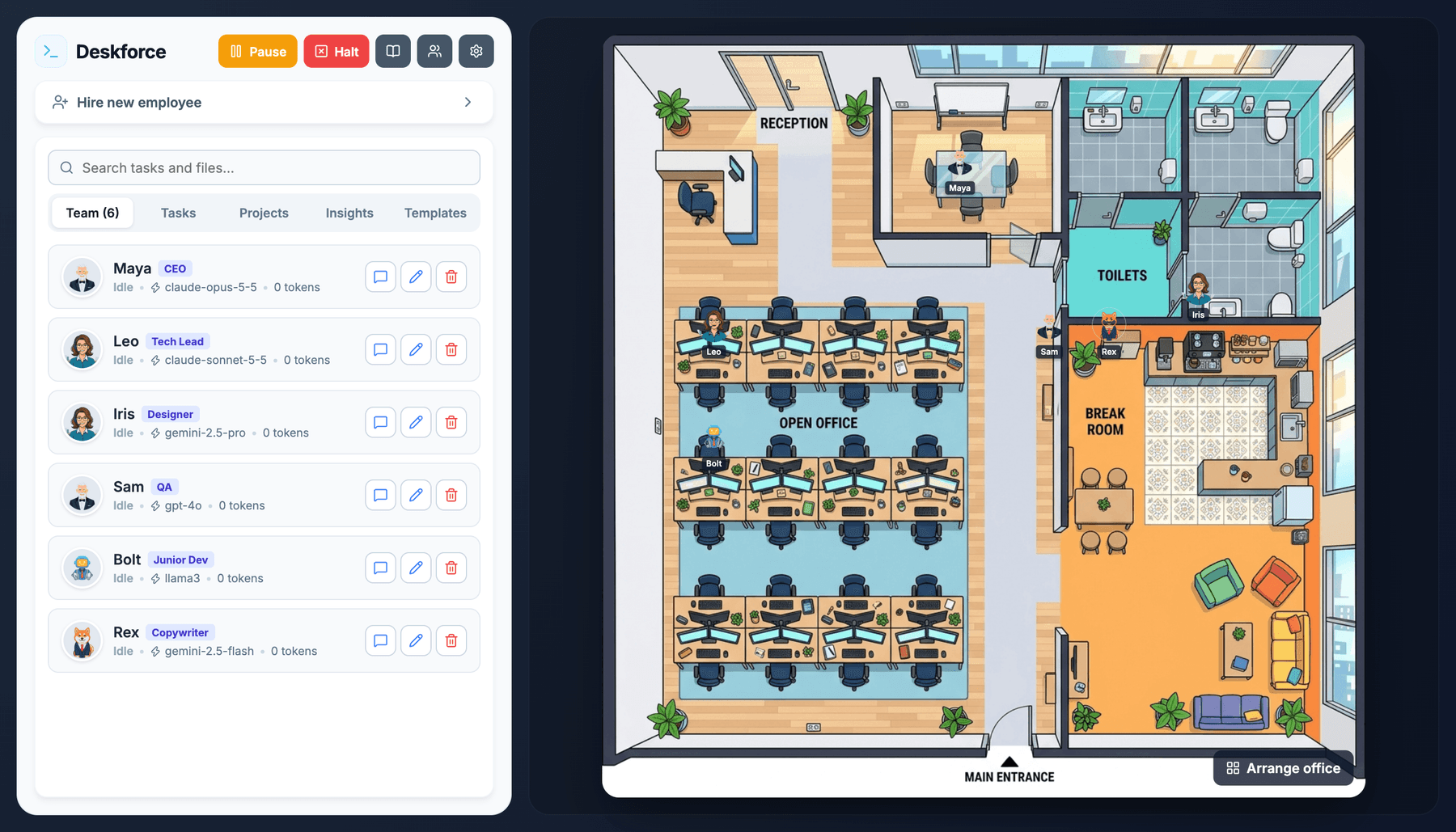
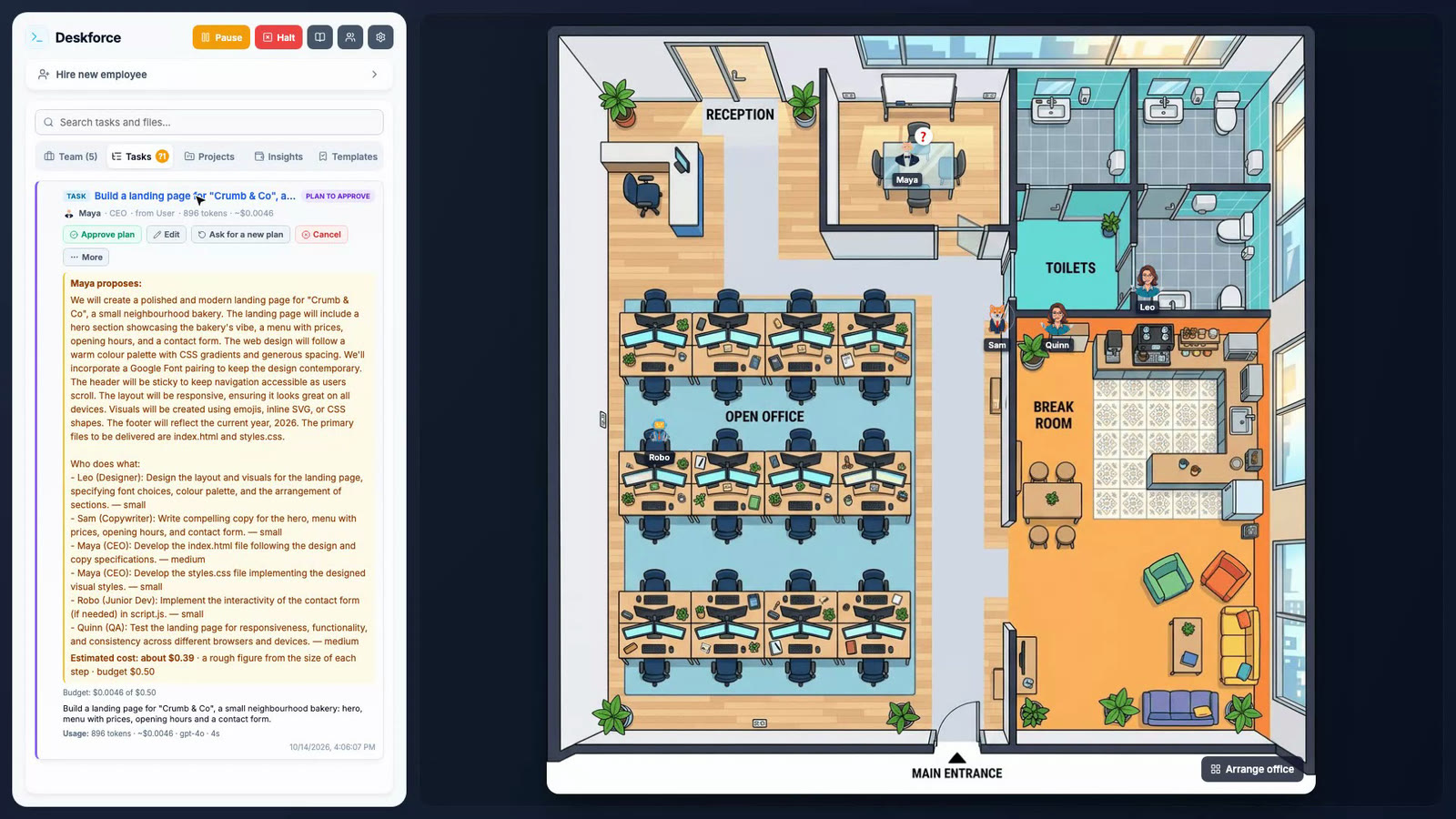
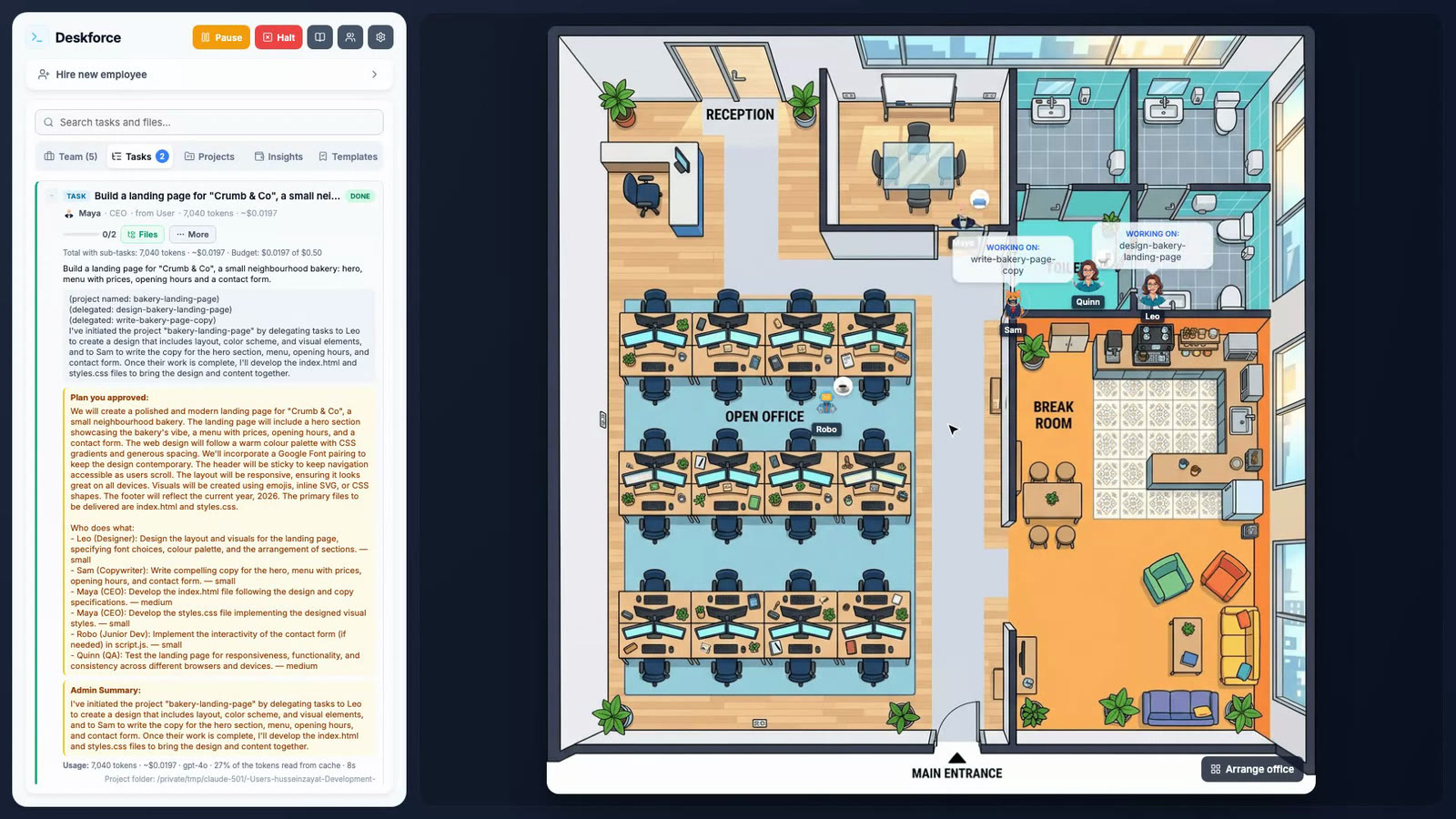
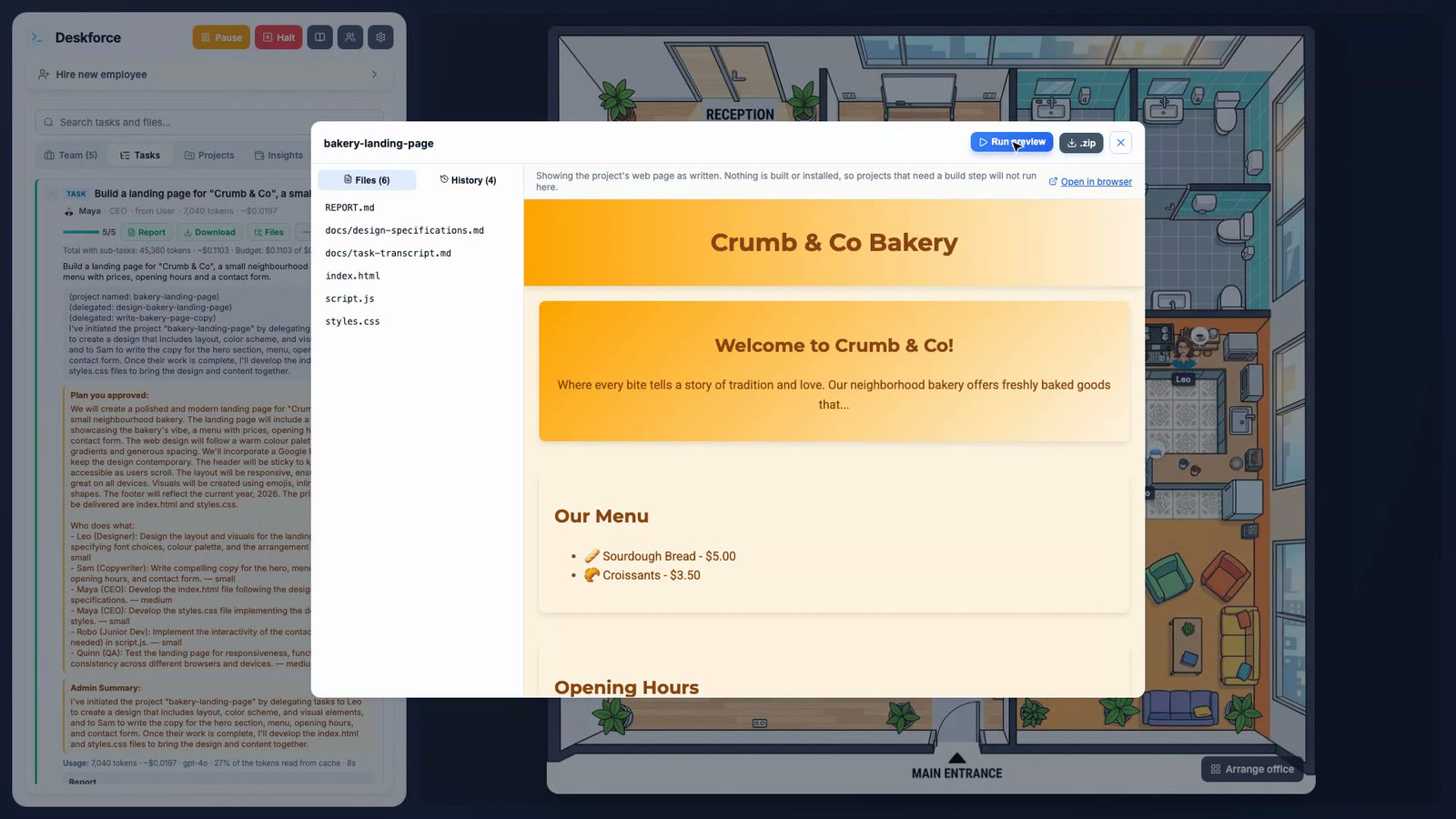
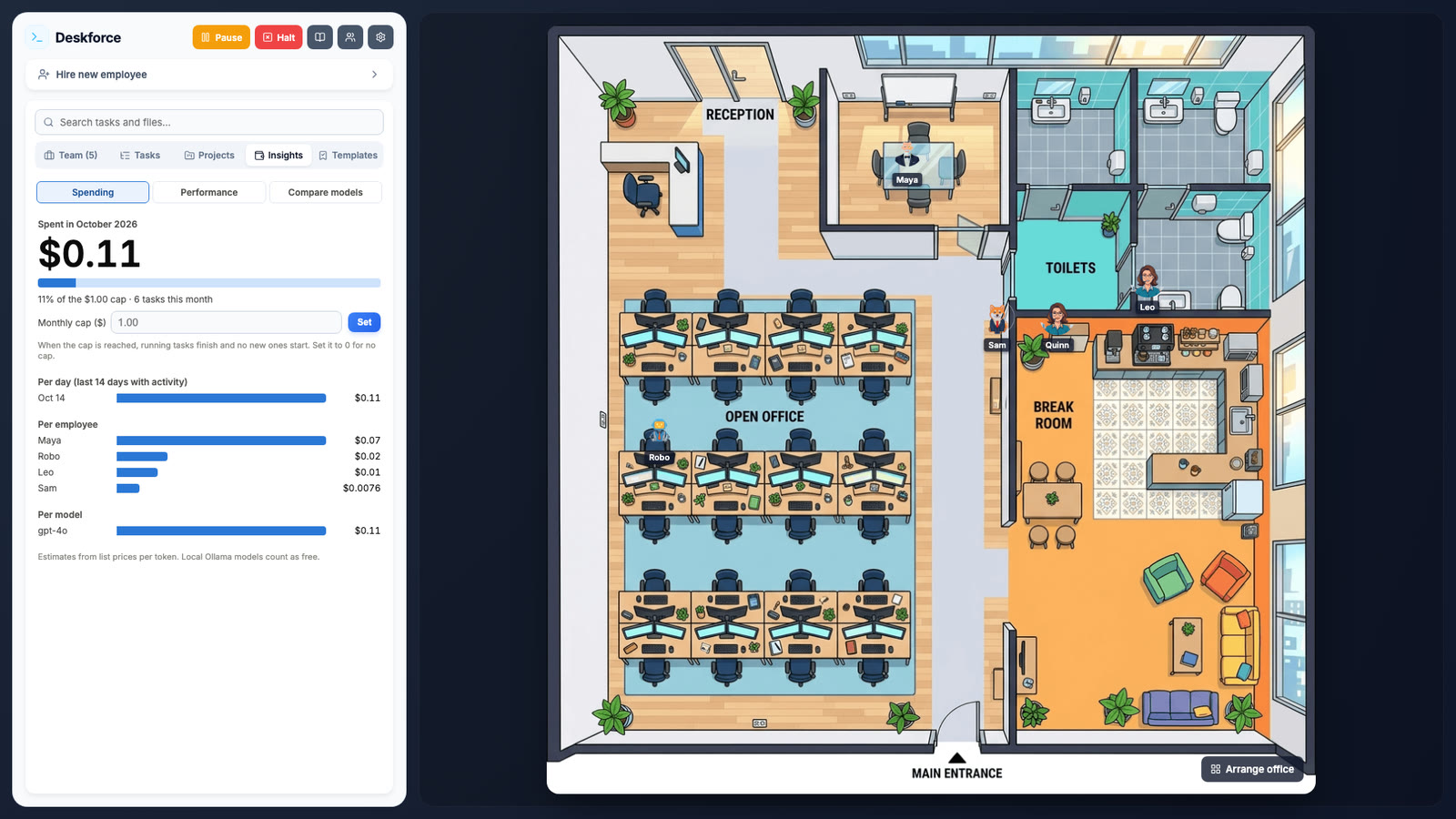
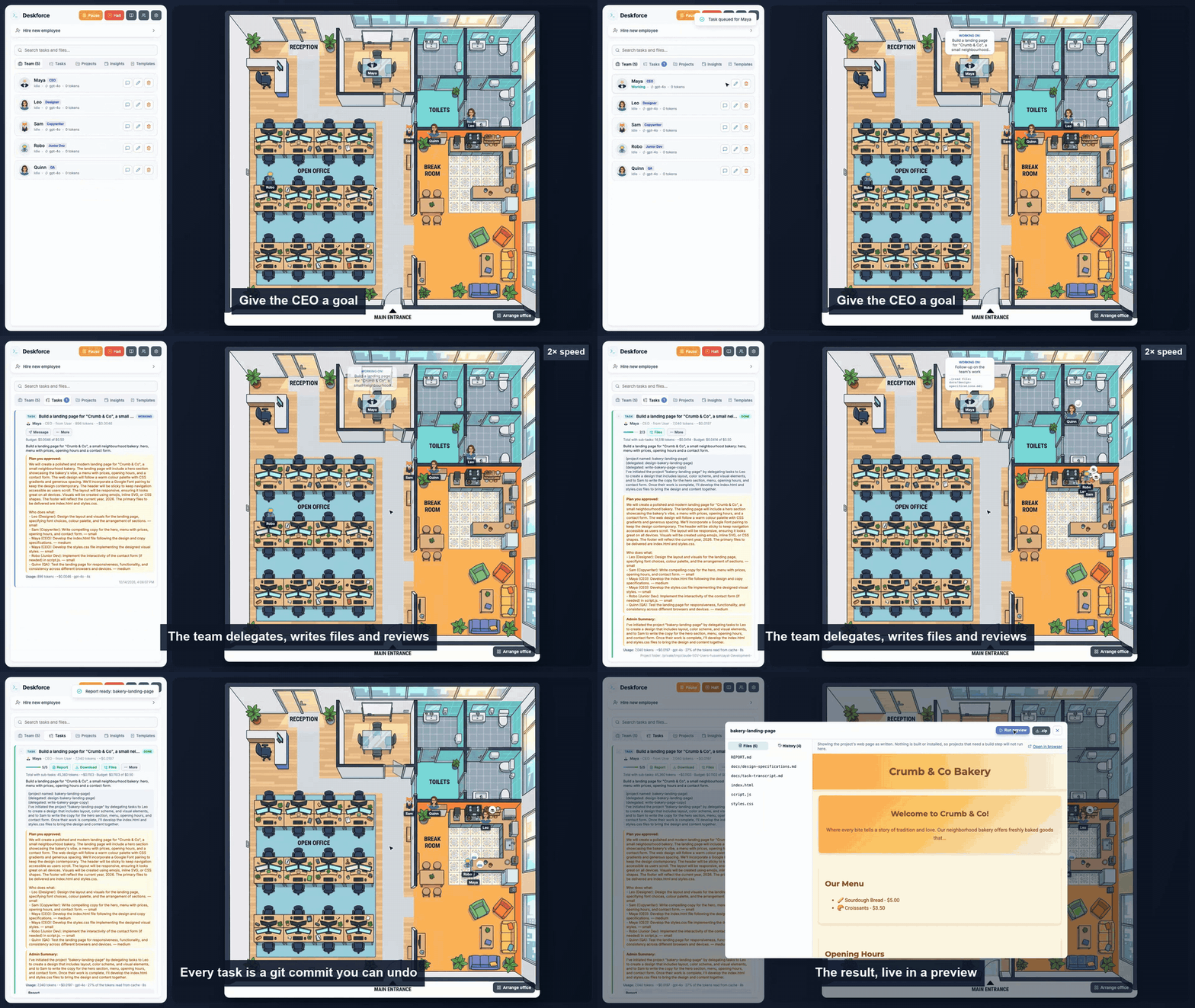
Staffing a virtual office with AI employees, Deskforce turns one goal into a plan you approve, delegated work, and a finished project. New hires pick a name, an avatar, a role, and their own model from OpenAI, Anthropic, Google Gemini, Grok, or a local Ollama server. On the floorplan, speech bubbles show what each model is writing as it writes it, and agents walk to the meeting room and coffee machine. Before anything is spent, the CEO proposes a plan with a cost estimate that you can approve, edit, or send back. Budgets cap each request, a monthly limit stops new work, and Insights charts spending per day, employee, and model. Model comparison runs one request on two or three models in separate projects and lines up result, time, and cost. Finished tasks land as git commits in the employee's name, ready to read or undo with one click. A file browser with history opens each project, and any project with an index.html gets a preview. When two agents need the same file, they hold a meeting first and agree who does what. Message the office from Slack and the senior employee answers, starts tasks, and flags plans waiting for approval. Templates rerun a saved task on a click, daily, or weekly. Close the browser tab and the work continues. Running on a dedicated VPS on RepoCloud with guaranteed CPU, RAM, and SSD, full root SSH access, and a browser serial console. MIT licensed.
Benefits
- Approve costed plans before spending
- The CEO drafts a plan with a rough cost estimate, and nothing gets built until you approve it, edit it, or ask for another; per-request budgets and a monthly cap add hard limits.
- A different model per employee
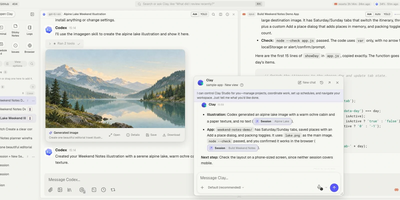
- Give the CEO and reviewers a strong model and juniors a cheap one, from OpenAI, Claude, Gemini, Grok, or local Ollama, then compare models side by side before hiring.
- Every change is reversible
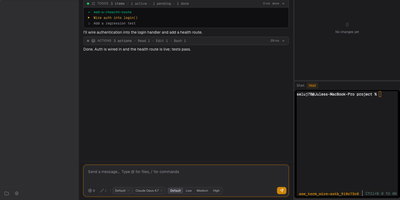
- Each task is committed to git in the employee's name, so the project browser shows exactly what changed and one click reverts it.
- Work continues without your browser
- Tasks run on the server, so closing the page does not stop them, interrupted tasks rejoin the queue after a restart, and Slack lets you check in from anywhere.
Features
- Live office floorplan
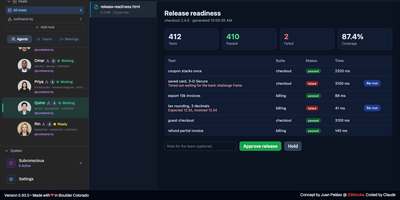
- A Next.js interface draws each agent as a clickable avatar on an uploadable floorplan, with live speech bubbles, draggable desks and rooms, and desks assigned to roles.
- Roles and delegation
- Eight starter roles, from CEO to Junior Dev, carry editable instructions and a rank; delegation only flows downward, up to three levels deep and four sub-tasks per task.
- Git history and preview
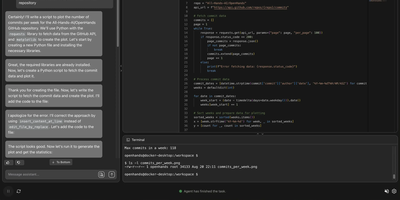
- isomorphic-git commits every file-changing task, and the project browser lists files and history, downloads a zip, and previews index.html from a separate local address.
- Insights and model comparison
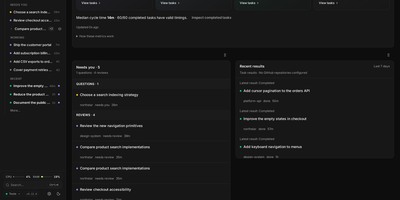
- Spending per day, employee, and model sits beside performance stats and Compare models, which runs one request on two or three models in separate projects.
- Slack over Socket Mode
- A Slack bot connects outward through Socket Mode, so no public URL is needed, and only allow-listed users can start tasks, approve plans, or ask for status.
- Templates and schedules
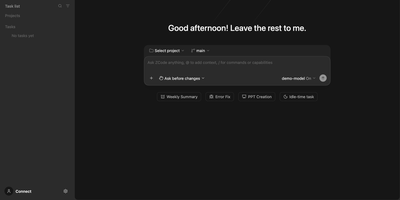
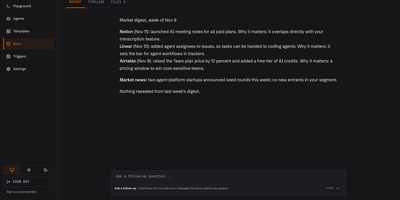
- Saved templates rerun with one click or on a daily or weekly schedule, and system notifications announce ready reports, employee questions, and failed tasks.