Stars
Forks
Watchers
Developer links
Dify
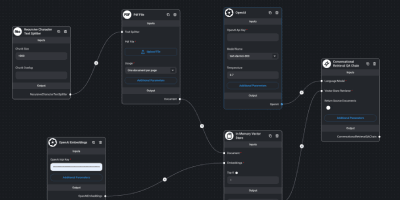
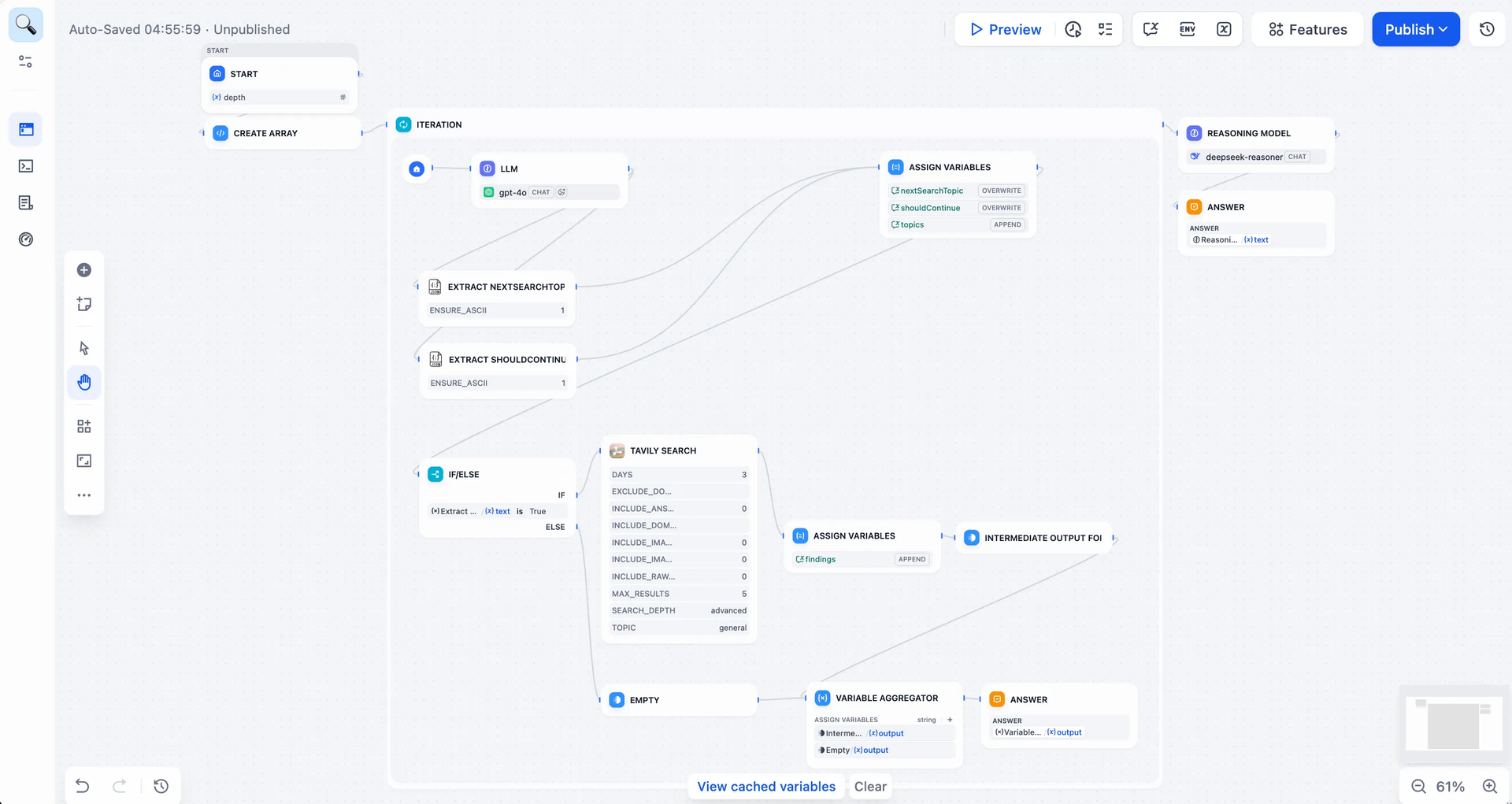
Dify turns the notoriously complex process of building production-grade AI applications into a visual drag-and-drop experience that teams can actually ship and maintain. With over 87,000 GitHub stars and backing from prominent investors, the platform has become the go-to open-source LLMOps solution for organizations that refuse to be locked into proprietary AI stacks. The visual workflow canvas lets developers wire together LLM calls, conditional logic, iteration loops, tool invocations, and human-in-the-loop checkpoints without writing boilerplate integration code. Its RAG pipeline engine handles the full document lifecycle from ingestion of PDFs, Word documents, and HTML through configurable chunking strategies, embedding with models from OpenAI or open-source alternatives, vector storage in Weaviate, Qdrant, Pinecone, or pgvector, and hybrid semantic-plus-keyword retrieval with citation tracking. Dify integrates with hundreds of model providers including OpenAI GPT-4o, Anthropic Claude, Google Gemini, Mistral, Llama, and any OpenAI-compatible endpoint like Ollama for fully local inference. The agent framework supports both ReAct and function-calling strategies with 50-plus built-in tools spanning Google Search, DALL-E, Stable Diffusion, WolframAlpha, and custom API definitions. Published apps can be deployed as hosted web interfaces, embedded chat widgets, REST API endpoints, or MCP-compatible tools. Enterprise features include role-based access control, SSO integration, and audit logging. A built-in marketplace enables teams to share and reuse model providers, tools, and workflow templates across projects. Running on a dedicated VPS on RepoCloud with guaranteed CPU, RAM, and SSD, full root SSH access, and a browser serial console. Apache 2.0 licensed with an open-source community edition.
Benefits
- Visual AI Development Without Code Complexity
- Build production-grade AI workflows using a drag-and-drop canvas with nodes for LLM calls, branching logic, iterations, and tool integrations, eliminating months of custom backend development work.
- Complete Model Provider Neutrality
- Integrate with hundreds of LLM providers including OpenAI, Anthropic, Google, Mistral, and self-hosted models via Ollama, avoiding vendor lock-in while switching models with zero code changes.
- Enterprise-Ready RAG Pipeline Engine
- Ingest PDFs, Word documents, and HTML with configurable chunking, embed with any supported model, store vectors in Weaviate or pgvector, and retrieve with hybrid semantic-keyword search including citation tracking.
- Production Observability Built In
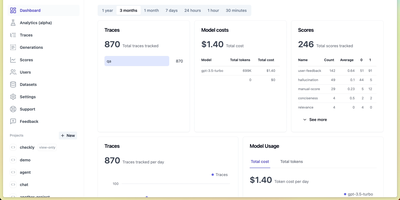
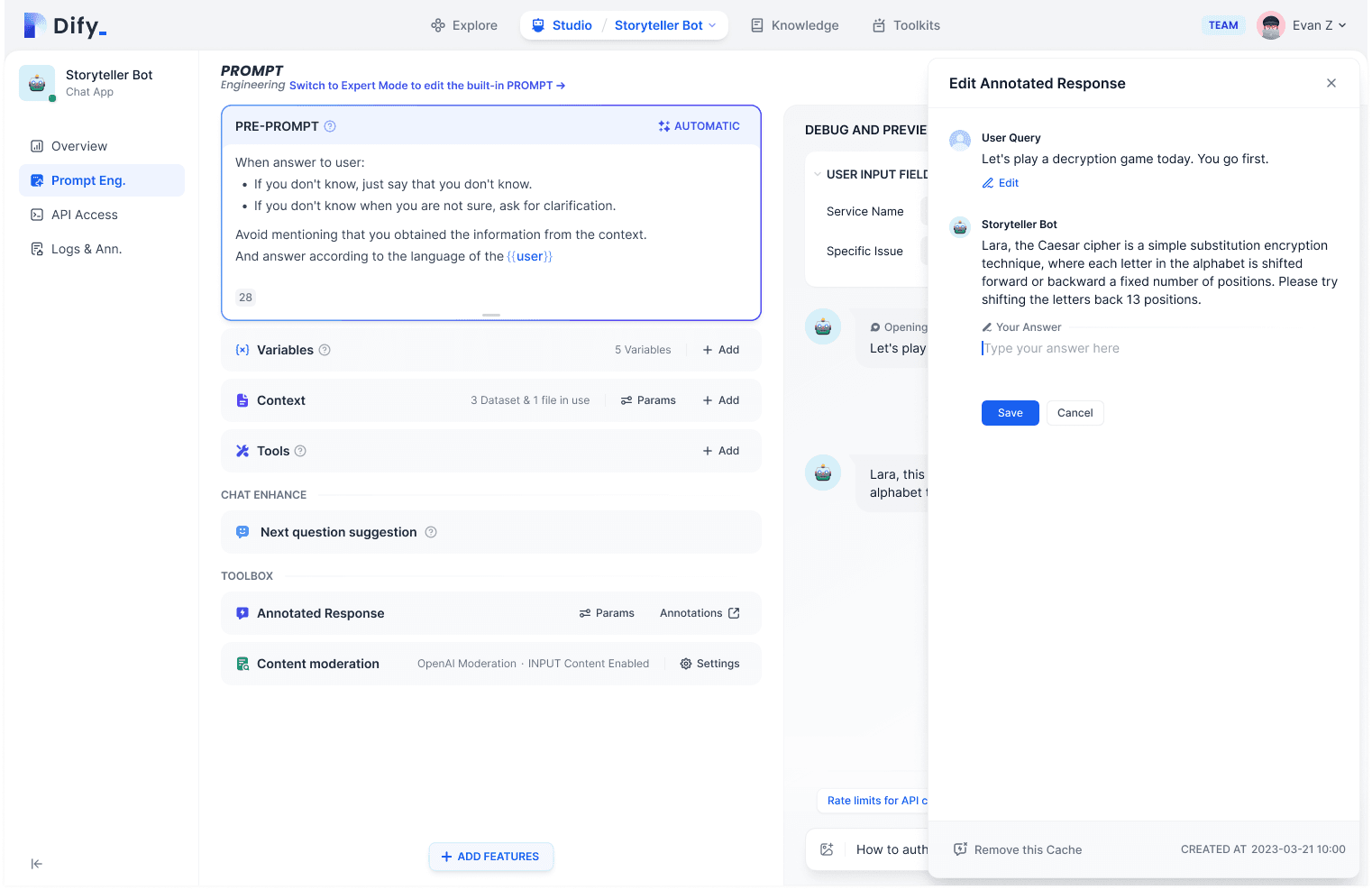
- Monitor application logs, track latency and token usage, annotate responses for quality improvement, and integrate with Langfuse, Opik, or Arize Phoenix for comprehensive AI application performance analysis.
Features
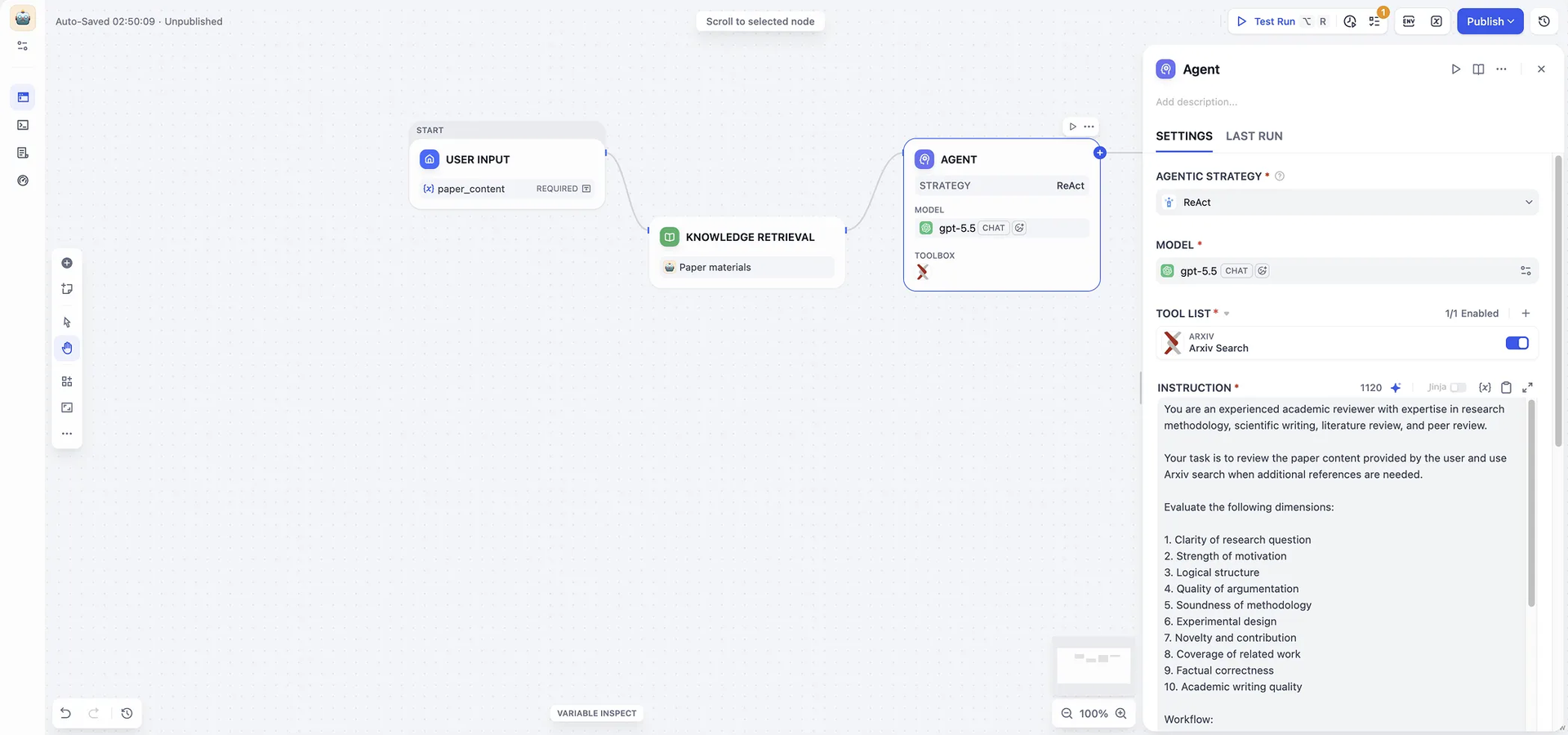
- Workflow Visual Canvas
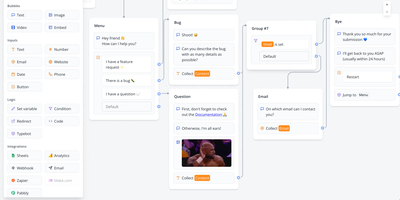
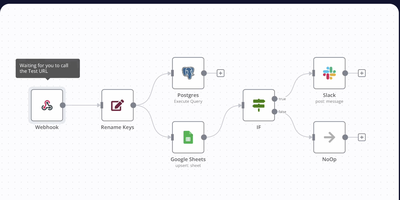
- Drag-and-drop orchestration of LLM calls, conditional branching, iteration loops, code execution, and tool invocations on an interactive node-based canvas.
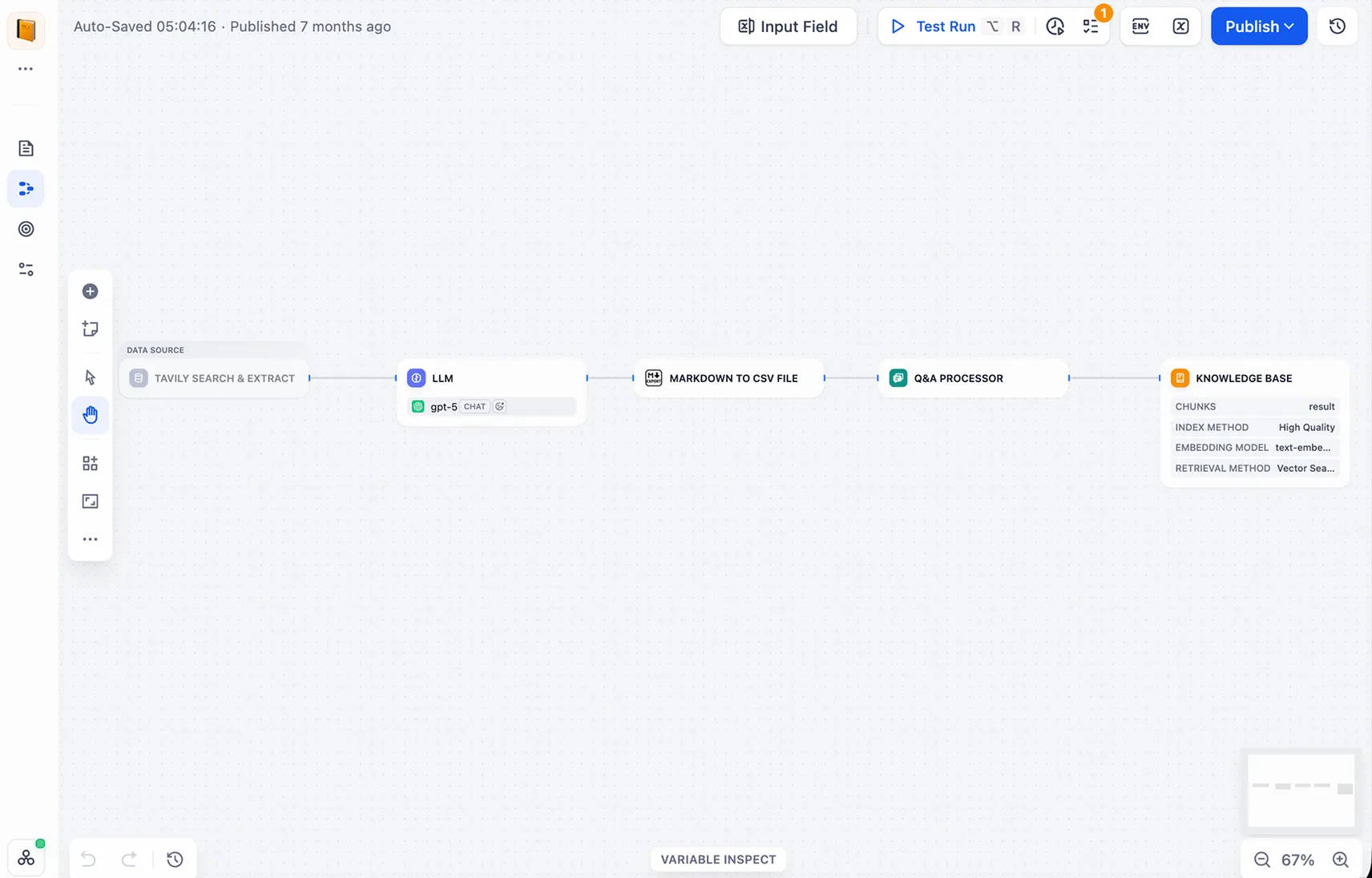
- RAG Document Pipeline
- End-to-end retrieval-augmented generation with document ingestion, chunking strategies, vector database indexing via Weaviate, Qdrant, Pinecone, or pgvector, and hybrid search.
- Agent Framework
- Autonomous agents using ReAct or function-calling strategies with 50-plus built-in tools including Google Search, DALL-E, and WolframAlpha, plus custom API tool definitions.
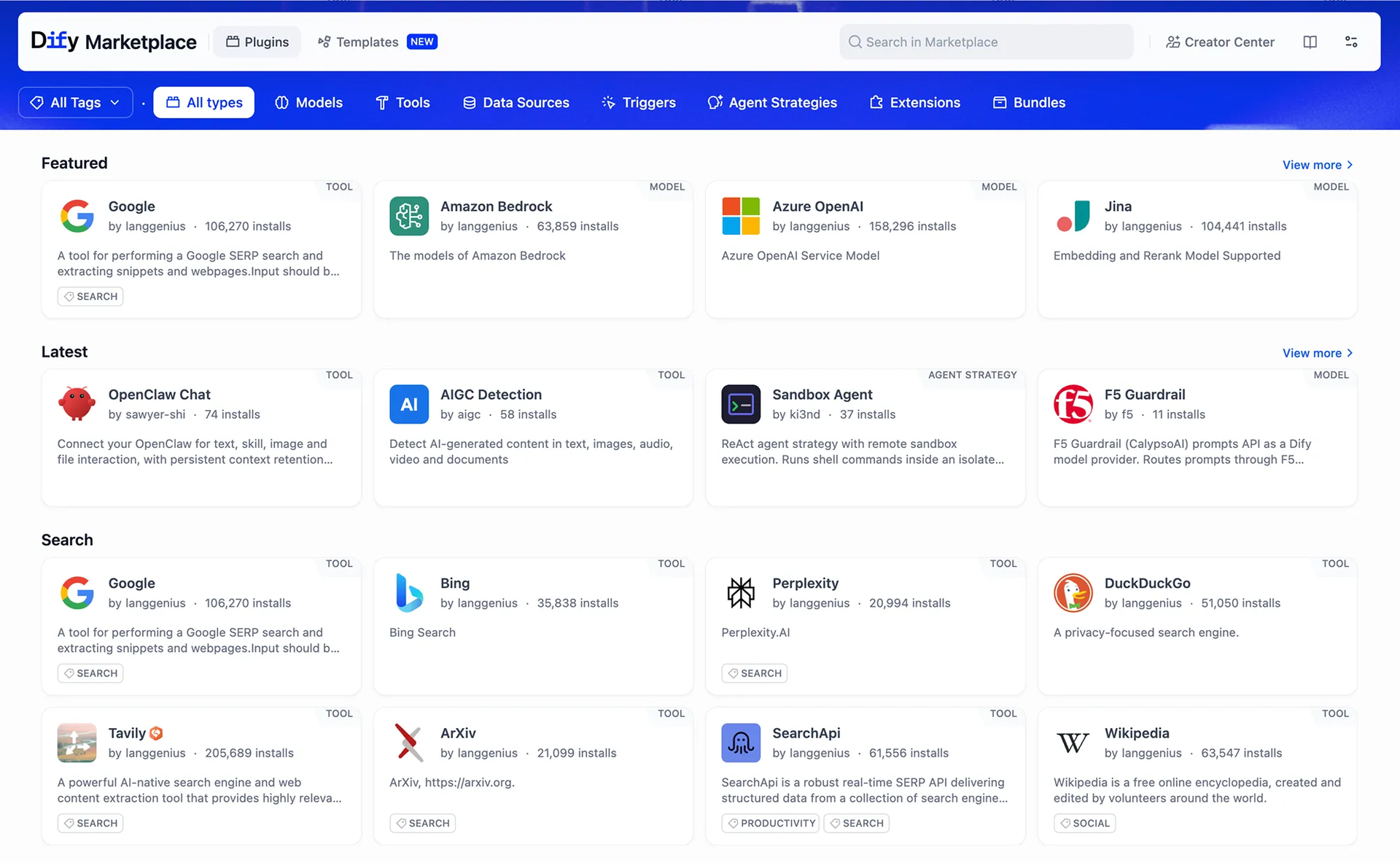
- Marketplace Ecosystem
- Install and share model providers, tools, data sources, and MCP integrations from a built-in marketplace, enabling cross-project reuse of approved plugins.
- Multi-Format App Publishing
- Deploy AI applications as hosted web interfaces, embeddable chat widgets, REST API endpoints, or MCP-compatible tools with built-in analytics and feedback collection.