Categories
Self-Hosted AI Agents Monitoring MCP Server LLM Observability OpenTelemetry LLM Evaluation Prompt ManagementDeveloper links
Memoturn
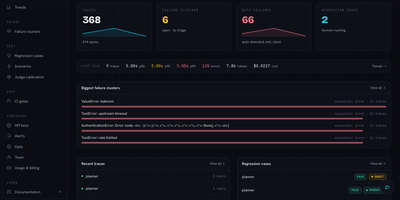
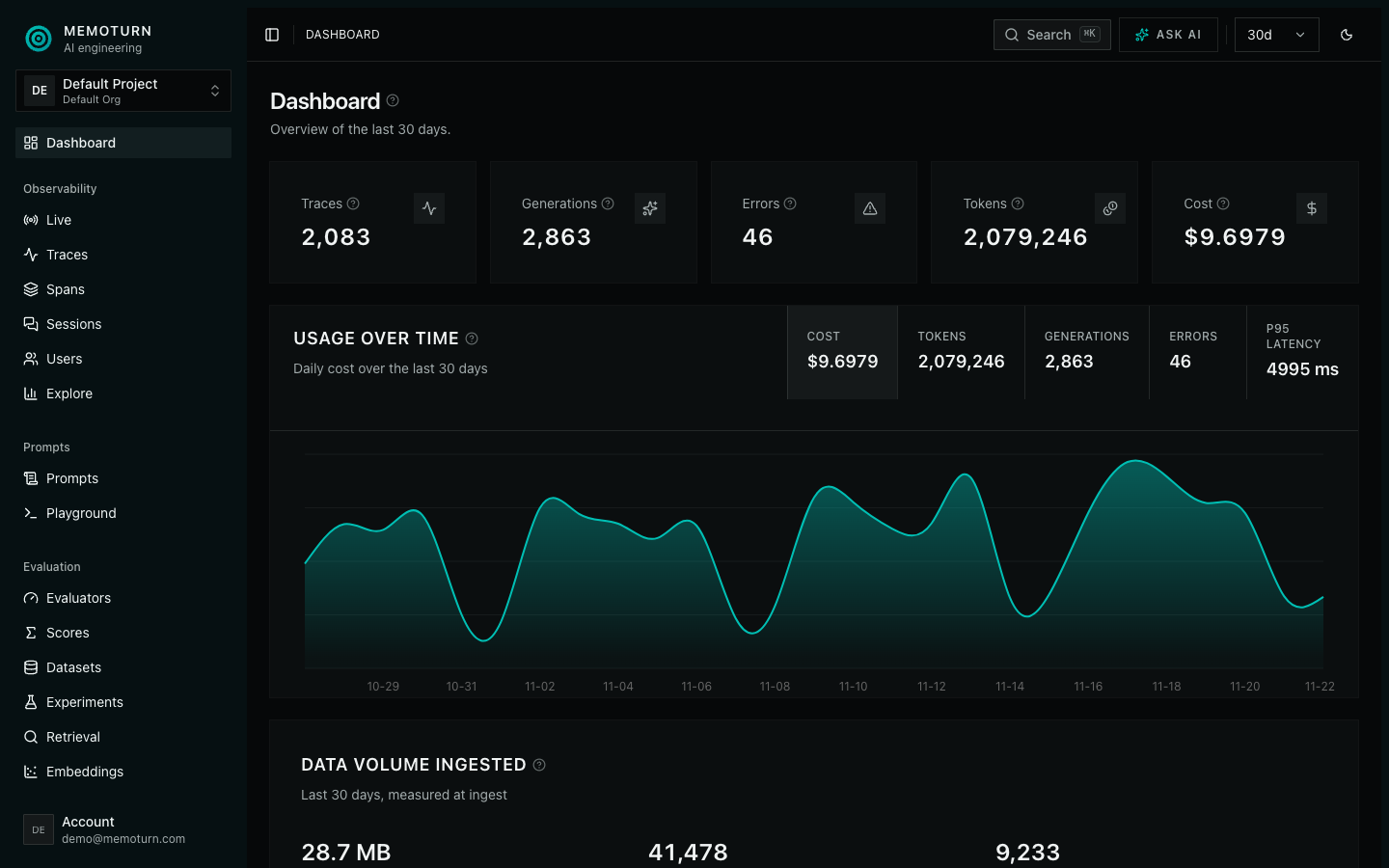
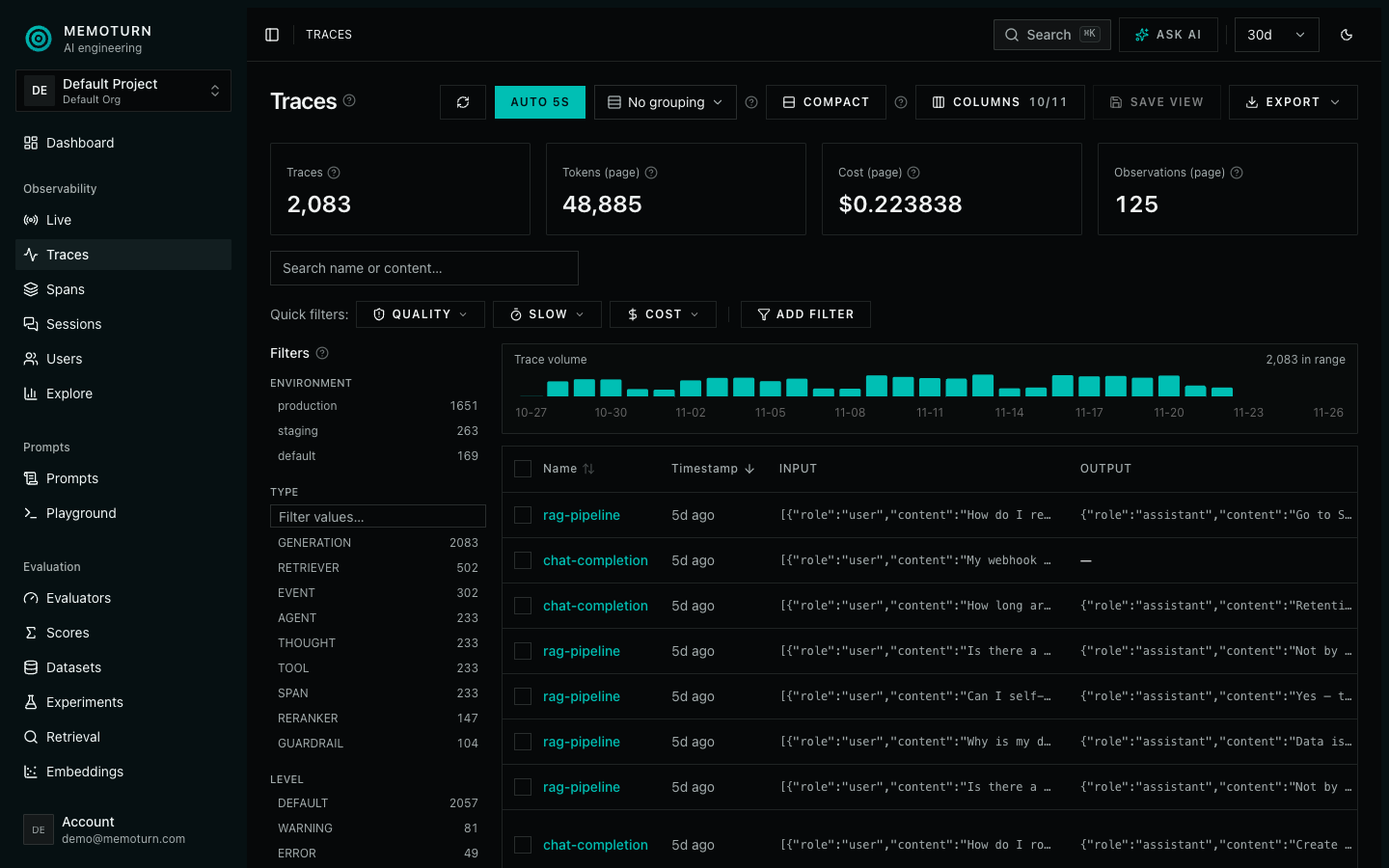
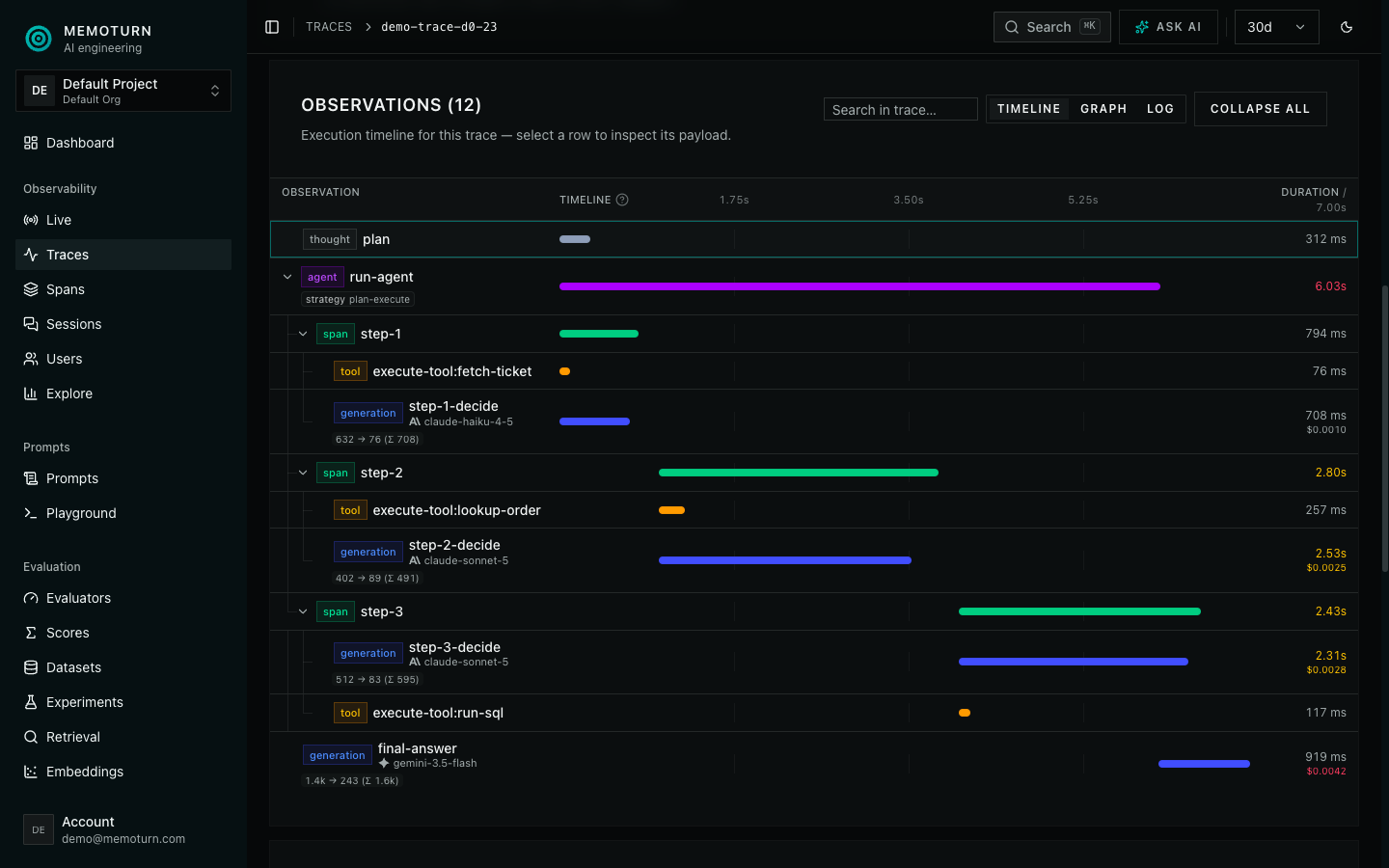
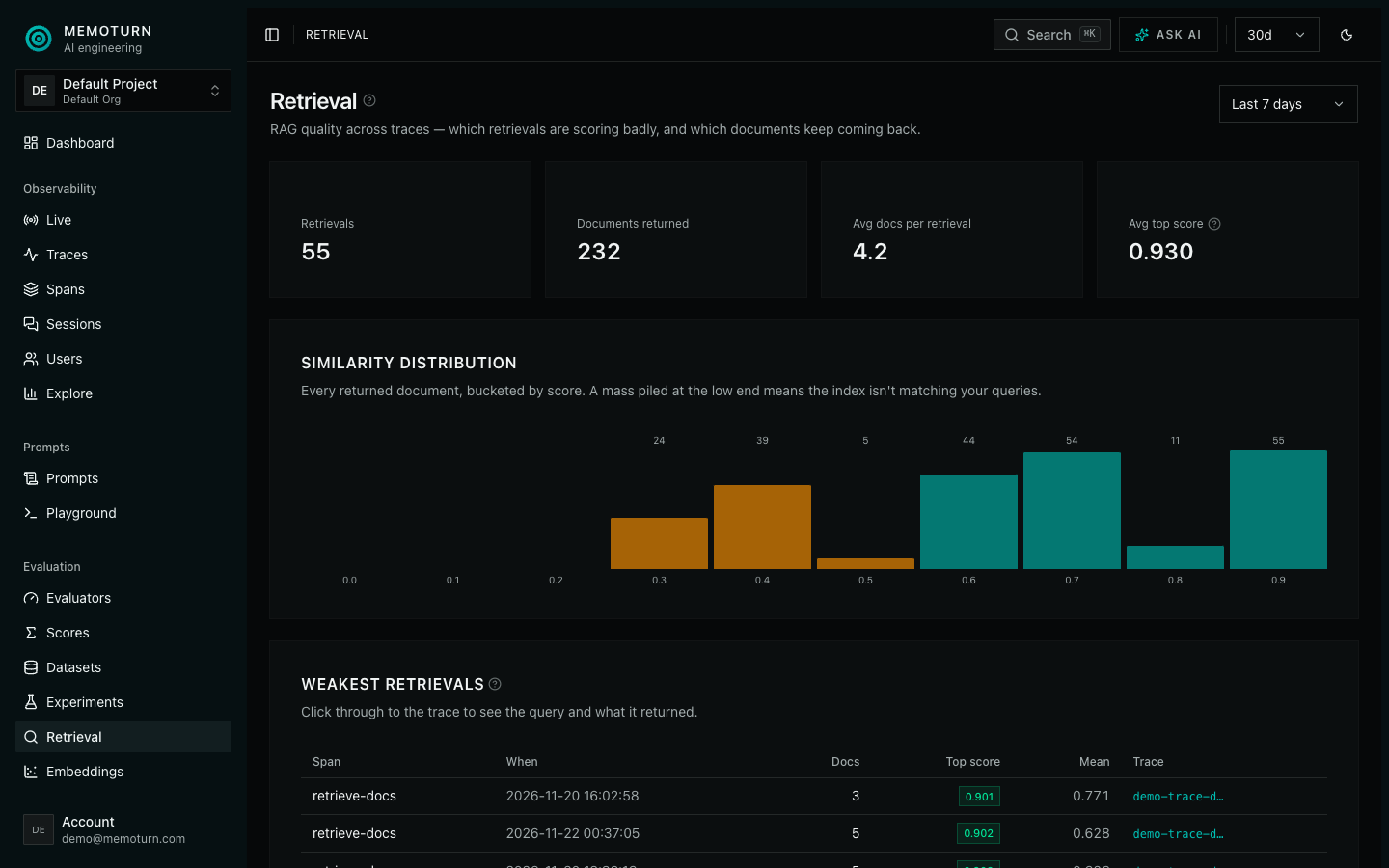
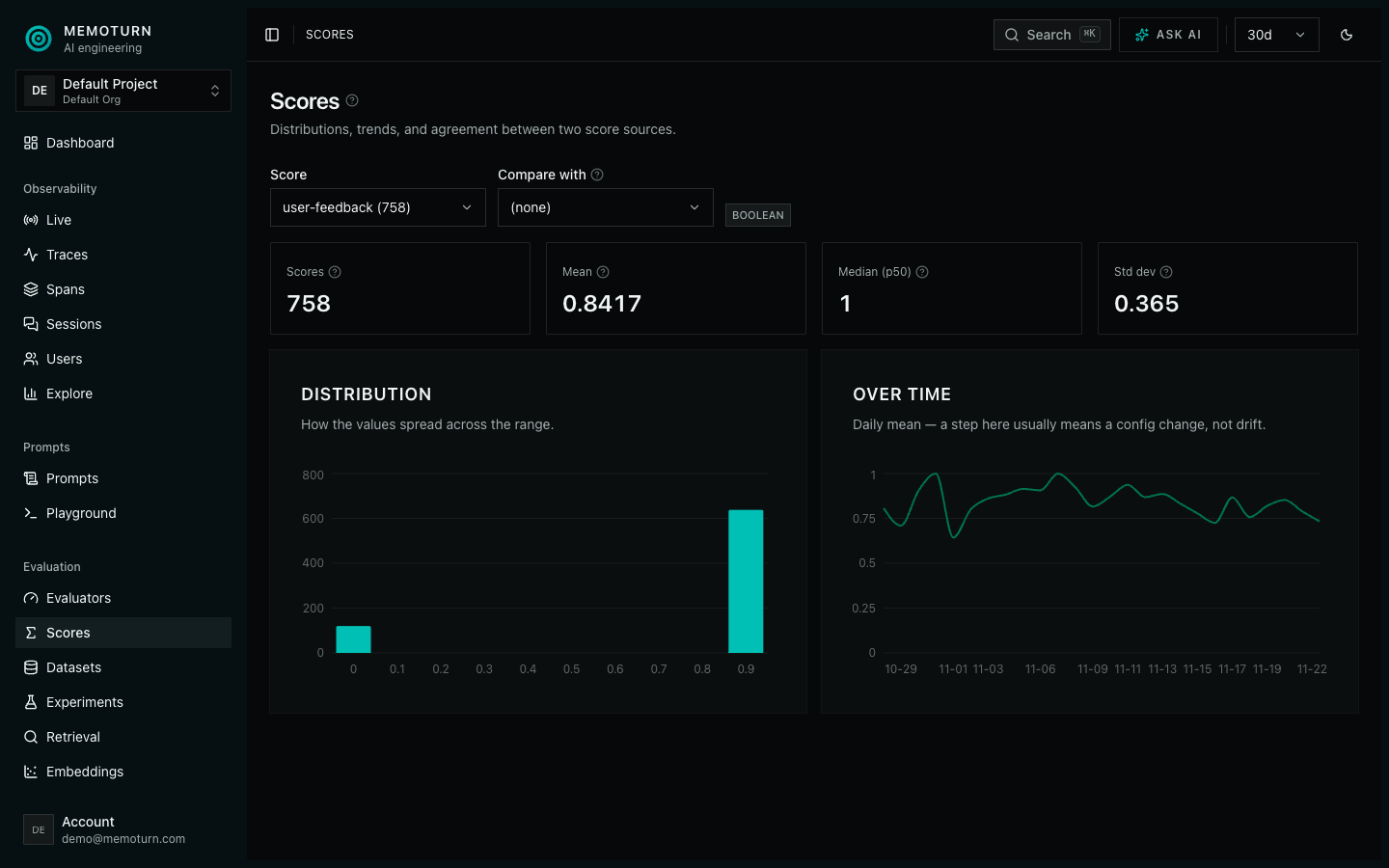
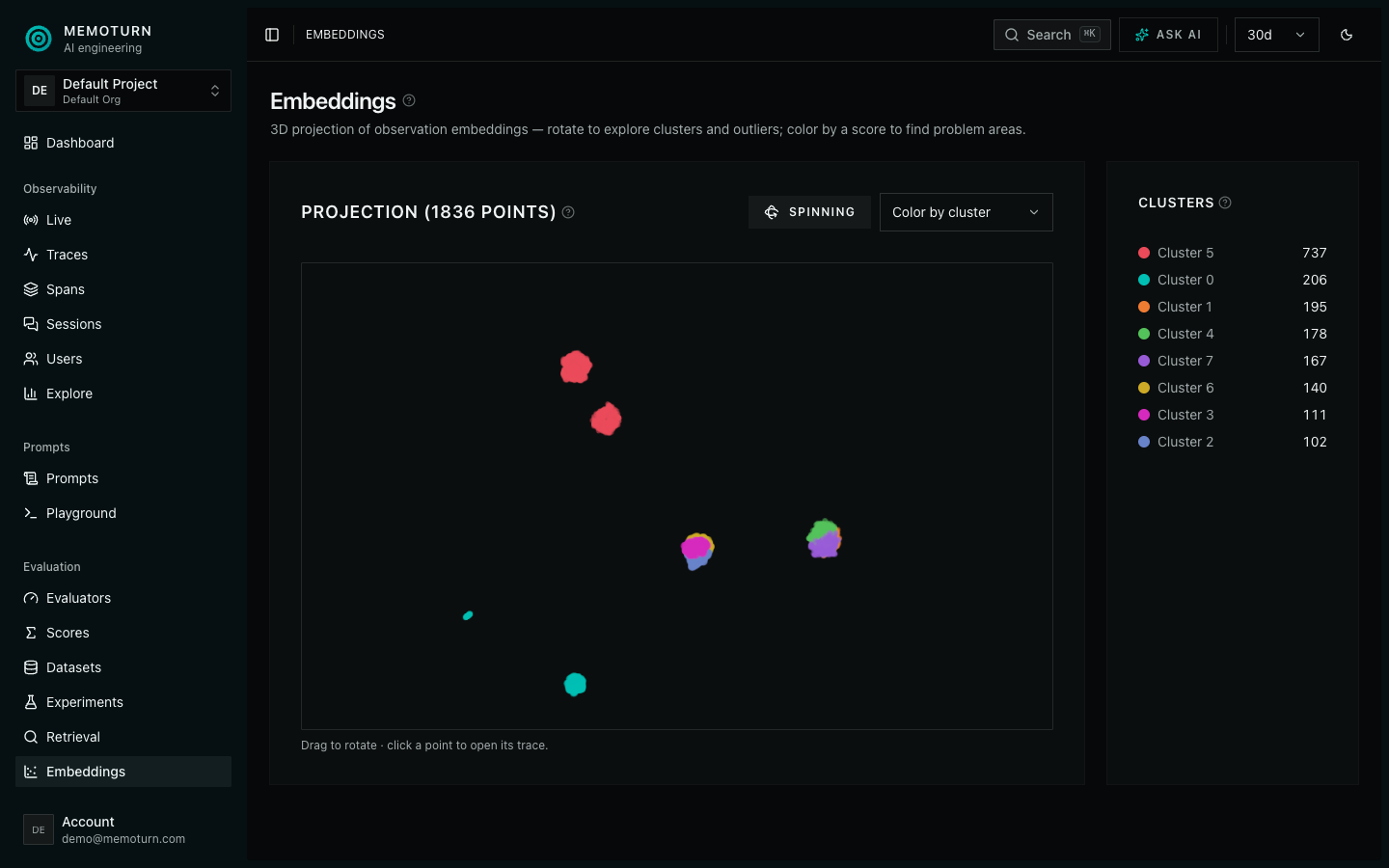
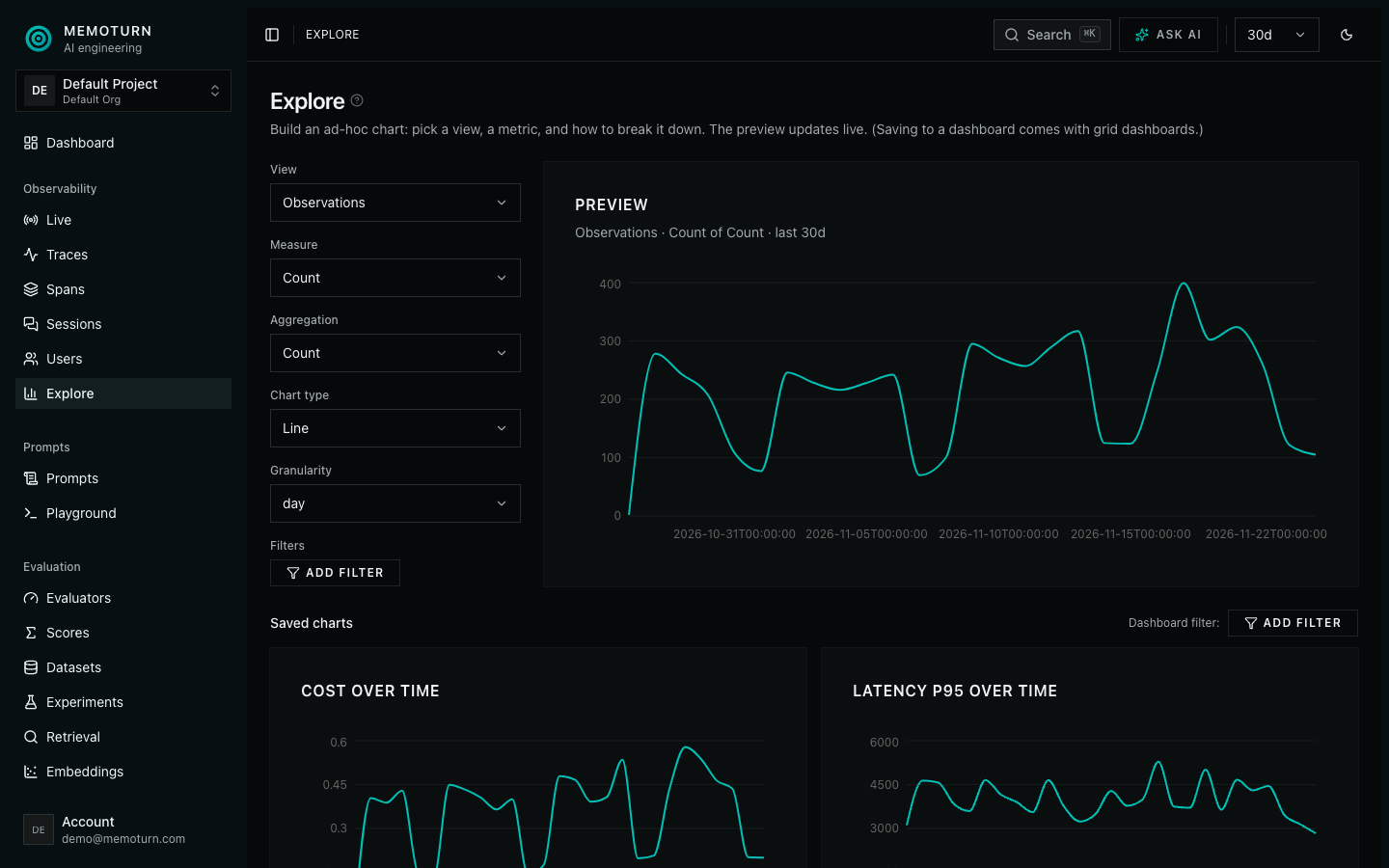
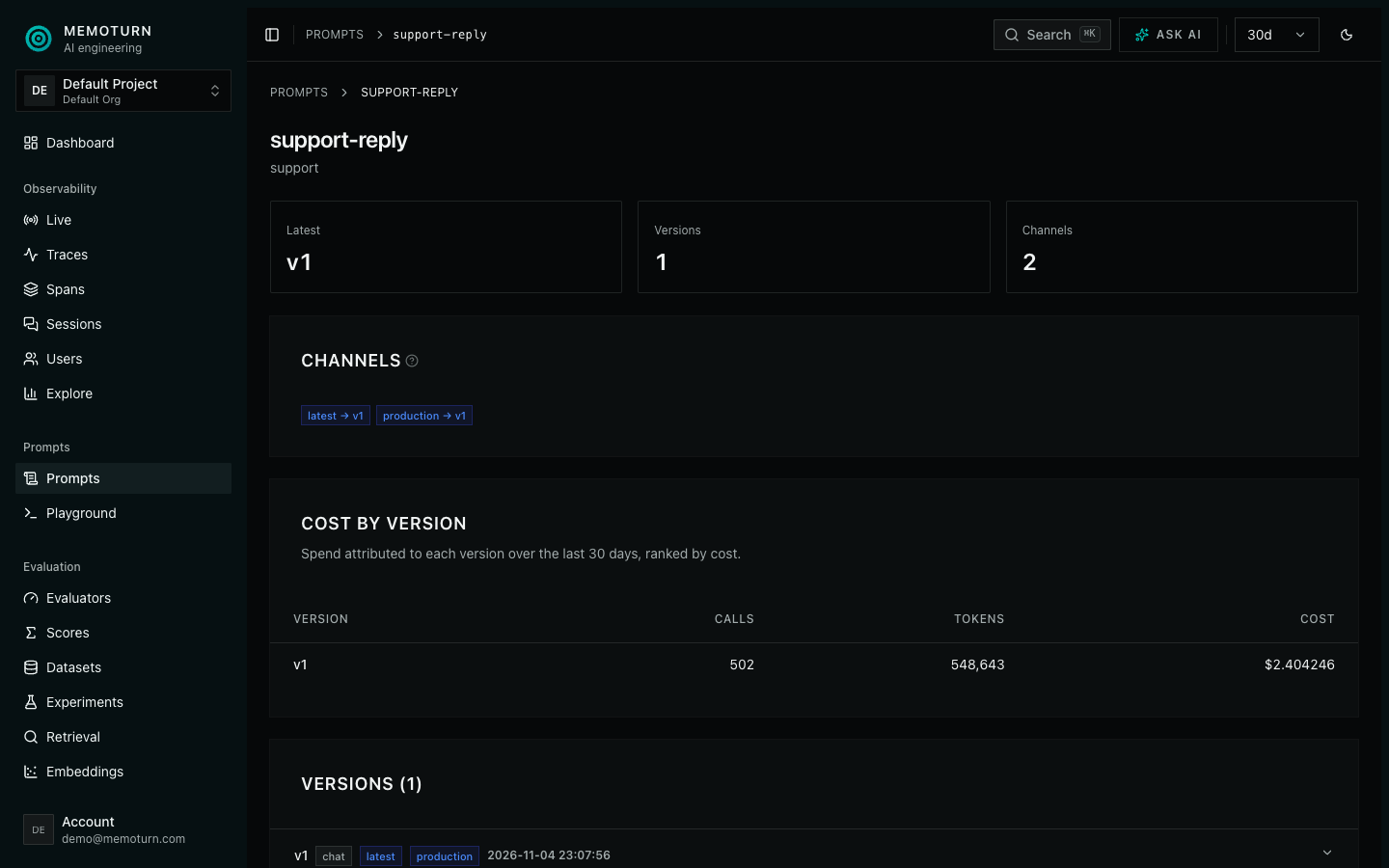
Tracing each model call, pricing it, scoring the answer, and versioning the prompt behind it, Memoturn gives AI teams proof of what works before it ships. Traces unfold on a waterfall timeline where agent plans, tool calls, retrievals, and generations each get a bar, with tokens and cost on every step. Quality is measured three ways: offline experiments over datasets, online judges sampling production traces, and human review queues with one-click scoring. Scores appear on the trace they came from. A versioned prompt registry promotes versions through deploy channels, A/B tests split live traffic between them, and a streaming playground compares models side by side. Cost, token, and latency charts break down by day, model, user, and tool, while budget alerts run every minute and automations post to Slack or a webhook when a score drops. A retrieval page flags weak document matches, and an embeddings map with similarity search turns one bad generation into every trace like it. An MCP server hands prompts, datasets, and review queues to agent IDEs like Claude Code and Cursor, with roles checked per tool. Teams get organizations and projects, SSO through OIDC or SAML, read-only viewer roles, PII masking at ingest, and retention rules. Data arrives from any OpenTelemetry exporter, with integrations for OpenAI, Anthropic, LangChain, and LiteLLM. Running on a dedicated VPS on RepoCloud with guaranteed CPU, RAM, and SSD, full root SSH access, and a browser serial console. Apache-2.0 licensed.
Benefits
- Traces That Show Every Agent Step
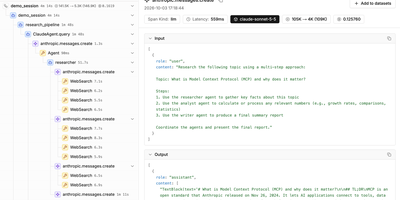
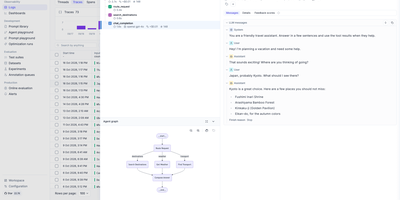
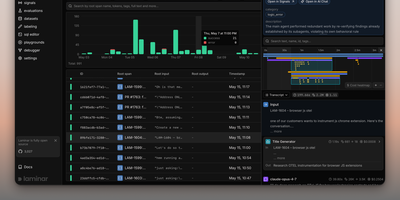
- Waterfall timelines lay out agent plans, tool calls, retrievals, and generations with tokens, cost, and latency on each step, so a slow or expensive run is easy to pin down.
- Quality Measured Three Ways
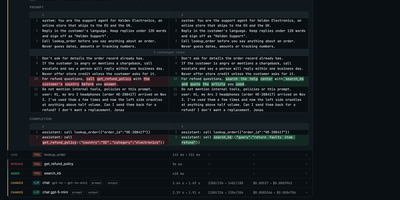
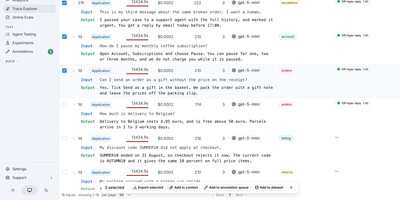
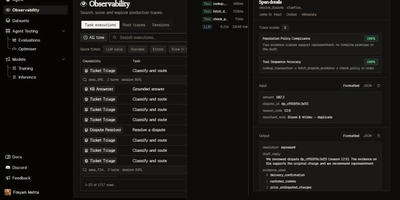
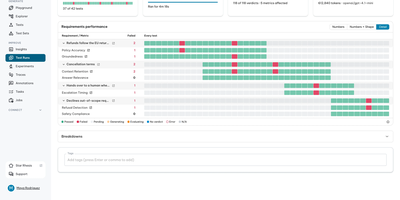
- Offline experiments over datasets, online evaluators that sample production traces, and human review queues all write scores back onto the trace they judged, so regressions show where they happen.
- Ship Prompts Like Code
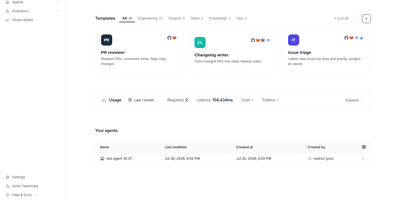
- A versioned, immutable registry promotes prompts through production and custom channels, A/B tests split live traffic between versions, and any version can be rolled back instantly.
- Telemetry That Stays on Your Servers
- Everything runs on infrastructure you control, so prompts, outputs, and user data never leave your network, and SSO, PII masking, and retention rules protect what is stored.
Features
- Tracing and Waterfall Timelines
- Traces, spans, generations, and scores on a waterfall timeline, with sessions and per-user rollups, and OTLP/JSON ingestion that follows the OpenTelemetry GenAI conventions.
- Three Kinds of Evaluation
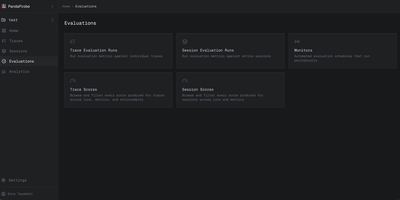
- Offline experiments over datasets, online evaluators sampling production traces by rate and filter, and human review queues, plus a prebuilt judge library for RAG quality and agent trajectories.
- Prompt Registry and Playground
- Versioned prompts with production and custom deploy channels, plus a multi-provider streaming playground with structured output and tool calling that records every run as a trace.
- Metrics, Monitors, and Alerts
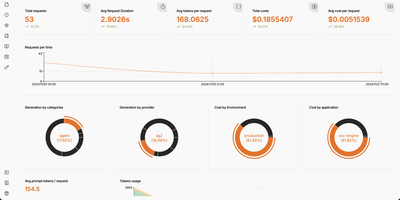
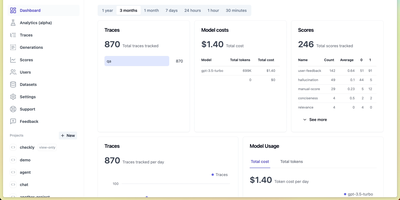
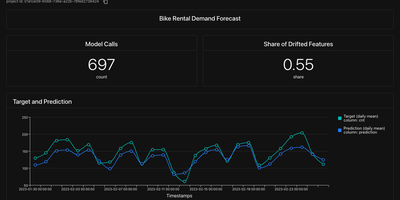
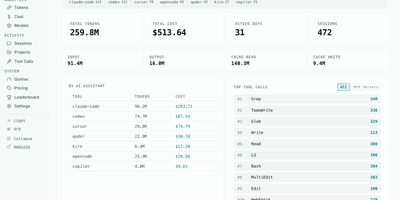
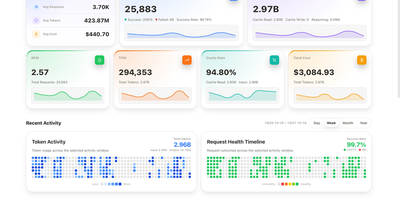
- Cost, token, and latency p50/p95 aggregated on the fly, plus alert rules and cost budgets evaluated every minute, and trigger-to-action rules that call webhooks or Slack.
- Retrieval and Embeddings Views
- A retrieval page scores RAG quality with similarity distributions and weakest matches, while a 3D embeddings projection clusters traces and find-similar search links one bad generation to similar traces.
- MCP Server and Integrations
- An MCP server exposes prompts, datasets, and review queues to agent IDEs with per-tool RBAC, alongside TypeScript, Python, and Go SDKs and LangChain and OpenAI wrappers.