Categories
Self-Hosted Developer Tools AI Agents Collaboration Workflow Automation Coding Agents Internal Tools App BuilderDeveloper links
Viberglass
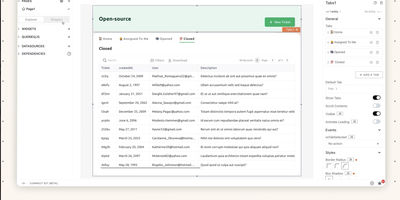
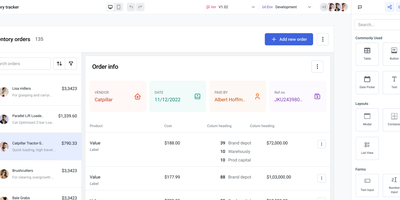
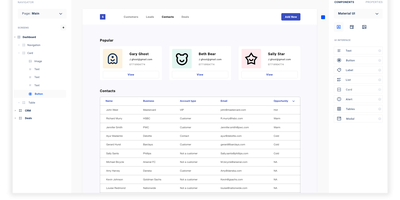
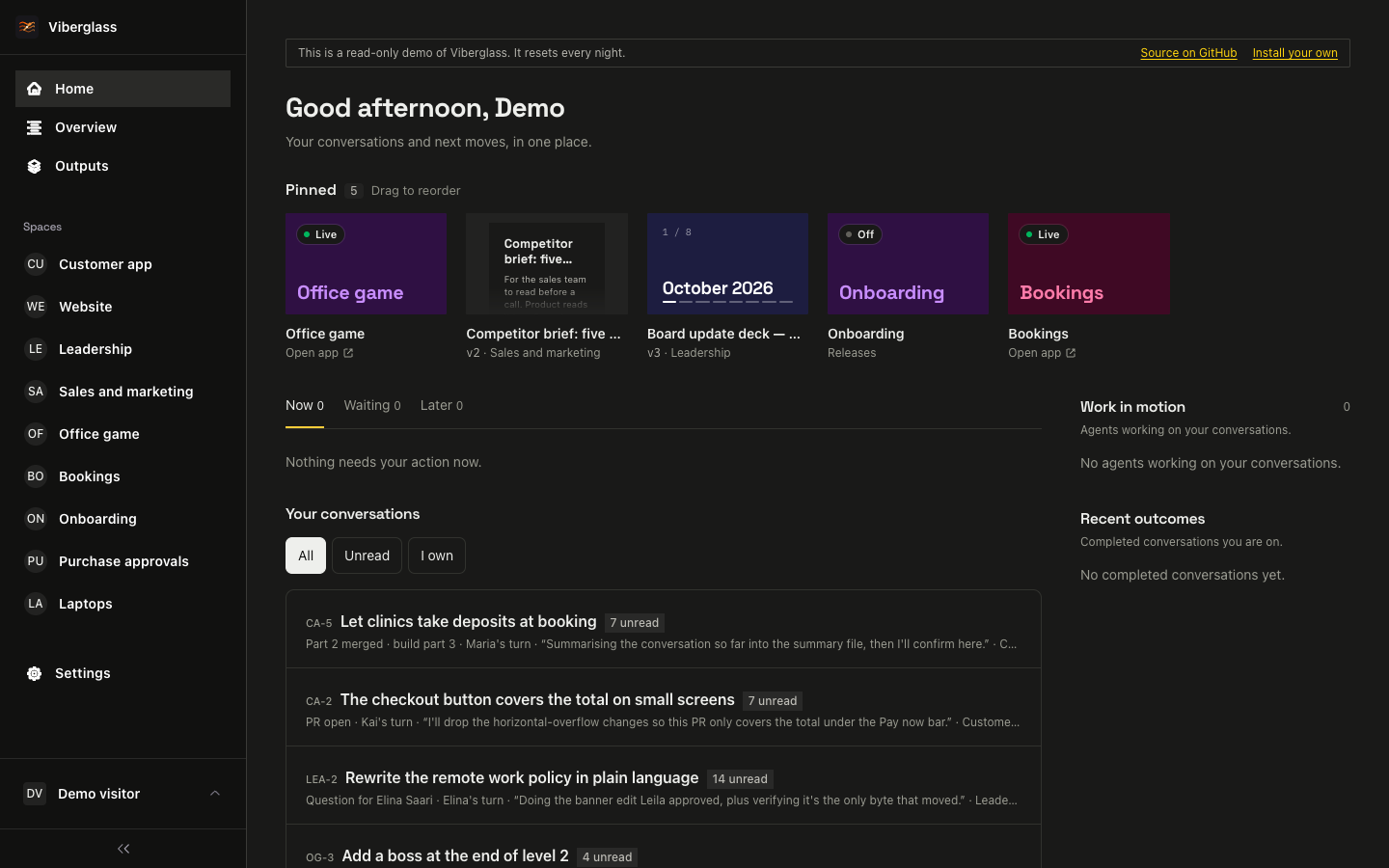
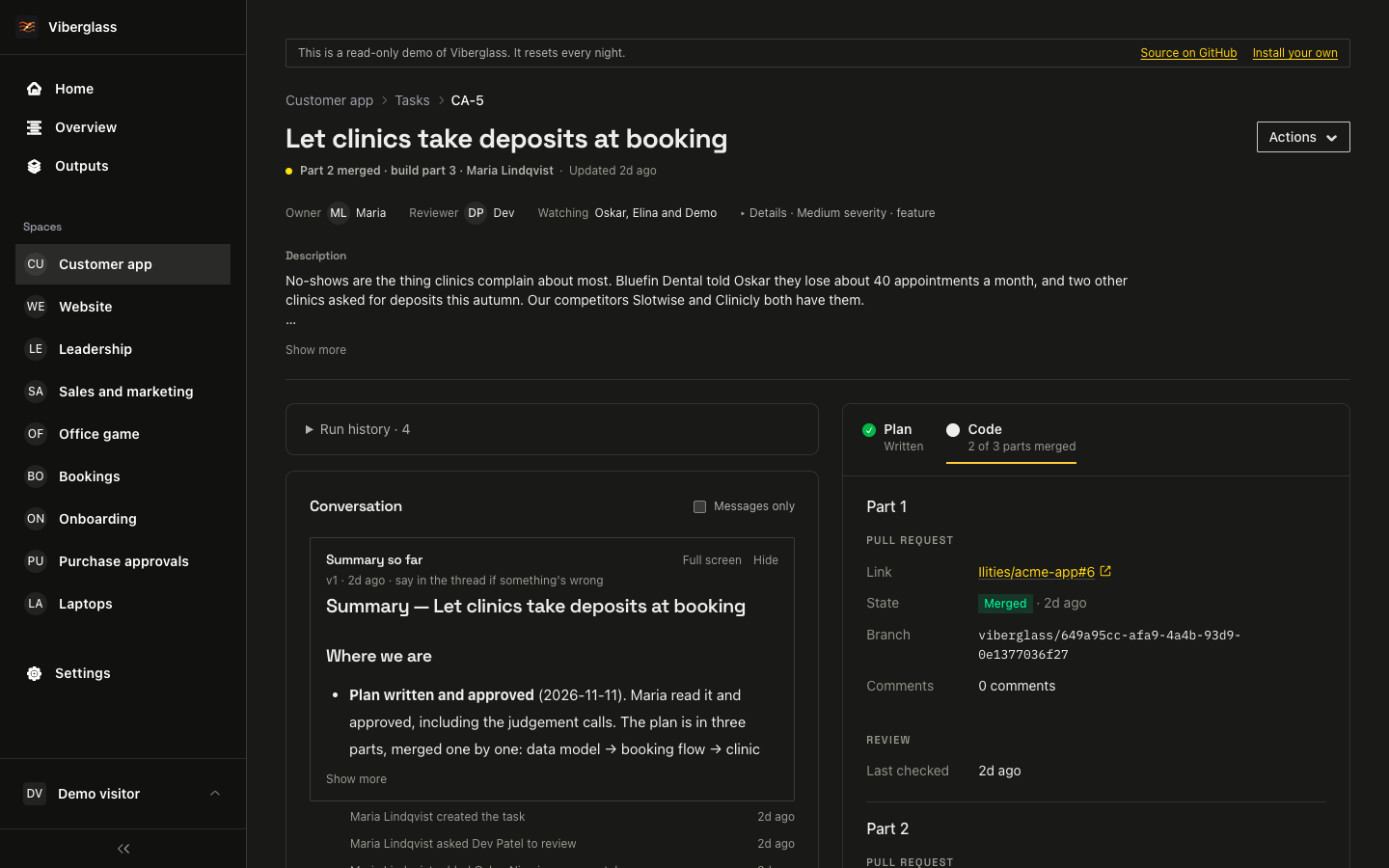
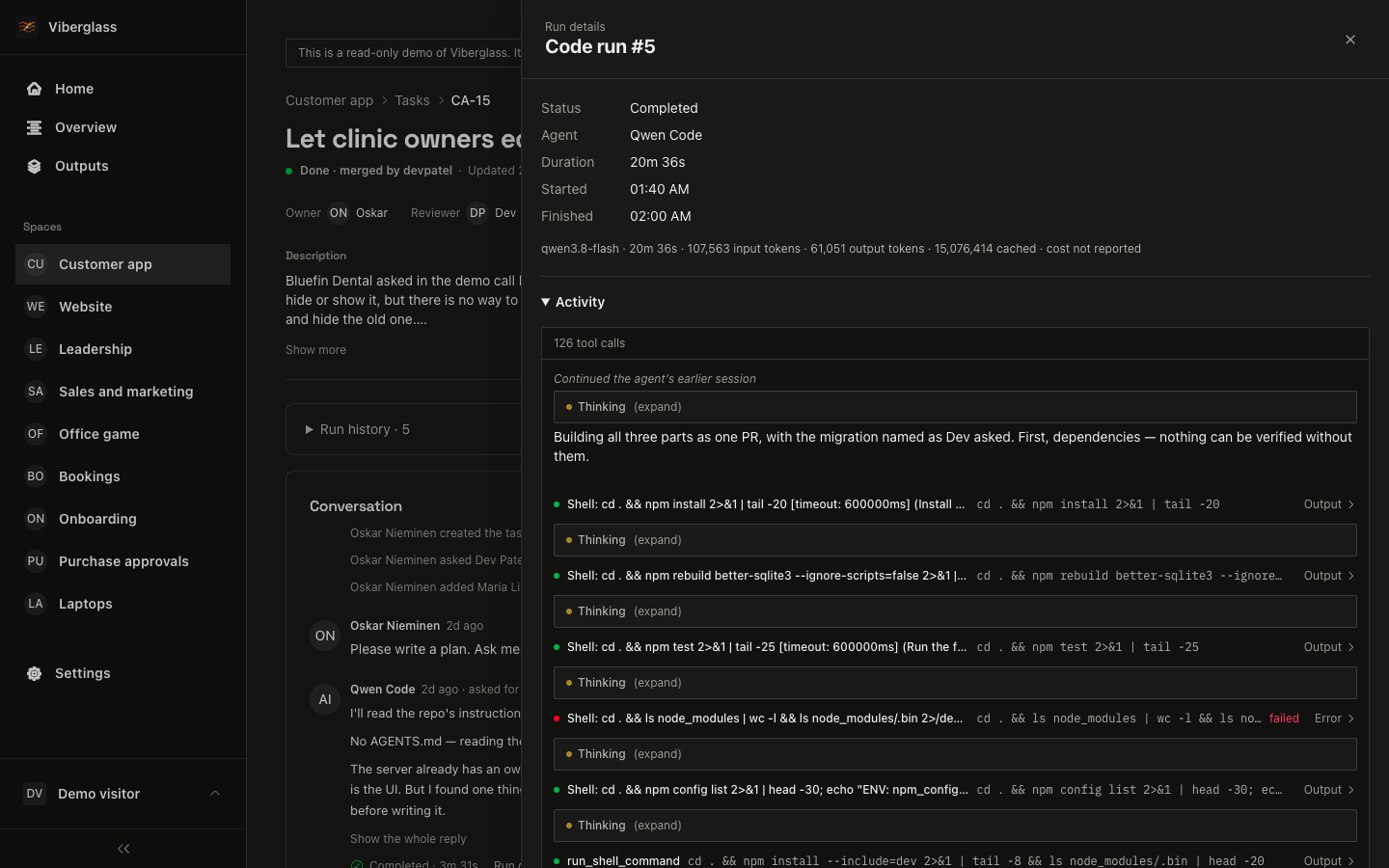
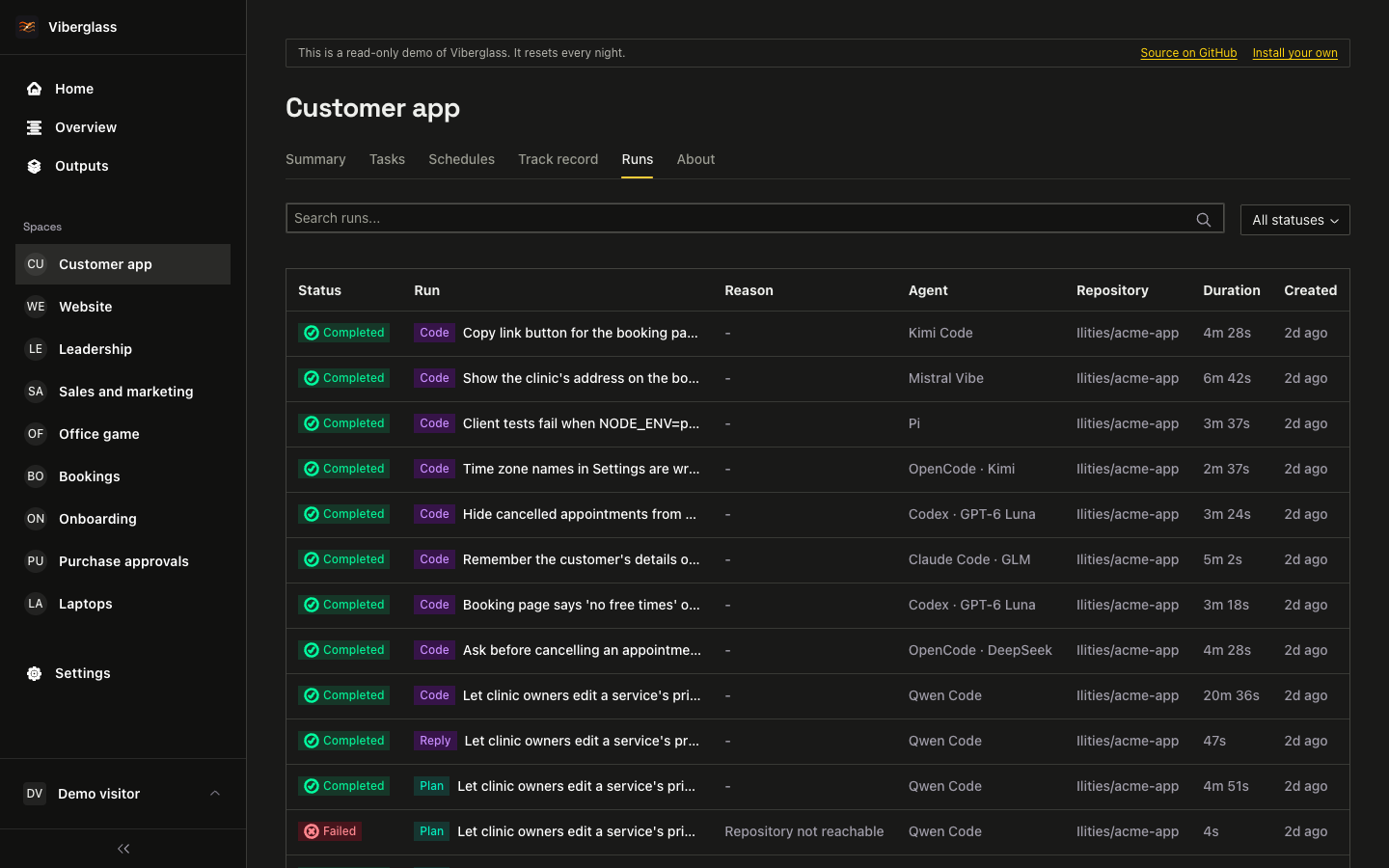
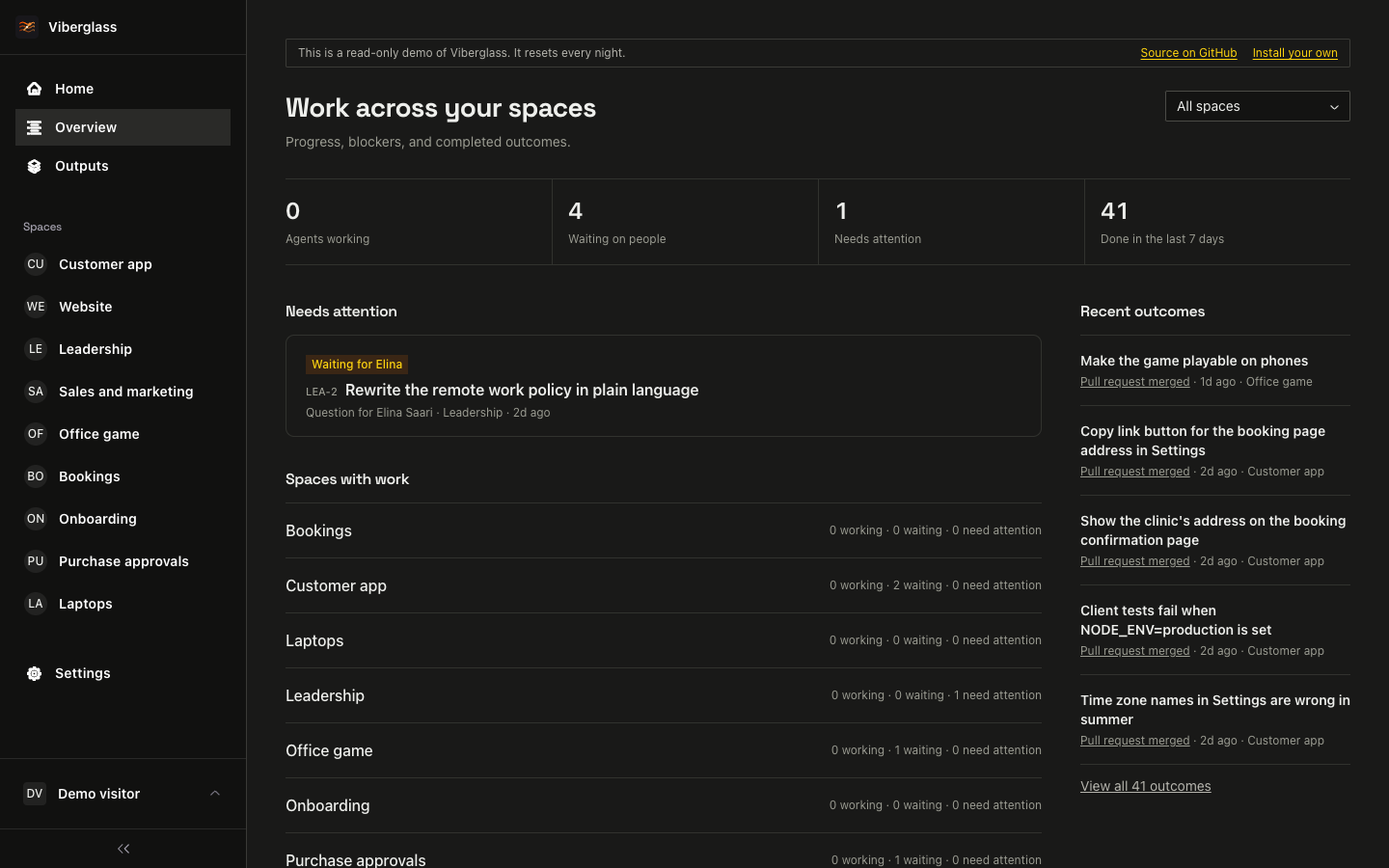
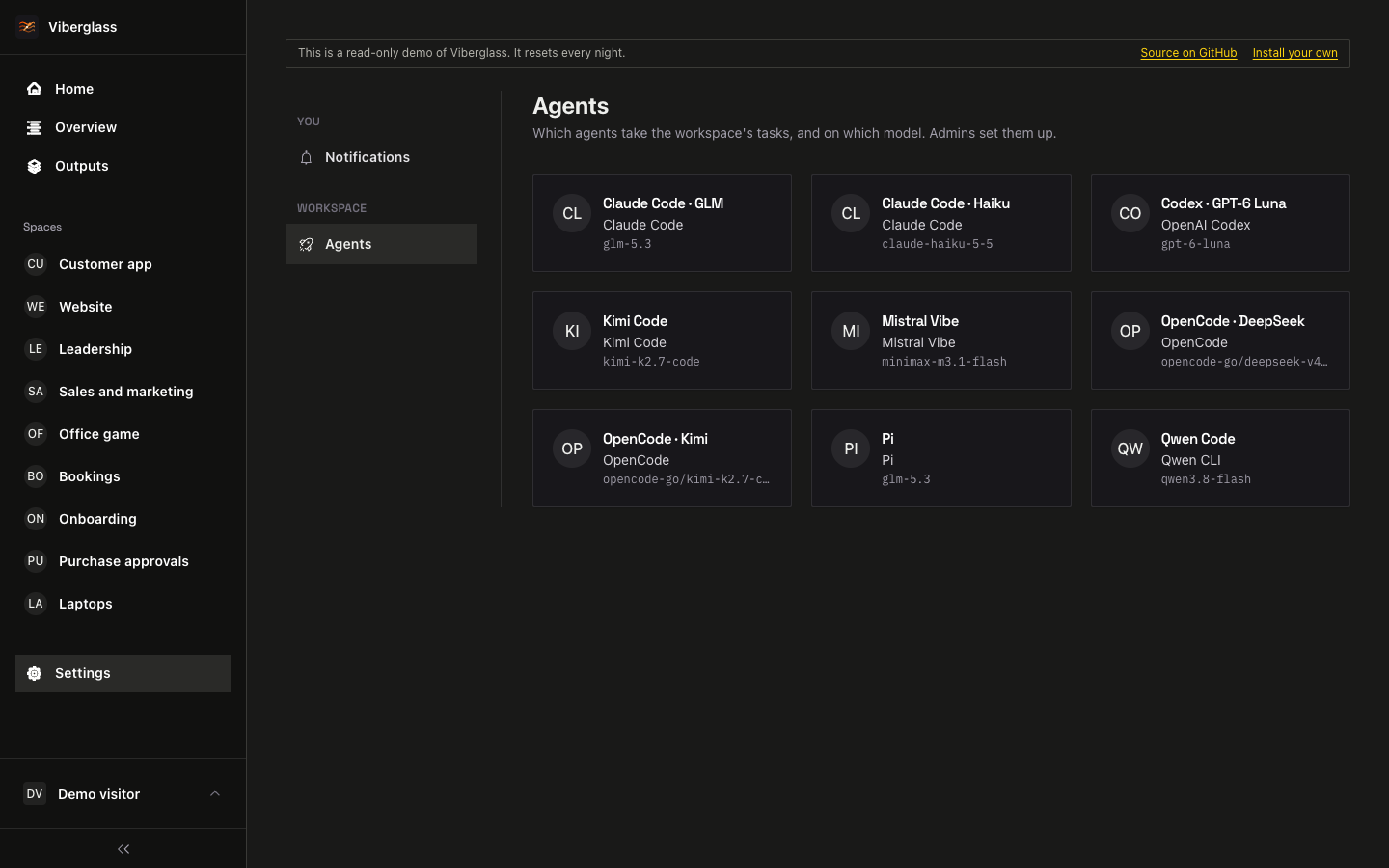
Describe the tool your team needs, and Viberglass has a coding agent build it, preview it, and run it, with nobody on the team touching code. Trackers, approval lists, checklists, and booking calendars replace spreadsheets, each app running on your own servers behind team sign-in, with backups and rollback. Changes run in a preview on a copy of the live data and go live only when the requester or a maintainer says so. The same tasks produce documents and presentations, kept as versioned artifacts that preview in the app, or open GitHub pull requests for engineering to review. For code, the agent writes a plan, asks the right person when something is unclear, takes line-by-line comments, then builds in parts, one pull request each. One task, one thread. Pick Claude Code, Codex, Antigravity, Qwen Code, Mistral Vibe, Kimi Code, OpenCode, or Pi, with provider keys, coding plans, or any OpenAI- or Anthropic-compatible endpoint. Run details show the agent's thinking, tool calls, prompt, worker log, and token usage. Tasks start in Slack, a browser extension, GitHub Issues, Jira, Shortcut, webhooks, schedules, or an MCP client. Roles for members, guests, and read-only viewers, open or private spaces, shared secrets, and an audit log cover a shared installation. Agent runs start in a throwaway container that is removed afterward, and stored credentials are encrypted. Running on a dedicated VPS on RepoCloud with guaranteed CPU, RAM, and SSD, full root SSH access, and a browser serial console. AGPL-3.0 licensed.
Benefits
- Colleagues Request Tools Without Coding
- Anyone describes a tracker, approval list, or checklist in a task or in Slack; the agent builds it, asks questions when unclear, and the requester tries it before it goes live.
- Previews, Backups, and Rollback Built In
- Each change runs on its own address with a copy of the live data, Viberglass backs up the data before going live, and a recent release can be rolled back.
- Choose Any Agent and Model
- Eight coding agent harnesses run side by side, using provider keys, coding plans, or any OpenAI- or Anthropic-compatible endpoint, including a model you host so nothing leaves your network.
- Your Data Stays on Your Servers
- Tasks, files, app data, and code stay on your infrastructure with no Viberglass cloud or account; agents send a model only what the task in front of them needs.
Features
- Apps With Live Previews
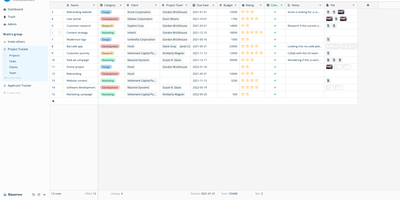
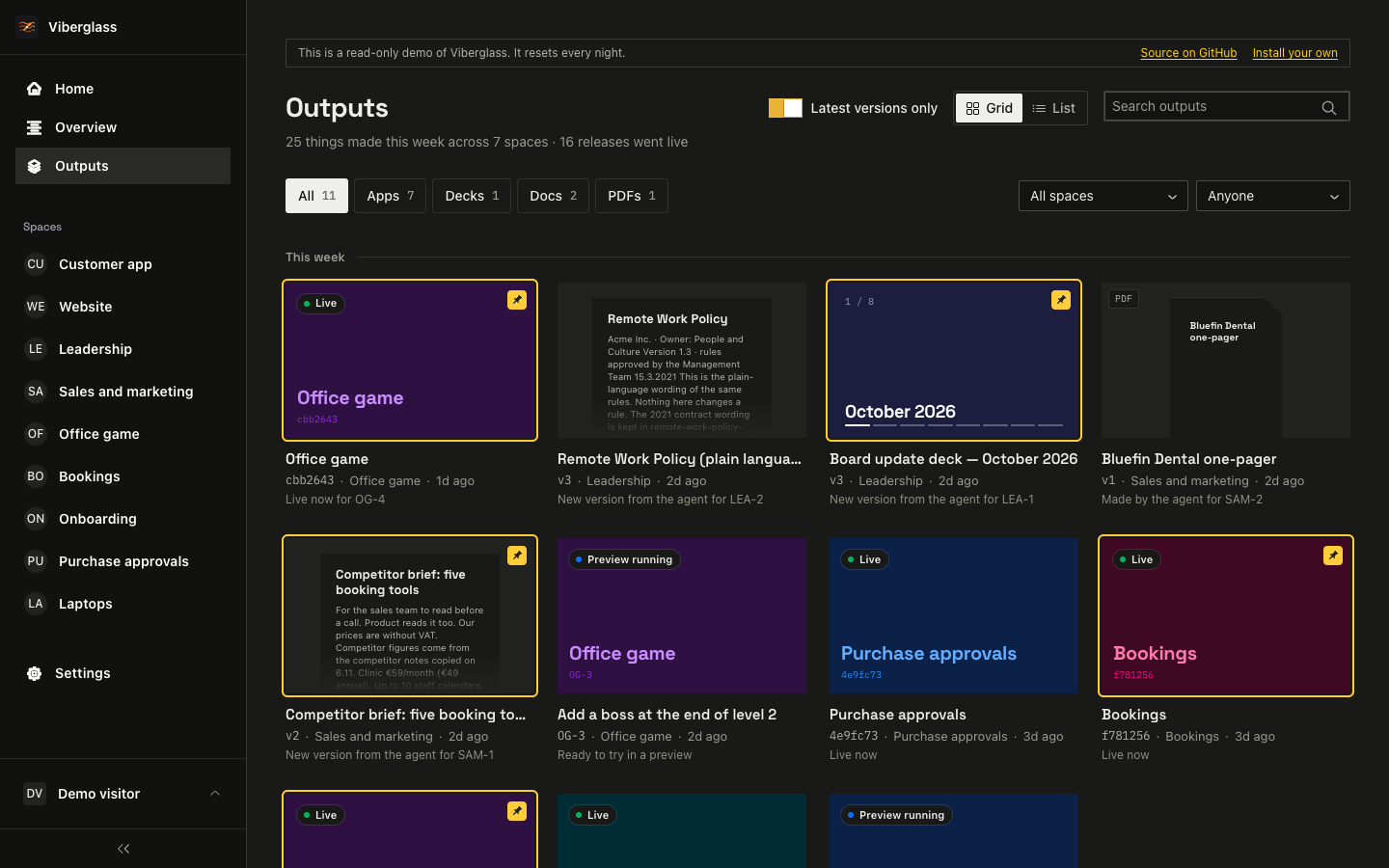
- App spaces build tools such as equipment trackers and approval lists, keep each app's code in a private repository, back up its data, and roll back to earlier releases.
- Plans, Parts, and Pull Requests
- Agents write a plan, take line comments and suggested edits, keep every version for word-by-word comparison, then build in parts with one GitHub pull request per part.
- Files and Artifacts Spaces
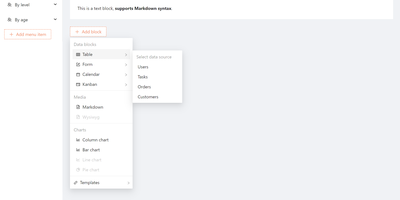
- Files spaces keep documents and presentations in S3-compatible storage, with Markdown editing in the app and versioned artifacts that preview as web pages, slides, images, and PDFs.
- Inspectable Agent Runs
- Run details list the agent's thinking, tool calls, prompt, and worker log, with token usage and cost where the harness reports them; schedules rerun recurring work.
- Issue Trackers and Slack
- GitHub Issues, Jira, and Shortcut items become linked tasks with two-way comments, while the /viberglass Slack command starts tasks and lets people answer the agent's questions in a thread.
- Isolated Runners on Any Compute
- Agents run in containers on Docker, Kubernetes Jobs, AWS ECS Fargate, or AWS Lambda, started per run and removed after, with credentials stored encrypted.