Categories
Developer Tools Self-Hosted AI MCP Server AI Coding Agents Static Analysis Codebase Intelligence Code Health Documentation GeneratorStars
Forks
Watchers
Developer links
repowise
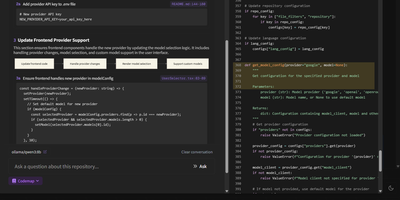
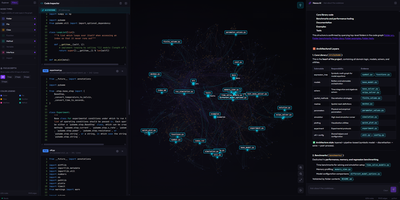
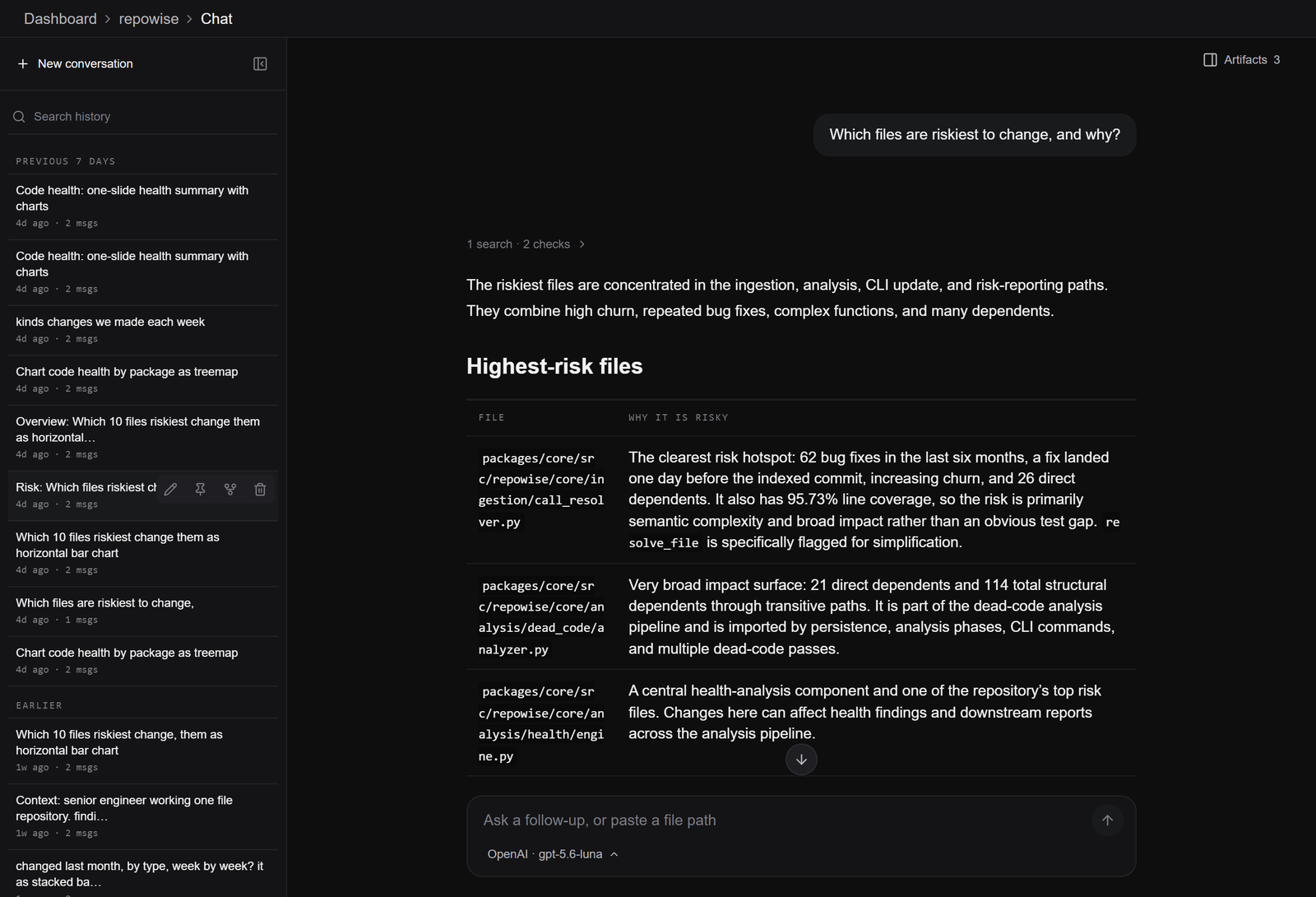
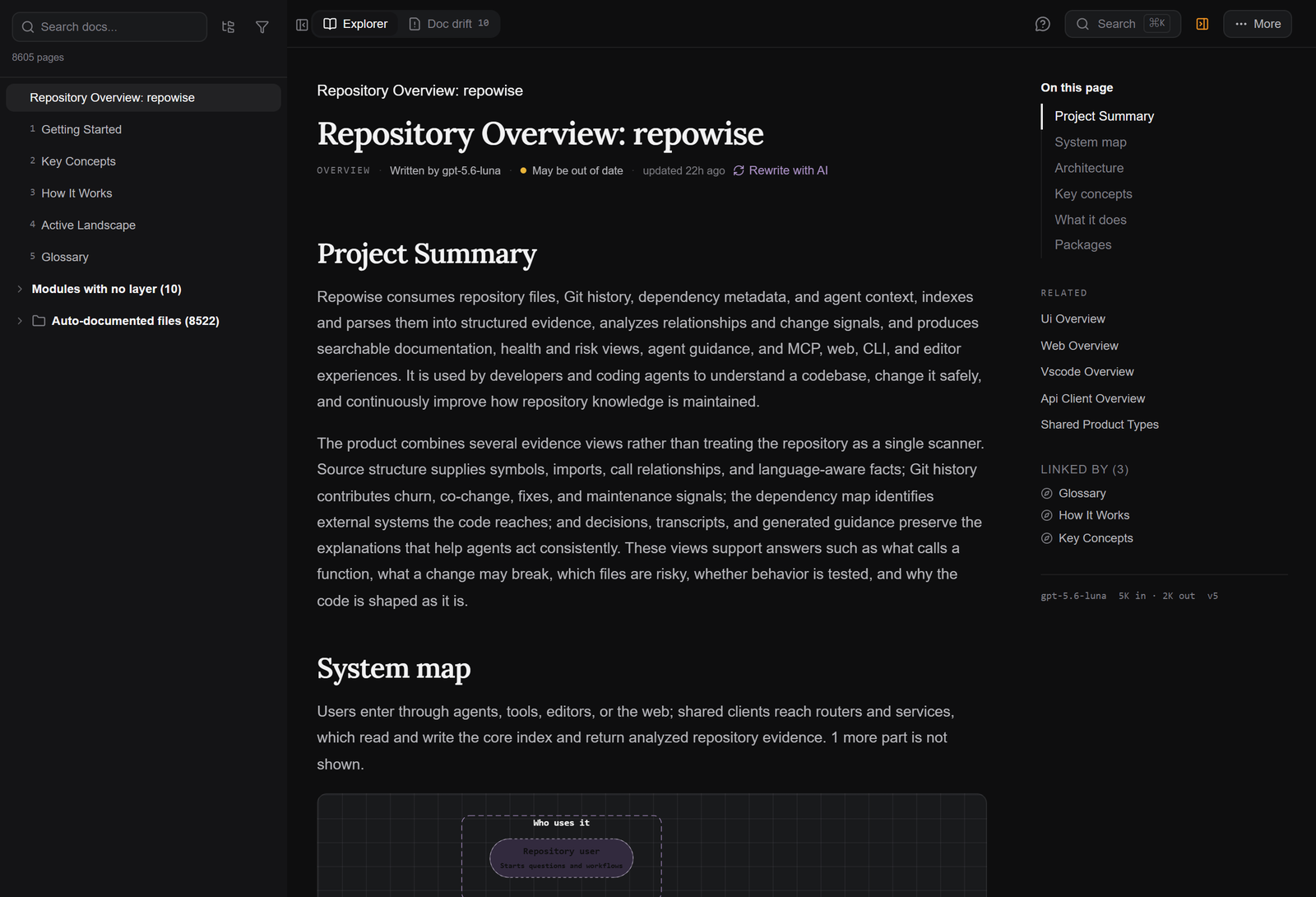
Instead of another round of grepping, a coding agent or developer asks repowise once and gets an answer drawn from a pre-built index of the repository's code, history, tests, and decisions. Indexing needs no API key: the call graph across 29 languages, git co-change and ownership, health scores, and dead code reports all come with zero model calls. A web dashboard opens onto Overview, Docs, Architecture, Knowledge Graph, Code Health, Refactoring, Commits, Decisions, and Usage pages, and a chat view returns cited answers with charts. Ten task-shaped MCP tools let Claude Code, Codex, Cursor, and other hosts ask for callers, risk, tests, owners, and reasons in a single request. Change risk scores any commit or branch against the repository's own history, and impacted-tests lists the tests a diff exercises. Every file earns a 1 to 10 health score from 53 detectors, with refactoring plans such as Extract Method and Break Cycle. Decisions mined from ADRs, comments, and commits stay linked to the code they govern, doc drift flags pages that describe code that no longer exists, and workspaces follow API contracts across repositories. Generated CLAUDE.md and AGENTS.md files keep agents informed, and distill trims noisy test and install output. Running on a dedicated VPS on RepoCloud with guaranteed CPU, RAM, and SSD, full root SSH access, and a browser serial console. AGPL-3.0 licensed.
Benefits
- Cut Agent Tool Calls In Half
- In the project's own Django benchmark, an agent using repowise made 3.8 tool calls instead of 7.2 and opened 3.0 files instead of 7.2, while writing 31.6% less output.
- Index Without Any API Key
- Graph, risk, health, test, and dead code analysis make zero LLM calls, so the first index runs locally with no key and no spend, and models write prose only on request.
- Know What Breaks Before Merging
- Change risk ranks a commit or branch against the repository's own history, listing outside callers, forgotten companion files, missing tests, and the specific tests worth running before the change lands.
- Keep Decisions Tied To Code
- Architectural decisions mined from ADRs, comments, commits, and pull requests stay linked to the files they govern and are flagged when they go stale, preserving the reasons behind the code.
Features
- Ten MCP Tools
- Task-shaped tools such as get_overview, get_answer, get_context, get_risk, and get_why serve Claude Code, Codex, Cursor, and any other MCP host from the same index.
- Architecture And Graph Views
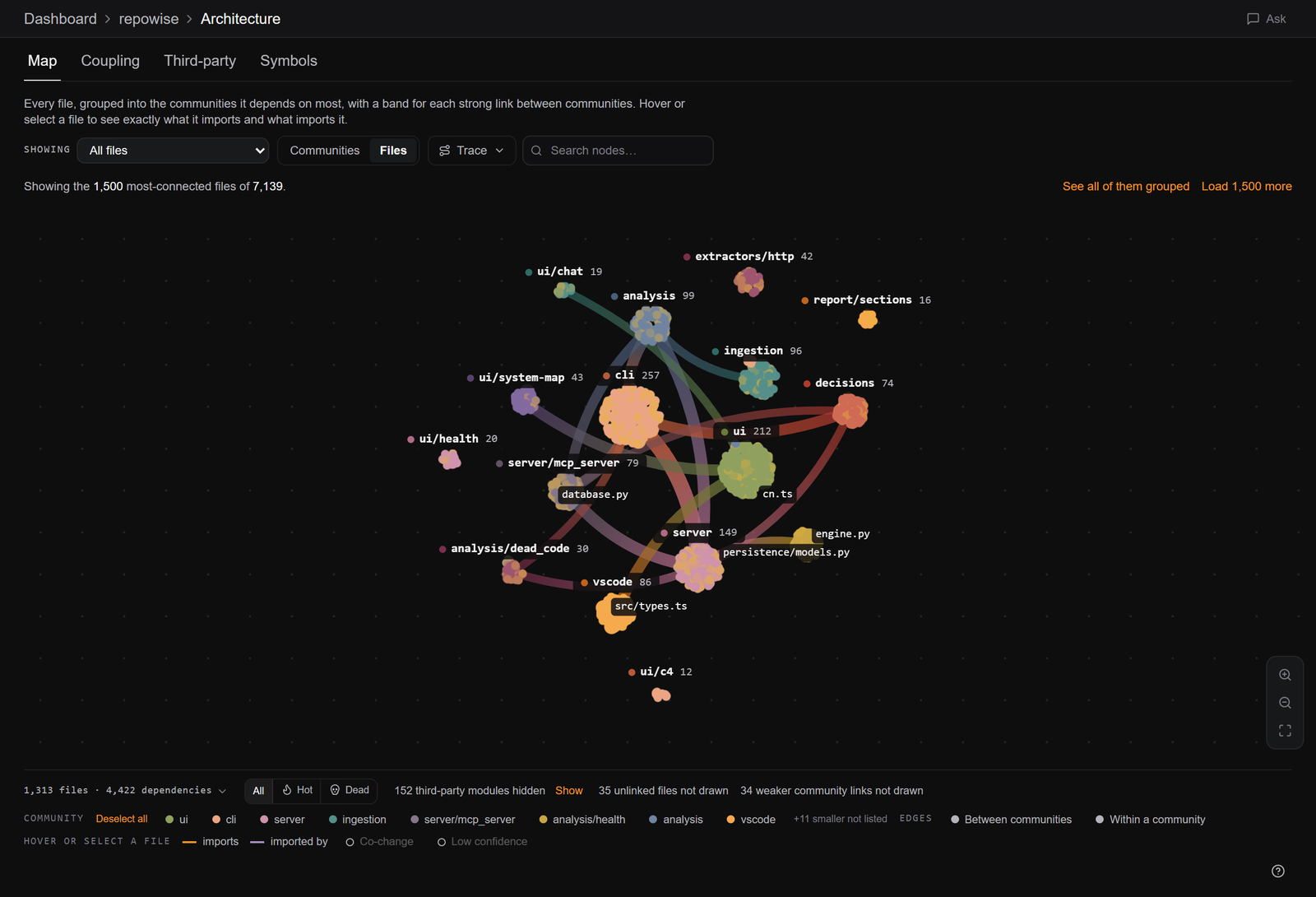
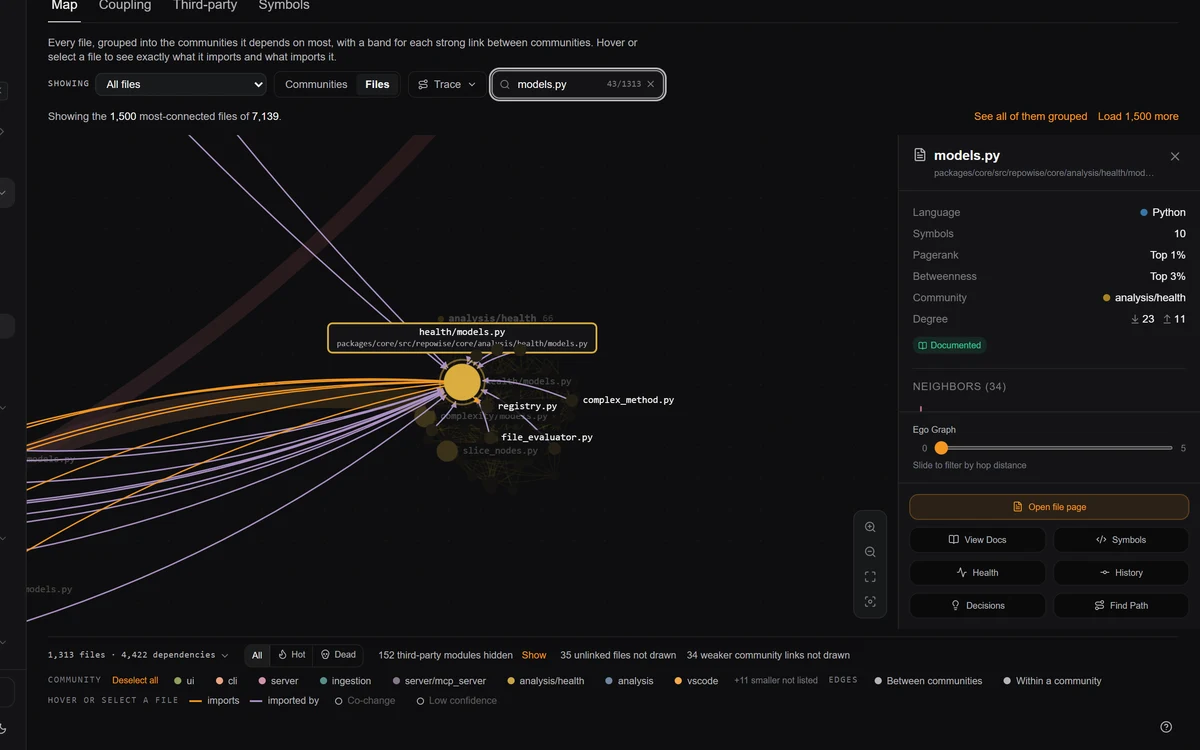
- An explorable dependency map groups files into communities, a continuous-zoom knowledge graph runs from repository to symbols, and call graphs cover 29 languages, plus C4 views and Structurizr export.
- Code Health And Refactoring
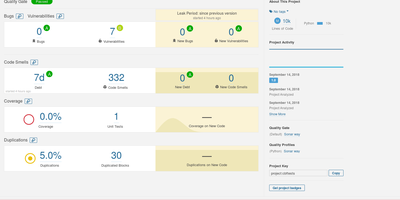
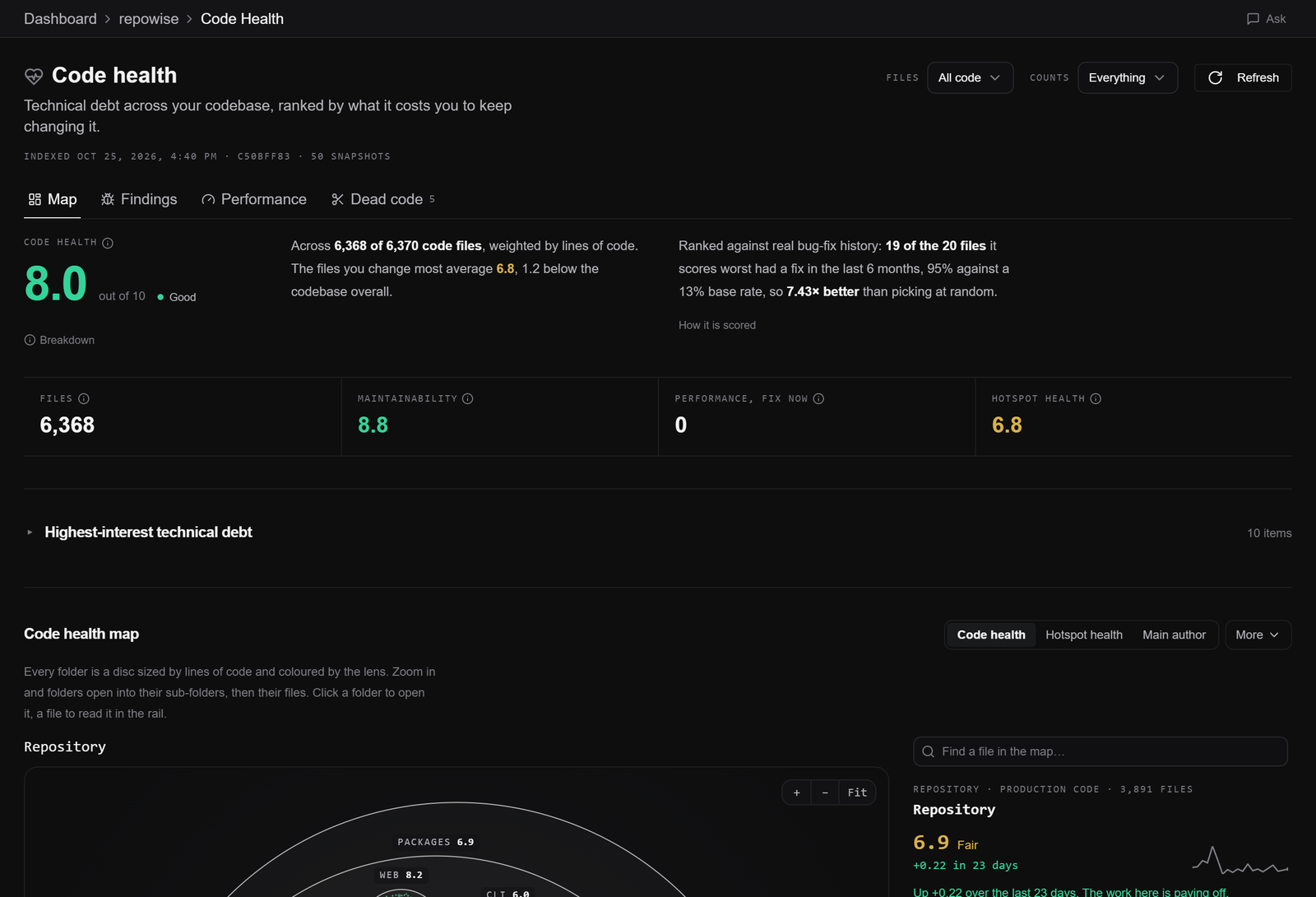
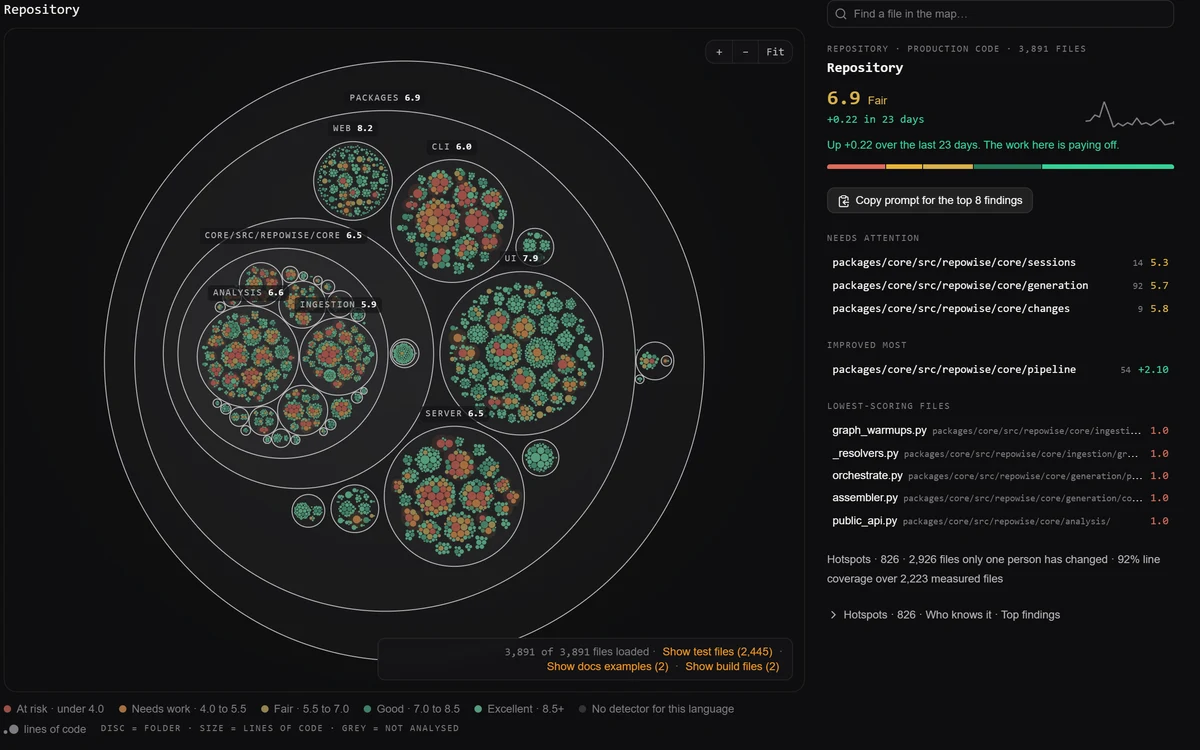
- Fifty-three detectors score every file from 1 to 10 across defect risk, maintainability, and performance, then propose Extract Method, Move Method, Split File, and Break Cycle plans.
- Generated Docs And Chat
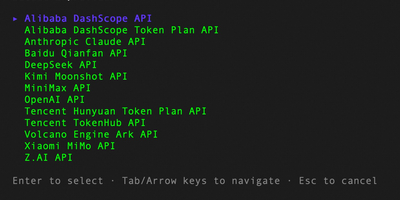
- A wiki page for every module and file renders without an API key, while chat gives cited answers and charts through Anthropic, OpenAI, Gemini, or Ollama models.
- Multi-Repo Workspaces
- Workspaces map HTTP, gRPC, and event contracts across repositories, with a breaking-change guard, cross-repo blast radius, and architecture rules that can gate CI.
- Docker Self-Hosting
- A single container serves the API on port 7337 and the dashboard on port 3000, protected by an API key, with the indexed repository mounted read-only.