Categories
Self-Hosted AI MCP Server Data Visualization Database Management Data Analytics ClickHouse AI SQL Assistant SQL ClientStars
Forks
Watchers
Developer links
Dory
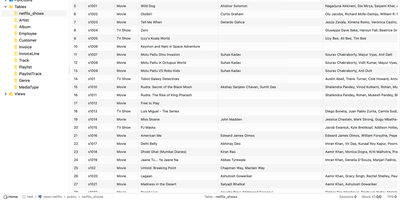
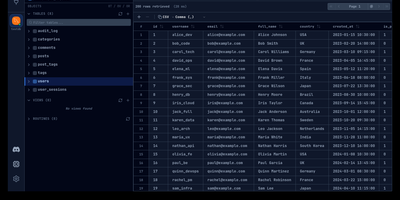
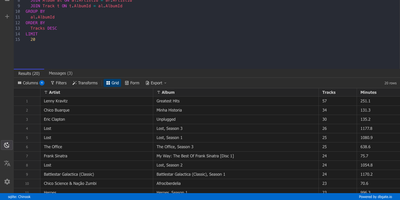
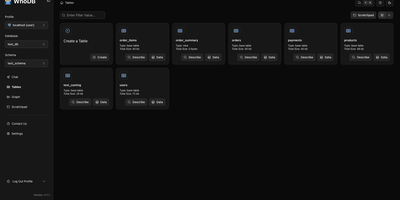
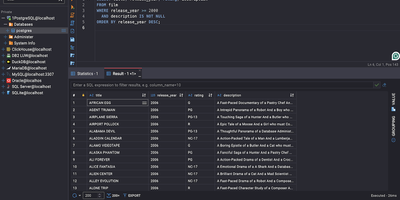
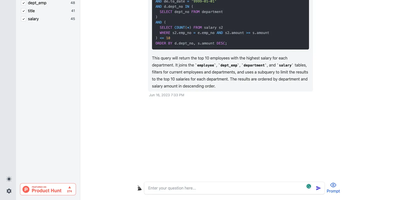
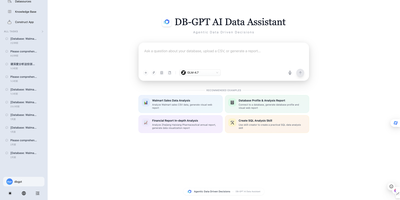
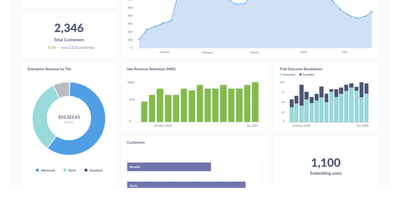
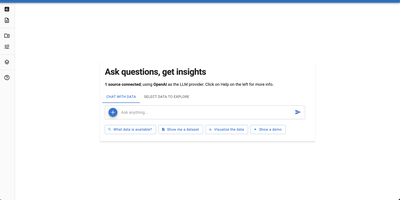
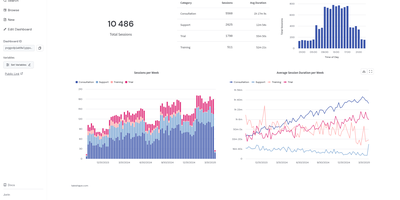
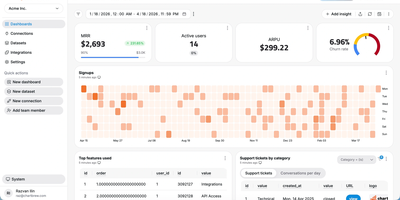
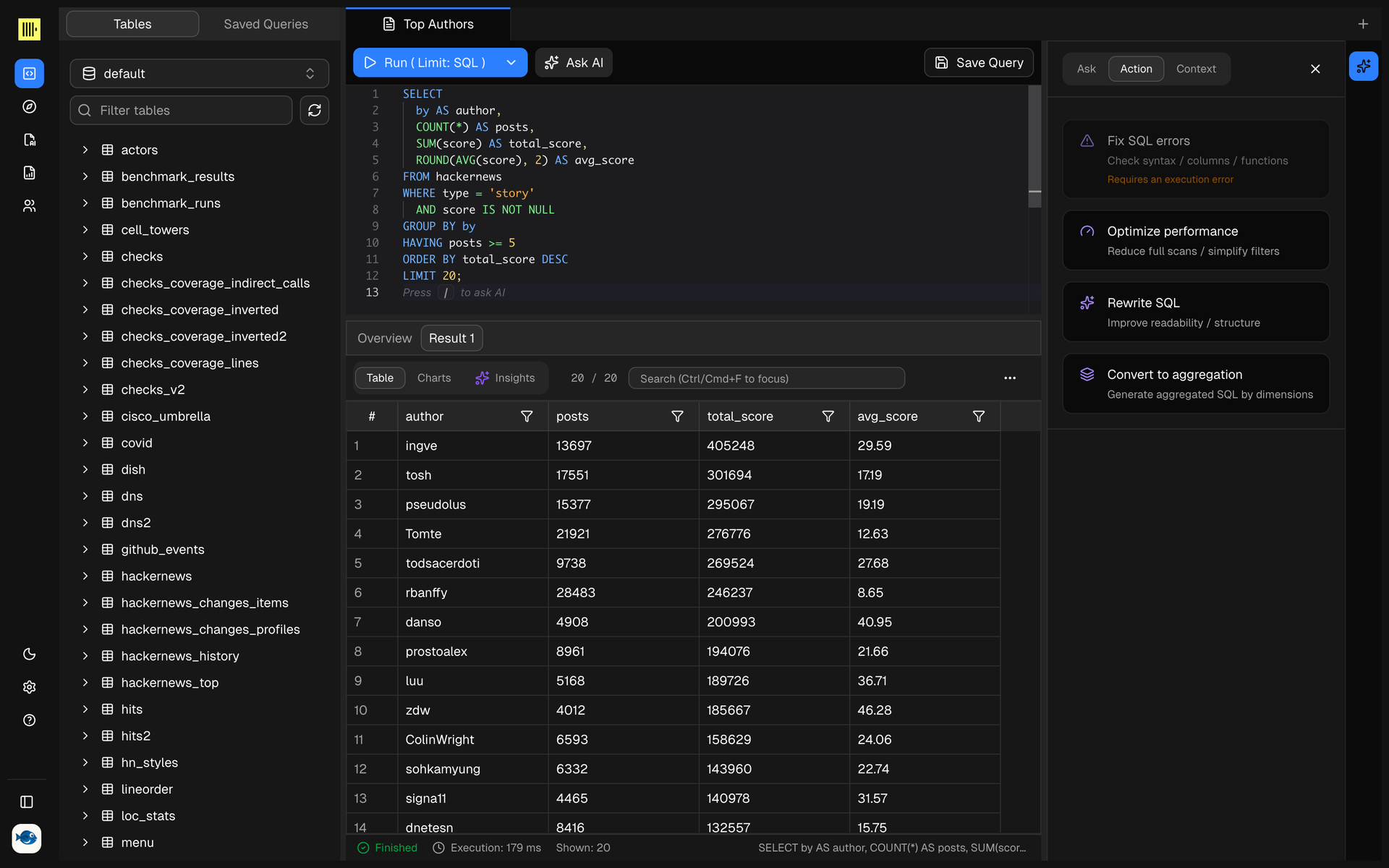
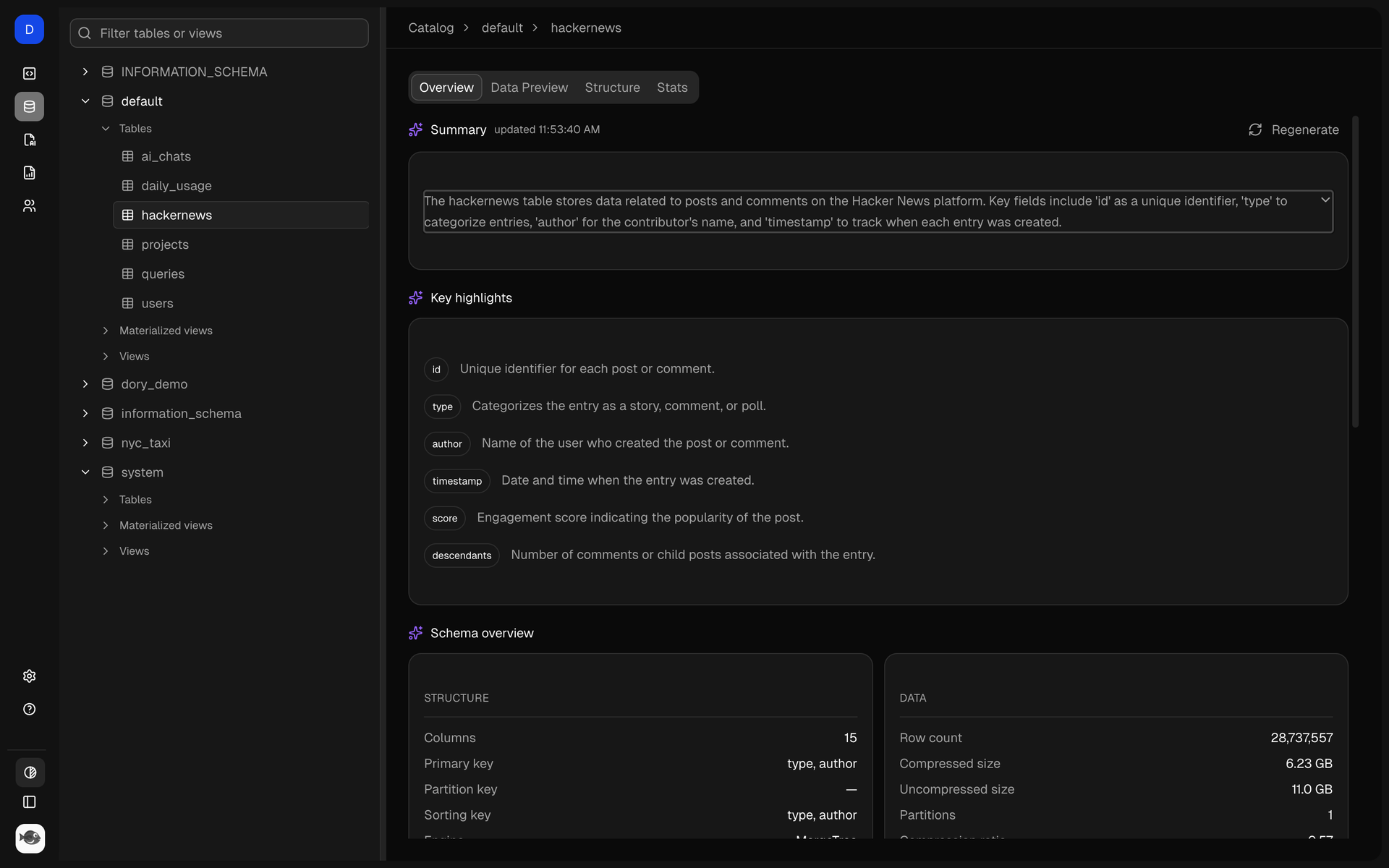
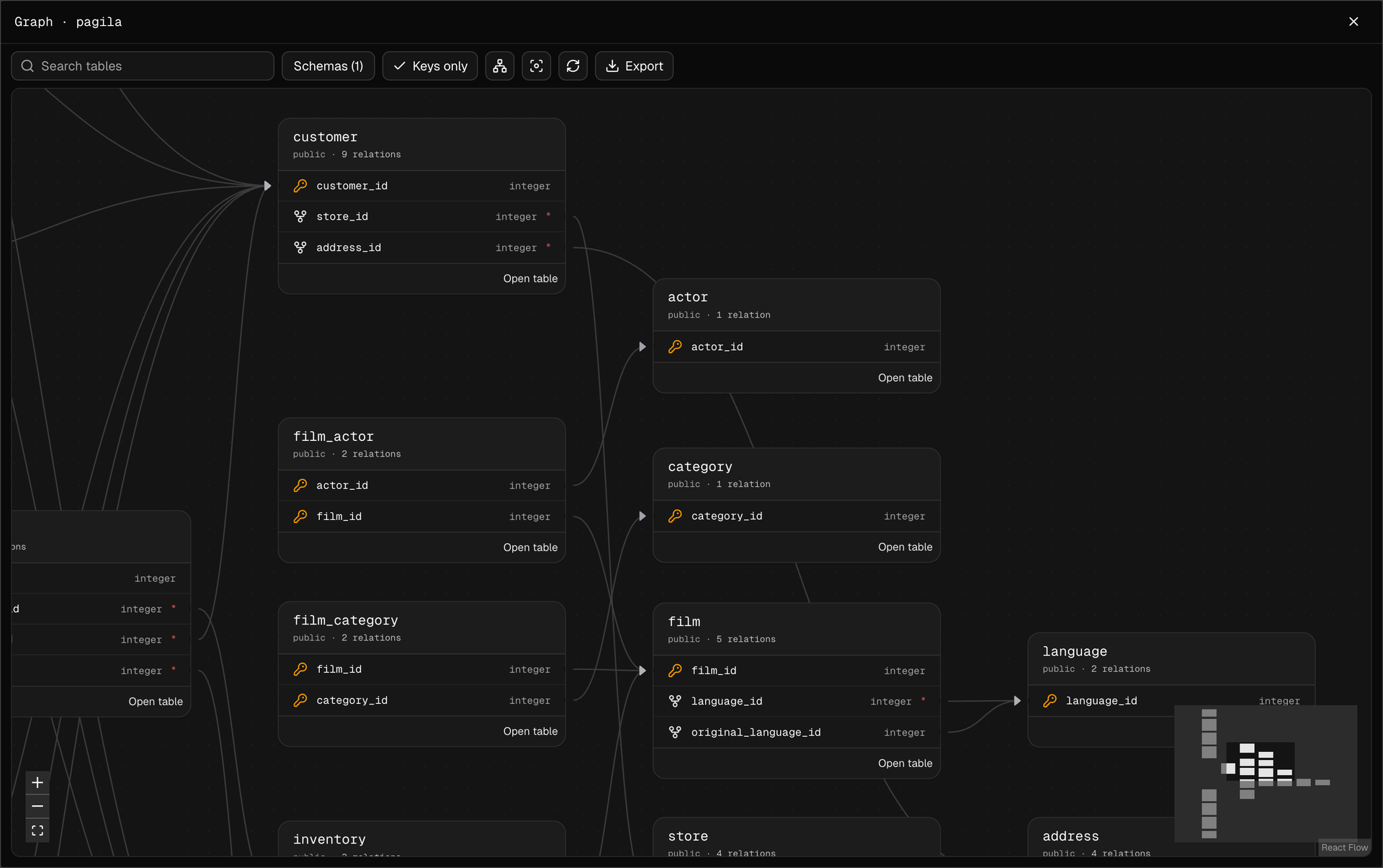
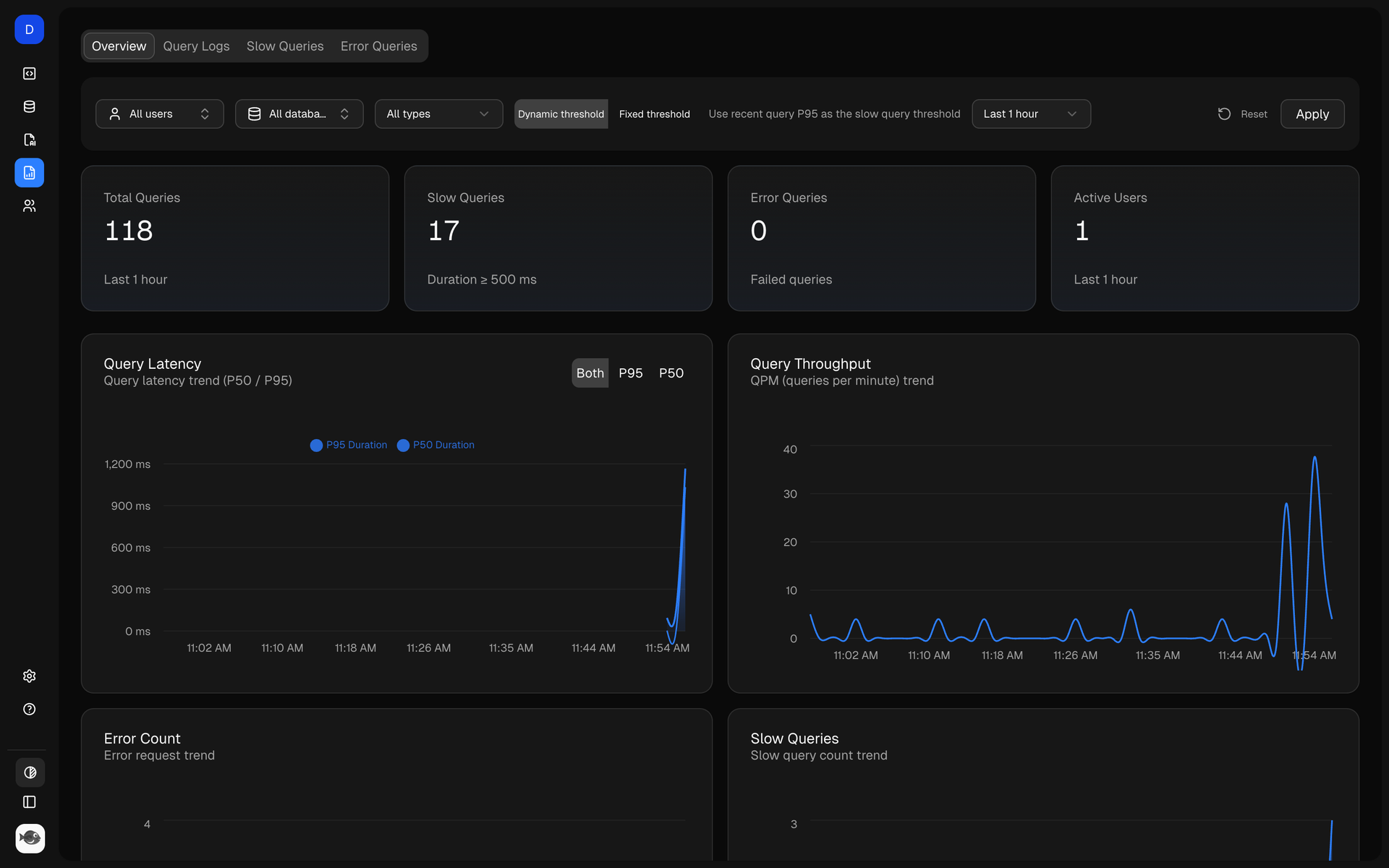
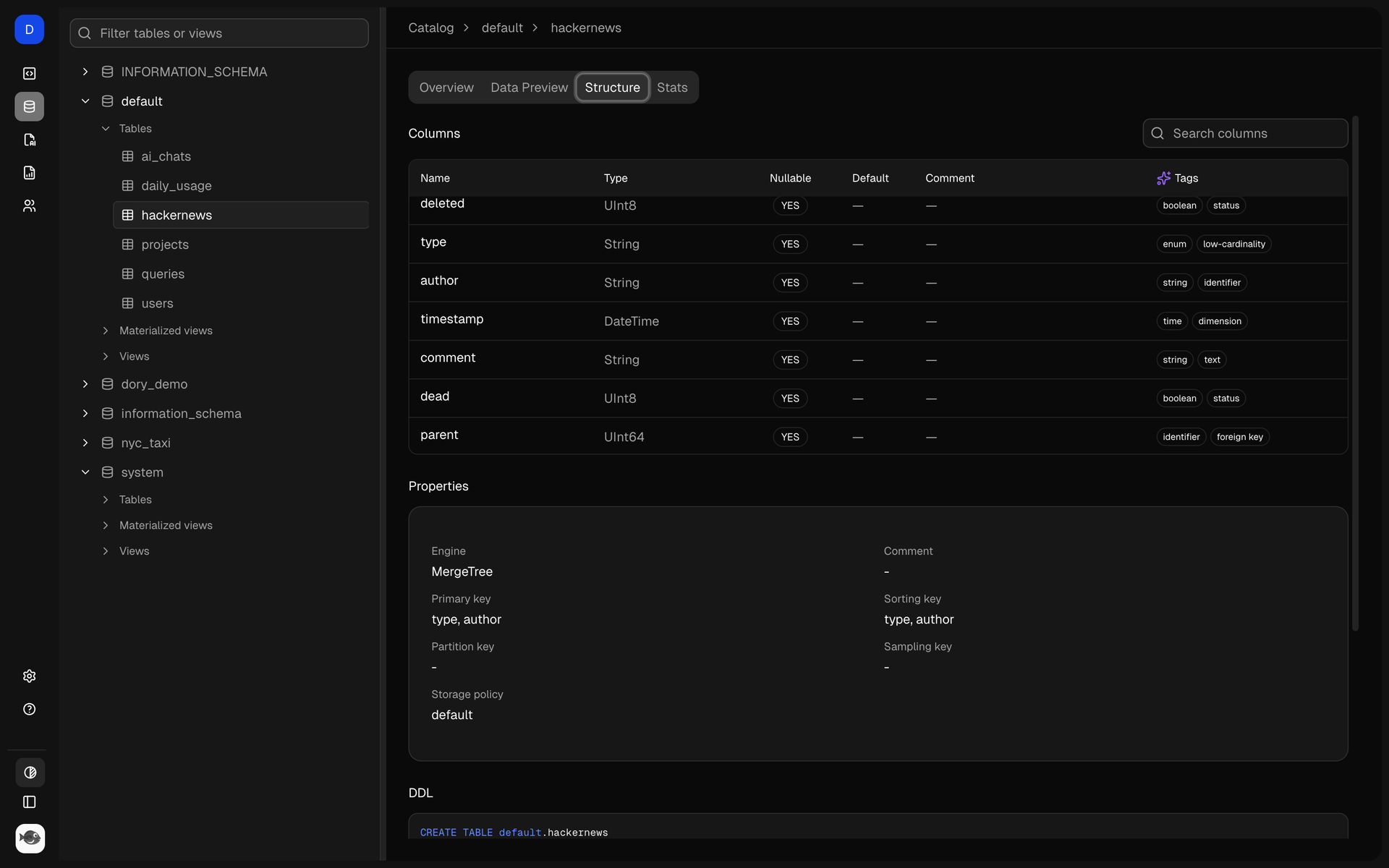
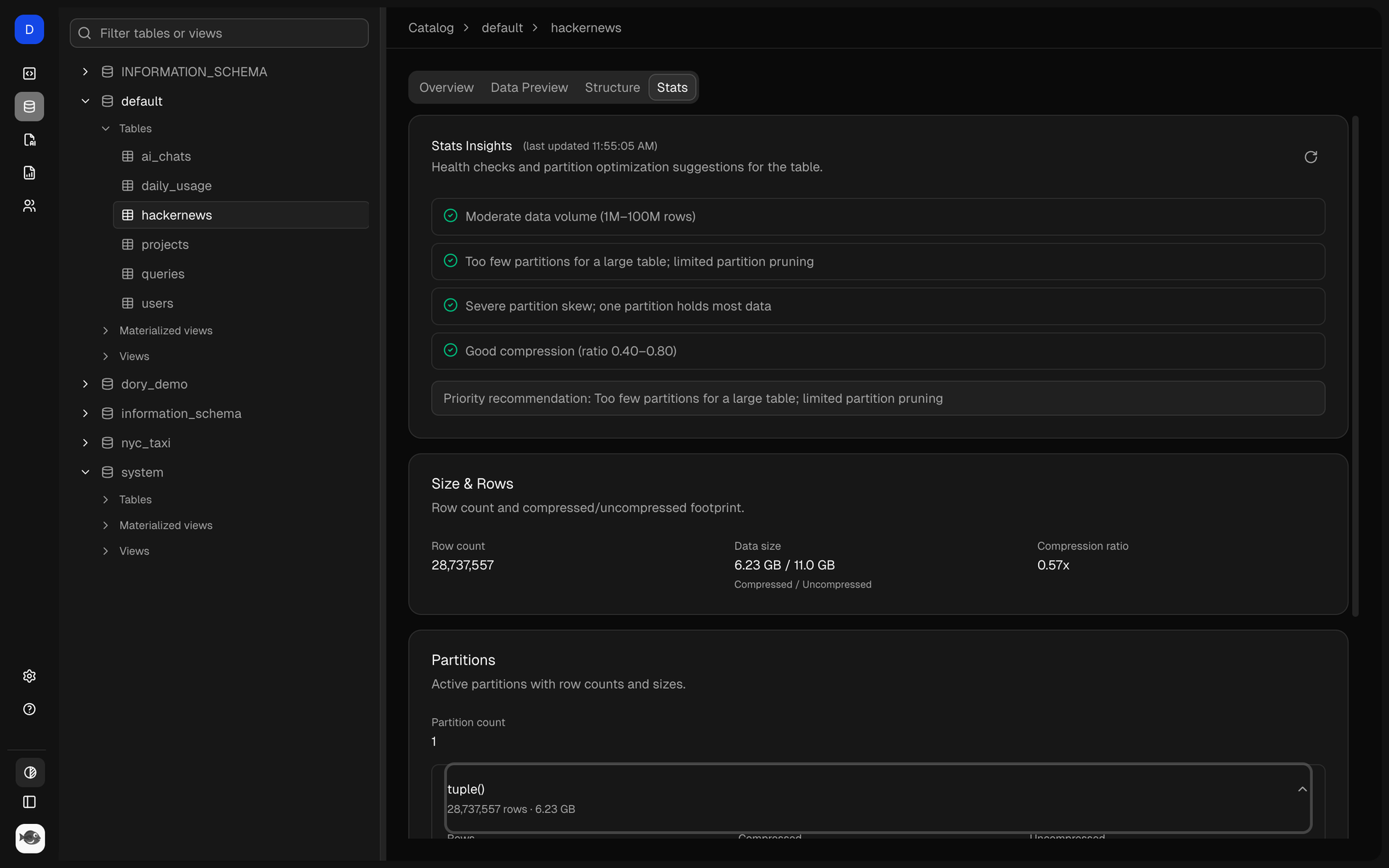
Dory is a SQL workspace where you and your AI agents work on the same queries, results, and charts. Write SQL in a multi-tab editor with schema-aware autocomplete, then let the built-in copilot generate queries from plain English, fix errors, rewrite messy statements, trim full scans, or turn a query into an aggregation. Results land in a grid you can sort, filter, and search, flip into charts, or save as reusable queries. The schema explorer draws a searchable map of tables, primary keys, and foreign keys that you can auto-arrange and export as PNG or SVG, while AI table overviews describe what each column means. Connect PostgreSQL, MySQL, MariaDB, SQL Server, Oracle, SQLite, DuckDB, Snowflake, Supabase, Neon, Cloudflare D1, and ClickHouse, with SSH tunneling for private networks. ClickHouse teams also get a monitoring console for latency, throughput, slow queries, and errors, plus user and role management with cluster-wide privileges. Claude Code, Codex CLI, and other MCP-compatible agents can list connections, explore schemas, and run read-only SQL, and the tabs they open stay editable for you to review, correct, and continue. A team can share one browser address with organizations, invited members, GitHub or Google sign-in, and access tokens for agents. Running on a dedicated VPS on RepoCloud with guaranteed CPU, RAM, and SSD, full root SSH access, and a browser serial console. Apache-2.0 licensed.
Benefits
- Agents and humans share one workspace
- Queries an agent runs over MCP open as ordinary SQL tabs with results, filters, and charts, so you can inspect, edit, and rerun them instead of trusting a chat transcript.
- AI answers grounded in your schema
- The copilot receives your real tables, columns, and recent query context, so generated SQL uses fields and joins that exist instead of invented ones, and failing statements can be repaired in place.
- Self-hosted for private databases
- Run it on your own server, reach databases inside private networks through SSH tunnels, and keep AI provider keys and saved connections in storage you control instead of a vendor cloud.
- Operate ClickHouse without hand-written grants
- A monitoring console charts query latency, throughput, slow queries, and errors, while the privileges screen creates users and roles, including On Cluster operations, without typing GRANT statements.
Features
- AI SQL Copilot
- Ask, Action, and Context modes generate SQL from plain English, fix errors, rewrite statements, and optimize scans using OpenAI, Anthropic, Google, Qwen, xAI, or any OpenAI-compatible provider.
- MCP Agent Gateway
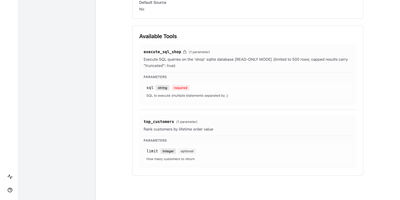
- The @getdory/cli package serves MCP over stdio or HTTP with a token, so Claude Code and Codex CLI can list connections, explore schemas, and run read-only SQL.
- Interactive Schema Explorer
- A searchable graph of tables, primary keys, and foreign-key relationships with a keys-only filter, auto-arrange, fit-to-view, and PNG or SVG export.
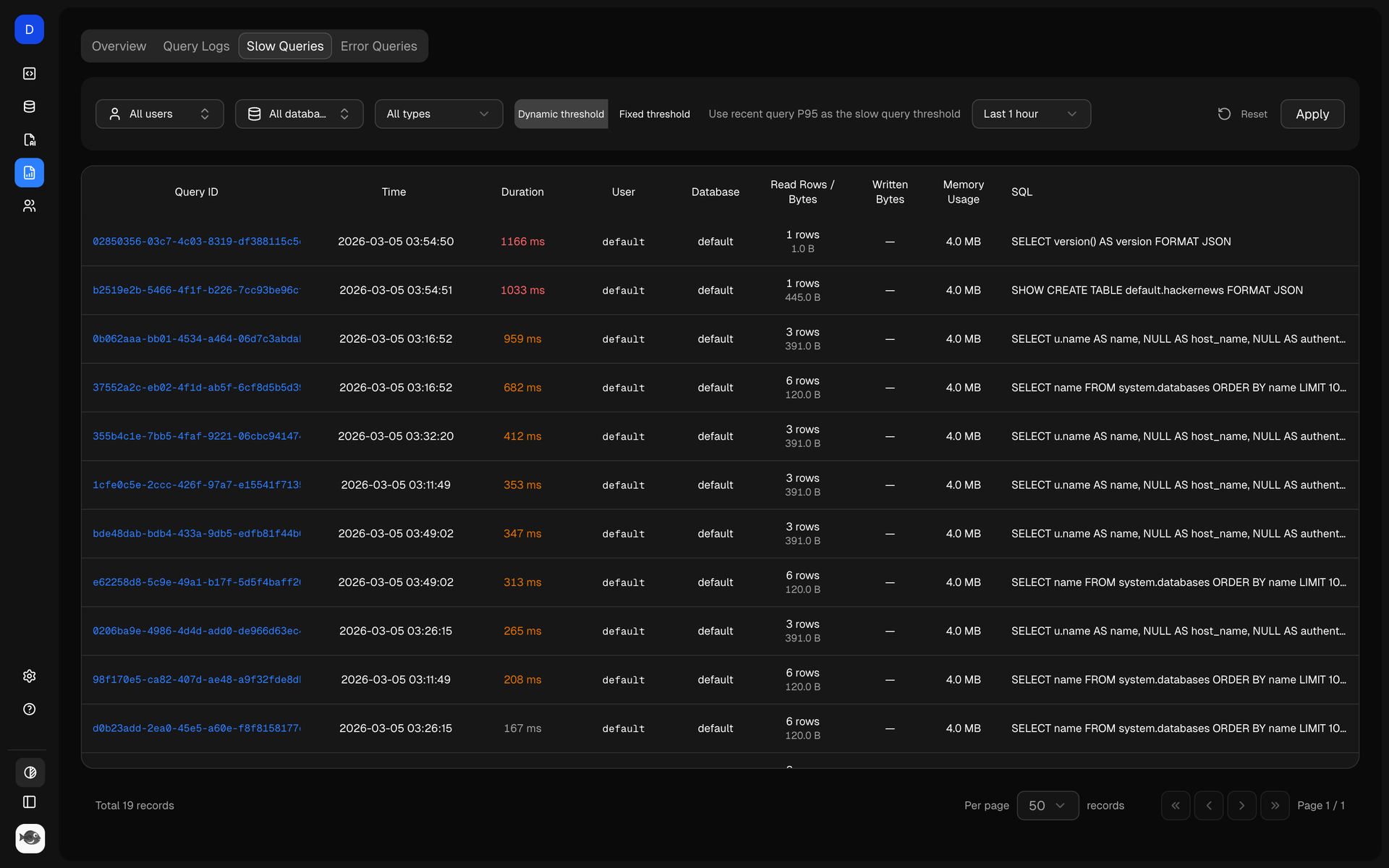
- ClickHouse Monitoring Console
- Overview, query log, slow query, and error tabs show P50 and P95 latency, queries per minute, and active users, filterable by user, database, query type, and time range.
- Multi-Database SQL Workbench
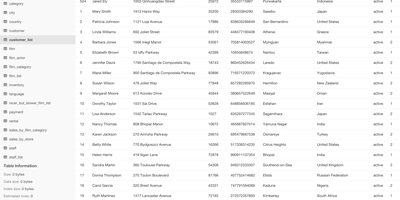
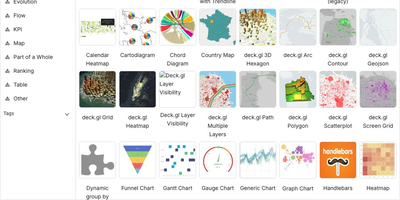
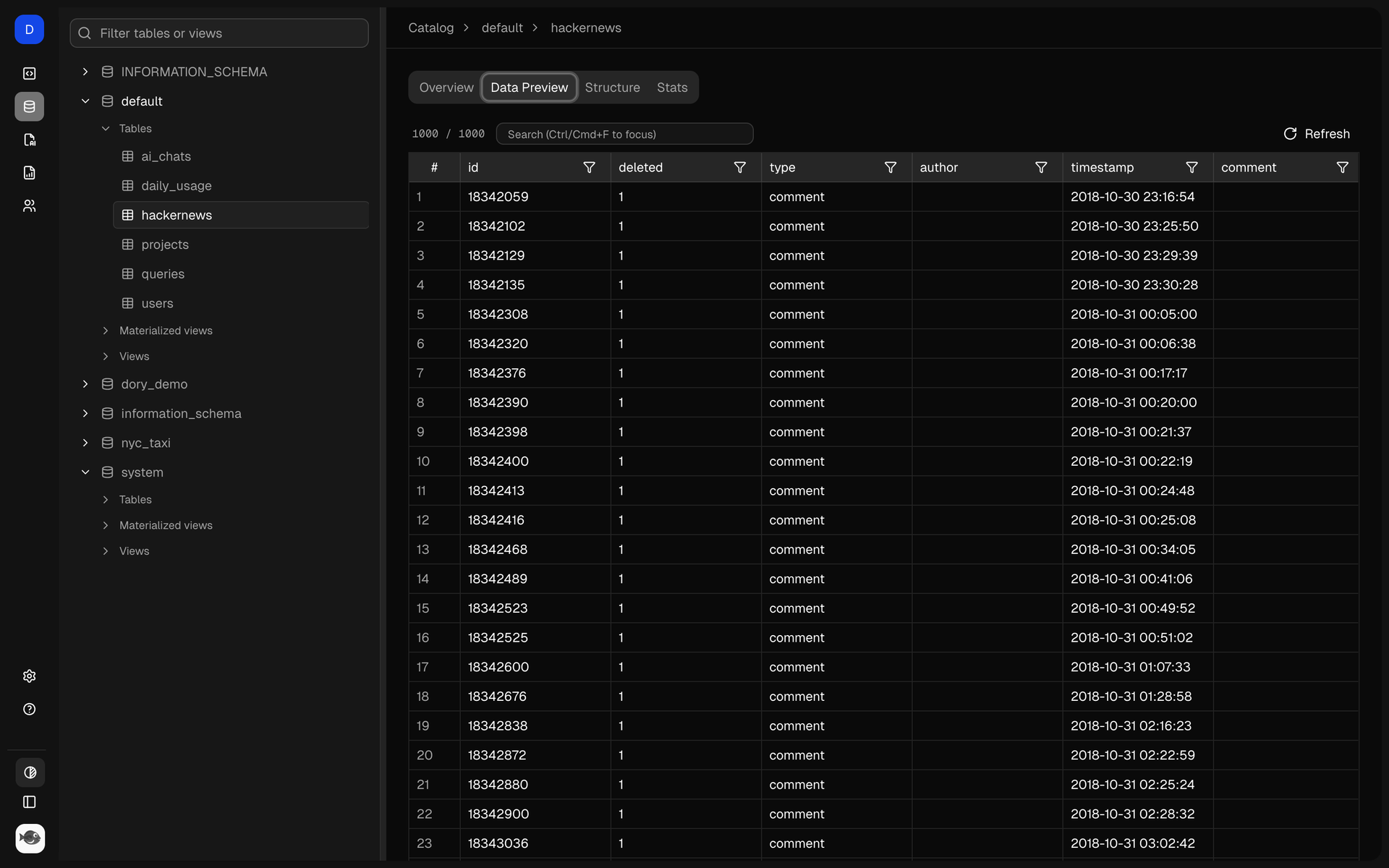
- Multi-tab editor with schema-aware autocomplete, sortable result grids, charts, and saved queries across PostgreSQL, MySQL, SQL Server, Oracle, SQLite, DuckDB, Snowflake, and ClickHouse connections.
- Docker Self-Hosting
- One dorylab/dory container listens on port 3000 and stores application data in PGlite or external Postgres, with initial admin sign-in and organization members.