Categories
Self-Hosted AI Gateway API Management Model Routing LLM Observability LLM Proxy MCP Servers GuardrailsStars
Forks
Watchers
Developer links
Kaeso
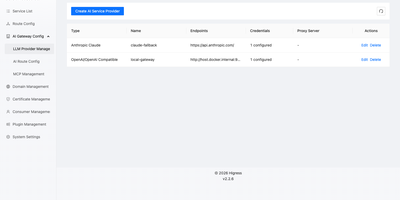
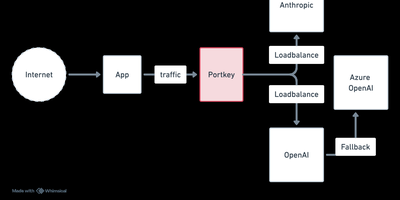
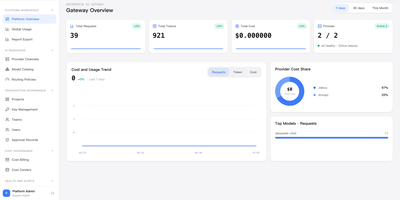
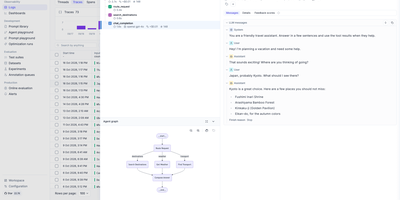
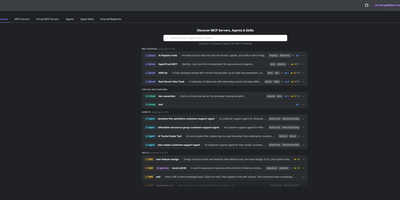
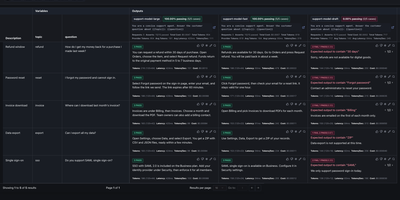
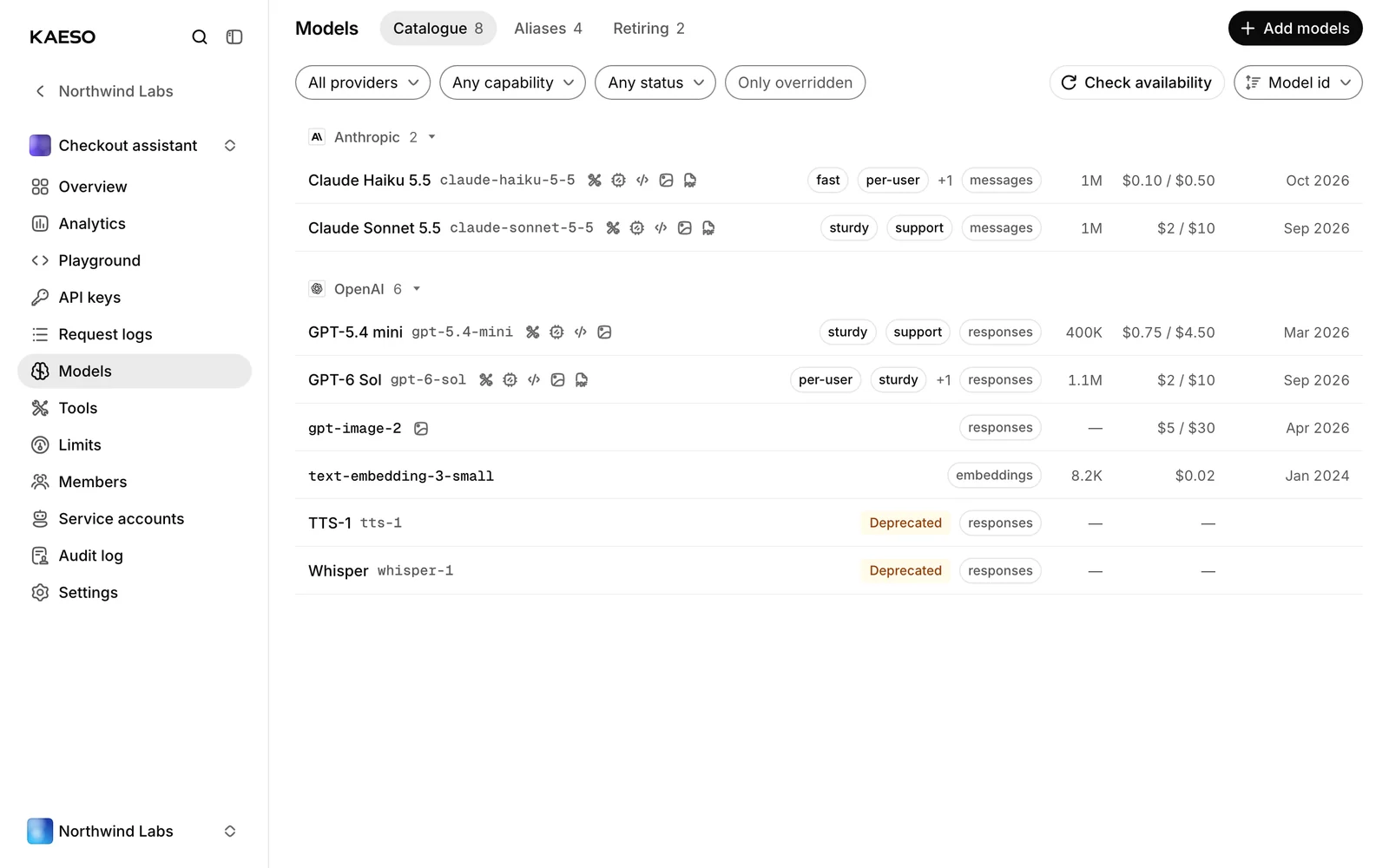
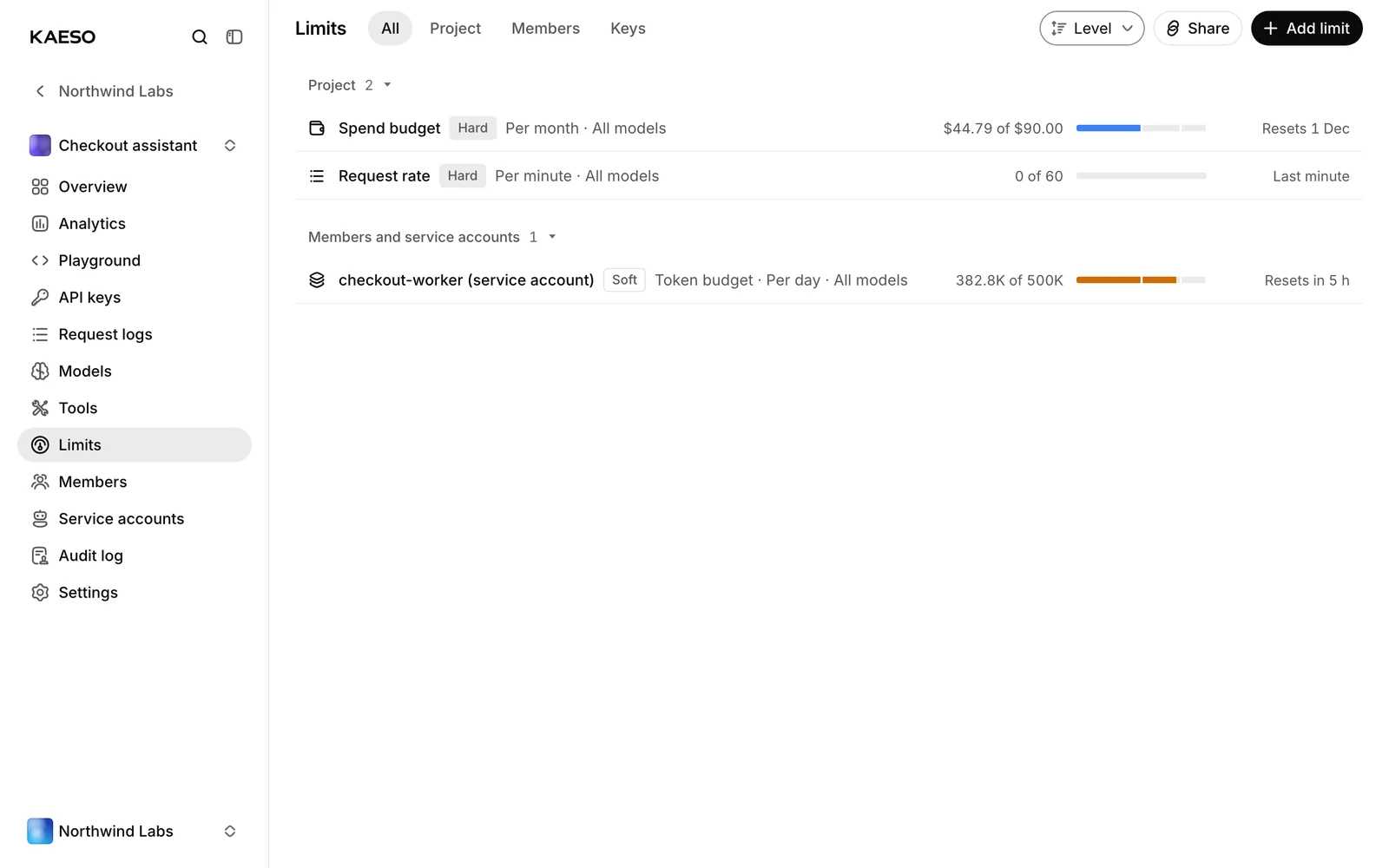
Point every app, SDK, and coding tool at one endpoint, and Kaeso routes each request to the provider or self-hosted model that should answer it, with budgets, logs, and access control built in. Apps keep speaking the OpenAI, Anthropic, Gemini, or ElevenLabs format, and Kaeso translates each request, reply, and stream for whichever provider sits behind the model name. Beyond chat it serves embeddings, reranking, decision models that answer typed questions with probabilities, images, video, speech, transcription, music, and batches. Alias routes add conditions, weighted splits, fallbacks, and retries, key pools spread a project over several keys of one provider, and retiring models send Deprecation and Sunset headers, show who still calls them, and offer a one-click move to the replacement. Hard or soft budgets and rate limits per project, member, service account, or key are checked before the provider is called, and guardrails mask or block secrets, email addresses, IBANs, and card numbers before the model sees them. Teams get single sign-on over OpenID Connect, SCIM 2.0, roles, and request logs that keep content only where the organization, project, or request allows. A playground compares models side by side, and a per-project MCP portal lets claude.ai, ChatGPT, or Cursor call your MCP servers. Claude Code and Codex can use Kaeso as their model provider, so every session is logged and budgeted. Running on a dedicated VPS on RepoCloud with guaranteed CPU, RAM, and SSD, full root SSH access, and a browser serial console. MIT licensed.
Benefits
- One endpoint for every model
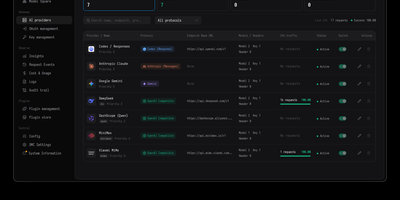
- Apps keep their OpenAI, Anthropic, Gemini, or ElevenLabs SDK and change only the base URL, while Kaeso translates requests, replies, and streams for about 50 built-in providers or your own servers.
- Spend capped before the call
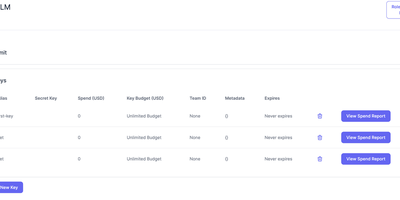
- Hard or soft budgets and rate limits per project, member, service account, or key are checked before the provider is called, with alerts by email or signed webhook.
- Routes that survive provider failures
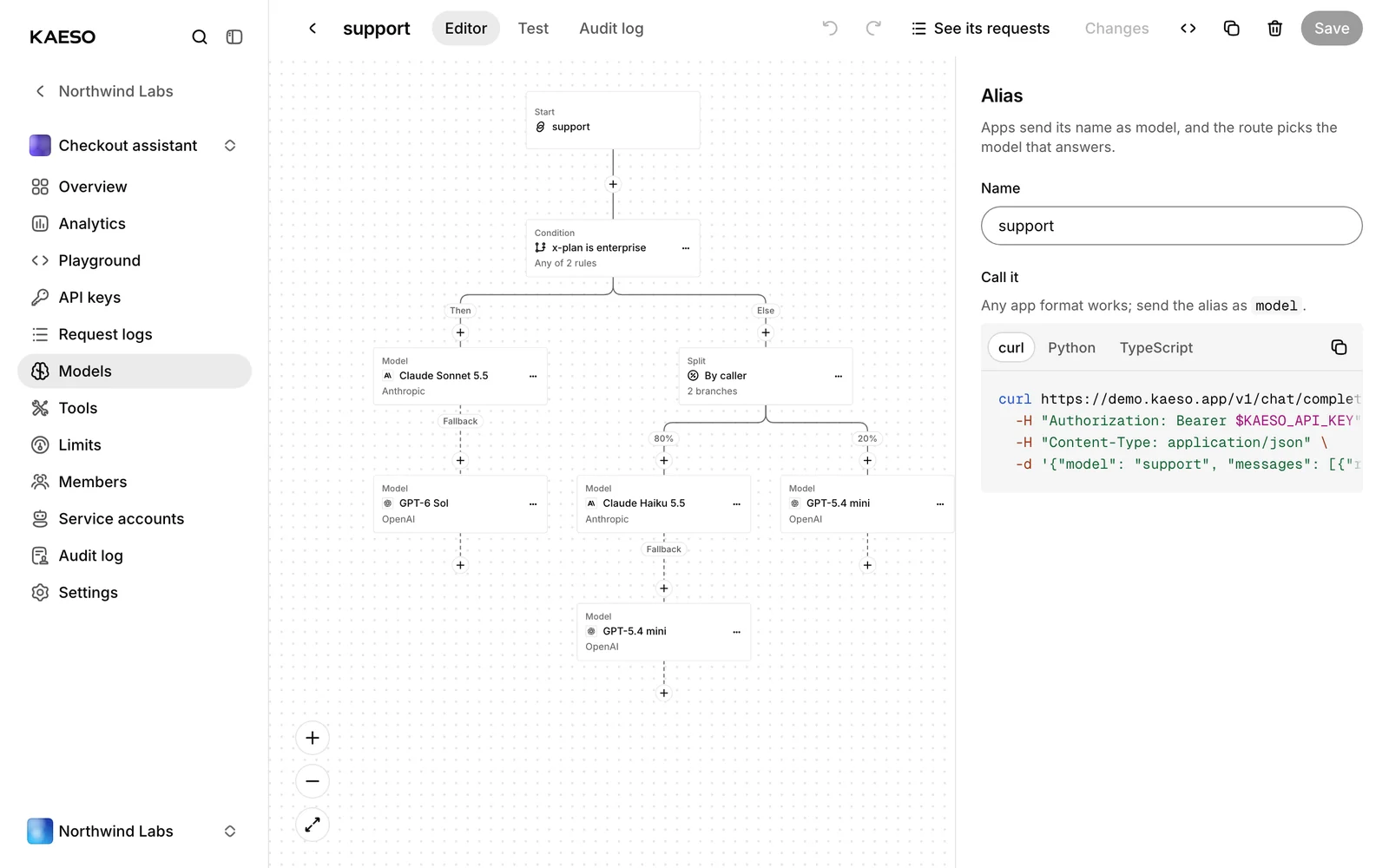
- Alias routes combine conditions, weighted splits, fallbacks, and retries after dropped connections or 5xx answers, so switching or backing up a model never needs a code change in the calling app.
- Sensitive data masked before models
- Built-in guardrails find keys, tokens, email addresses, IBANs, and card numbers and mask or block them, and your own HTTP service can allow, block, or rewrite any request first.
Features
- Format translation layer
- Accepts OpenAI Chat Completions and Responses, Anthropic Messages, Google Gen AI, and ElevenLabs requests, encodes them for each provider, and translates replies and streams back, with reranking in Cohere's format.
- Alias routes and key pools
- A visual route editor with conditions on headers and tokens, weighted splits, and fallbacks, plus key pools that draw weighted keys of one provider and skip refused or rate-limited ones.
- Decision models and reranking
- Typed questions answered with probabilities and confidence scores, plus embeddings, reranking, images, video, speech, transcription, and music, all through the same keys, limits, and logs.
- Request logs and analytics
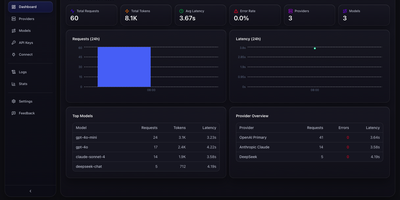
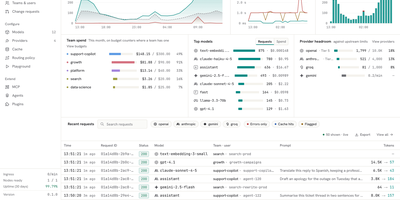
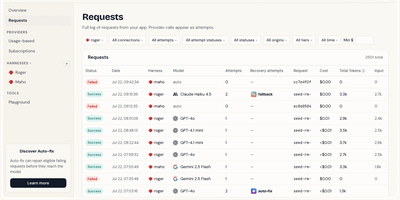
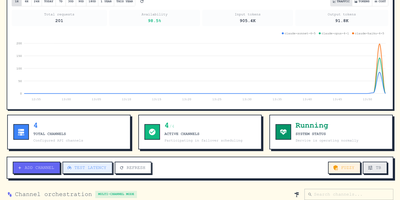
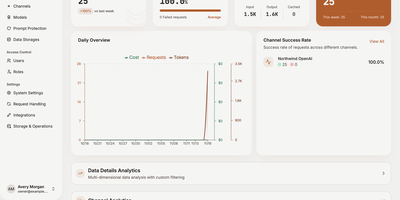
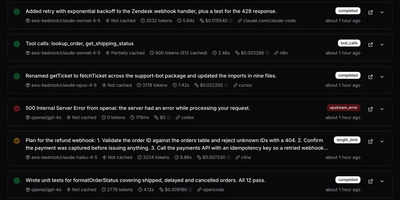
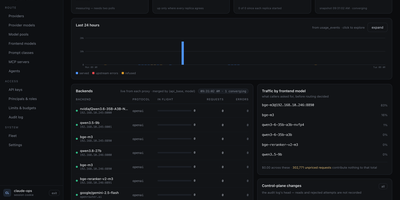
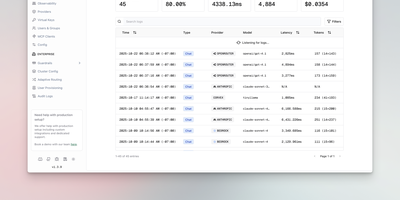
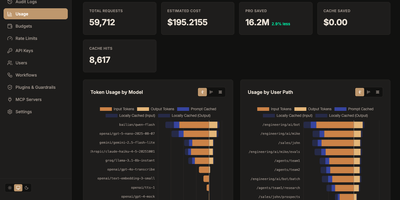
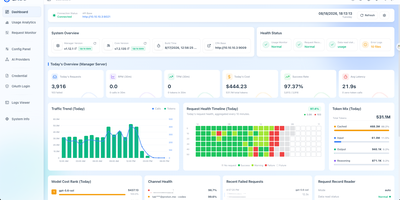
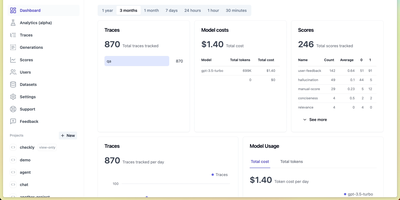
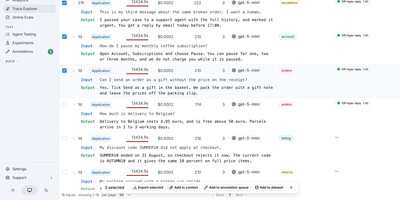
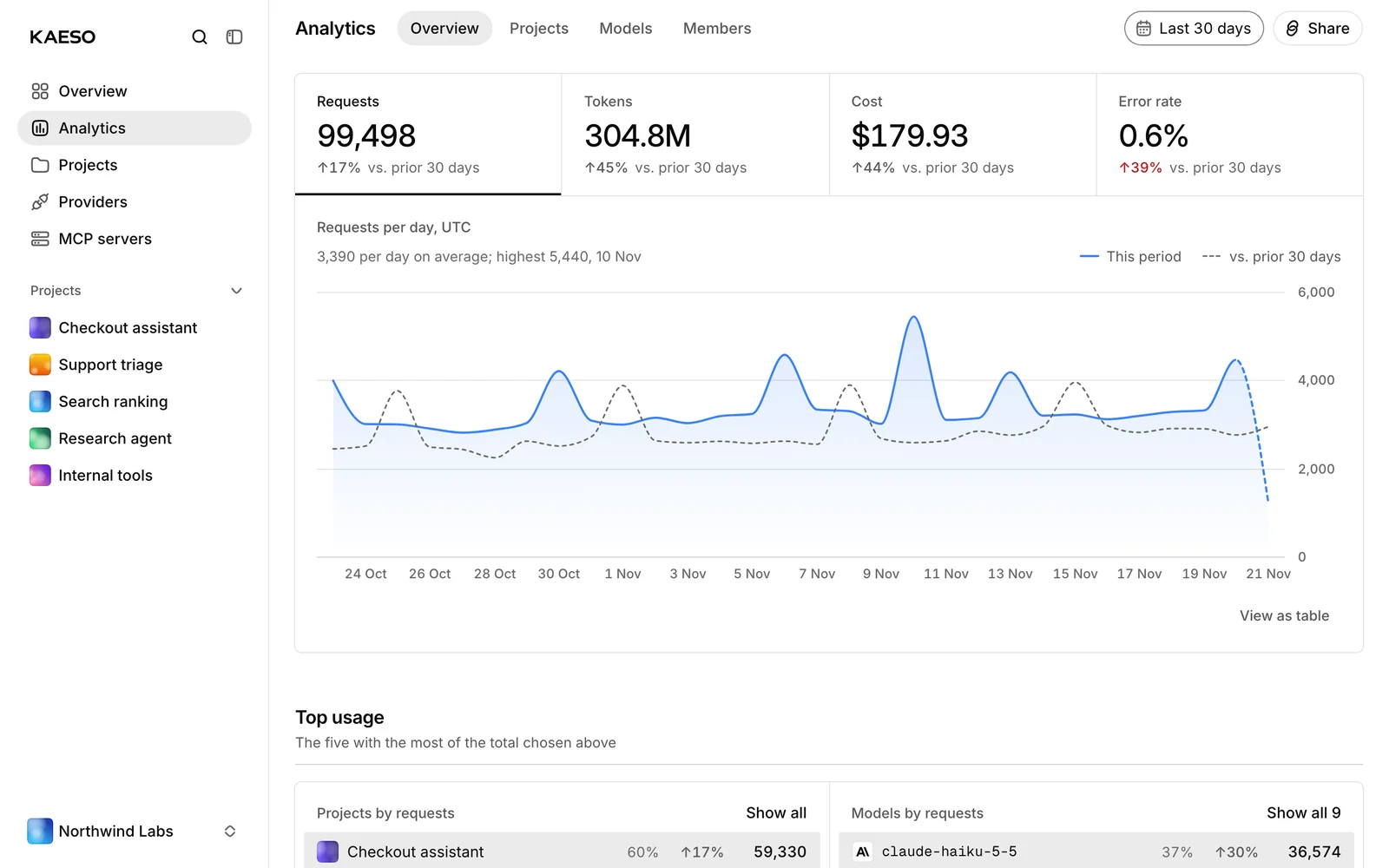
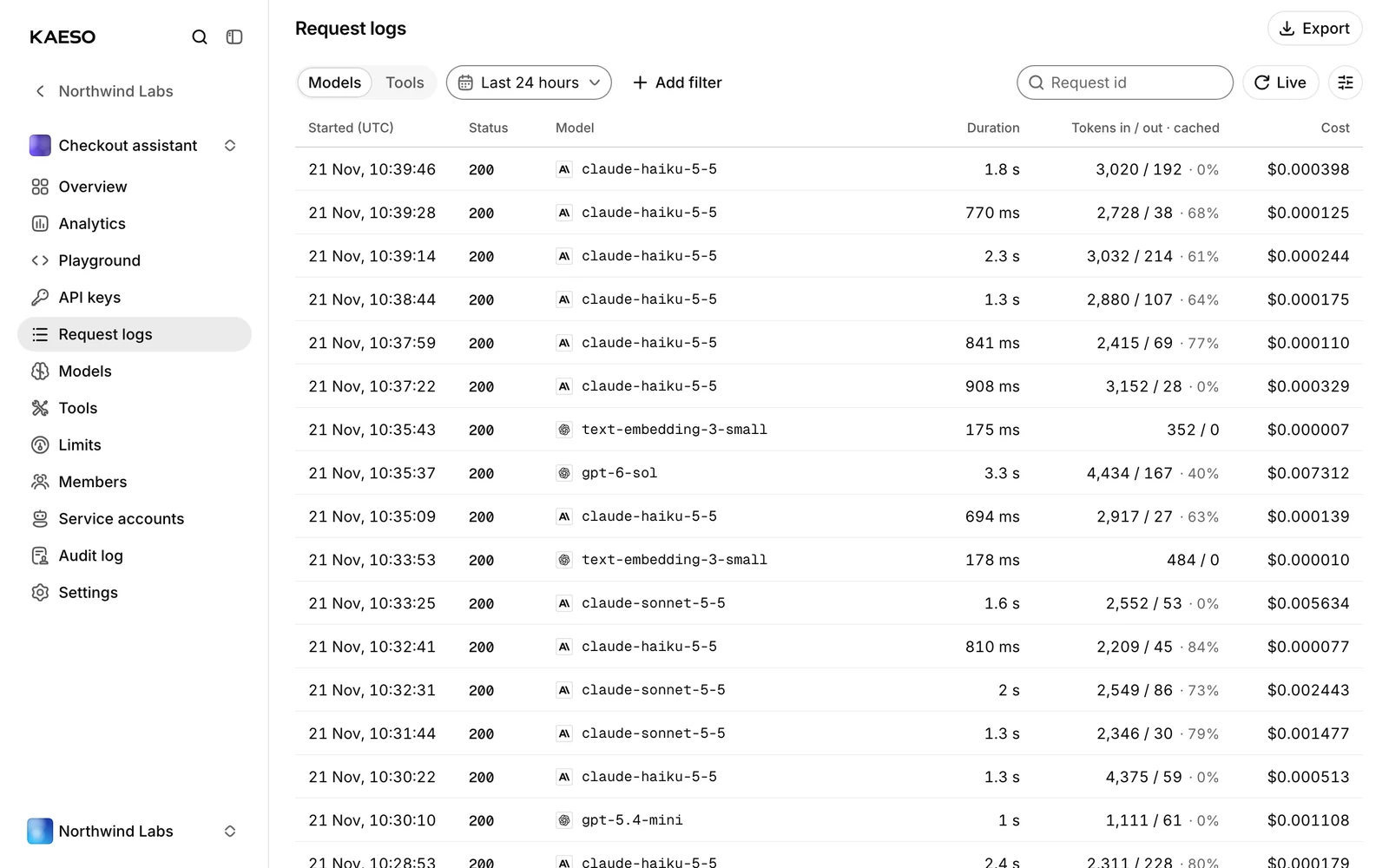
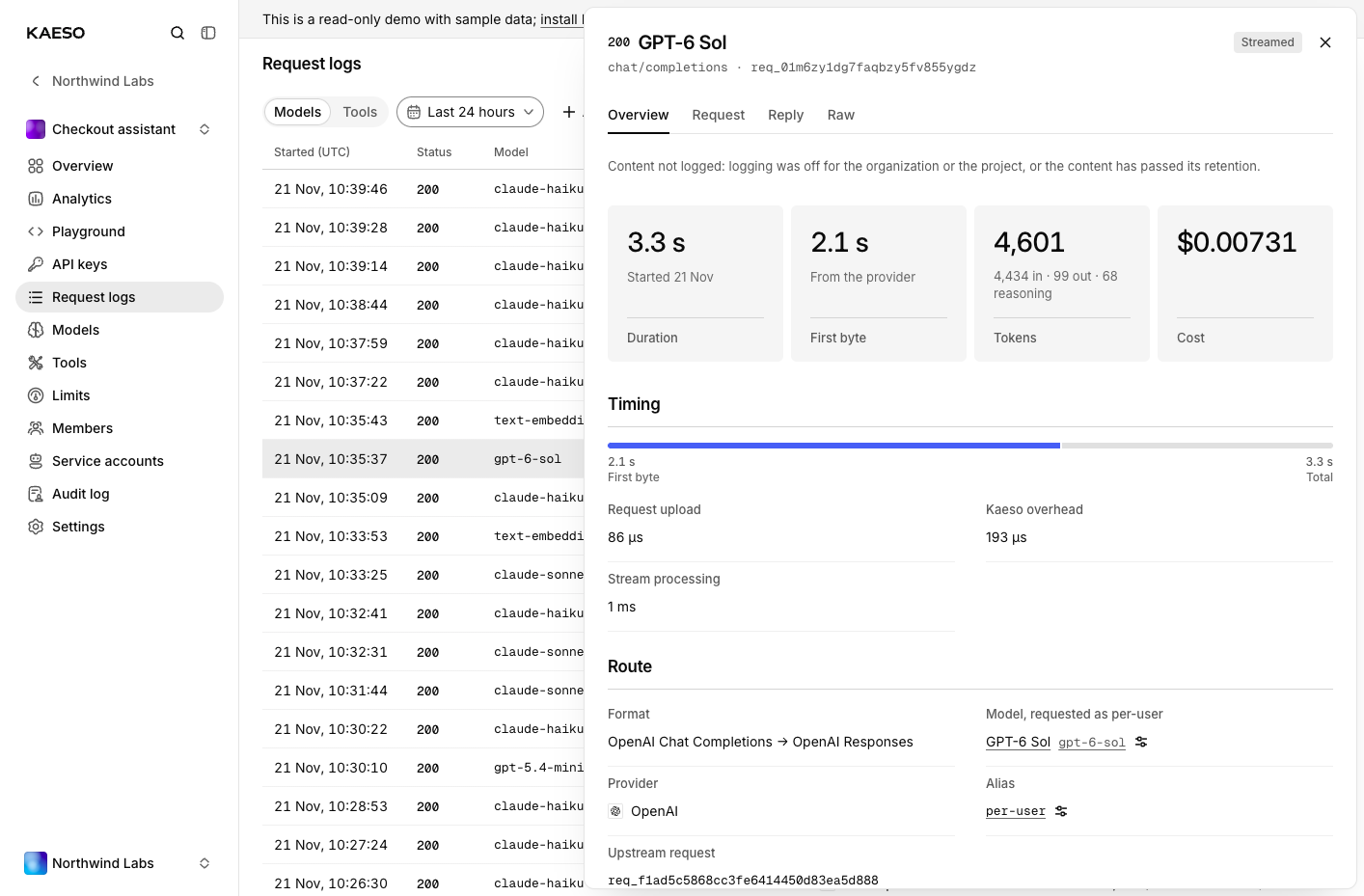
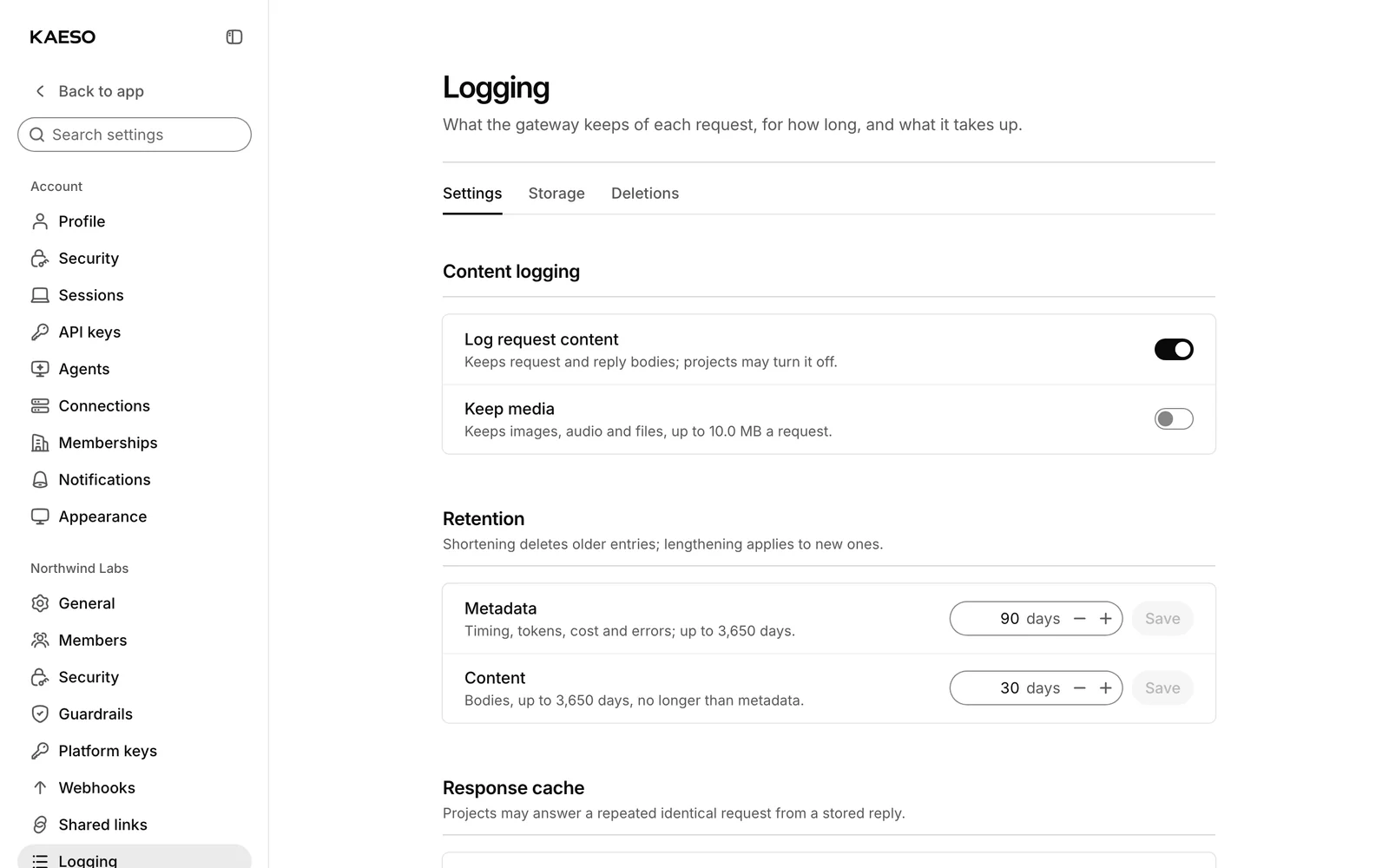
- Per-request logs record model, status, tokens, cached share, cost, and timing; analytics break usage down by project, model, key, and member; OpenTelemetry traces and Prometheus metrics feed your own tools.
- SSO, SCIM, and roles
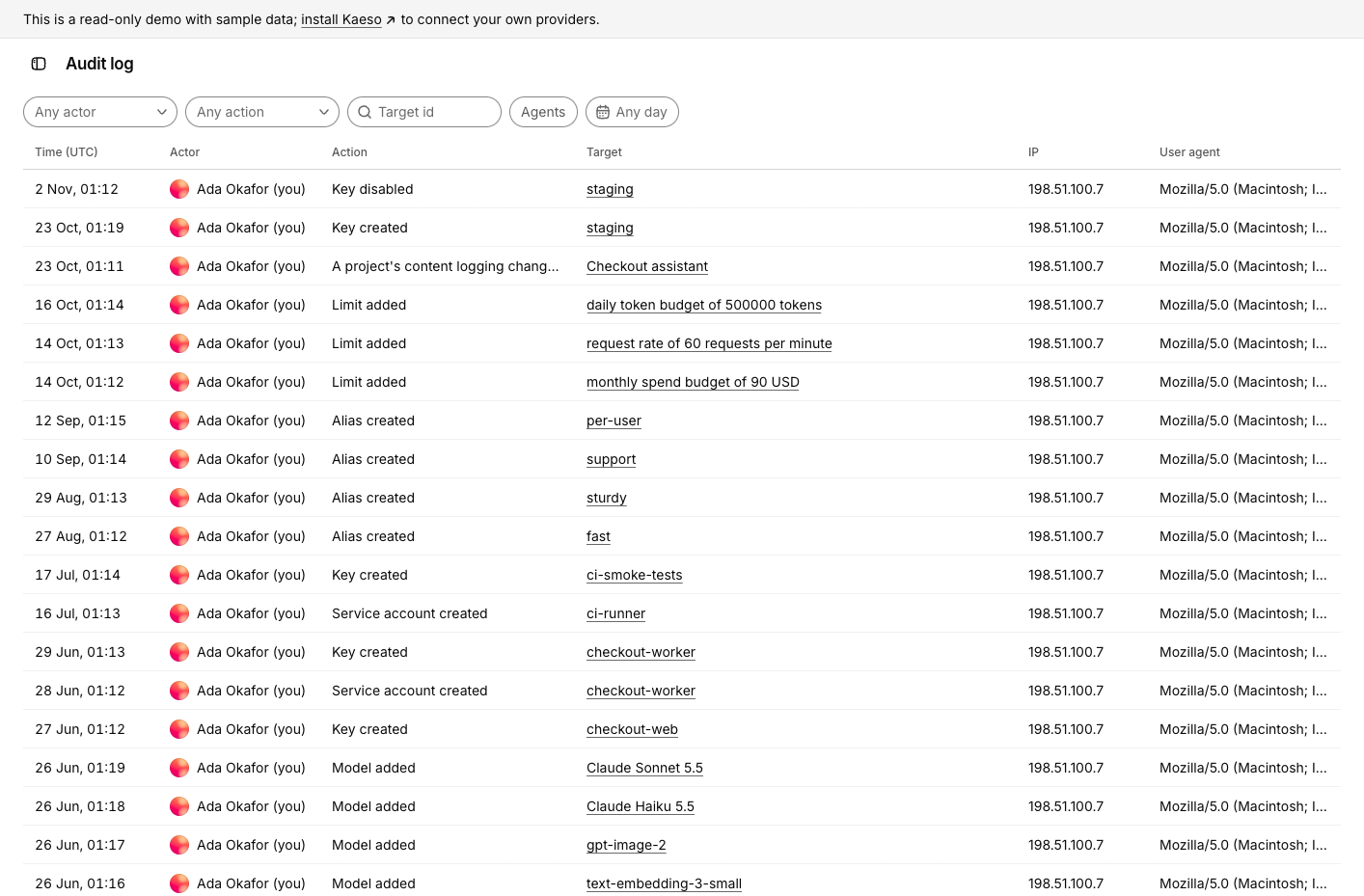
- Single sign-on over OpenID Connect, SCIM 2.0 provisioning, identity provider groups mapped to roles and projects, service accounts, and an audit log, with no paid edition.
- Compose and Helm install
- One install script sets up Kaeso with PostgreSQL, ClickHouse, and Valkey on Docker Compose 2.24 or newer; a Helm chart and signed build provenance cover Kubernetes.