Categories
Self-Hosted Cybersecurity Threat Intelligence Network Security Honeypot Attack Visualization IP Blocklist Security MonitoringStars
Forks
Watchers
Developer links
Knock-Knock
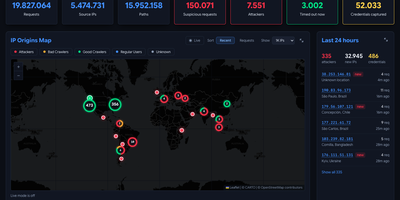
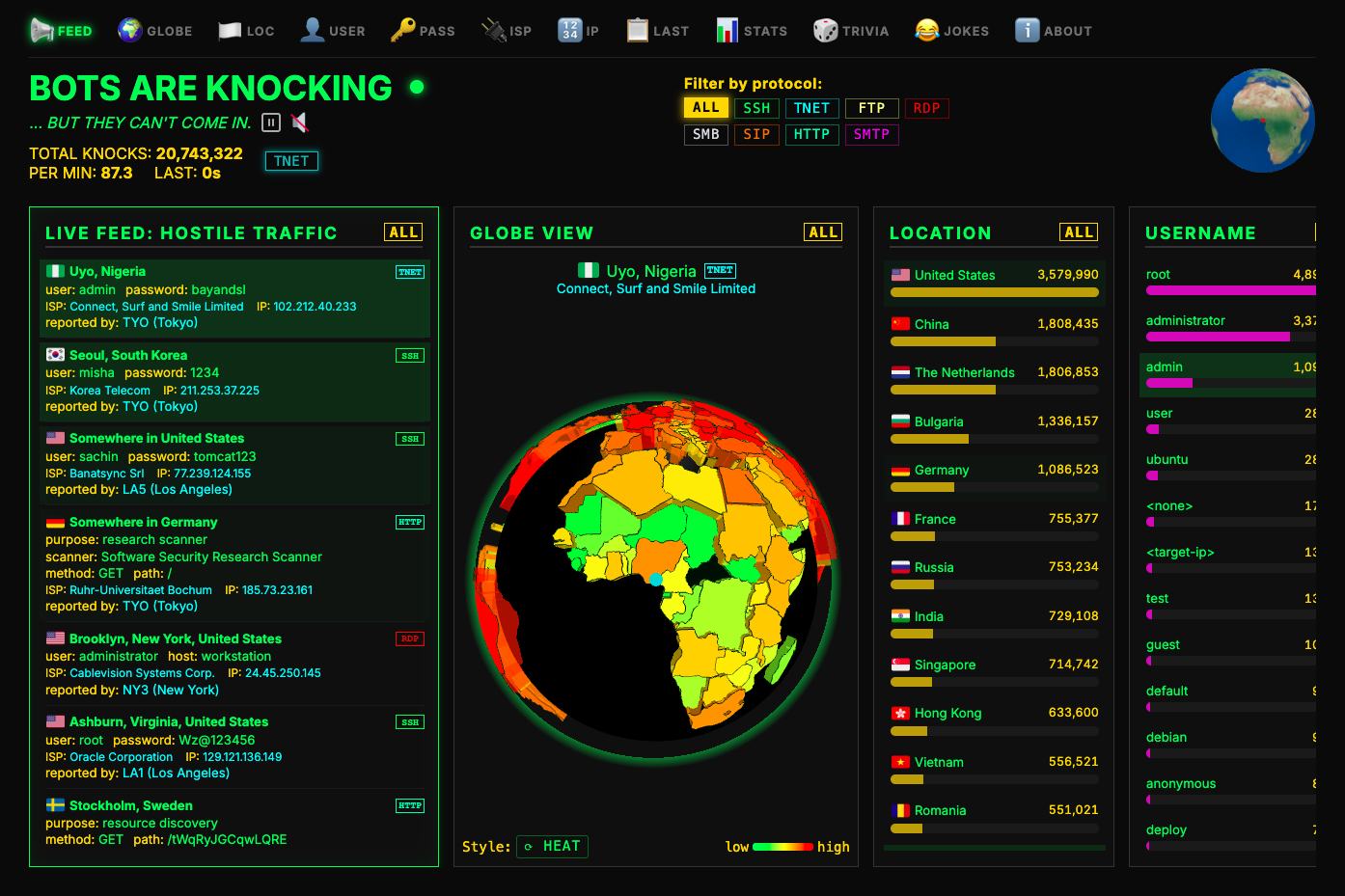
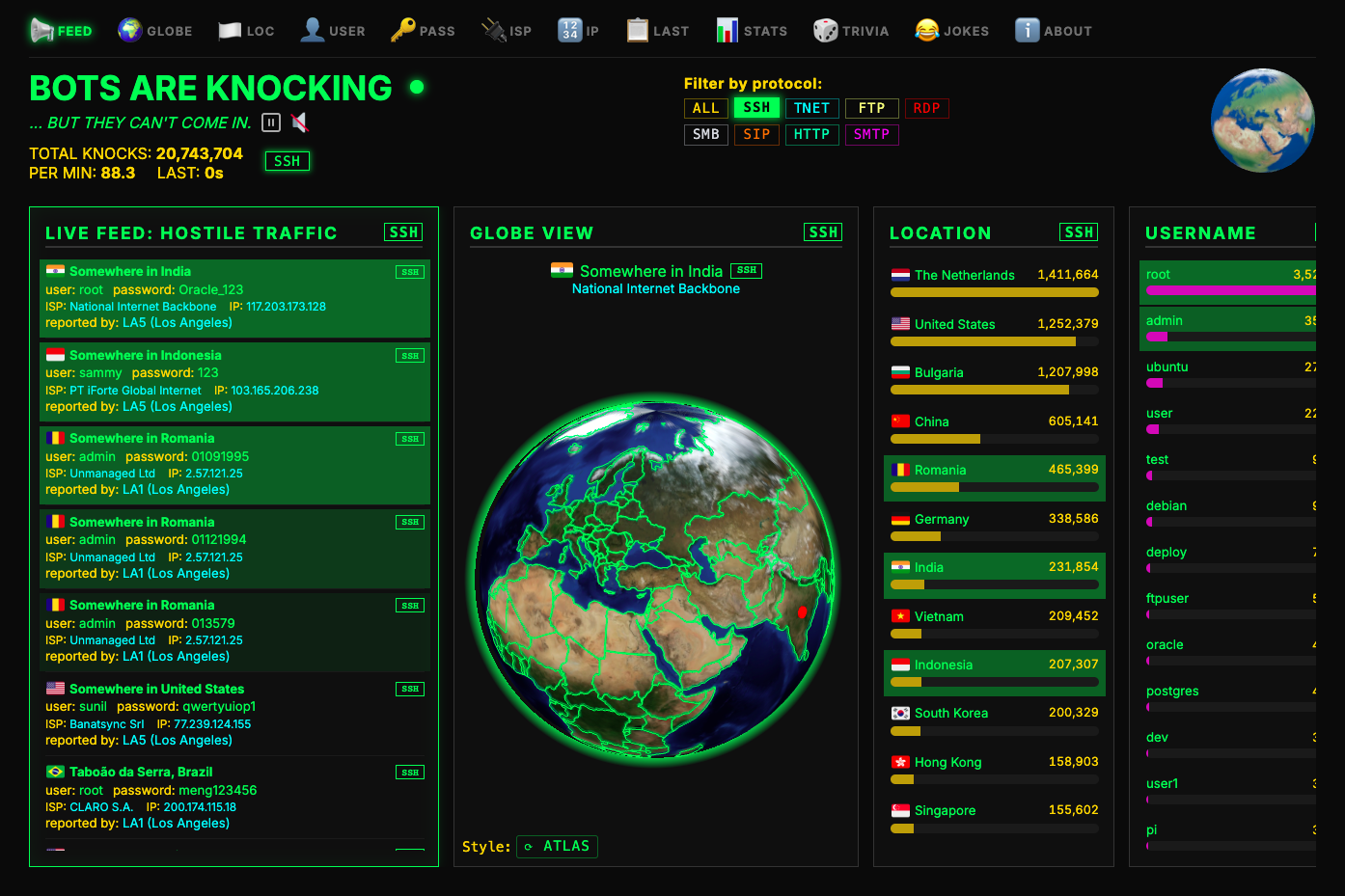
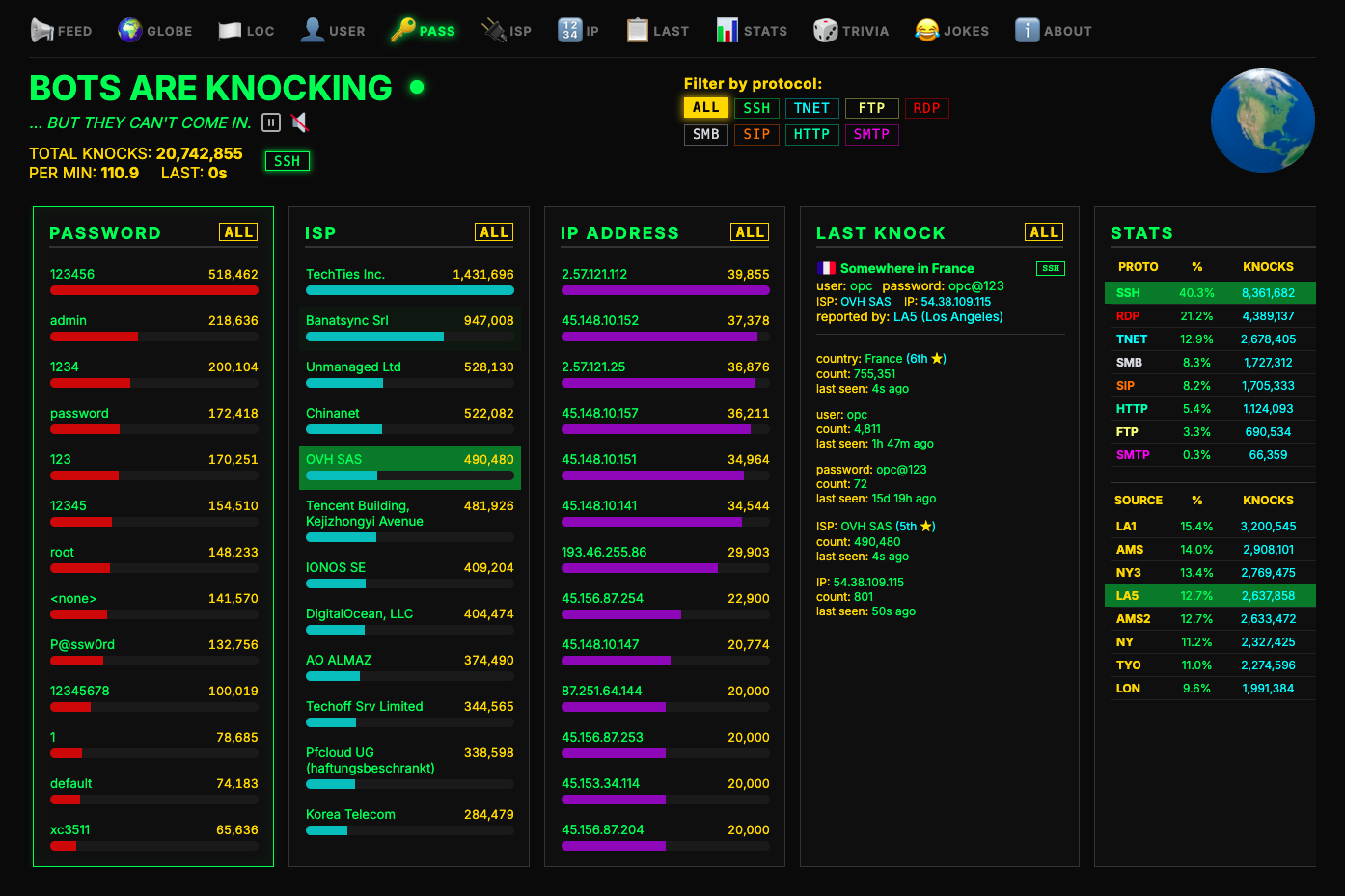
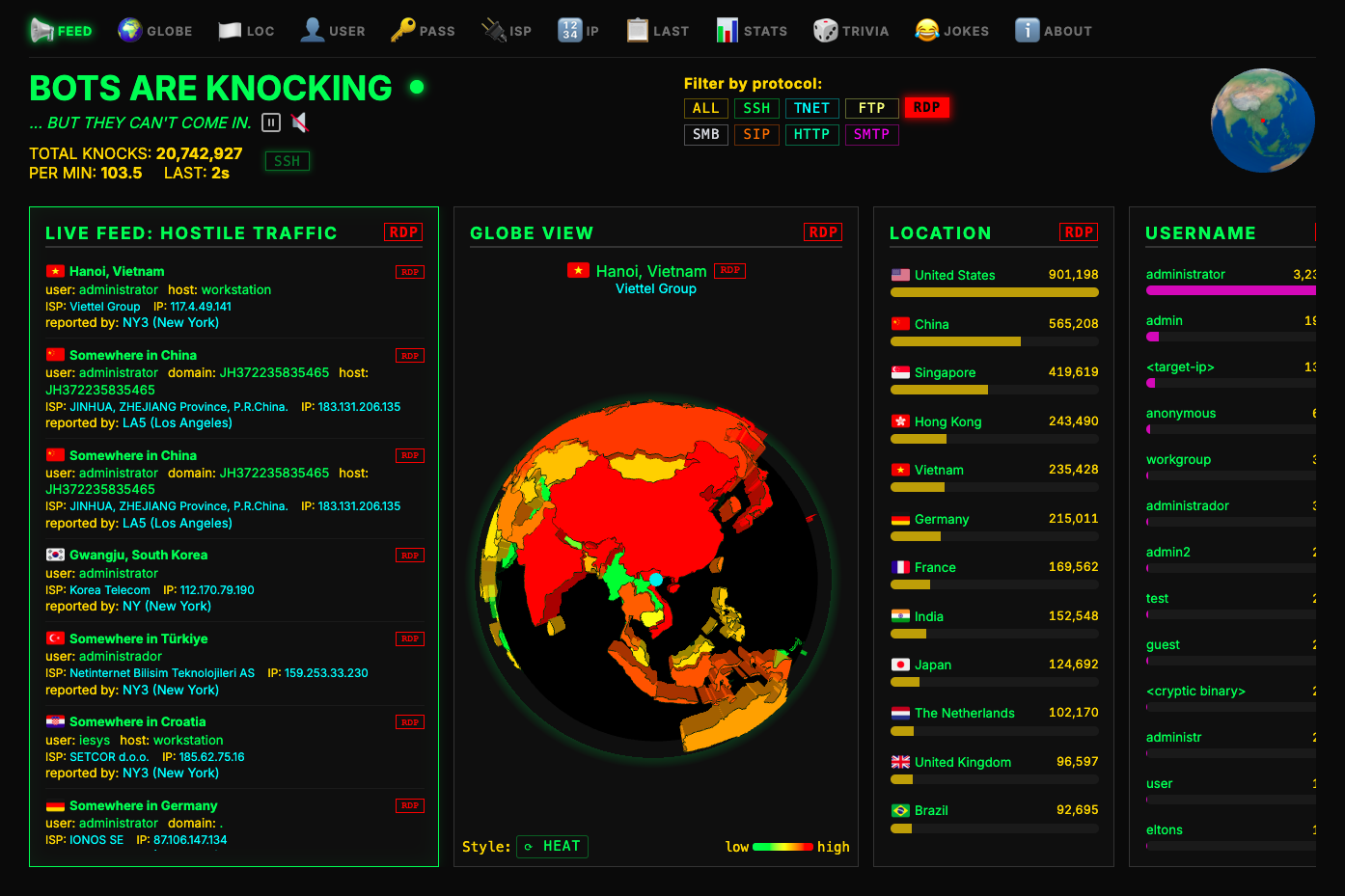
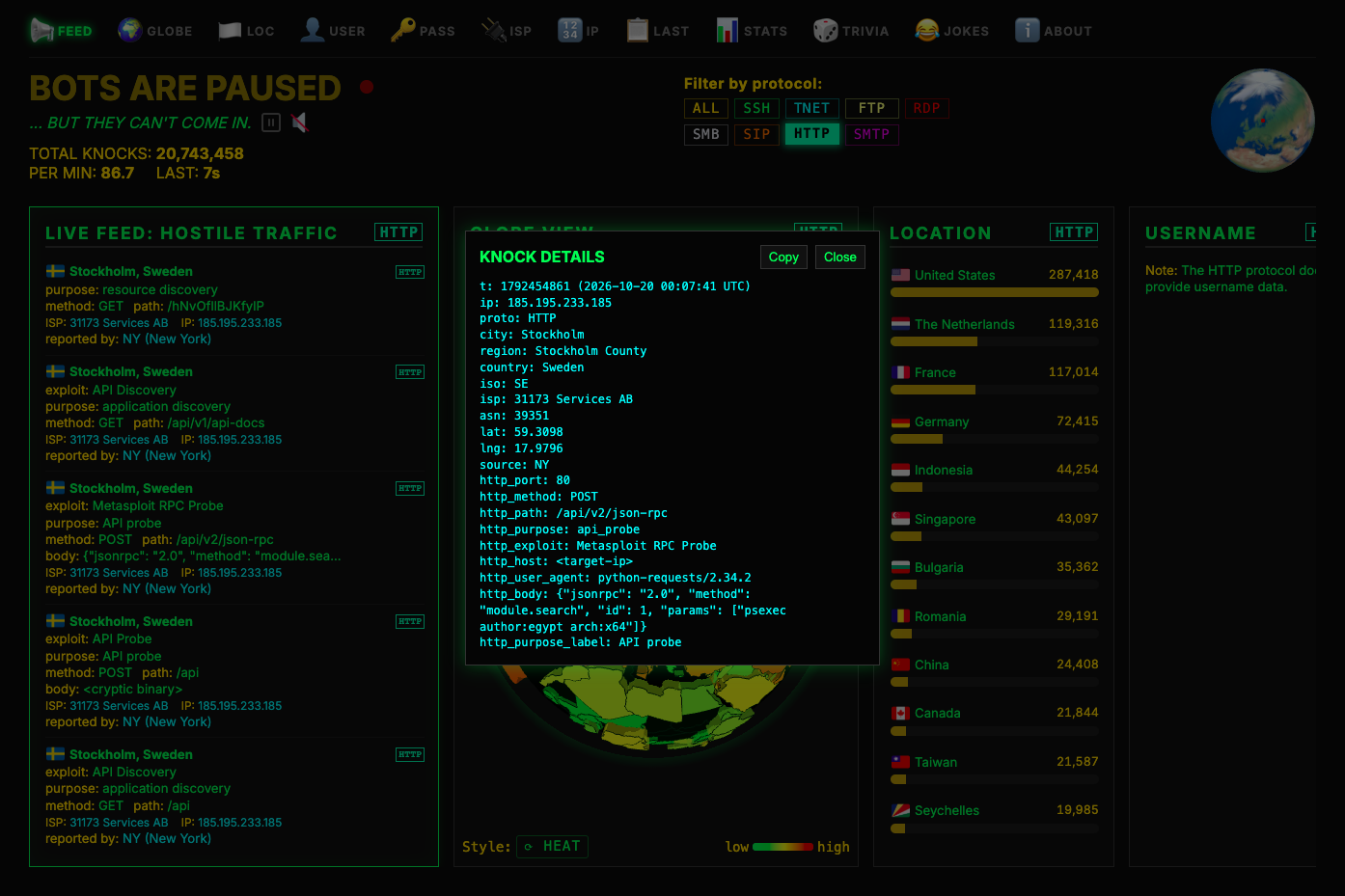
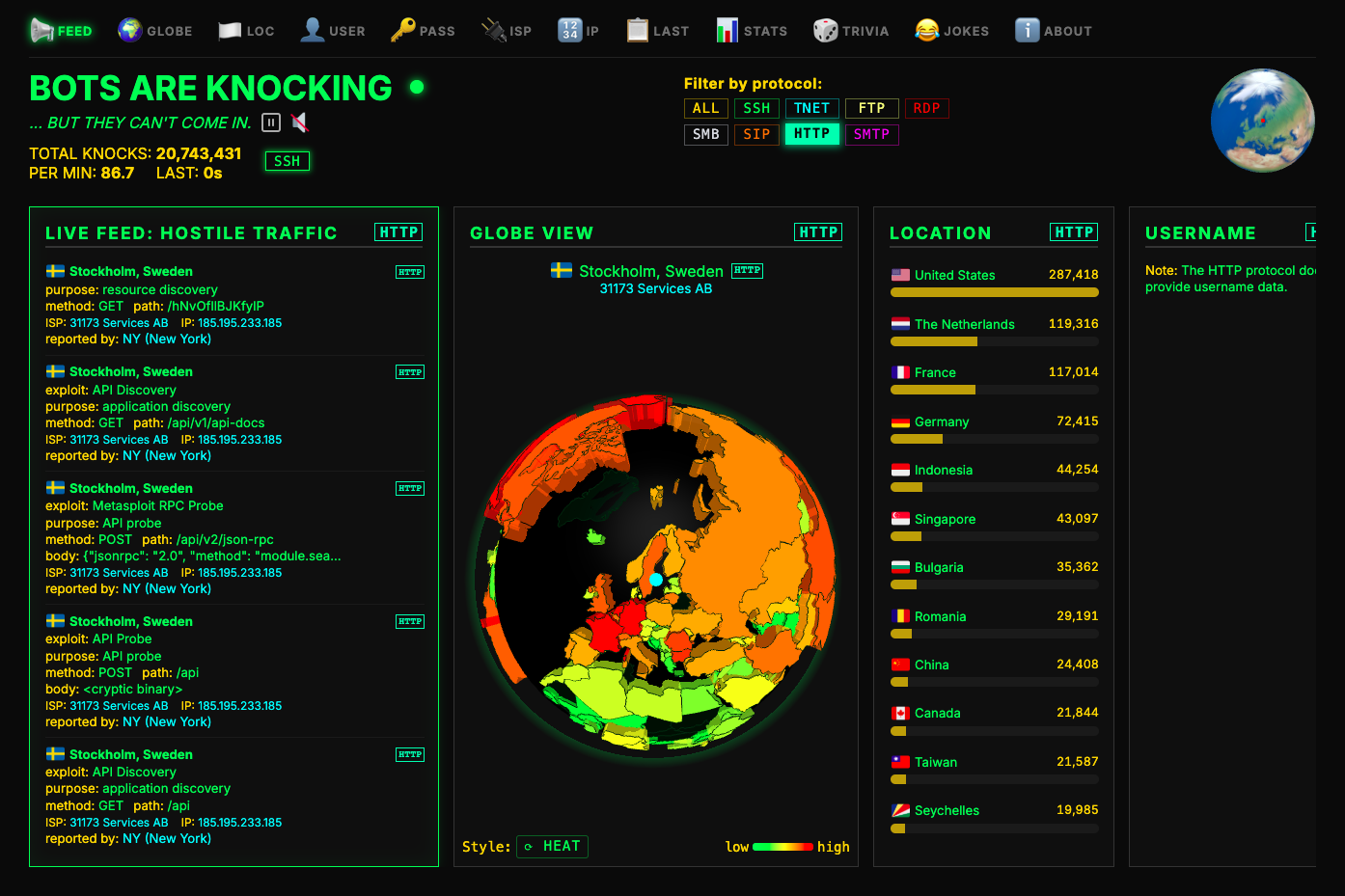
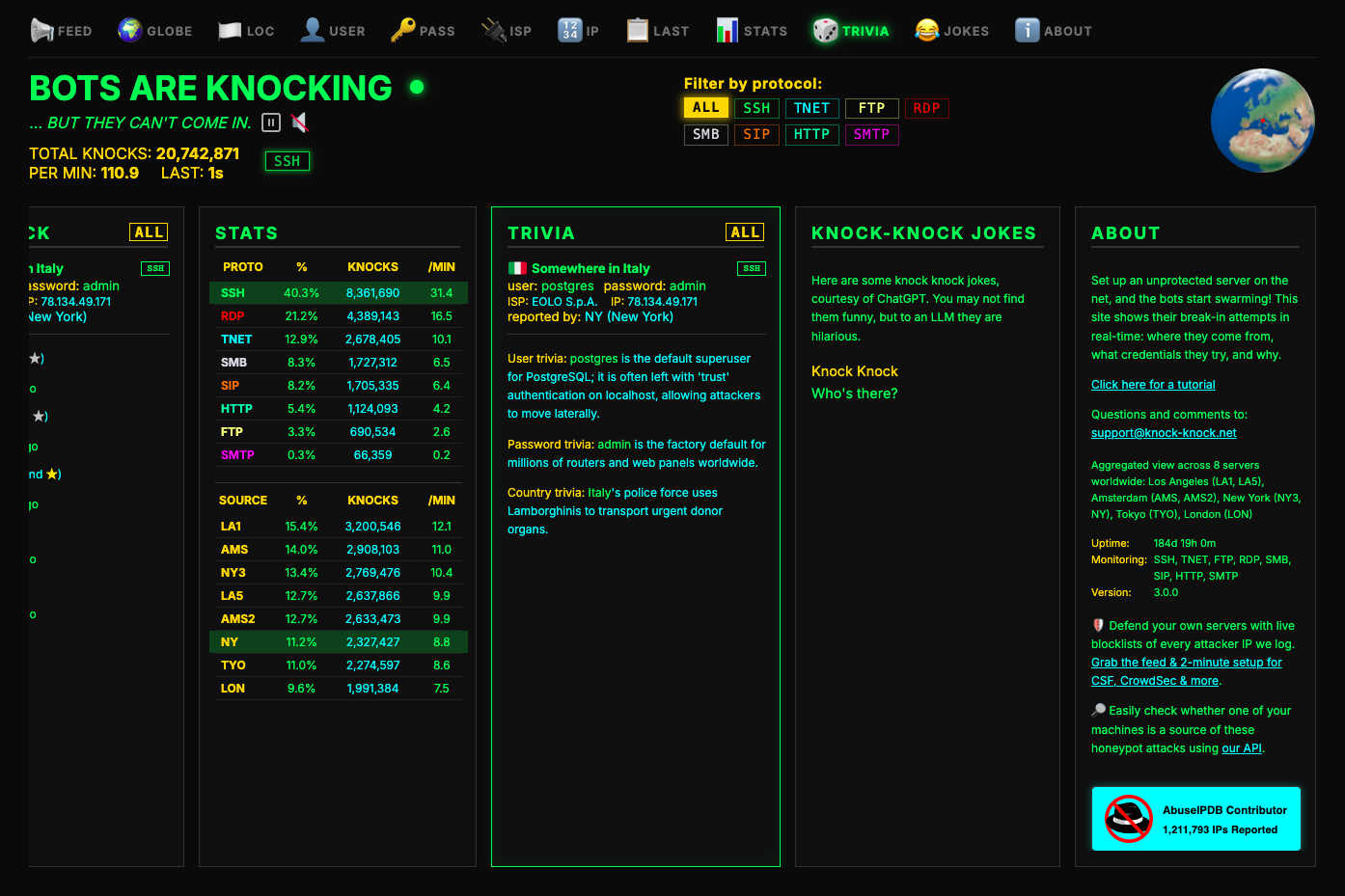
Bots that knock on your server's login ports are always turned away by Knock-Knock, a multi-protocol honeypot that shows every attempt on a live dashboard. Honeypots answer on the standard ports for SSH, Telnet, FTP, RDP, SMB, SIP, HTTP, and SMTP, with MQTT, Node-RED, Modbus, S7, and SNMP as optional extras. Authentication is always rejected, so no bot ever gets a shell. Who is knocking? The live feed shows each attempt's country, username, password, ISP, IP, and protocol. From where? A 3D globe marks the origin in one of six styles, including an extruded country heat map. Trying what? Leaderboards rank countries, usernames, passwords, ISPs, and IP addresses, and a trivia panel explains why bots favor certain credentials. A protocol filter re-slices the feed, globe, and leaderboards together; SIP shows dialed numbers and toll-call destinations, and RDP shows hostnames and accounts. Too fast? Press the space bar to pause, right-click any knock for details, or switch on a virtual Geiger counter that clicks as attacks arrive. Want to fight back? Download hourly 30-day and 365-day blocklists with recipes for CSF, CrowdSec, ipset, nftables, and pfSense, or query the optional API for any IP, CIDR range, or ASN. Several honeypot servers can stream into one aggregated dashboard. Running on a dedicated VPS on RepoCloud with guaranteed CPU, RAM, and SSD, full root SSH access, and a browser serial console. MIT licensed.
Benefits
- Watch attacks as they happen
- Every knock reaches the dashboard over a WebSocket stream with country, username, password, ISP, IP, and protocol, plus a 3D globe, a pause key, and a scrolling history of the last 100 attempts.
- Learn what bots really try
- Leaderboards rank the most common usernames, passwords, countries, ISPs, and IP addresses, while a trivia panel explains why bots favor particular usernames and passwords.
- Turn attack data into firewall rules
- Hourly 30-day and 365-day attacker IP lists come with copy-paste recipes for CSF, CrowdSec, ipset, nftables, and pfSense, so what the honeypot sees can block the same bots elsewhere.
- Attackers can knock, never enter
- Authentication is always rejected, so no attacker ever gets a shell, and captured SMTP message bodies are stored with your server's own IP, hostname, and domain removed.
Features
- Multi-Protocol Honeypots
- Listeners cover SSH, Telnet, FTP, RDP, SMB, SIP, HTTP, and SMTP by default, with MQTT, Node-RED, Modbus, S7, and SNMP optional, each defined as a self-contained protocol module.
- Live Feed and 3D Globe
- A WebSocket feed shows the last 100 knocks with GeoIP city, country, and ISP, while a 3D globe plots origins in six styles, including a heat map.
- Credential and Origin Leaderboards
- Panels rank the top countries, usernames, passwords, ISPs, and IP addresses, compare the latest knock against those rankings, and track the share of each protocol.
- Blocklist Feeds and API
- Plain-text IPv4 feeds regenerate hourly in 30-day and 365-day versions, and an optional FastAPI service answers per-IP, per-CIDR, and per-ASN queries with protocol breakdowns.
- Multi-Server Aggregation
- Feeder honeypots forward knocks over a TCP ingest port to one aggregator, which tags each with a SOURCE_ID and shows per-server frequencies in the Stats panel.
- Docker Compose Deployment
- A pre-built ghcr.io image starts Redis, geoipupdate, monitor, and web containers, and host networking on Linux lets honeypots bind real ports and see true attacker source IPs.