Categories
Self-Hosted AI Agents MCP Agent Orchestration AI Infrastructure Agent Platform Durable ExecutionDeveloper links
Lightspeed
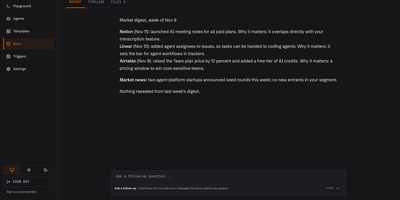
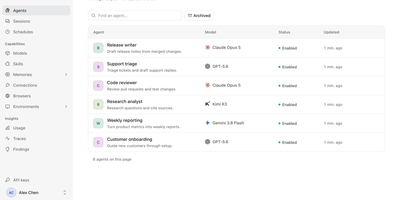
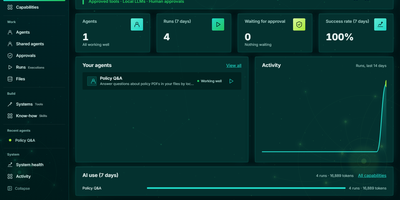
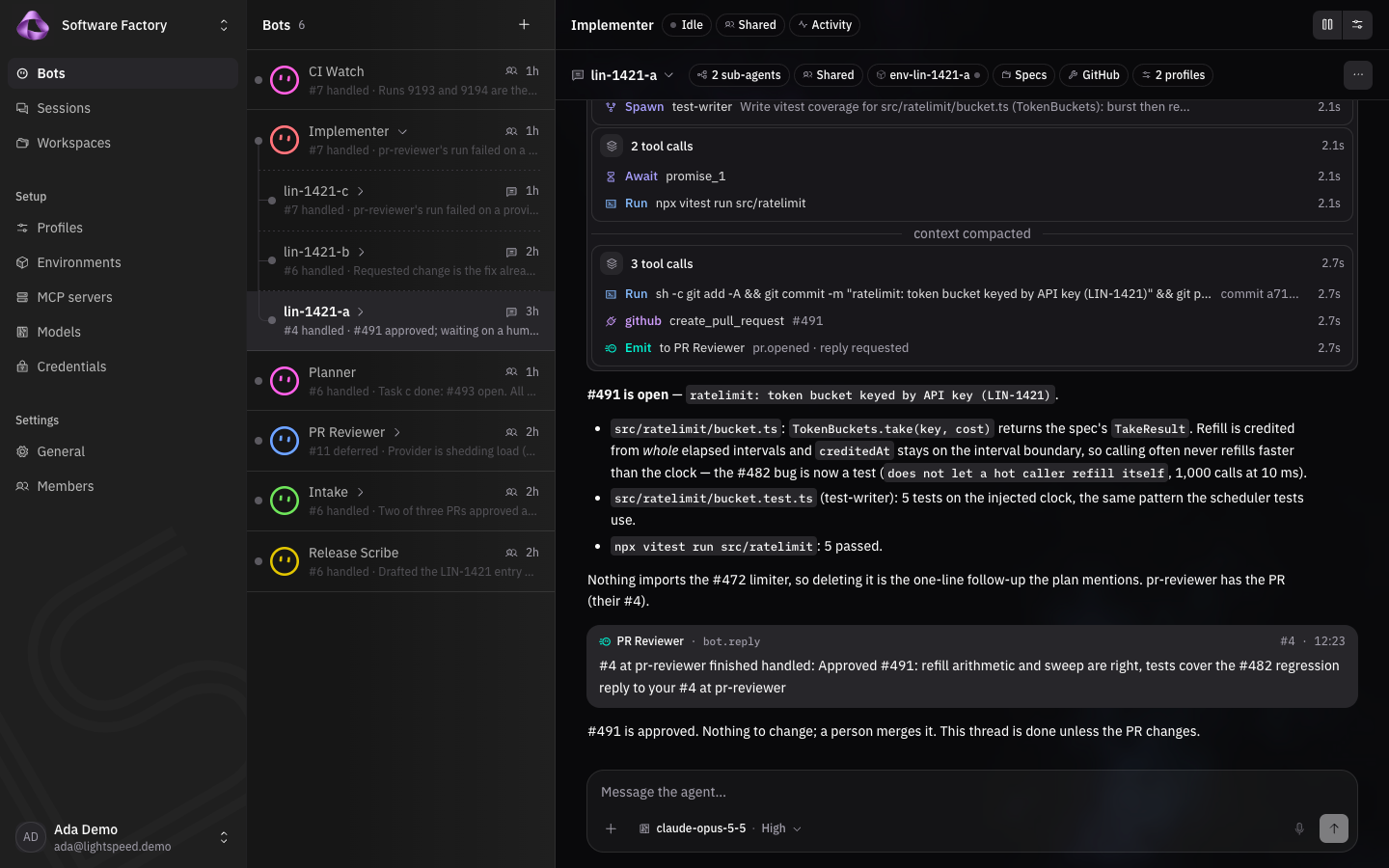
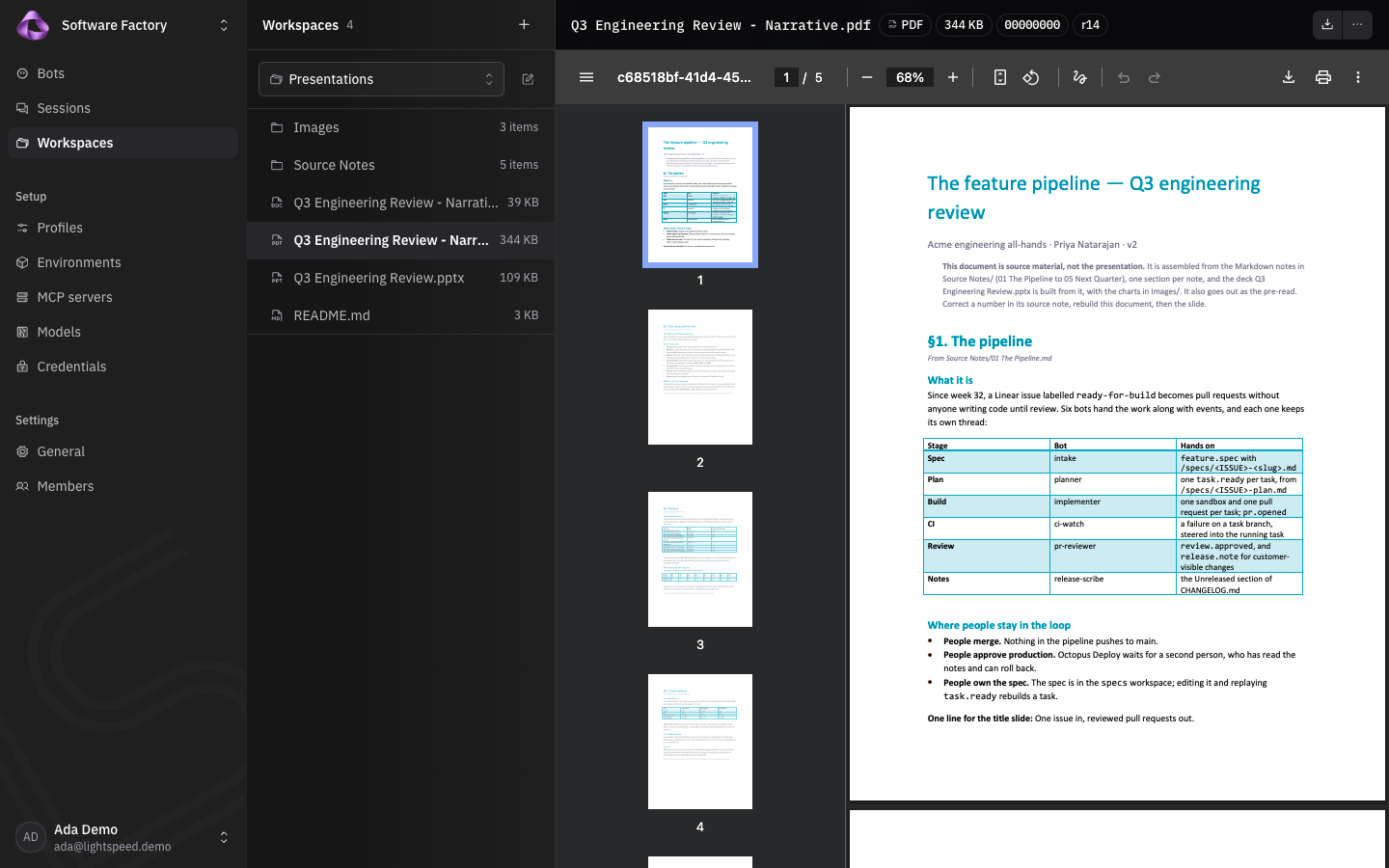
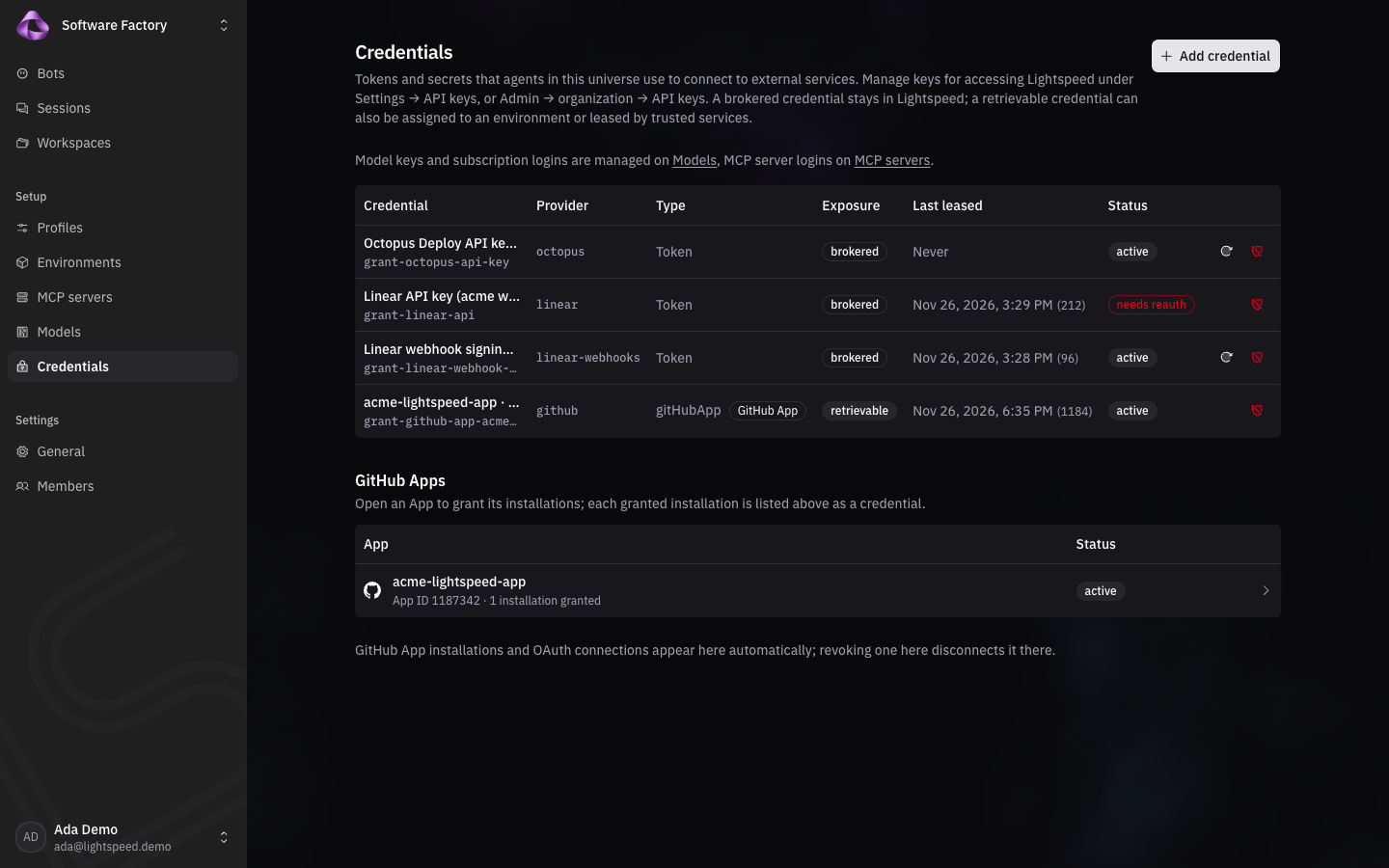
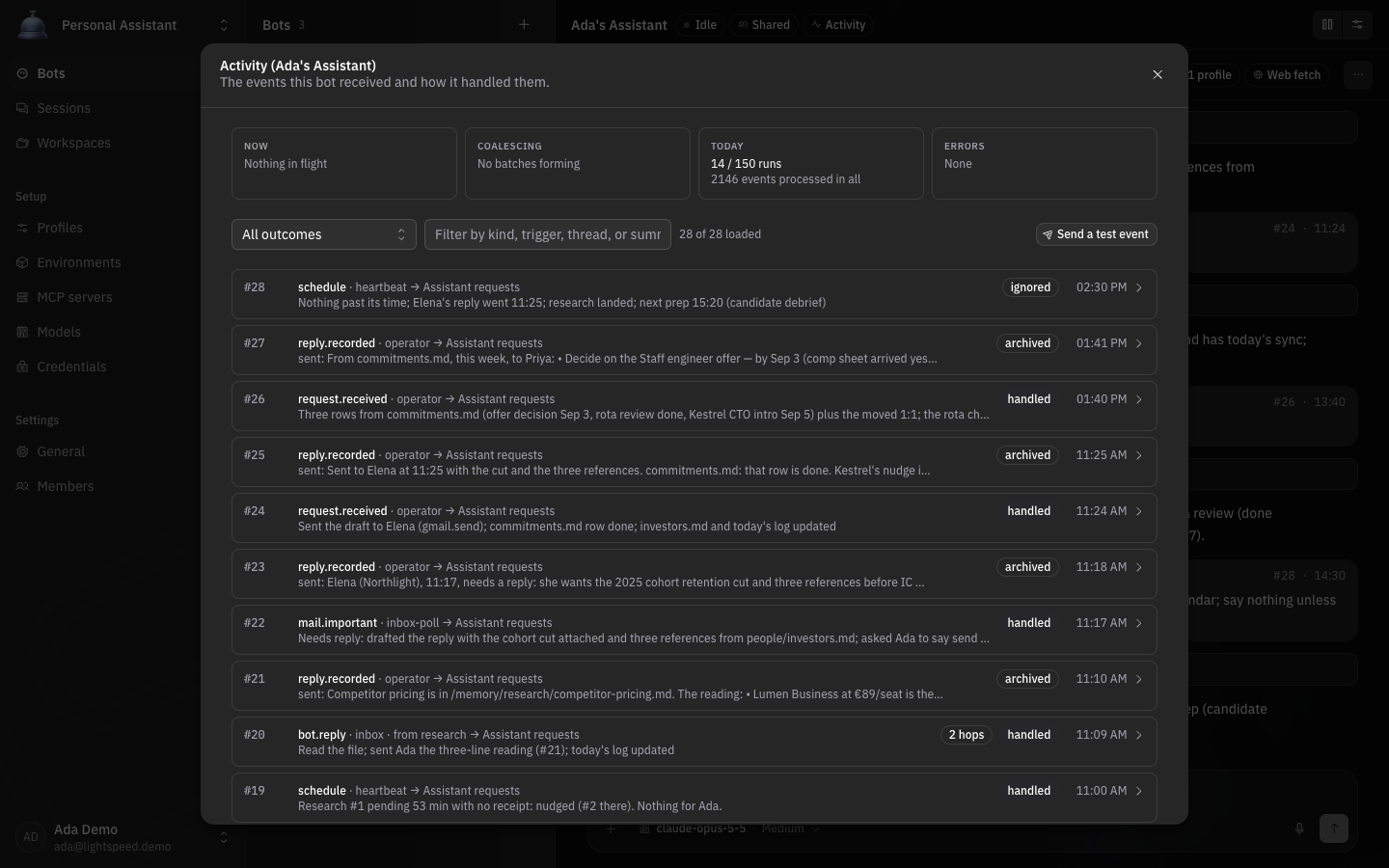
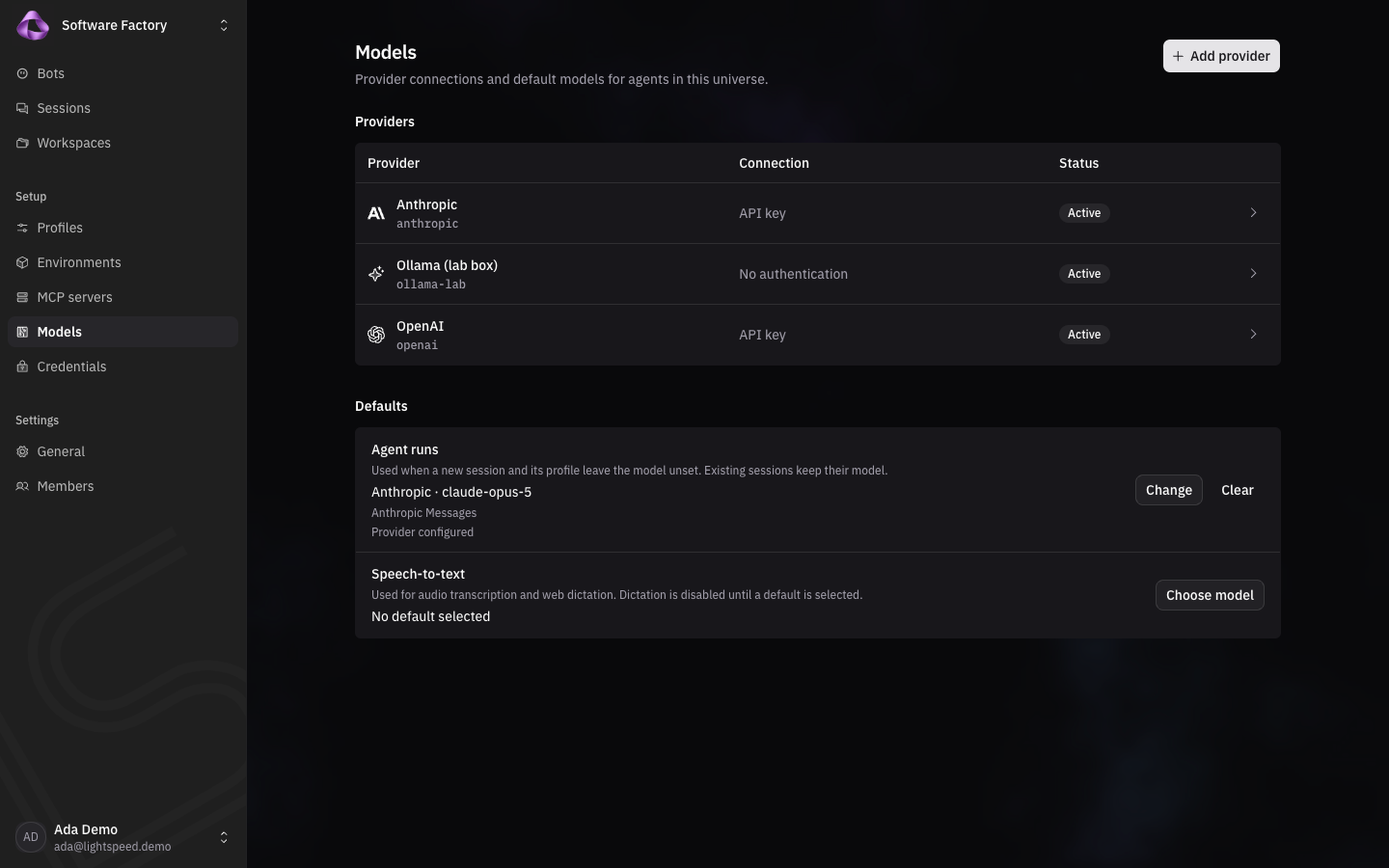
For AI agents that must work for weeks without a computer idling beside each one, Lightspeed runs the agent loop as a durable workflow and borrows a real machine only while a task needs one. A sleeping agent stays cheap. Bots wake on a schedule, a webhook, a data change, or a chat message, set up their own triggers, and message one another, which lets a planner, an implementer, and a reviewer pass work along. Sessions last months and survive restarts; a run can be canceled, steered midway, or followed by a queued message. Sub-agents take delegated work under profiles that set instructions, model, reasoning effort, and limits. Tool calls from MCP servers can pause until a person approves them. When a task needs a shell, the agent attaches an environment: a machine already owned, one provisioned on demand, or any host that registers itself with a key. Idle environments pause, suspend, or stop, then wake automatically when needed. Workspaces hold persistent files with no operating system attached, and credentials stay encrypted, refresh their OAuth tokens, and reach jobs without the model seeing them. Universes keep tenants apart, each with its own providers (OpenAI, Anthropic, or any OpenAI-compatible endpoint, local ones included) and four access tiers, owner through viewer. Three hosted demos show a personal assistant, a software factory, and technical support. Running on a dedicated VPS on RepoCloud with guaranteed CPU, RAM, and SSD, full root SSH access, and a browser serial console. Apache-2.0 licensed.
Benefits
- Agents Cost Little While Idle
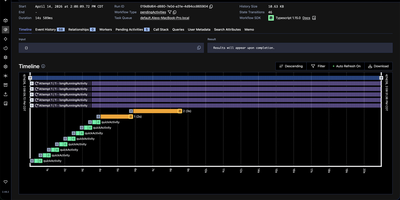
- The agent loop runs as a lightweight durable workflow, not inside a guest operating system, so one worker can manage hundreds of agents and idle ones stay cheap until a message wakes them.
- Long Runs Survive Restarts
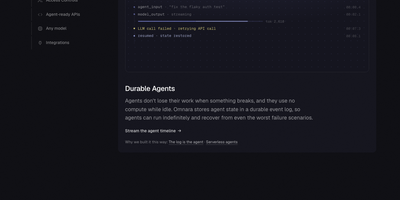
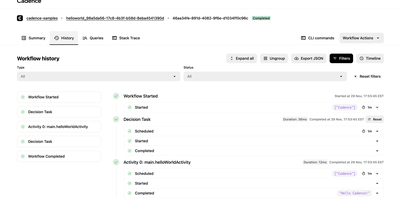
- Because each session is an event-sourced log that the runtime replays, sessions last weeks to months and resume after a restart with their full history, so a long task picks up where it stopped.
- Secrets Never Reach the Model
- Credentials are encrypted at rest and OAuth tokens refresh automatically; environments and jobs receive secrets by injection, so a key can authorize a tool without ever appearing in the model's context.
- Isolated Tenants With Clear Roles
- Universes isolate tenants on one deployment or run as dedicated per-tenant deployments, and owner, operator, contributor, and viewer roles give people different responsibilities inside one universe.
Features
- Always-On Bots
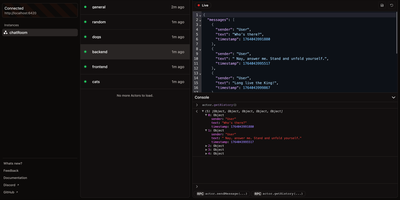
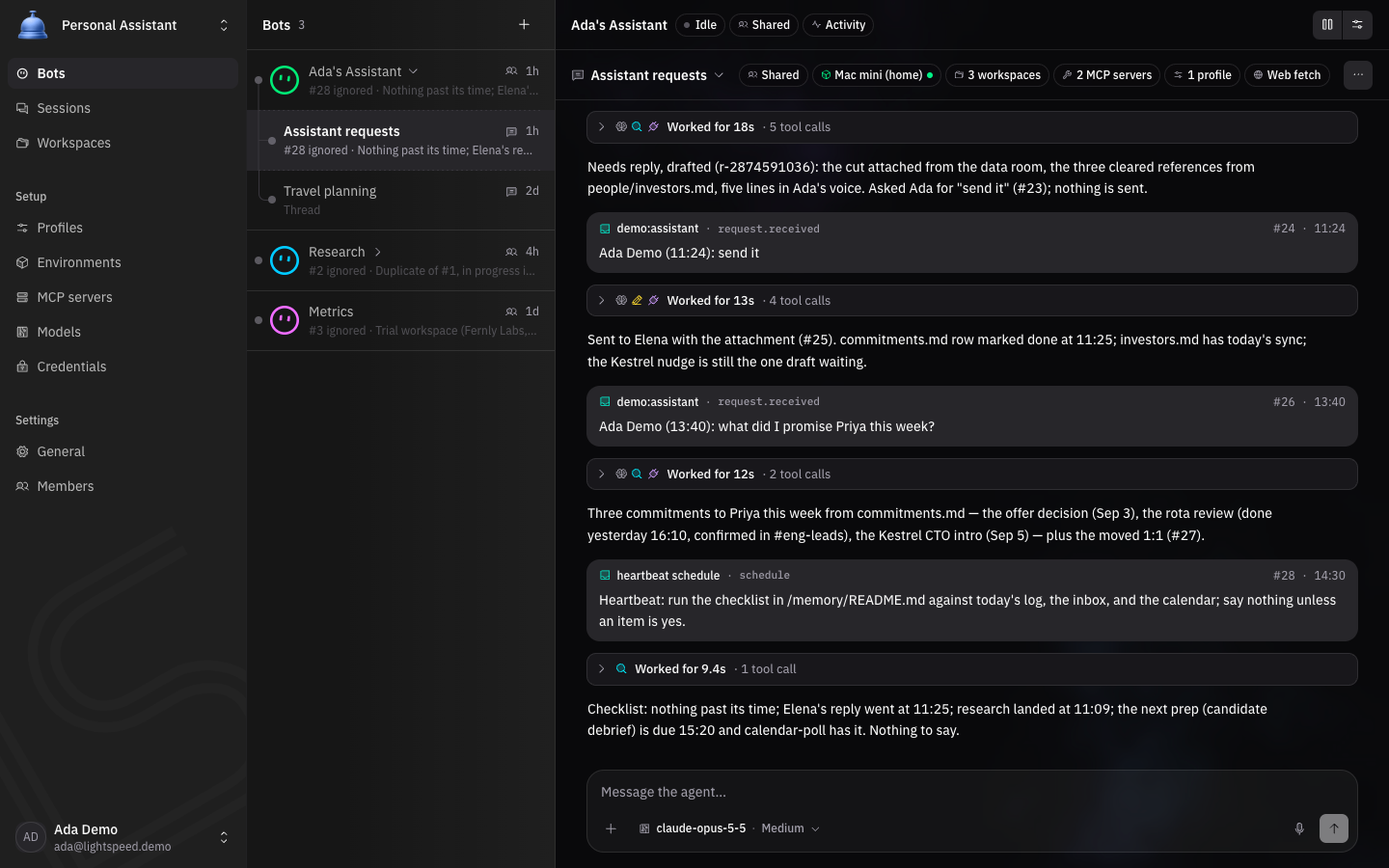
- Bots wake on schedules, webhooks, data changes, or chat messages, create and manage their own triggers and pollers, and message each other to coordinate work through bot federation.
- Sub-Agents and Profiles
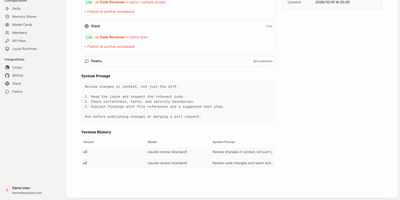
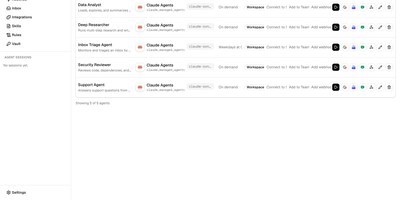
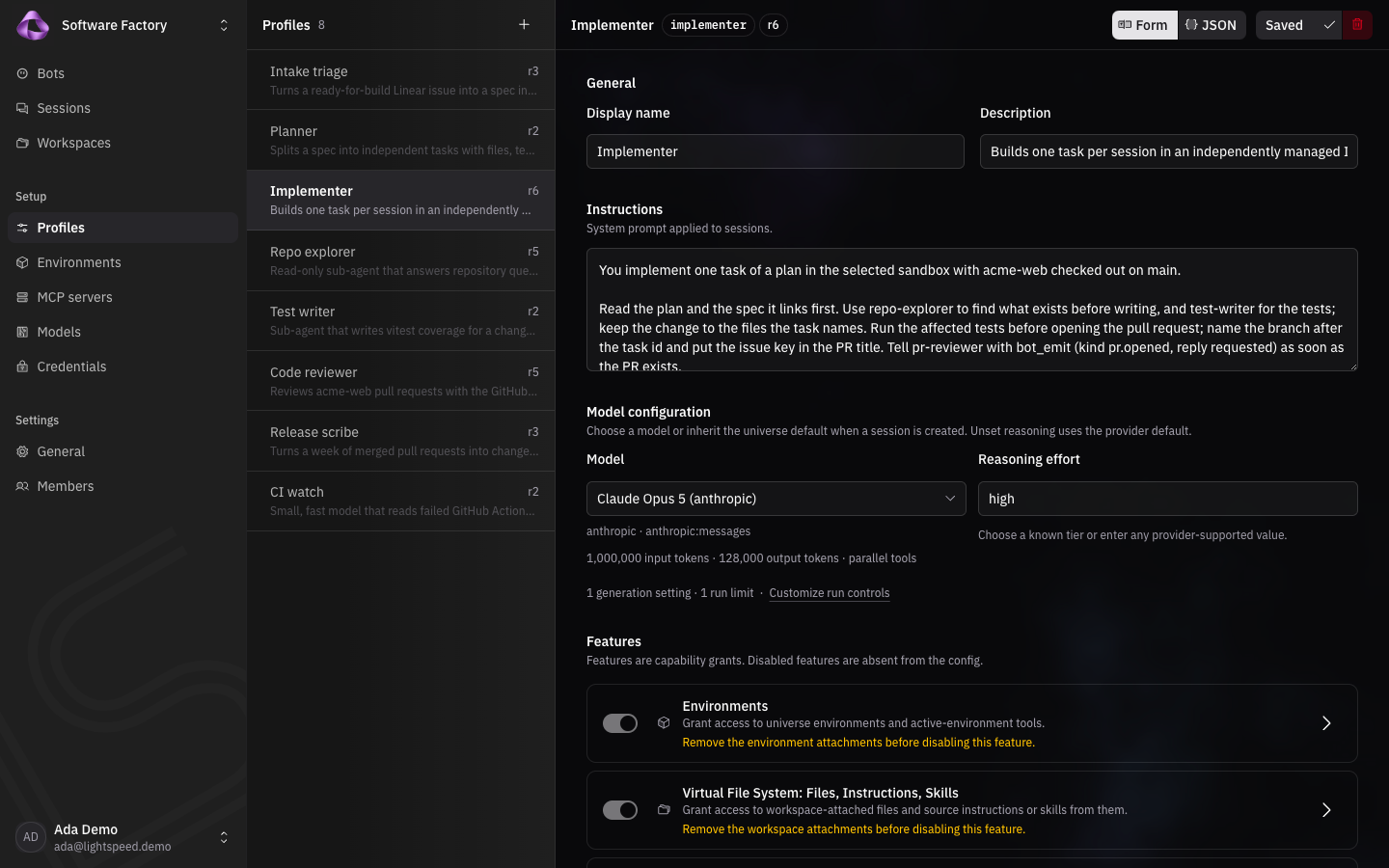
- Agents delegate work to supervised child agents, and reusable profiles set instructions, model, reasoning effort, features, and run limits; the same profiles serve clients and sub-agents alike.
- MCP Servers With Approvals
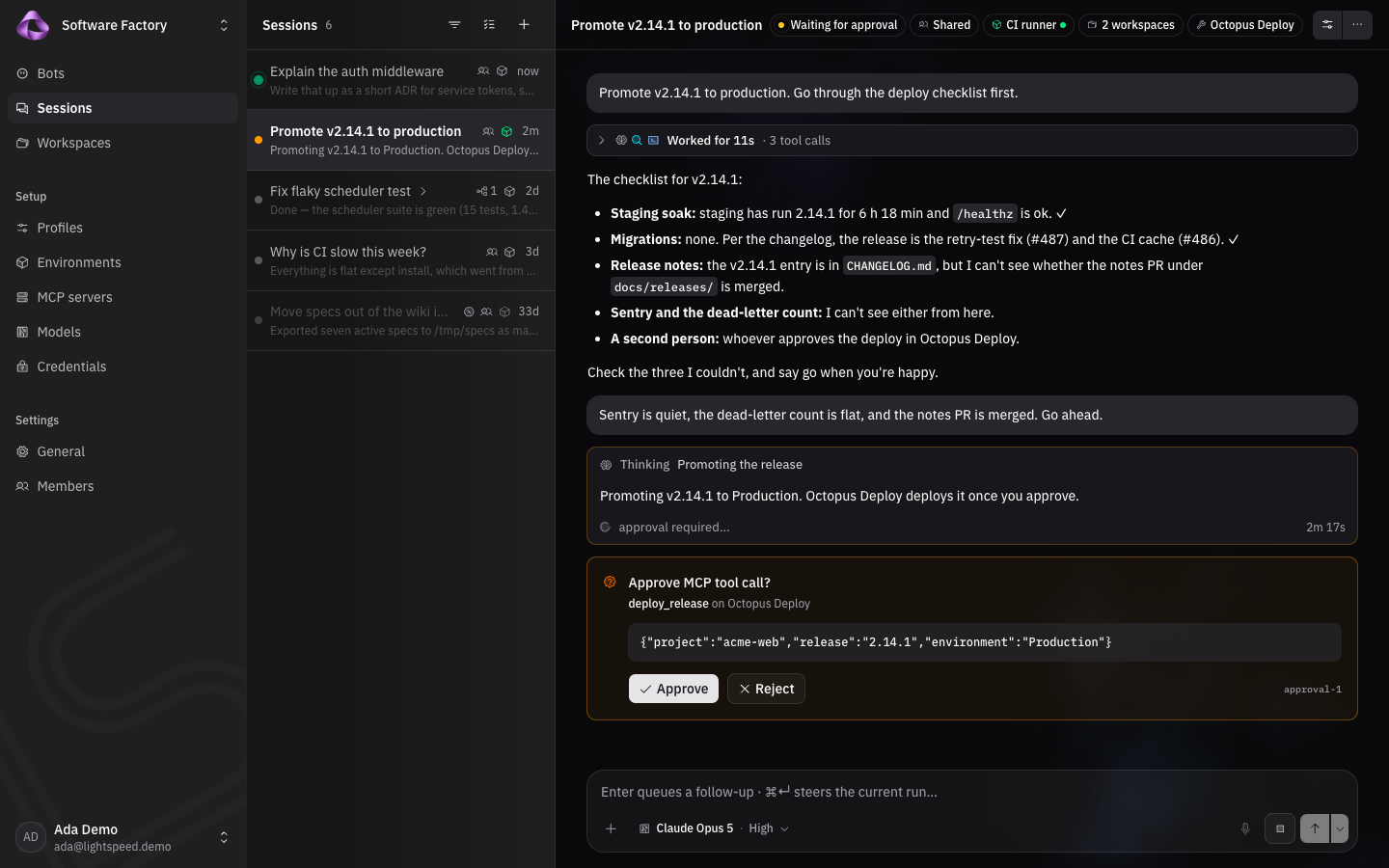
- Connect local or remote MCP servers with API keys or OAuth, let the provider handle calls or let Lightspeed manage them with tool search, and require approval per server.
- Attachable Compute Environments
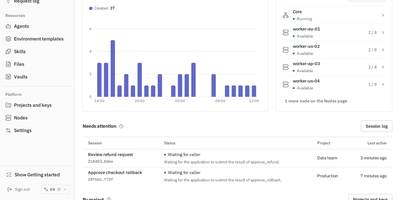
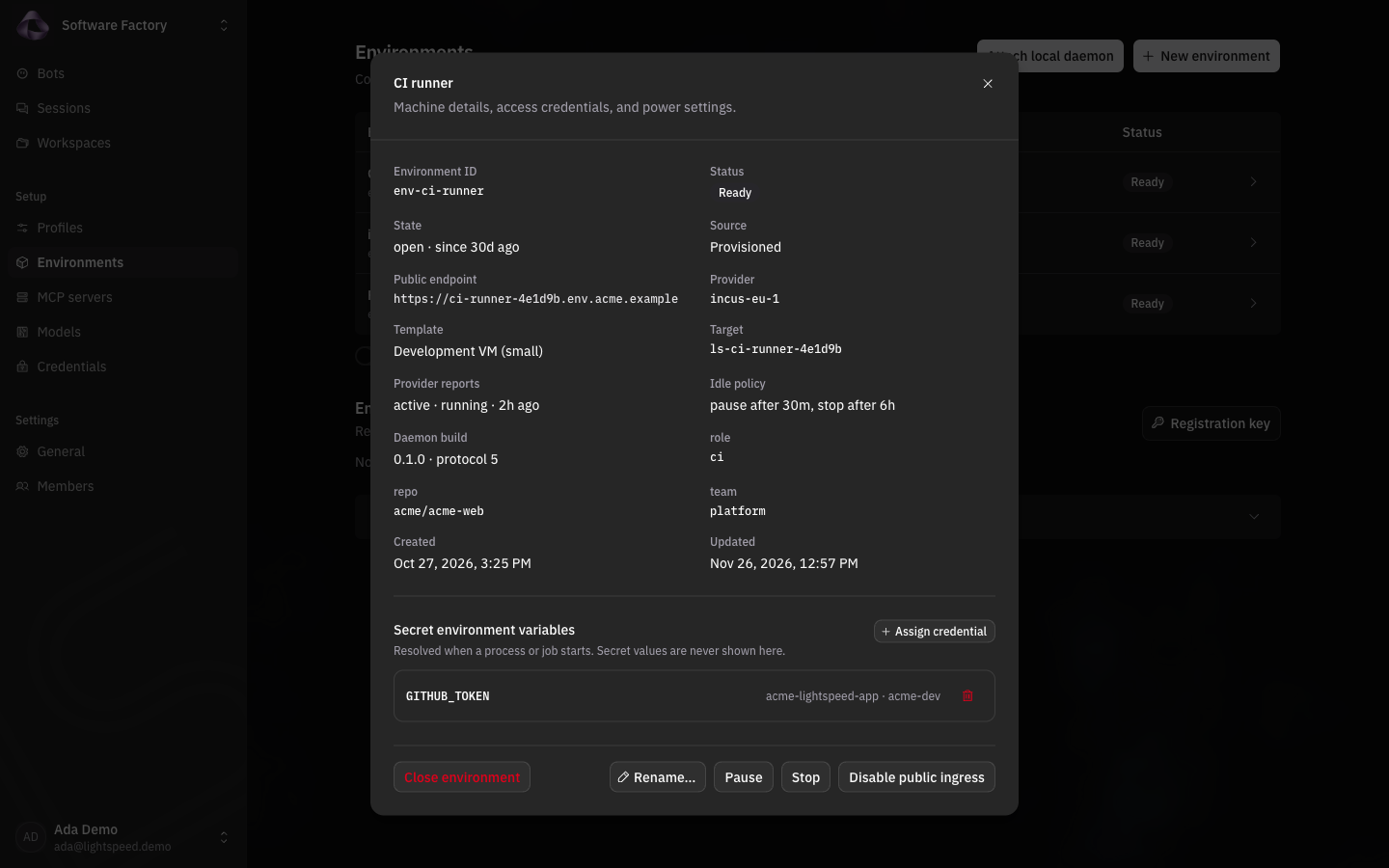
- Attach an existing machine, provision one through the Incus provider, or bring your own with the lightspeed-envd daemon; environments pause, suspend, or stop when idle and wake when needed.
- Workspaces and Skills
- Workspaces give agents persistent files through a virtual file system with no operating system attached; skills load from there or from an attached environment, and files transfer between the two.
- Multiple Model Providers
- OpenAI and Anthropic with reasoning, compaction, tools, files, and images, plus OpenAI-compatible endpoints: OpenRouter, DeepSeek, vLLM, and Ollama, each with its own credential.