Stars
Forks
Watchers
Developer links
MikoPBX
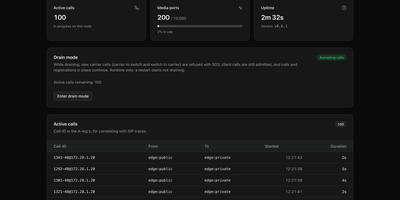
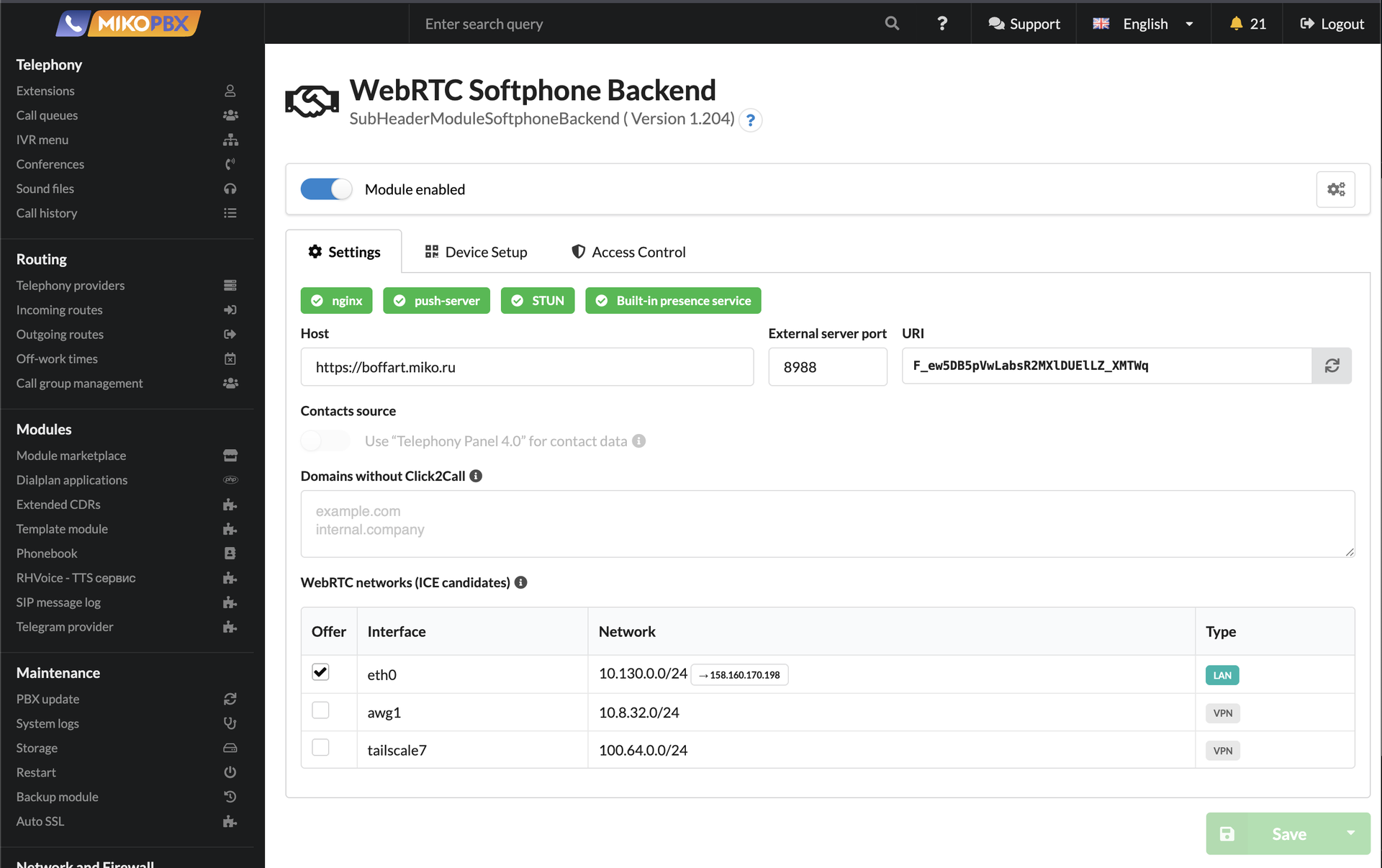
MikoPBX gives a small business a complete phone system on a server it controls, with extensions, call queues, IVR menus, and call recording instead of per-seat hosted PBX fees. Follow a call through it: incoming rules per provider match exact numbers or patterns, fall through by priority when nobody answers, and end at a default route. Each employee gets an extension with SIP credentials, forwarding for no-answer, busy, and unavailable states, and an optional recording switch. Queues offer seven distribution strategies, including Ring All, Least Recent, Fewest Calls, and Memory Hunt, and can announce each caller's position and estimated wait. IVR menus play a recorded greeting, route keypad choices to departments or extensions, and fall back to a default number after a set number of retries. Call history filters by caller, destination, or DID, flags missed calls in red, and plays or downloads recordings as WebM, MP3, WAV, or OGG. Voicemail, call transfer, call pickup, and a holiday and night-time switcher serve daily needs, while free and paid marketplace modules, among them a softphone, auto dialer, and LDAP/AD sync, handle the rest. A firewall, Fail2Ban, passkey sign-in, and CrowdSec integration protect the system, and a REST API with more than 250 endpoints lets other tools manage it. The interface speaks 26 languages. Running on a dedicated VPS on RepoCloud with guaranteed CPU, RAM, and SSD, full root SSH access, and a browser serial console. GPL-3.0 licensed.
Benefits
- No Per-Seat Phone Licensing
- All core business functionality is free and GPL-3.0 licensed, so extensions, queues, IVR menus, and call recording need no per-user license, while paid marketplace modules stay optional.
- Flexible Call Distribution and Routing
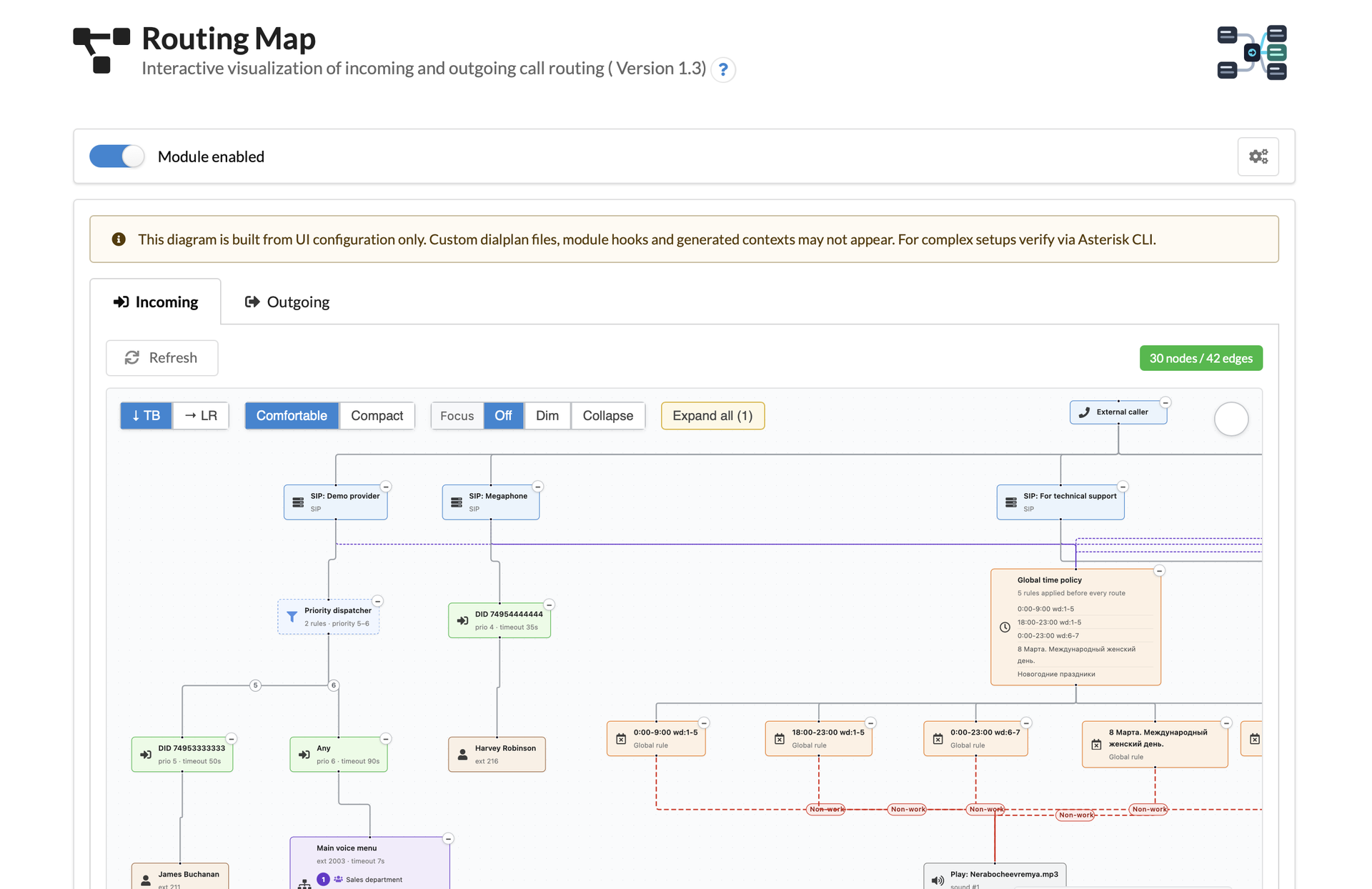
- Seven queue strategies, IVR menus with retry fallbacks, conference rooms, and priority-ordered incoming rules let one system serve a reception desk, a support team, or a small call center.
- Runs on Modest Hardware
- The documentation lists 1 GHz and 512 MB of RAM for five to ten simultaneous calls, rising to two CPUs and 2 GB of RAM or more beyond 25 calls.
- Layered Protection Against Intruders
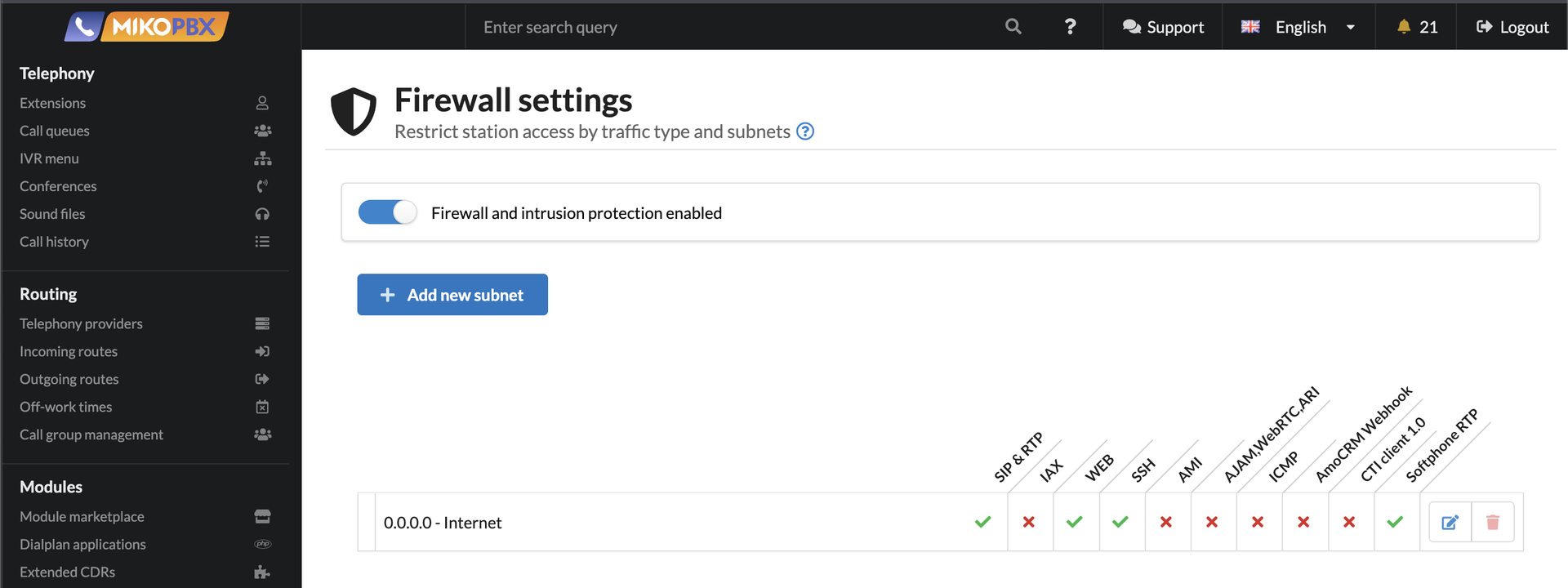
- A built-in firewall, Fail2Ban blocking of repeated failed logins, passkey sign-in, and CrowdSec blocklist integration help protect the system from unauthorized access.
Features
- Extensions and Providers
- Employee extensions carry SIP credentials, forwarding rules, and optional recording, while external lines connect as SIP or IAX provider accounts, and employee lists export to CSV.
- Queues, IVR, and Conferences
- Queues distribute calls by seven strategies, from Ring All and Linear Progressive to Memory Hunt, while IVR menus use DTMF keypad input and conference rooms bring callers together.
- Call History and Recording
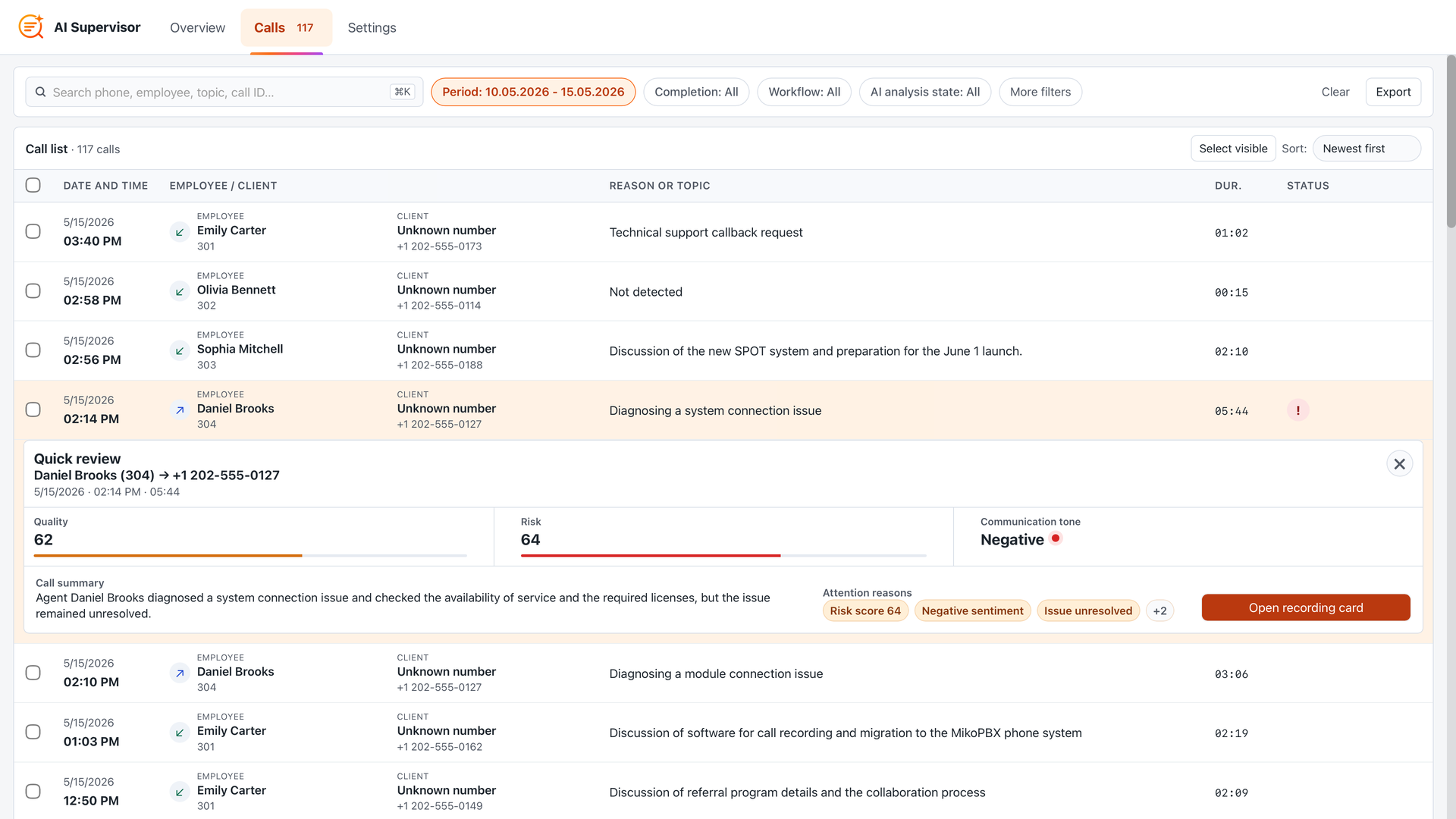
- Call history filters by caller, destination, DID, or linked call ID, marks missed calls in red, and plays or downloads recordings as WebM (Opus), MP3, WAV, or OGG (Opus).
- REST API and Modules
- A REST API with more than 250 endpoints and JWT authentication pairs with free and paid marketplace modules such as a softphone, auto dialer, Let's Encrypt, and LDAP/AD sync.
- Multilingual Web Interface
- The browser interface is available in 26 languages with community translation through Weblate and manages extensions, routing, modules, firewall, and system settings in one console.
- Flexible Installation Formats
- Installs from ISO images, Docker or LXC containers, or cloud images on x86_64 and ARM64, with guides for AWS, Google Cloud, Azure, DigitalOcean, Vultr, Hetzner, and Alibaba Cloud.