Categories
Self-Hosted AI Infrastructure WebRTC Conversational AI Customer Experience Digital Humans AI AvatarsStars
Forks
Watchers
Developer links
Mynah
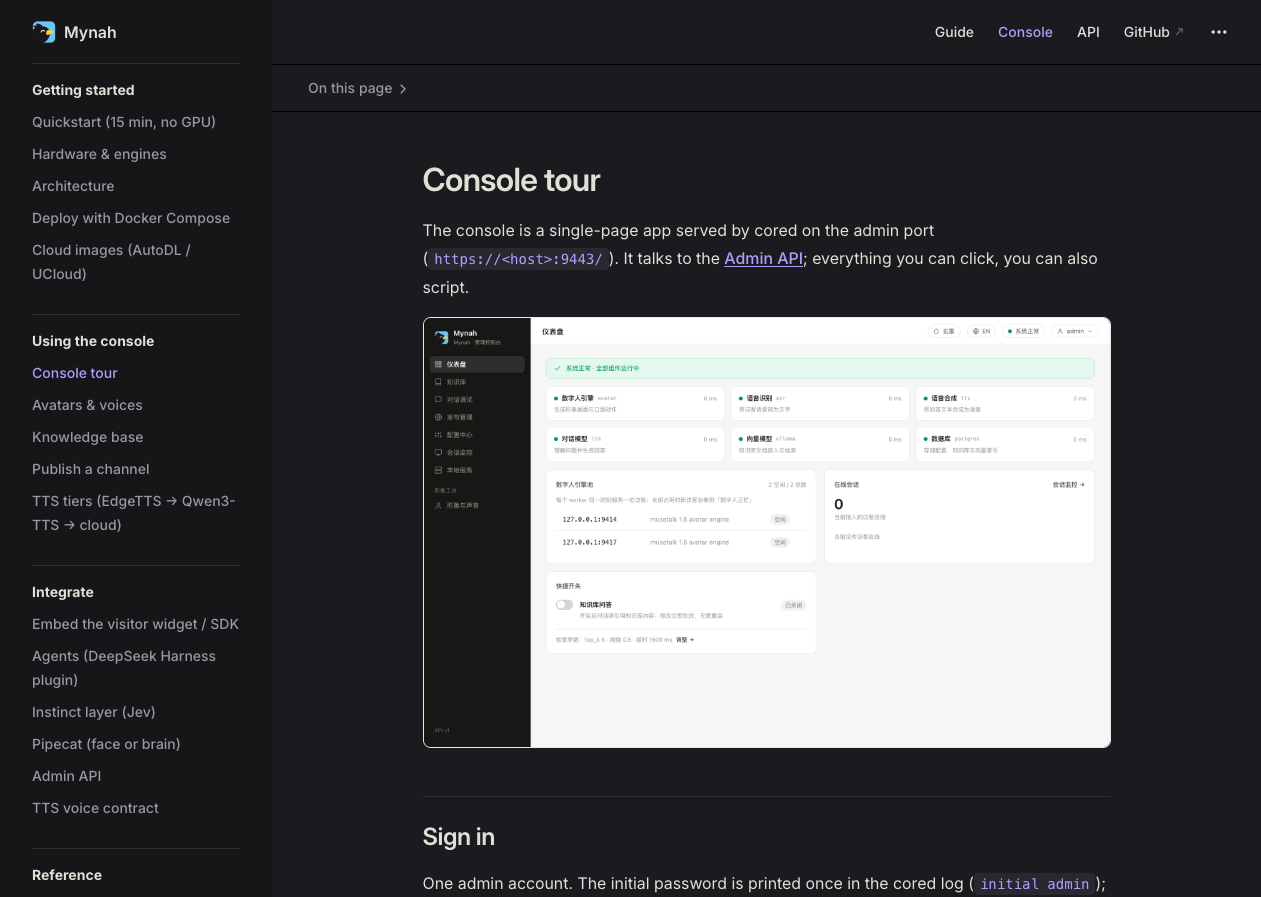
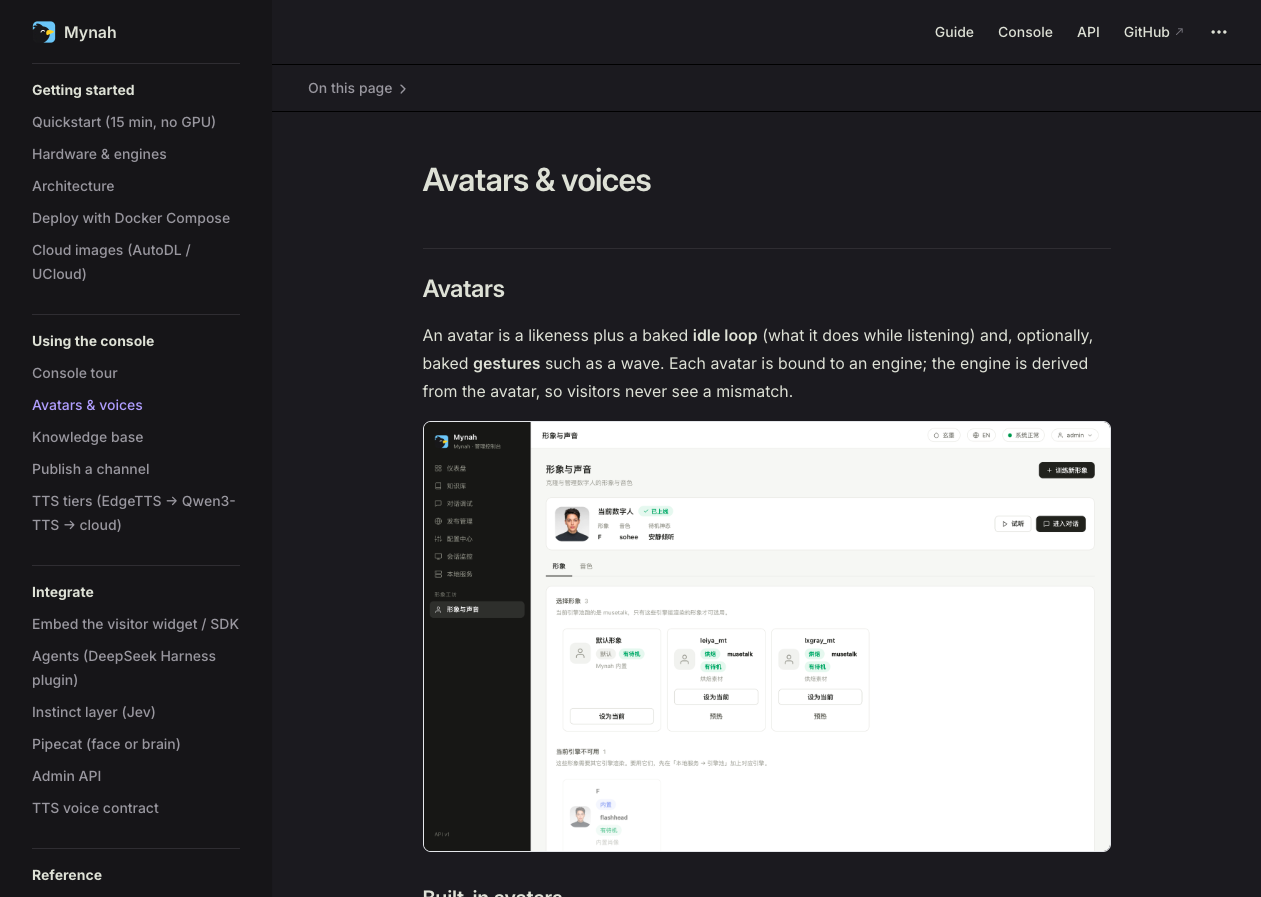
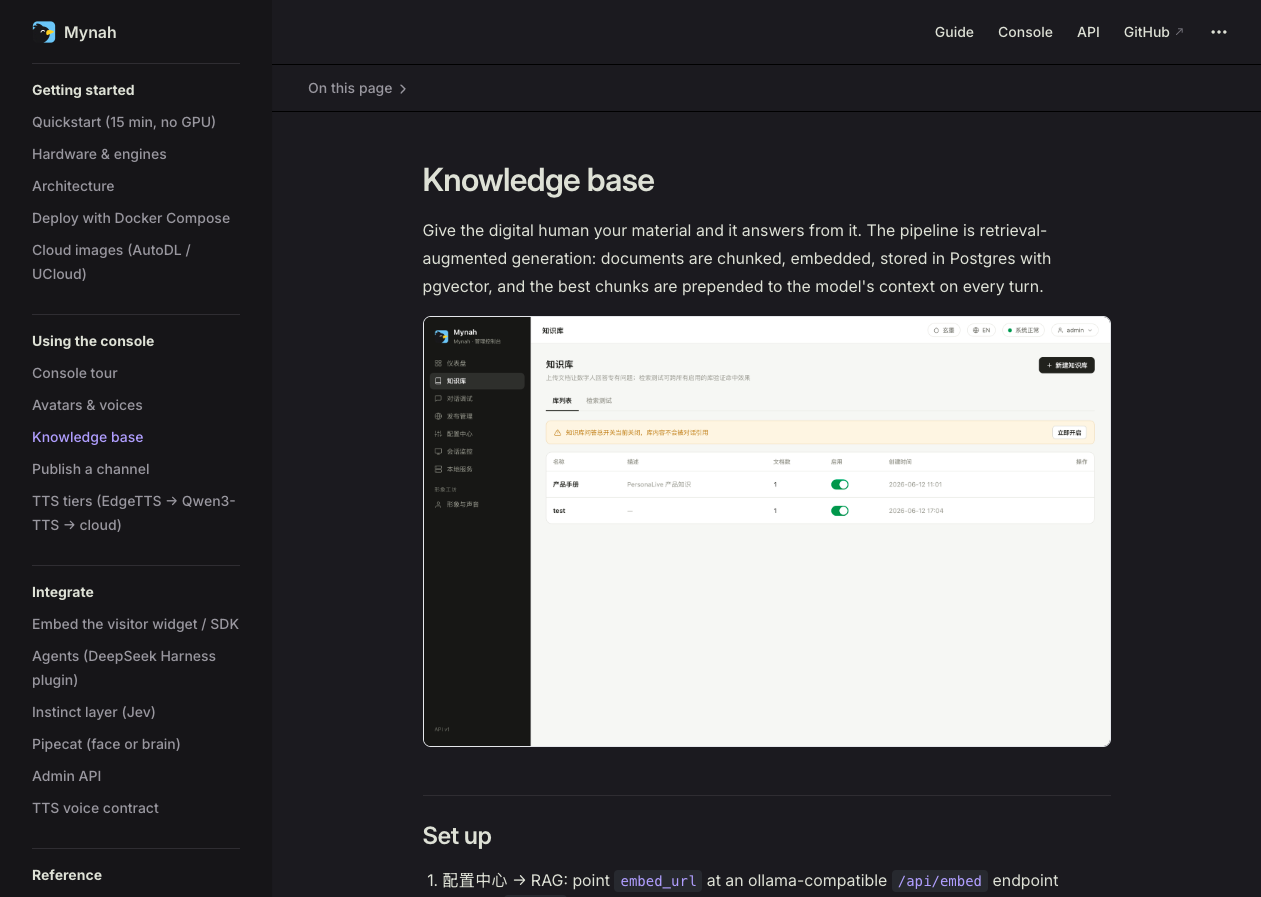
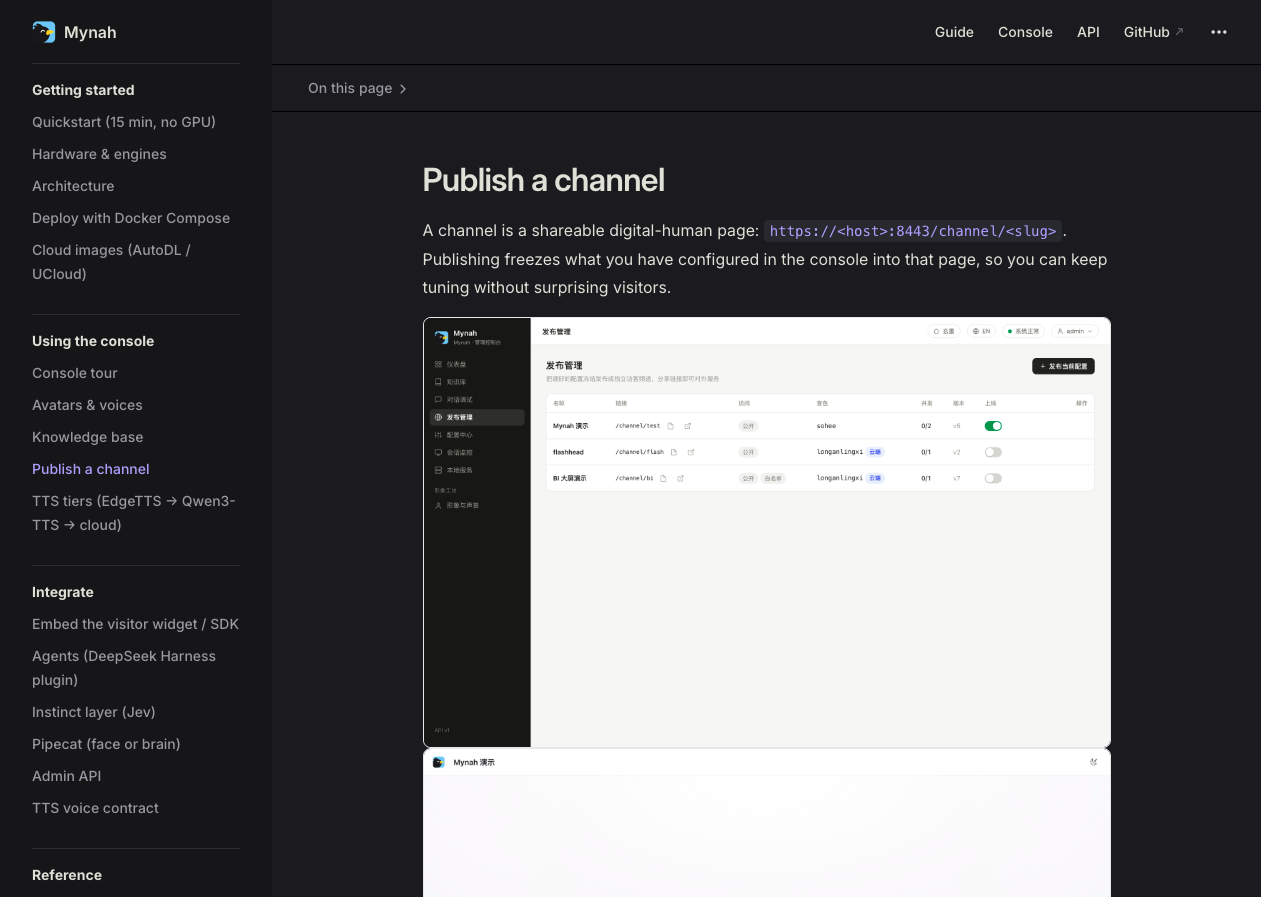
A visitor clicks your link and a face is already there, listening, answering within a fraction of a second, and stopping the moment they interrupt, because Mynah runs live digital humans in the browser instead of playing back rendered video. Underneath, cored takes WebRTC offers, runs the conversation through your chosen language model, speech recognition, and text to speech, and drives a lip synced avatar engine such as MuseTalk, FlashHead, or Wav2Lip, with a semantic end of turn model deciding when a person has finished speaking. The admin console is where you shape the experience: bake a new avatar from a talking video with explicit consent, clone or audition voices, swap avatars per channel without cold starts, and tune green screen keying and gestures live in the playground. Knowledge bases take your documents through ingestion and embedding so answers ground in your material, with retrieval tests before anything ships. Publishing freezes a model, voice, and knowledge snapshot into a channel: a shareable link with token, domain, or CIDR access control, its own branding, and a concurrency cap drawn from an engine pool that computes how many workers your VRAM can hold. Session monitoring shows who is connected and lets you kick a session, health checks watch every dependency, and light and dark themes with Chinese and English interfaces cover both console and visitor pages. Running on a dedicated VPS on RepoCloud with guaranteed CPU, RAM, and SSD, full root SSH access, and a browser serial console. Apache-2.0 licensed.

Benefits
- Live Faces, Not Rendered Clips
- The digital human answers within a fraction of a second over WebRTC, lip synced and interruptible, with a semantic model deciding when a visitor has finished speaking.
- Channels Freeze What Ships
- Publishing snapshots the model, voice, brain mode, and knowledge settings into a shareable link with branding, so console experiments never change what visitors get.
- Capacity Computed From VRAM
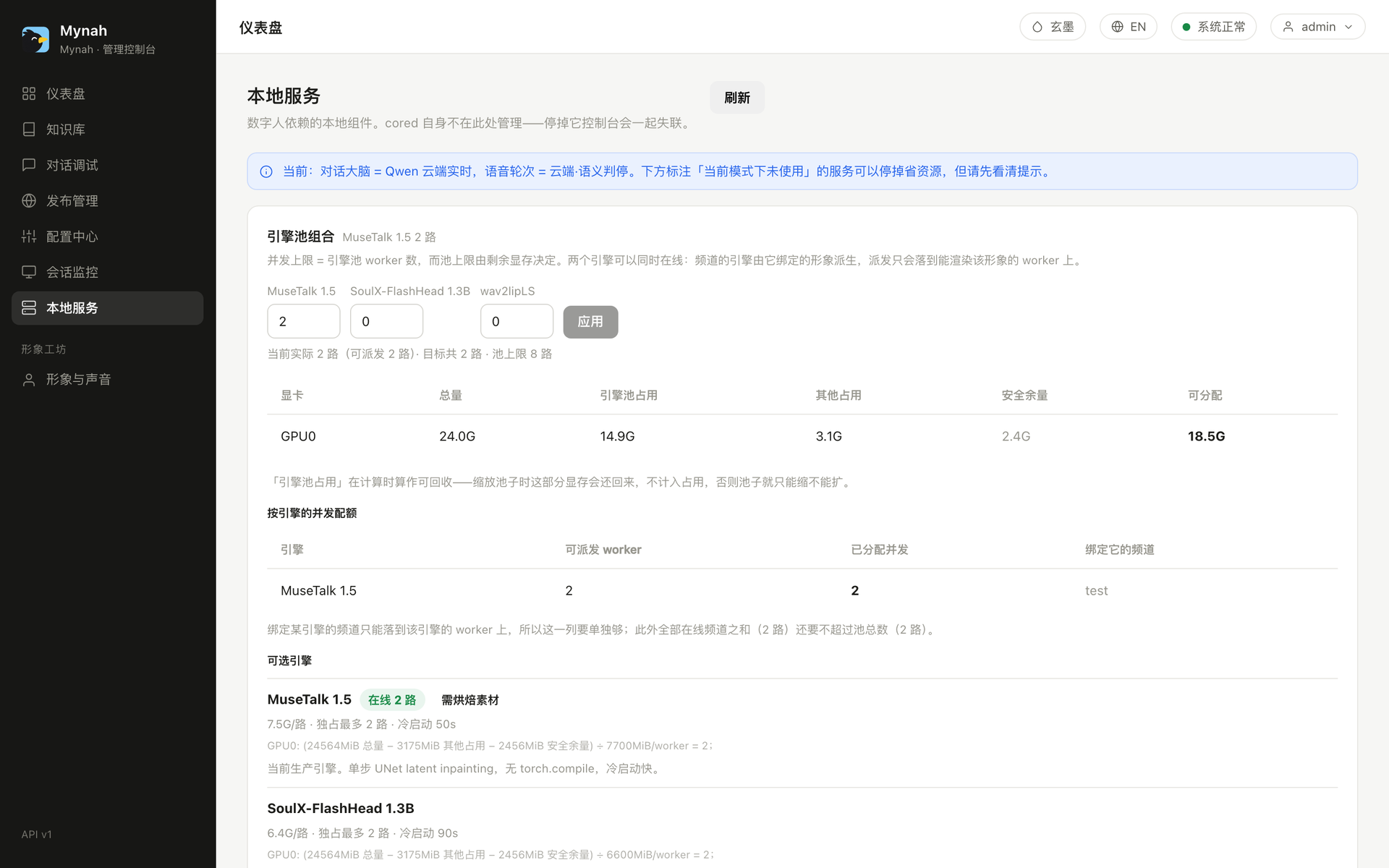
- The services page measures per engine VRAM and refuses pool compositions that do not fit, then allocates each channel's concurrency cap out of that honest pool.
- Every Surface Under Access Control
- Visitor channels accept tokens, allowed domains, or CIDR rules, while the admin console and API stay loopback by default behind JWT logins and forced password changes.
Features
- Pluggable Avatar Engines
- MuseTalk, FlashHead, and Wav2Lip workers sit behind gRPC contracts cored dials locally or remotely, with measured VRAM figures kept per engine.
- Bring Your Own Brain
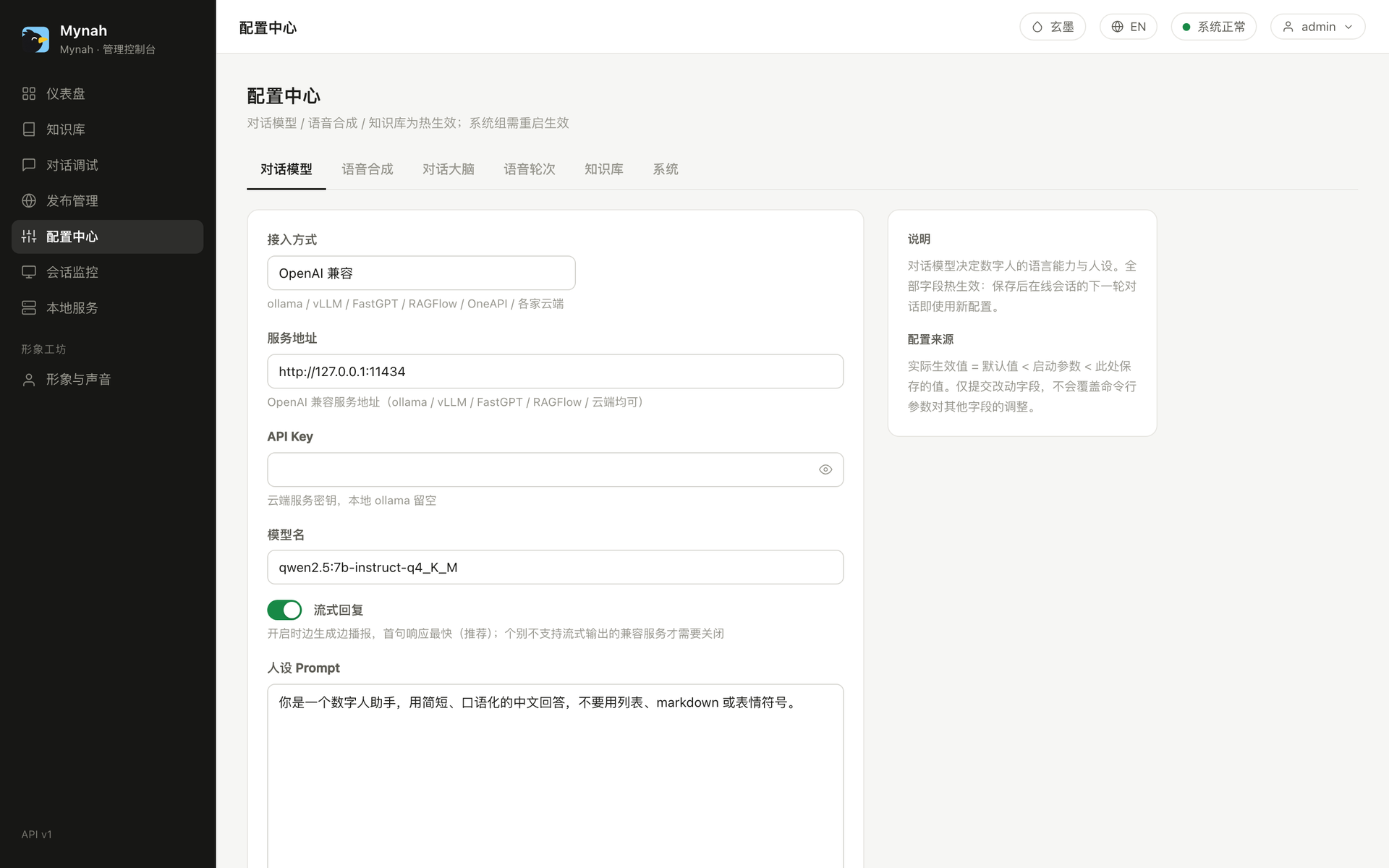
- Conversation runs on any OpenAI compatible LLM endpoint, a local pipeline, or Qwen Realtime, tested from the console with a real turn before saving.
- Grounded Knowledge Bases
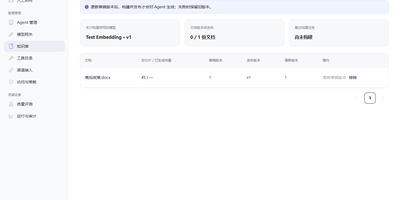
- Uploaded documents are chunked, embedded, and indexed with ingestion status polling, reindexing, and retrieval tests run against the live search settings.
- Consent Gated Avatar Baking
- New avatars bake from uploaded talking video only with an explicit consent field, size capped and streamed to disk, never buffered in memory.
- Playground With Live Tuning
- Talk to the exact visitor pipeline by text or voice, inspect retrieved chunks and latency, trigger gestures, and adjust green screen keying in real time.