Stars
Forks
Watchers
Developer links
Nebula
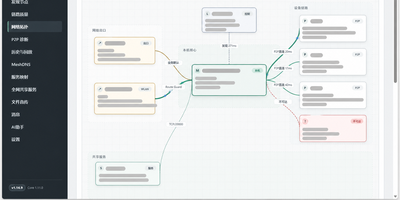
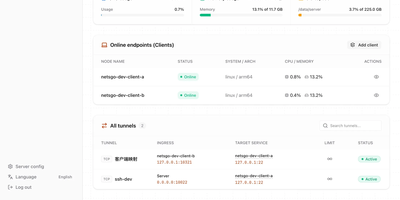
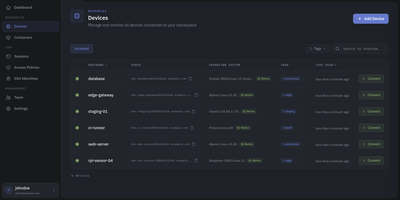
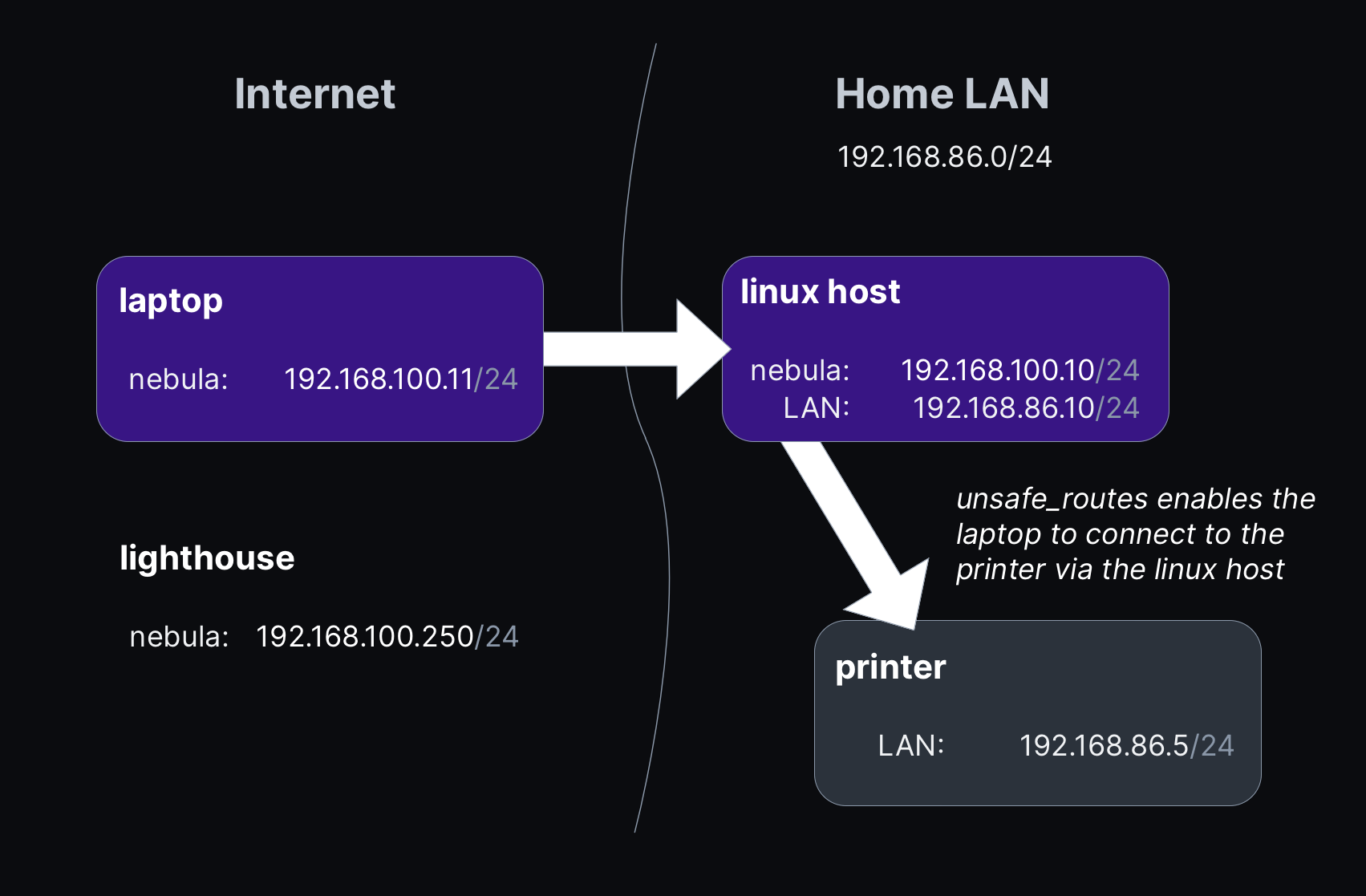
Give every laptop, server, and cloud VM you own one private address that works from anywhere, and that is exactly the overlay network Nebula builds. Each machine runs a single small binary, presents a certificate signed by your own certificate authority, and joins a peer-to-peer layer-3 mesh where tunnels form on demand between hosts that need to talk. Lighthouse nodes, the piece you park on a VPS, keep track of where every peer can be reached and introduce hosts to each other, so machines find each other without any central VPN concentrator carrying their traffic. UDP hole punching and keepalive packets open direct tunnels through home routers and office NAT, and when two hard NATs refuse to cooperate, a relay host forwards the encrypted traffic until a better path appears. Every host enforces its own firewall, default deny on all overlay traffic, with rules keyed to certificate groups, so laptops in the user-endpoint group can reach a server's web port while other groups cannot. Ordinary hosts need no inbound ports at all, and the same binary runs on Linux, macOS, Windows, phones, and FreeBSD, making the mesh feel identical at home, in a datacenter, or across three clouds. Unsafe routes can even pull an existing office subnet into the overlay, giving legacy hardware that will never run Nebula an address on the private network. Running on a dedicated VPS on RepoCloud with guaranteed CPU, RAM, and SSD, full root SSH access, and a browser serial console. MIT licensed.
Benefits
- Private Addresses That Work Anywhere
- Every host receives a stable overlay IP from your own address space, so a laptop on hotel Wi-Fi reaches a home server by the same address it uses on the LAN, no port forwarding.
- Direct Tunnels, Not Bottlenecks
- Lighthouses only introduce peers; the encrypted traffic then flows directly between hosts, so bandwidth is never funneled through one VPN server and latency stays at whatever the direct path offers.
- Firewall Rules Travel With Certificates
- Groups are signed into each host certificate at issue time, and every machine enforces default-deny rules against them, so revoking access is reissuing one certificate rather than editing ACLs everywhere.
- NAT Traversal Without Router Surgery
- Hole punching plus punchy keepalives open and hold tunnels through home routers and carrier NAT, and relay hosts carry traffic for the rare pair of networks that cannot punch through.
Features
- Lighthouse Peer Discovery
- Always-on lighthouse hosts track which public addresses each peer can be reached at and introduce hosts attempting handshakes, enabling discovery and NAT traversal across the whole mesh.
- Certificate Group Firewall
- A per-host firewall, default deny for all overlay traffic, allows by protocol, port, host, CIDR, or the certificate groups issued by your CA with nebula-cert.
- Relays For Hard NAT
- When symmetric NAT blocks direct punching both ways, designated relay hosts forward the encrypted packets between peers, so connectivity survives even hostile enterprise and carrier networks.
- One Binary, Every Platform
- The same daemon ships for Linux, macOS, Windows, iOS, Android, and FreeBSD on x86 and ARM, configured by one YAML file covering CA trust, certificates, and firewall rules.
- Unsafe Route Gateways
- A host can advertise routes into underlay subnets it sits on, letting printers, legacy servers, and other devices that cannot run Nebula join the overlay address space.