SaaS Alternative
Vimeo Livestream Mux Cloudflare Stream Wowza Streaming Cloud AWS Elemental MediaLiveStars
Forks
Watchers
Developer links
SRS
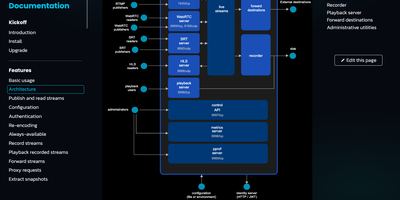
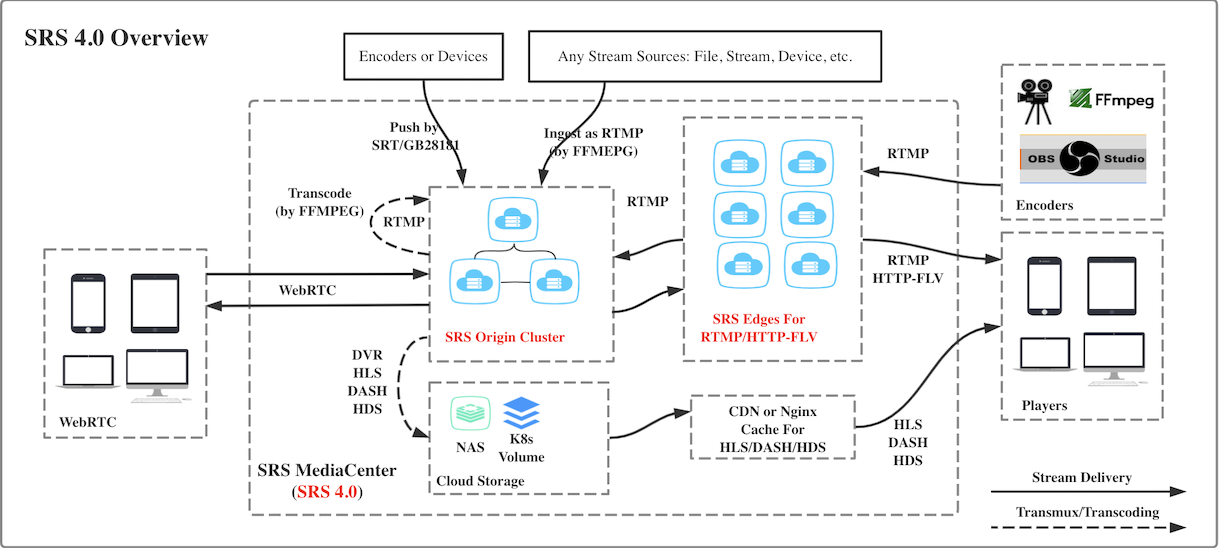
Viewers arrive on browsers, phones, and desktop players, and SRS meets each of them with the right protocol from a single published stream. A broadcaster pushing RTMP can reach browser viewers through WebRTC with sub-second latency, phone apps through HLS, and desktop players through HTTP-FLV, all from the same live source without running parallel encoders. WHIP endpoints accept WebRTC ingest from browser studios and tools like OBS, while WHEP serves WebRTC playback, so an entire publish-to-viewer path can stay on modern web protocols. Operators shape each channel with virtual hosts, authenticate publishers and players through HTTP hooks that consult your own backend, and record live streams to disk as DVR archives for replay. Forwarding republishes a stream to YouTube, Facebook, or another SRS instance, and origin clustering lets edge servers pull from a central origin so one ingest feeds viewers in several regions. The built-in HTTP API reports streams, clients, and server health for monitoring, and GB28181 support ingests surveillance camera networks alongside creator broadcasts. Configuration lives in a single reloadable file, so changing a vhost or enabling HLS rarely means restarting the listeners your audience is attached to. Running on a dedicated VPS on RepoCloud with guaranteed CPU, RAM, and SSD, full root SSH access, and a browser serial console. MIT licensed.
Benefits
- Publish Once, Play Everywhere
- One RTMP, SRT, or WebRTC ingest becomes WebRTC, HLS, HTTP-FLV, and MPEG-DASH playback automatically, so audiences on browsers, phones, and players are served without running separate encoders per protocol.
- Browser-Native Live Paths
- WHIP ingest and WHEP playback endpoints let browser studios publish and viewers play with WebRTC end to end, keeping latency low without plugins, native apps, or RTMP in the browser.
- Hooks Into Your Backend
- HTTP callbacks for publish, play, and stop events let your application authenticate streamers, authorize viewers, and log sessions, turning SRS into the media layer behind your own account system.
- Edges Pull From Origins
- Origin clusters and edge servers fetch streams from a central origin on demand, and forwarding republishes to external platforms, so a single ingest can serve regional audiences and other destinations.
Features
- Protocol Conversion Engine
- Convert RTMP or SRT to HLS, WebRTC, HTTP-FLV, or MPEG-DASH, and WebRTC back to RTMP, with virtual hosts separating channels, applications, and tenants per stream.
- DVR Stream Recording
- Record live streams to FLV or MP4 files by session, segment, or time-based plans, producing replay archives while the broadcast continues without a separate recorder.
- HTTP API And Hooks
- A JSON HTTP API exposes versions, streams, clients, and virtual hosts, while event hooks notify your backend about publish, play, unpublish, and DVR actions.
- GB28181 Camera Ingest
- GB28181 signaling ingests surveillance camera networks and converts their streams to RTMP, HLS, WebRTC, or HTTP-FLV for web dashboards and monitoring walls.
- Reloadable Single Config
- One configuration file controls listeners, vhosts, transcoding hooks, and clustering, and a SIGHUP reload applies most changes without dropping the running server process.