Stars
Forks
Watchers
Developer links
Webclaw
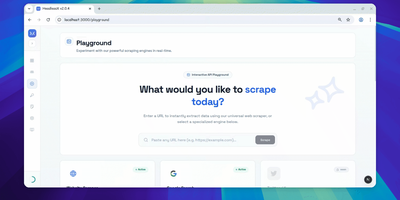
Webclaw turns messy web pages into clean content your AI tools can actually use, extracting the meaningful text and leaving the navigation, ads, and boilerplate behind. You point it at a URL and get back Markdown, plain text, structured JSON, raw HTML, or a format trimmed for language model input, with images stripped, links deduplicated, and whitespace cleaned. Crawl a whole site by following same-origin links page after page, map a domain first to discover every URL from its sitemap before deciding what to fetch, or batch many URLs at once and stream the results as they finish. CSS selectors let you include only the part of a page you care about or exclude the parts you never want, and main-content filtering keeps the article while dropping the chrome around it. Compare today's page against an earlier snapshot to see exactly what changed, or pull a site's colors, fonts, and logo into a brand profile. With your own language model connected, extraction follows a JSON schema or a plain prompt, and summaries come back at the length you ask for. Agents reach the same engine through an MCP server, scripts through the command line, and applications through the REST API. Running on a dedicated VPS on RepoCloud with guaranteed CPU, RAM, and SSD, full root SSH access, and a browser serial console. AGPL-3.0 licensed.
Benefits
- Clean content, not page chrome
- Extraction strips navigation, advertising, and boilerplate while keeping the main content, so downstream tools read the article instead of the page furniture around it.
- One engine, three interfaces
- The same Rust engine serves a command line for scripts, an MCP server for AI agents, and a REST API for applications, all returning identical output formats.
- Crawl, map, and batch built in
- Discover a site's URLs from robots and sitemap files, crawl same-origin pages breadth-first, or fetch many URLs in parallel with streaming results.
- Change and brand detection
- Diff the current page against a prior snapshot to spot content changes, and extract colors, fonts, logos, and metadata into a ready brand profile.
Features
- Scrape Endpoint
- POST /v1/scrape extracts one URL into Markdown, text, JSON, LLM-optimized, HTML, links, or attribute formats, with CSS include and exclude selectors.
- Site Crawling
- POST /v1/crawl walks same-origin links breadth-first from a starting URL, extracting each discovered page up to the depth and page limits you set.
- URL Mapping
- POST /v1/map discovers a site's URLs from robots.txt and sitemap.xml without extracting every page, so you can plan a crawl before spending requests.
- Structured Extraction
- POST /v1/extract converts page content into structured data using a JSON Schema or prompt, powered by a local or configured language model.
- Batch and Diff
- POST /v1/batch scrapes multiple URLs in parallel with NDJSON streaming, and /v1/diff compares current content against earlier snapshots for changes.
- MCP Server Mode
- Expose scrape, crawl, extract, and related tools to AI agents over the Model Context Protocol from the same single Rust binary.