
Stars
Forks
Watchers
Developer links
Kuvasz
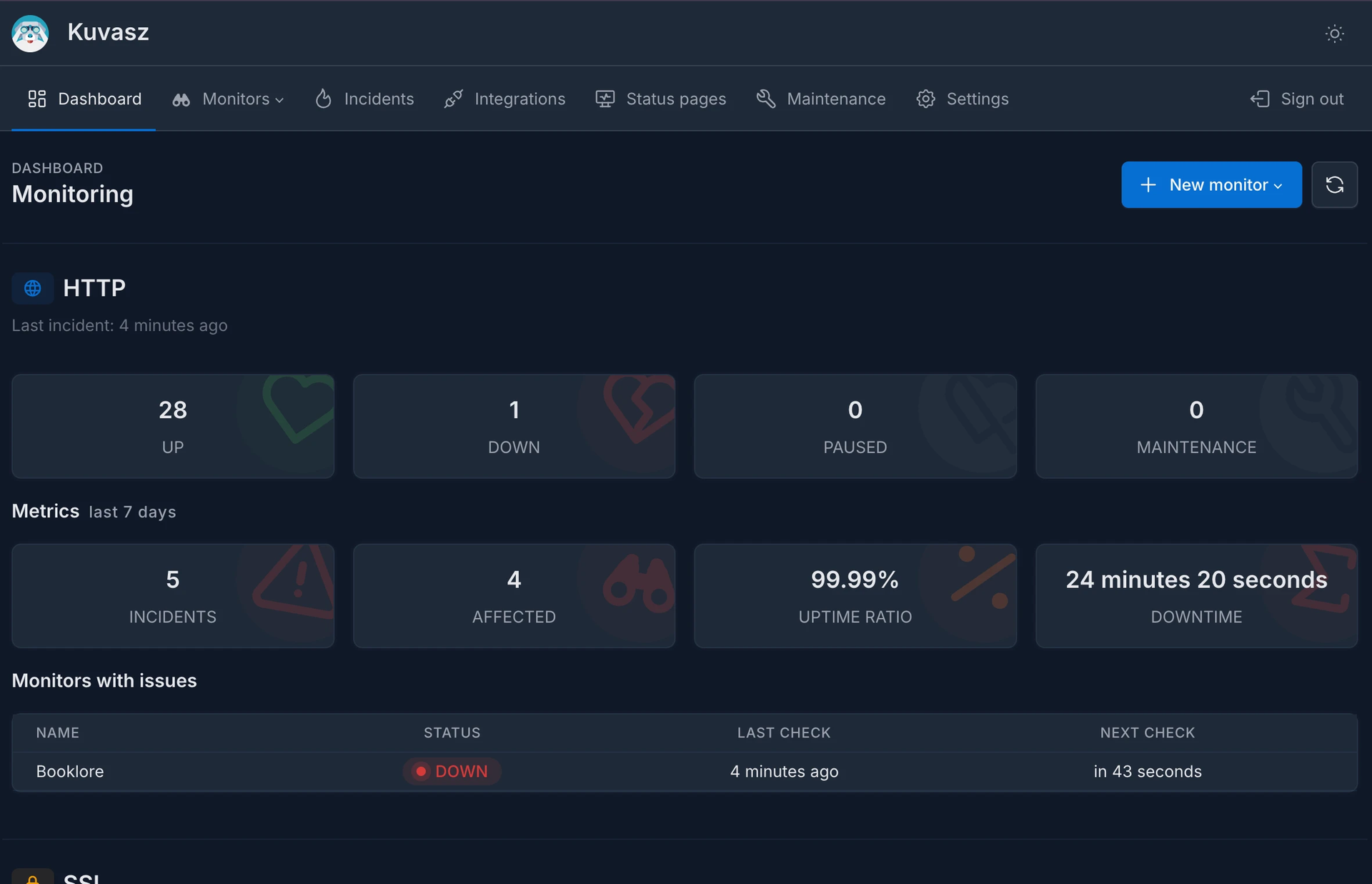
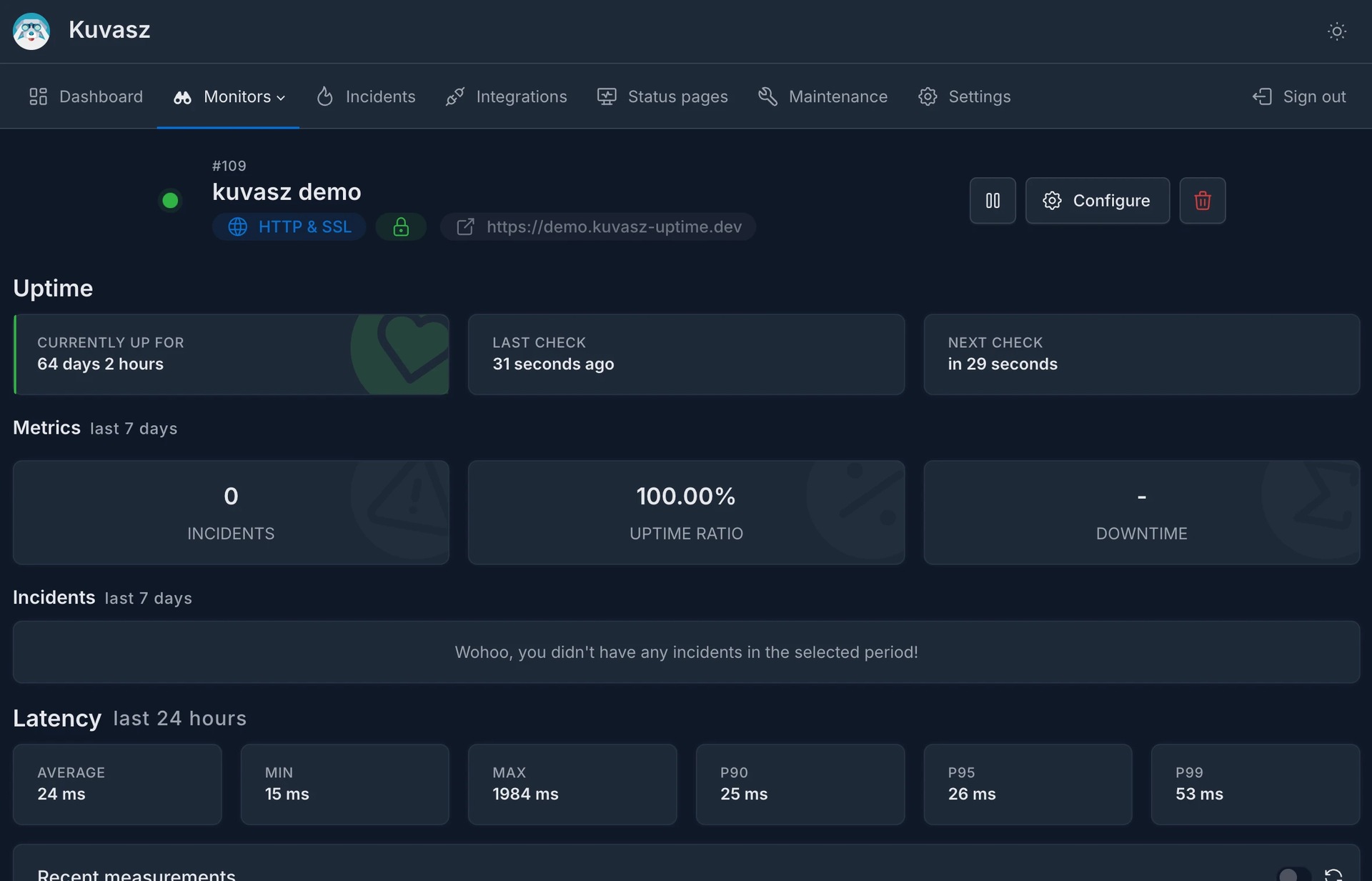
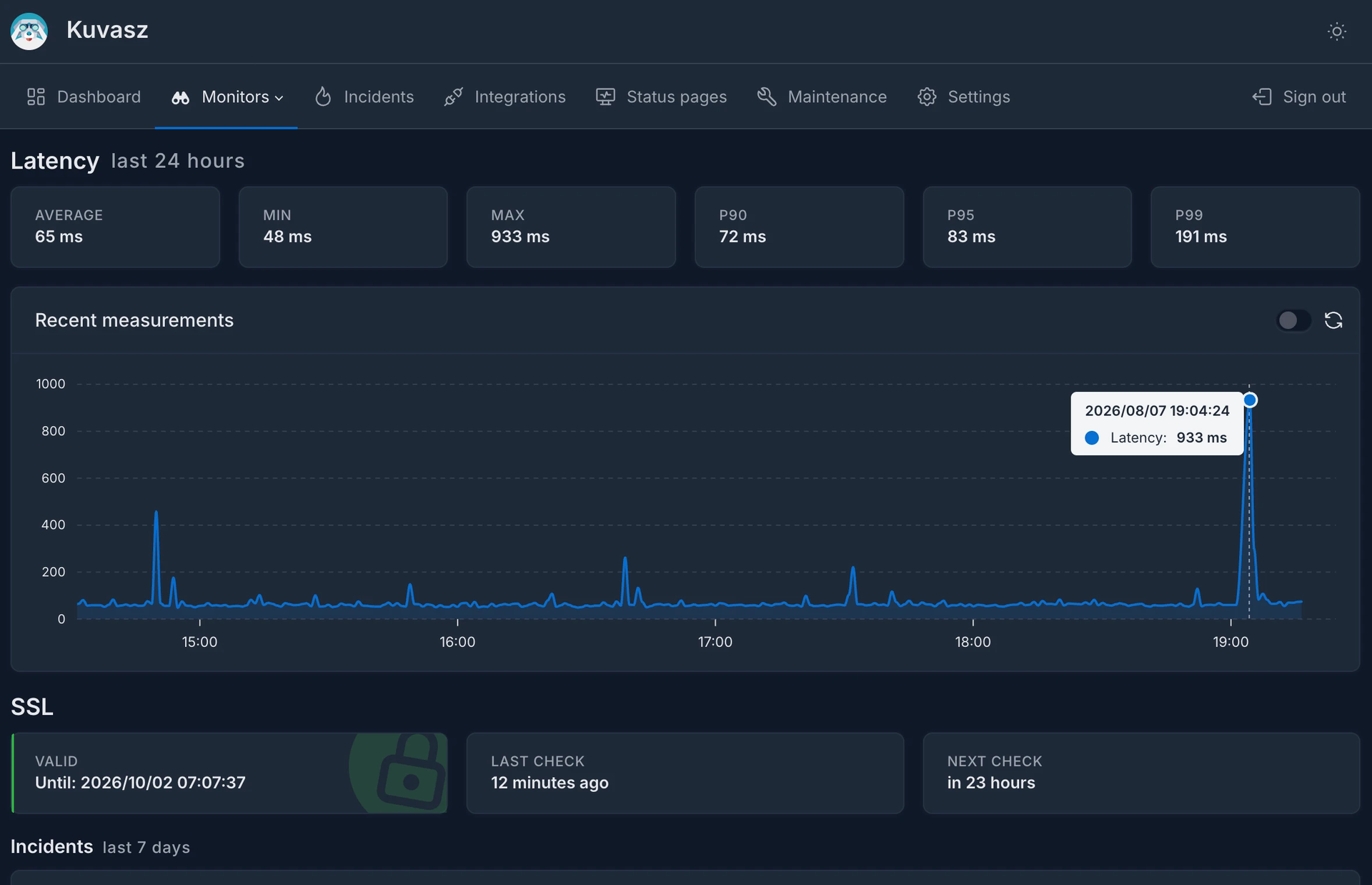
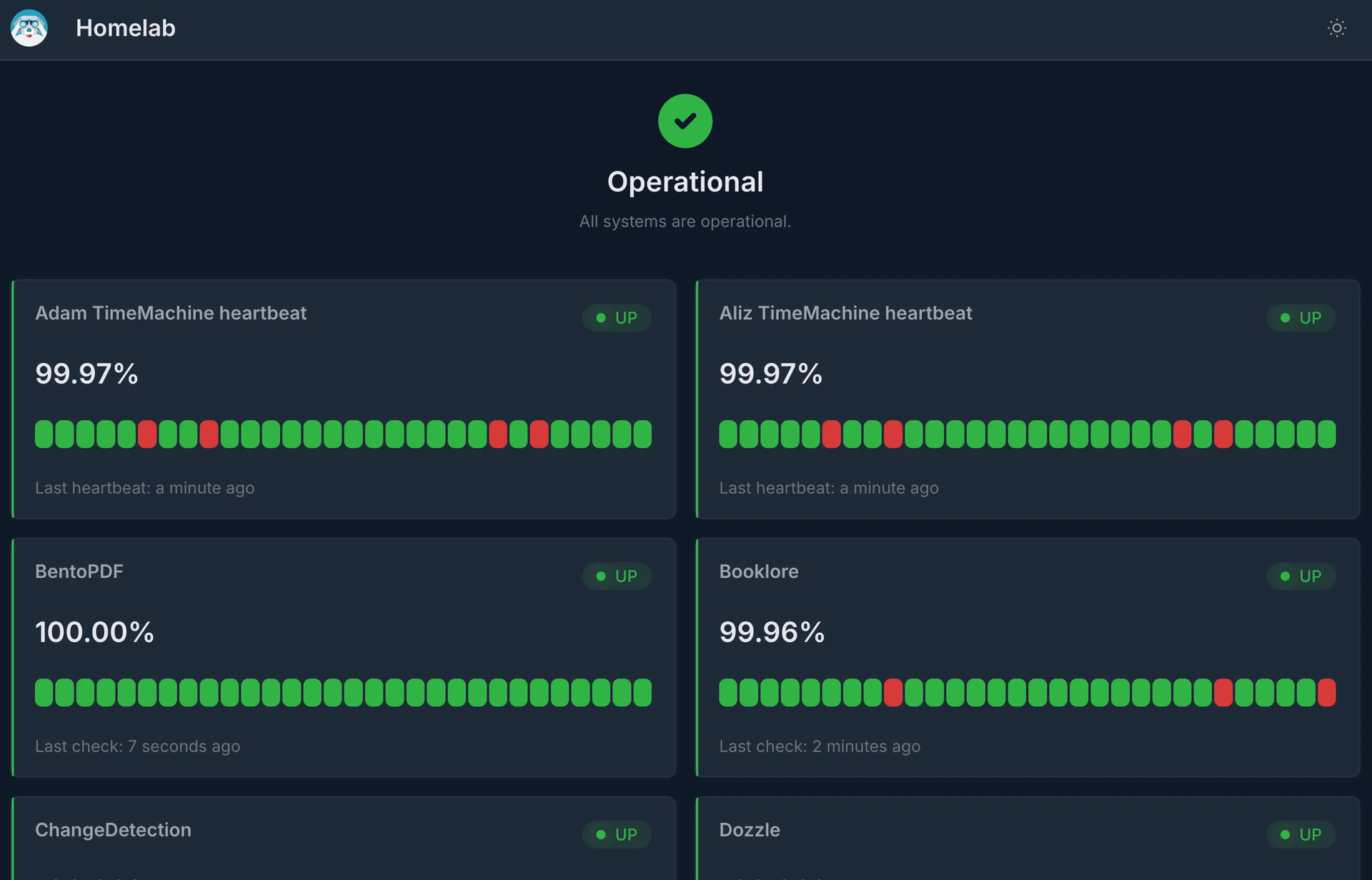
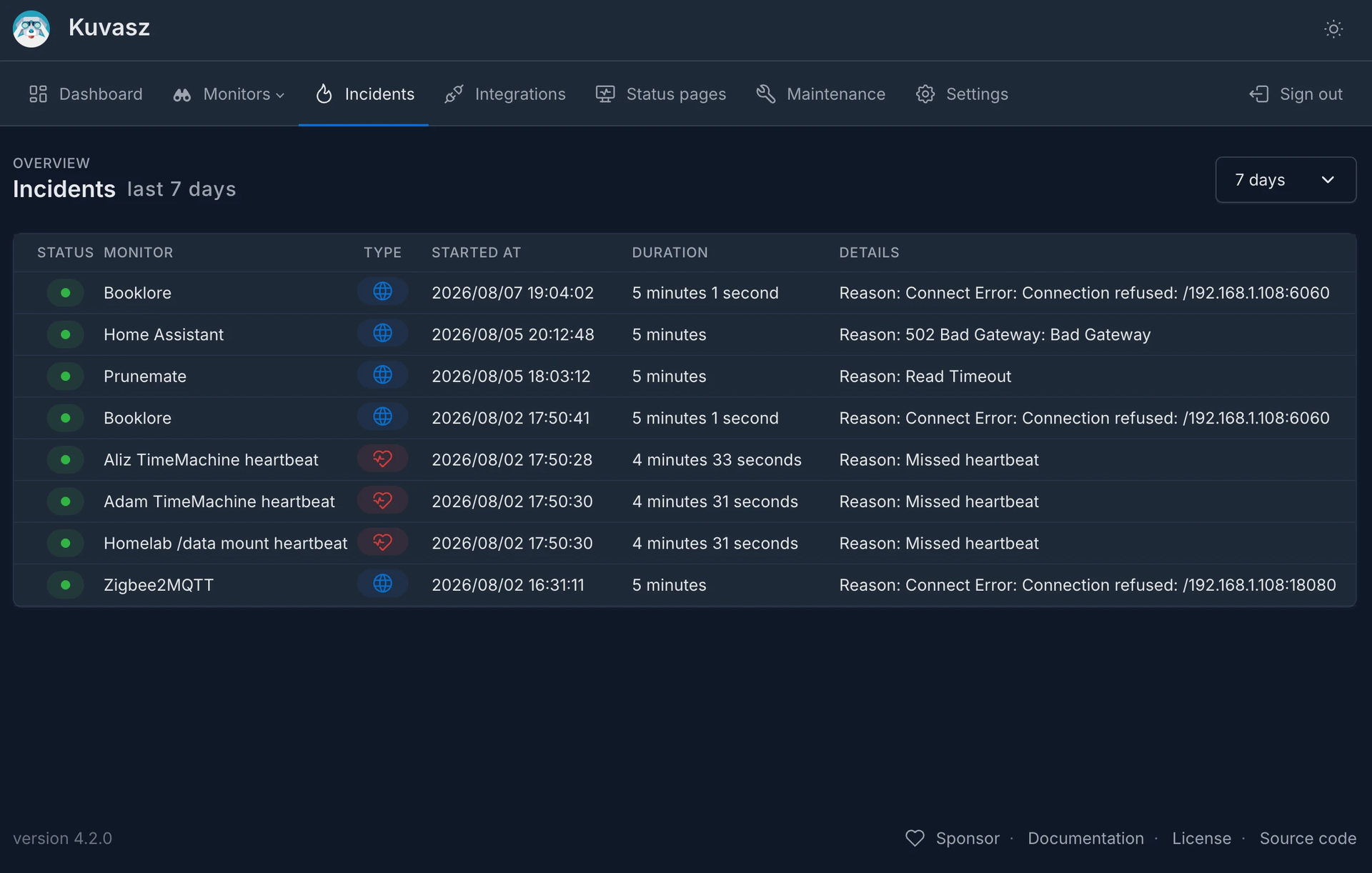
Continuous infrastructure monitoring meets automated SSL expiration tracking in Kuvasz, a self-hosted uptime platform that alerts DevOps teams before outages disrupt production operations. Operators can configure granular health checks across HTTP endpoints, ICMP ping targets, and raw TCP ports with custom polling intervals down to seconds. Automated SSL inspectors track certificate validity, issuing early warning notices before cryptographic chains expire and disrupt production traffic. A push monitoring system receives incoming heartbeat signals from background cron jobs, database backups, and recurring automation scripts, triggering alerts whenever expected pings fail to arrive on schedule. Multi-channel dispatchers route incident notifications through Slack, Discord, Telegram, Microsoft Teams, PagerDuty, and custom webhook payloads with adjustable failure count thresholds to eliminate transient false alarms. Maintenance windows let teams schedule planned downtime through one-off intervals or recurring cron expressions, automatically muting notifications during deployment cycles. Public and private status pages publish categorized system health metrics, historical latency charts, and incident timelines to keep internal stakeholders and end users informed. An integrated Model Context Protocol server allows AI assistants to query monitoring states and toggle checks directly via conversational interfaces. Running on a dedicated VPS on RepoCloud with guaranteed CPU, RAM, and SSD, full root SSH access, and a browser serial console. AGPL-3.0 licensed.
Benefits
- Multi-Protocol Health and Uptime Verification
- Monitor websites, databases, and microservices simultaneously using HTTP status codes, keyword matching, ICMP echo pings, and raw TCP port connections with polling intervals down to five seconds.
- Proactive SSL Certificate Expiration Tracking
- Automatically inspect remote TLS certificates independently of HTTP routing to detect approaching expiration dates, invalid authority chains, and protocol mismatches before domain security warnings trigger for users.
- Push Heartbeats for Scheduled Tasks
- Track non-HTTP cron jobs, database dump scripts, and distributed background workers using inbound heartbeat endpoints that dispatch urgent team notifications when scheduled executions fail to ping on time.
- Public Status Pages with Maintenance Controls
- Deliver real-time incident transparency to customers through customizable status pages while scheduling recurring or one-time maintenance windows that automatically suppress false-positive alarms during software deployments.
Features
- Multi-Channel Alert Dispatching
- Broadcast instant downtime notifications and recovery alerts across Slack, Discord, Telegram, Microsoft Teams, PagerDuty, and custom JSON webhook endpoints with configurable consecutive failure thresholds.
- Interactive Status Page Builder
- Publish dedicated public or password-protected status pages with grouped service categories, historical uptime percentage badges, latency graphs, and manual incident announcement timelines.
- Automated Maintenance Windows
- Configure planned downtime windows using standard Unix cron expressions or one-off datetime schedules to automatically mute monitoring alerts during expected server reboots and application updates.
- Prometheus and OpenTelemetry Exporters
- Stream latency metrics, monitor states, and incident counters into external observability systems using standard Prometheus scrape targets and OpenTelemetry telemetry collector pipelines.
- Model Context Protocol Integration
- Expose real-time infrastructure status and management controls directly to Claude, Cursor, and other AI agents through a built-in MCP server supporting natural language queries.