Categories
Self-Hosted Device Management Remote Desktop IT Administration RustDesk Audit Logging Remote SupportStars
Forks
Watchers
Developer links
CortenDesk
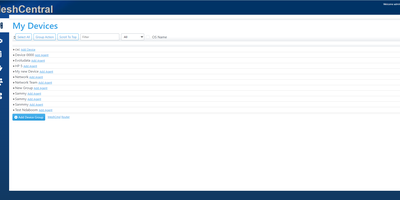
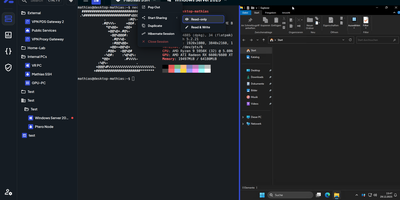
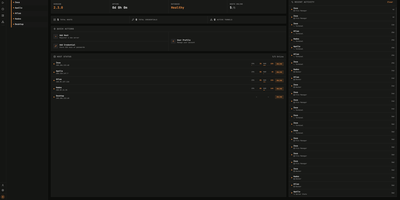
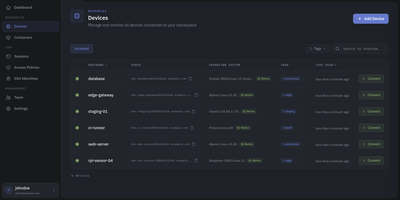
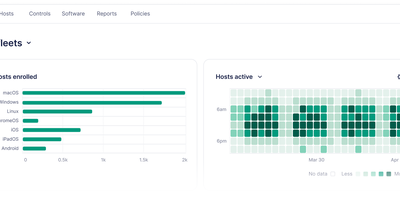
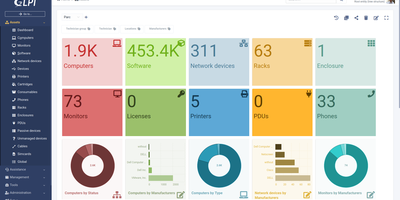
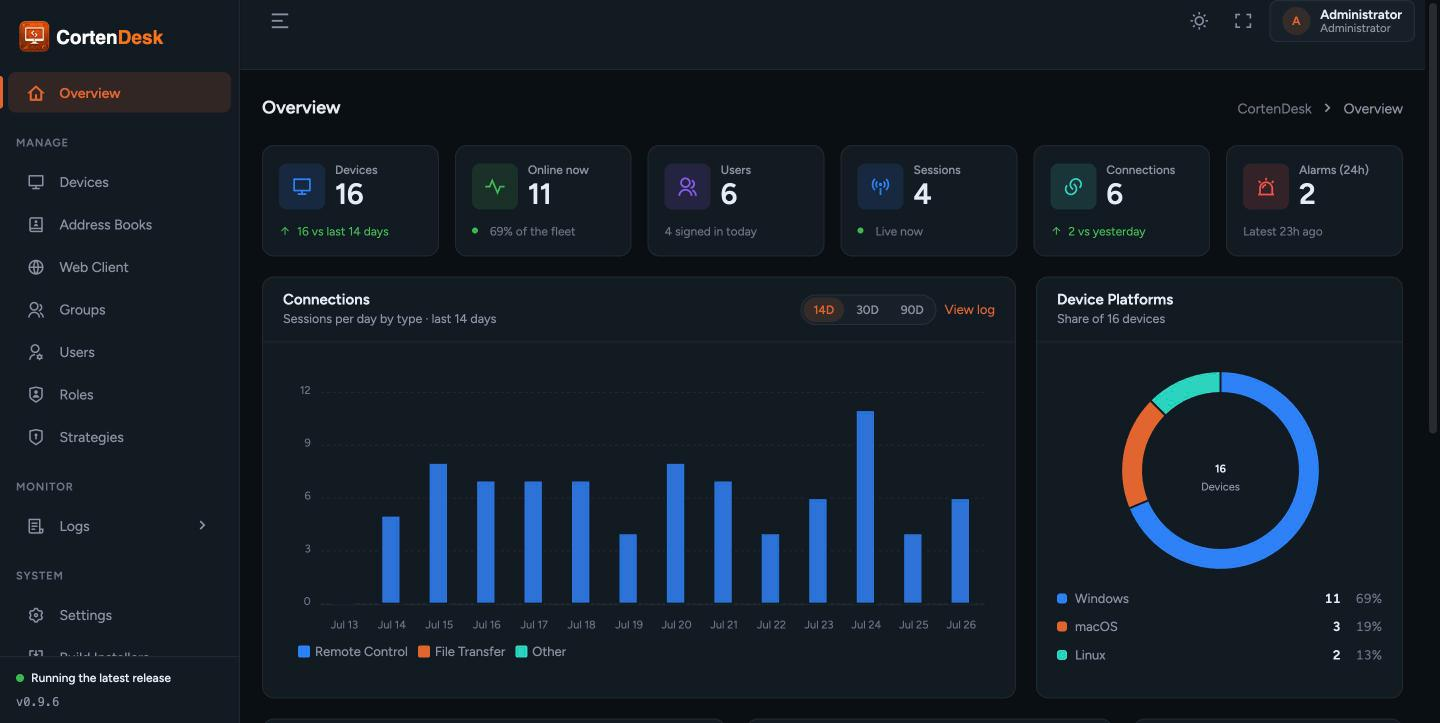
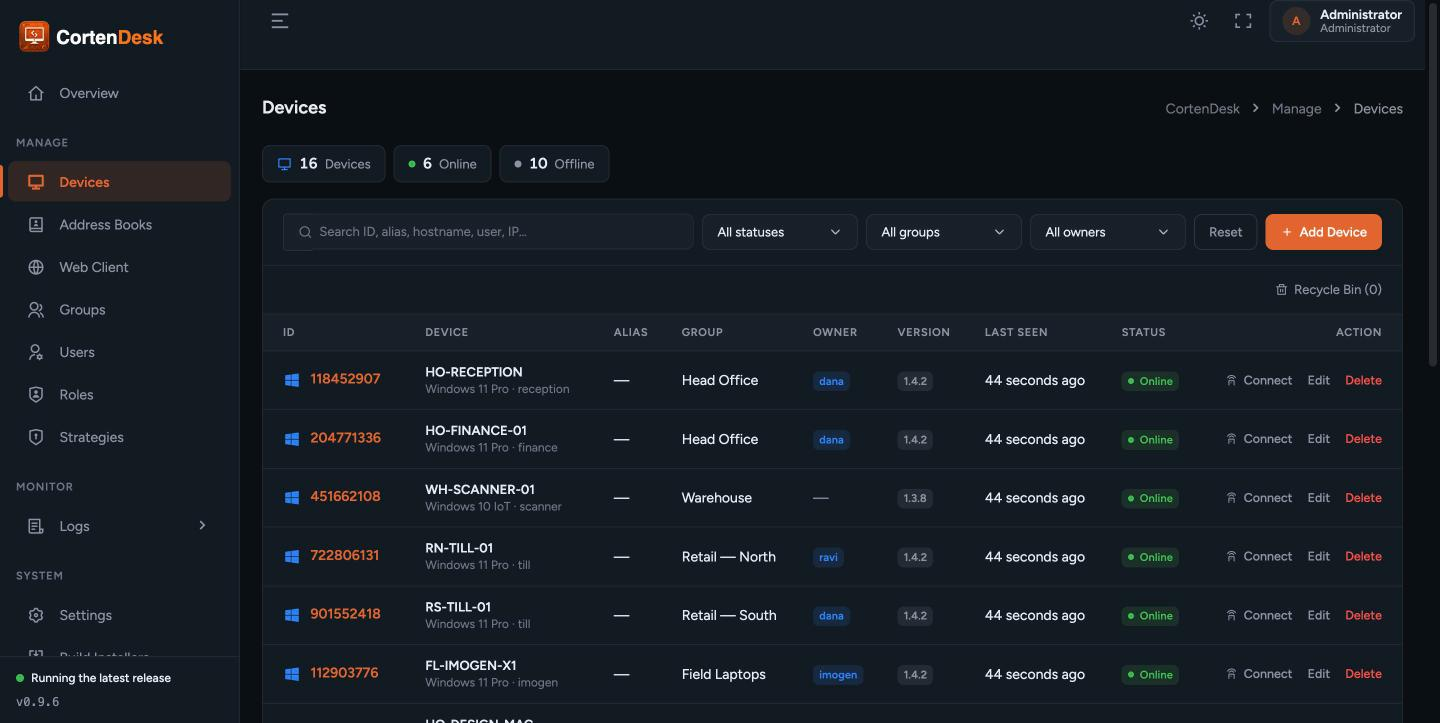
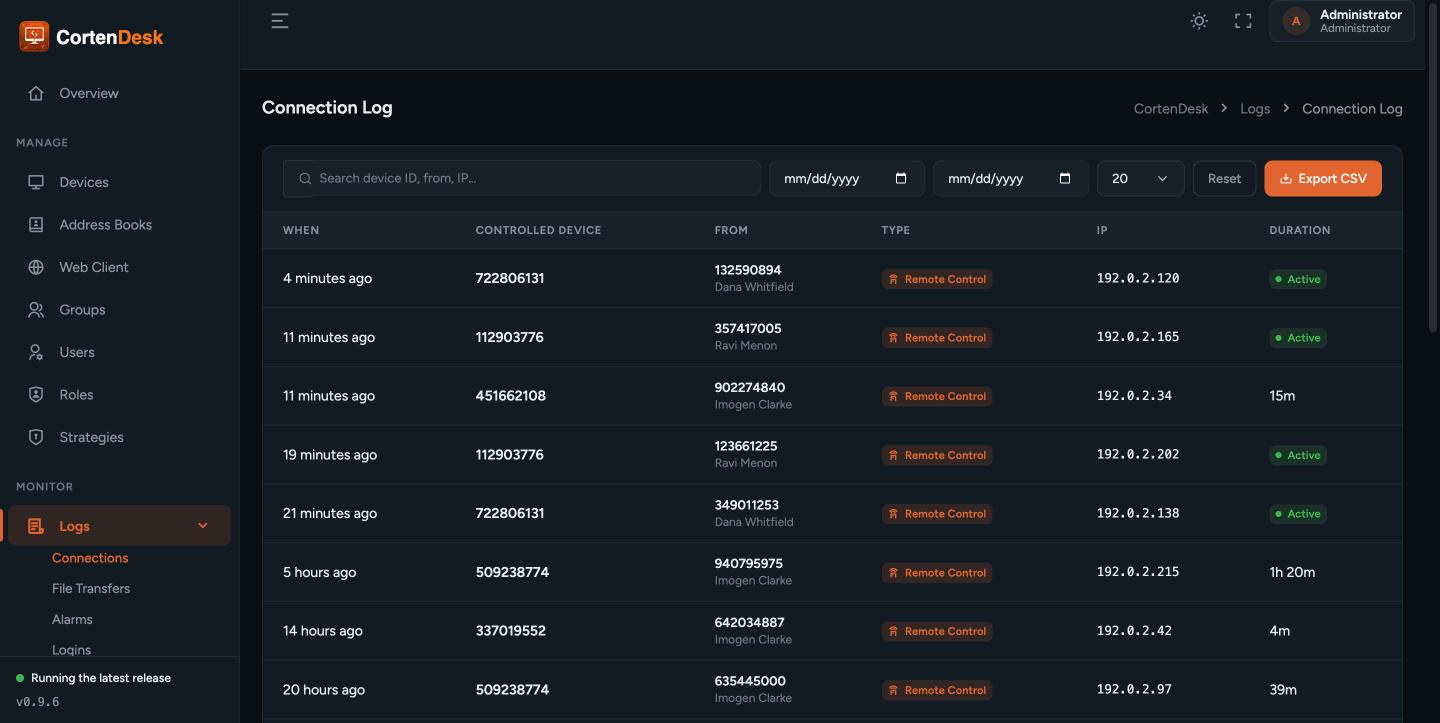
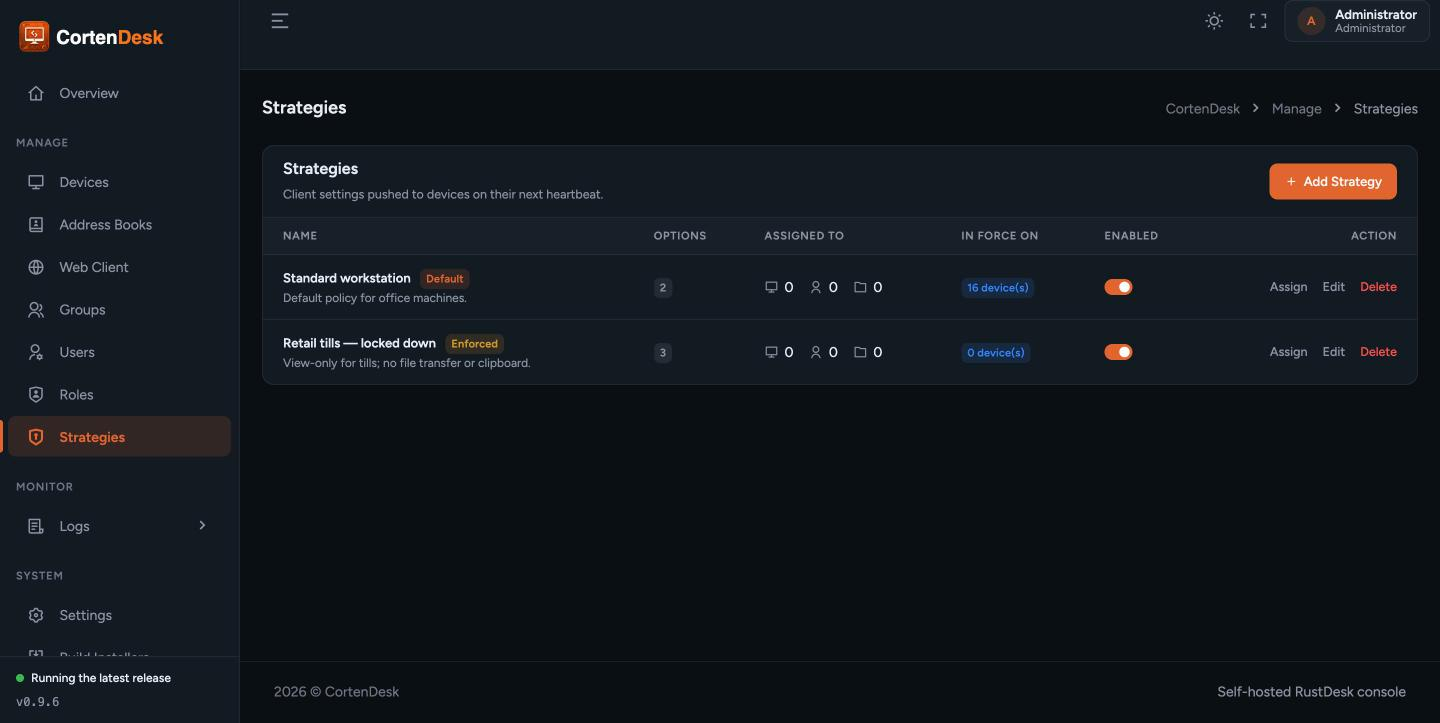
Point your RustDesk clients at CortenDesk and the bare open-source server turns into a managed fleet console with a real address book, real access control, and a remote client that lives in the browser. One container runs the ID server, the relay, and the console together, and existing key pairs and device IDs move in unchanged, so migration is a hostname change rather than a rebuild. The fleet view shows live presence, platform, aliases, owners, and last-seen for every machine, organized into folders that double as the unit of access control. People see only their own devices plus the groups granted to them, and the same scoping is enforced in the RustDesk client API, not just the web pages. Policies push client settings over the heartbeat, covering permissions, password rules, and capture behavior, and enforced policies revert local changes automatically. Five audit logs record connections, file transfers, sign-ins, security alarms, and console actions, all filterable and exportable to CSV. When a browser is all you have, the built-in web client views and controls machines with file transfer, clipboard, audio, and multi-monitor switching, no installer required. Running on a dedicated VPS on RepoCloud with guaranteed CPU, RAM, and SSD, full root SSH access, and a browser serial console. AGPL-3.0 licensed.
Benefits
- One container, whole server
- The ID server, relay, and web console ship in a single Docker image that generates its key pair on first boot, and stock RustDesk clients connect unchanged with existing device IDs preserved.
- Access scoped per person
- Users see only their own devices plus folders granted to them or their groups, enforced identically in the console and the RustDesk client API, so the address book never leaks the whole fleet.
- Policies pushed and enforced
- Push permissions, security, and capture settings to a device, user, or folder over the heartbeat; the most specific assignment wins, and enforced policies revert local changes within a minute.
- Every session on record
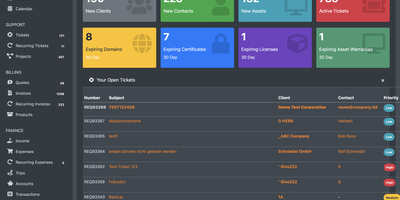
- Connections, file transfers, sign-ins, security alarms, and console actions are logged with configurable retention, nightly pruning, CSV export, and a dashboard showing active sessions you can end.
Features
- Fleet and folders
- Live presence, platform icons, aliases, owners, pre-registration by ID, an optional approval gate for unknown devices, and a recycle bin, with per-user table columns and CSV export.
- Browser remote client
- A native RustDesk protocol client in the browser: view and control machines, transfer files both ways, switch monitors, pass the clipboard, and send Ctrl+Alt+Del without any installer.
- Address books, both APIs
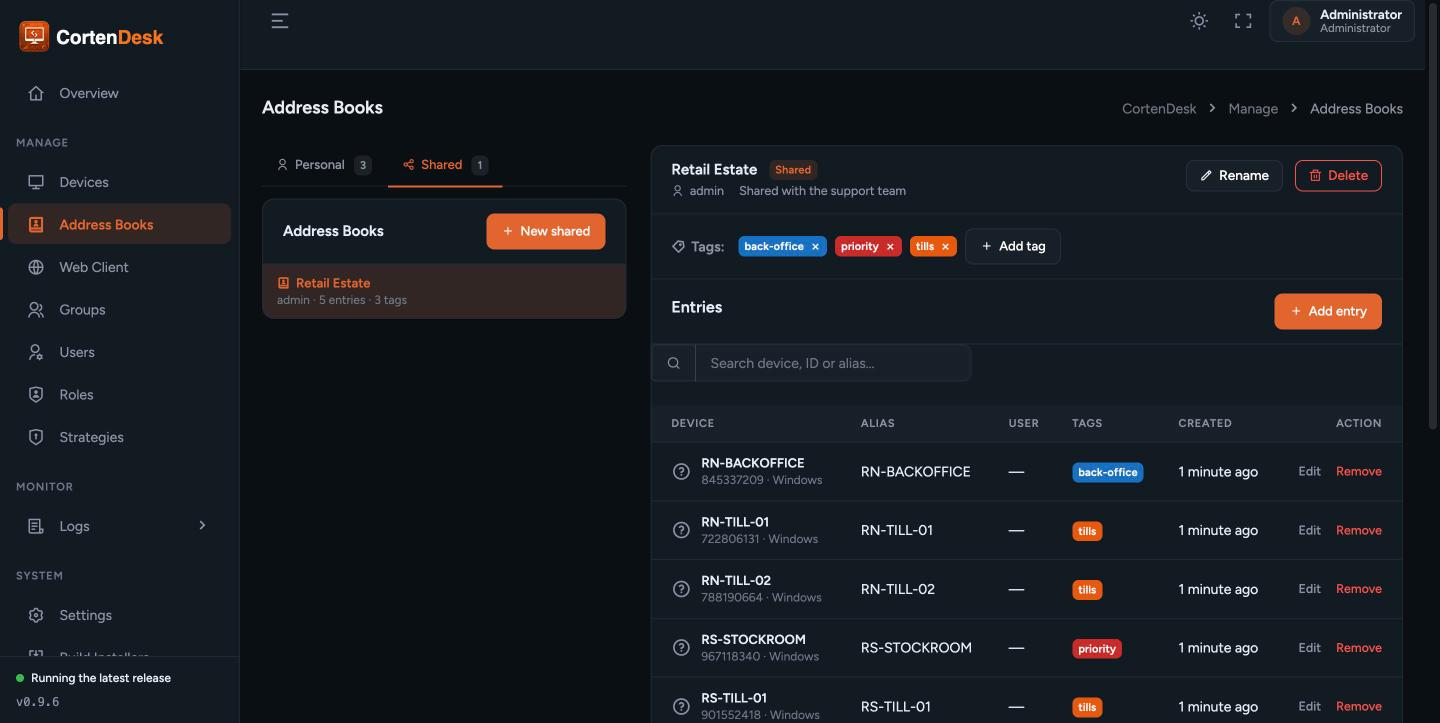
- Full support for the modern multi-address-book API and the legacy API, with shared books, share rules for everyone, a user, or a group, and color-coded tags.
- SSO and two-factor
- OpenID Connect sign-in with PKCE for Keycloak, Authentik, Entra ID, Okta, or Google, plus TOTP two-factor with single-use recovery codes that the RustDesk client also honors.
- Automation REST API
- Scoped bearer tokens drive a REST API over users, devices, groups, address books, and audit logs, including the RustDesk client --assign flag for unattended deployment scripting.