Categories
Self-Hosted Network Management Network Automation Source of Truth Internet Exchange Routing Policies BGP Management PeeringDBStars
Forks
Watchers
Developer links
Peering Manager
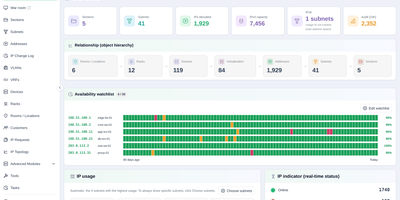
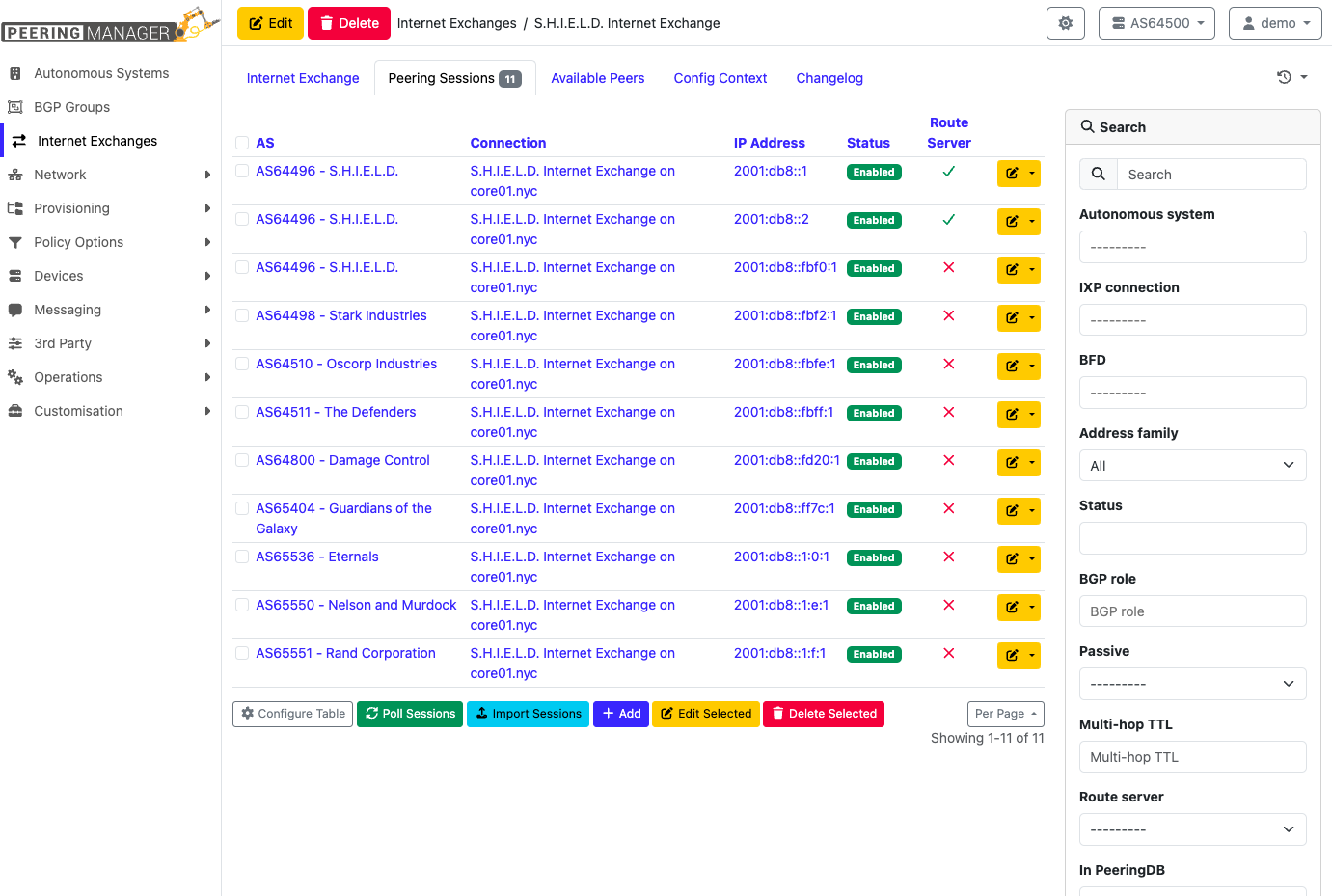
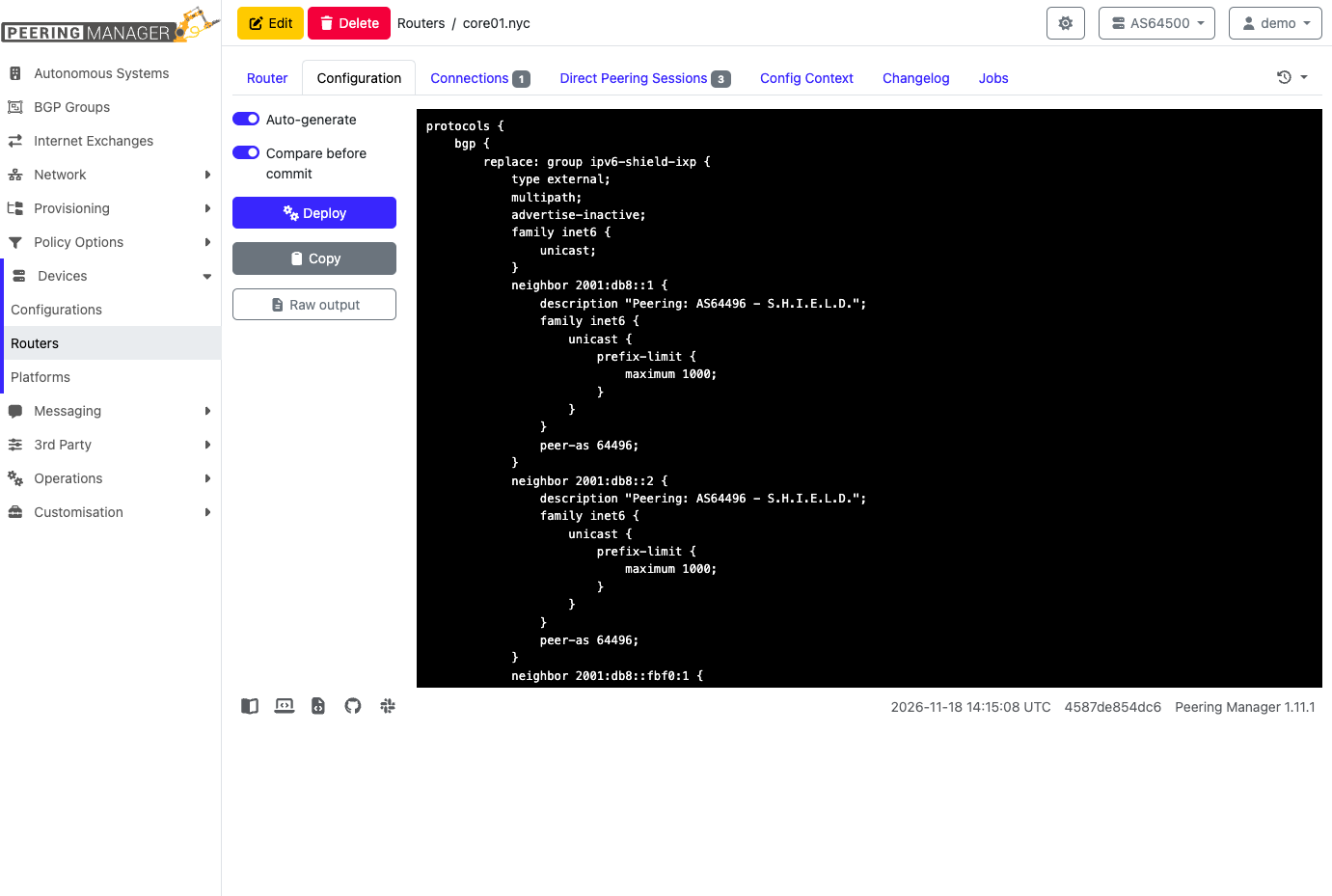
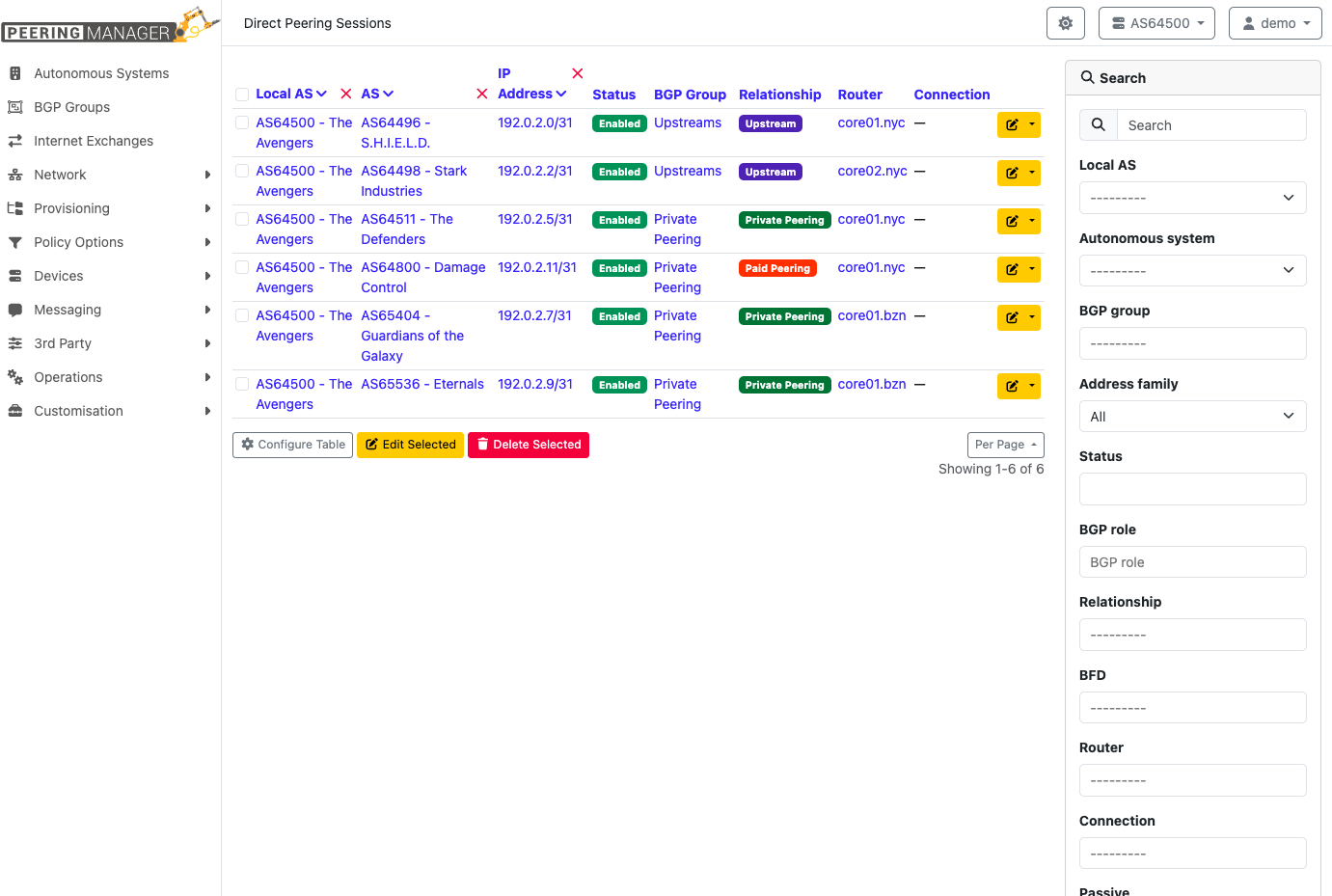
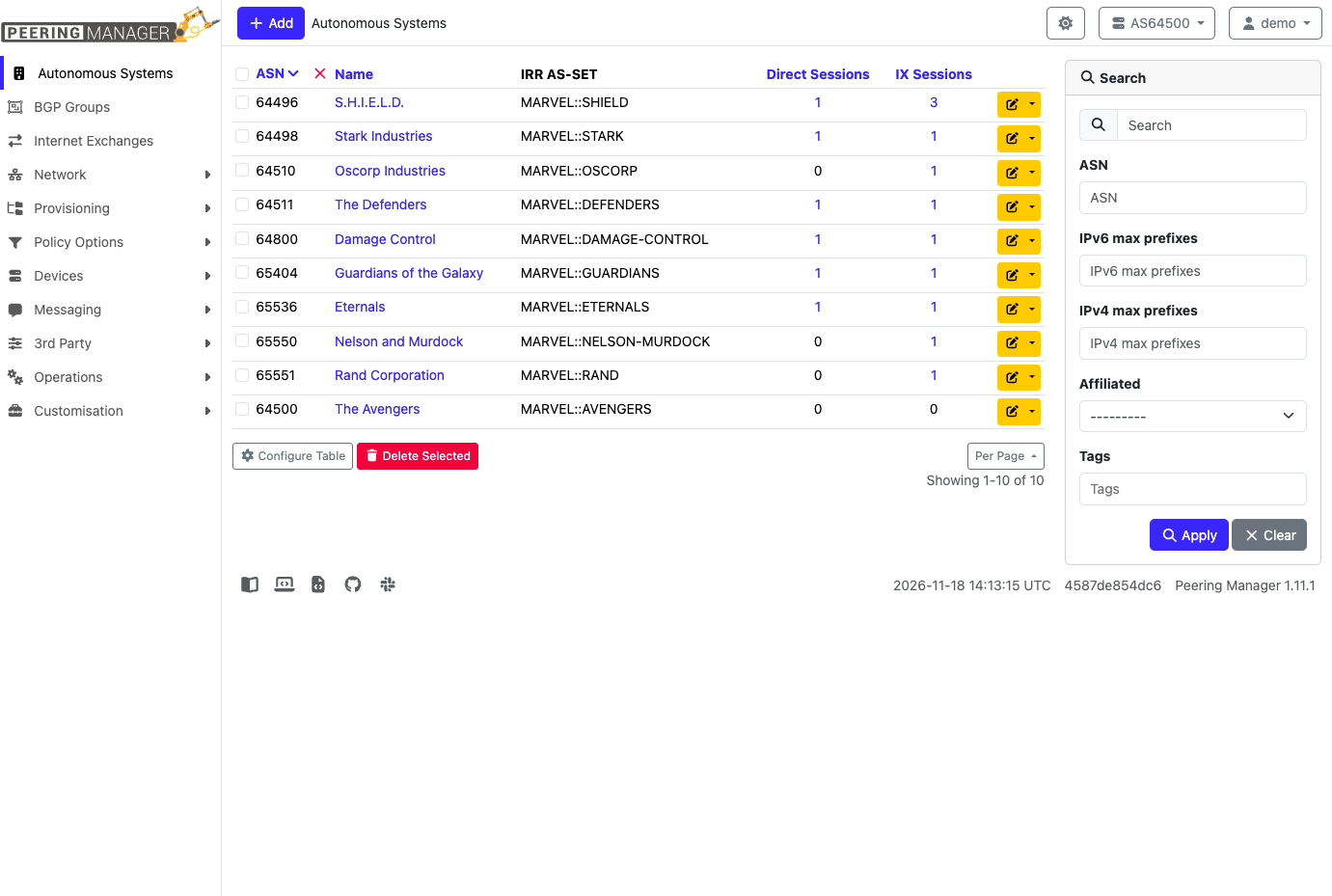
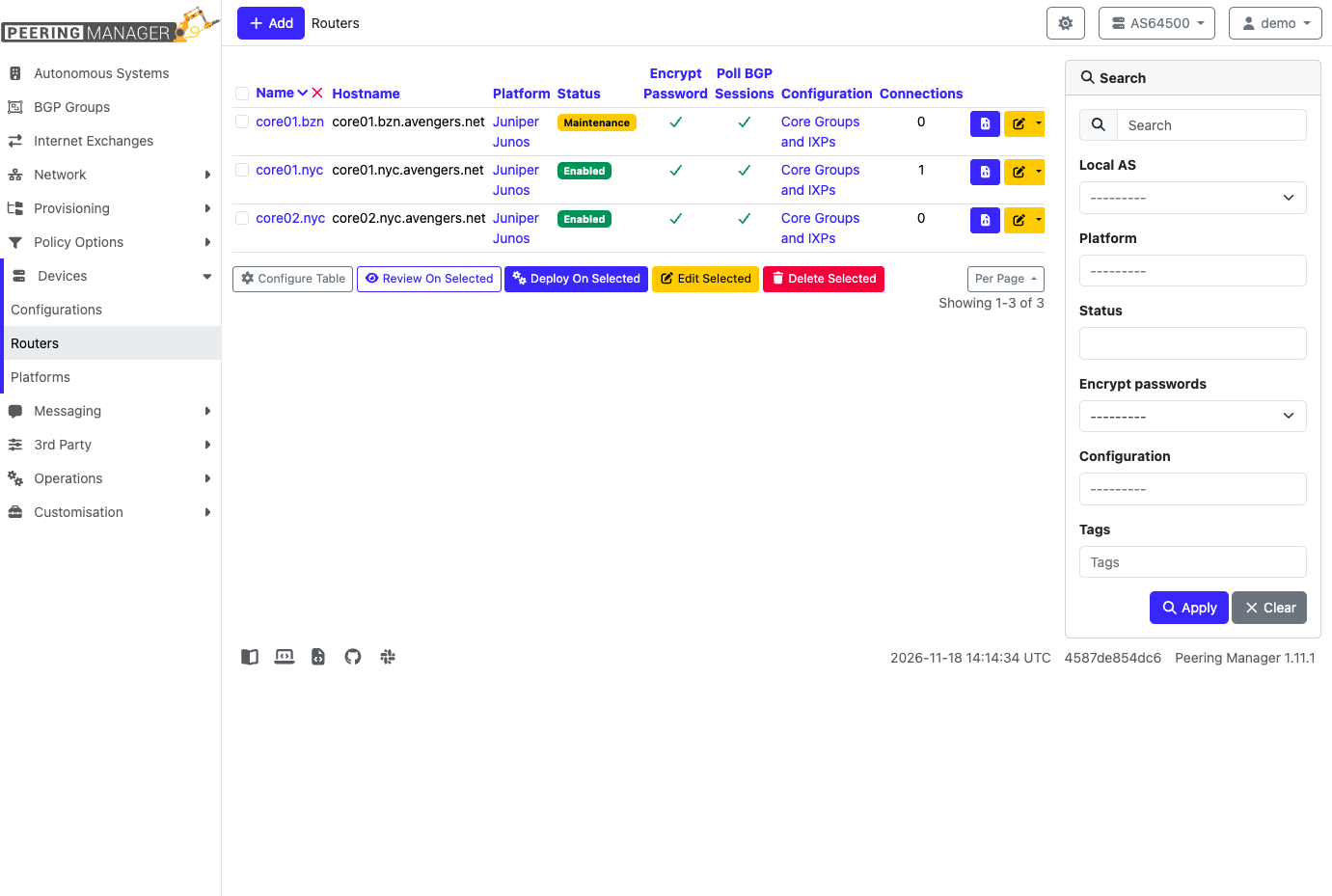
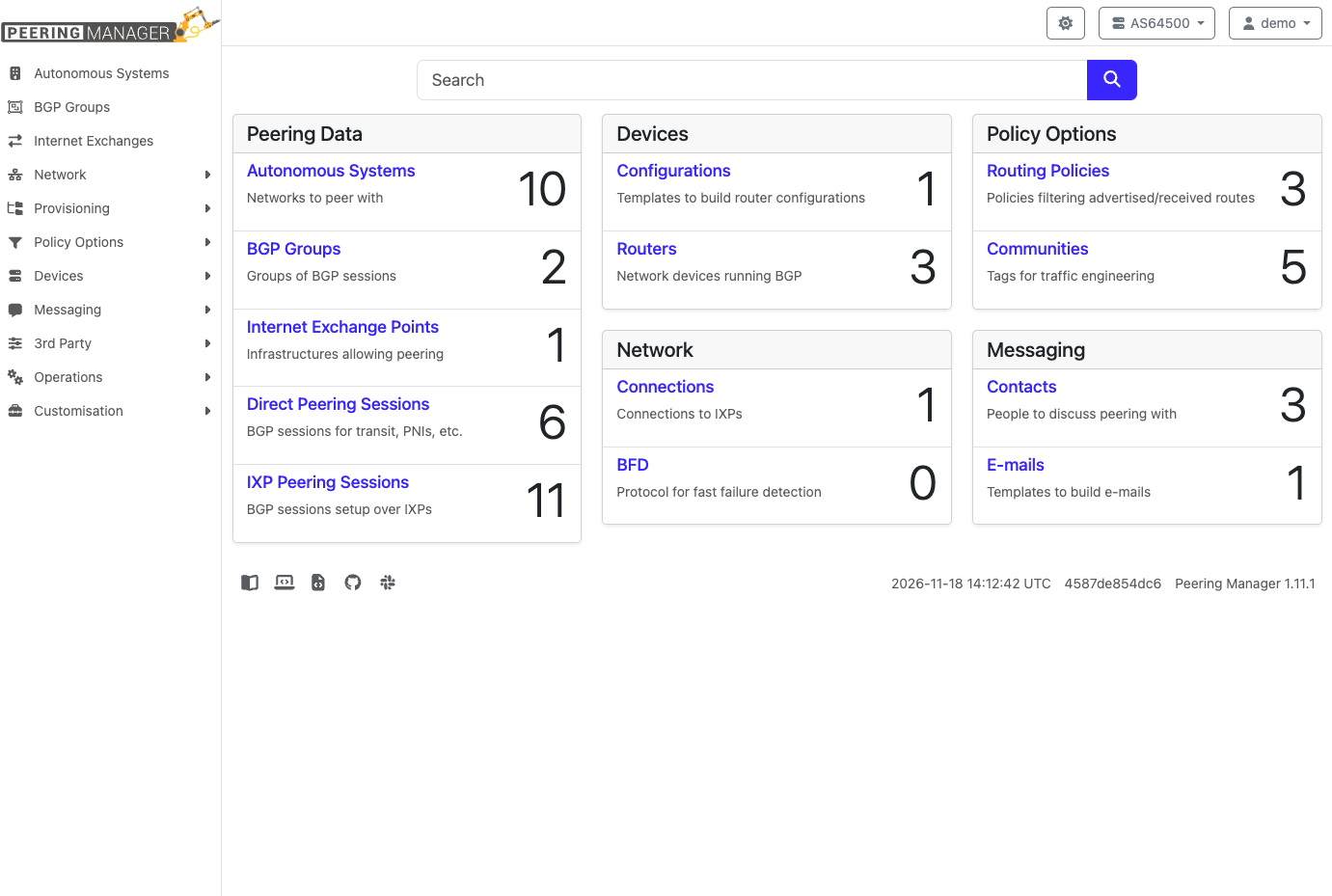
A source of truth for BGP peering, Peering Manager records every autonomous system, exchange, and session, then renders and deploys the router configuration that goes with them. Autonomous systems, BGP groups, exchange points, and connections live side by side, with separate session types for IXP peering and for direct links such as transit, customers, and private interconnects. Routing policies and BGP communities describe what to accept or advertise, and IRR data can be turned into prefix lists and AS lists for filtering. A local PeeringDB cache powers discovery of shared exchanges, potential peers, and network contacts, and importing an exchange creates its connections automatically. Configuration templates render complete or partial router configurations, show a comparison before committing, and deploy to platforms including Junos and IOS-XR. Polling reports the state of each BGP session. Other networks can submit and track peering requests through the portal API, contact records and e-mail templates handle the correspondence, and webhooks announce changes to tools such as Slack. Config contexts and export templates feed custom JSON and text to other systems, and the tool connects to automation pipelines and monitoring through a REST API and optional Prometheus metrics. Data sources keep templates in sync from a Git repository, a change log records every edit, and sign-in can use LDAP, OIDC, or RADIUS. Running on a dedicated VPS on RepoCloud with guaranteed CPU, RAM, and SSD, full root SSH access, and a browser serial console. Apache-2.0 licensed.
Benefits
- One Source of Truth for BGP
- Record autonomous systems, exchanges, connections, sessions, and routing policies once, then let every router configuration and export draw from the same vetted data instead of scattered spreadsheets.
- Turn Up Sessions Faster
- Import exchanges from PeeringDB, discover shared exchanges and potential peers, and let networks request peering through the portal API, so new BGP sessions start from existing data rather than manual lookups.
- Keep Router Configs Consistent
- Templates render each router's BGP configuration from the recorded sessions and policies, with a comparison before commit and one-click deployment, so devices match the documented desired state.
- Automate Around Your Tooling
- A REST API, webhooks, config contexts, export templates, and Git-synced data sources let provisioning systems, chat alerts, and monitoring tools consume Peering Manager data without screen scraping.
Features
- IXP and Direct Sessions
- Track IXP peering sessions separately from direct sessions such as transit, customers, and private interconnects, with status, BGP role, route server flag, passive mode, and multihop TTL.
- Routing Policies and Communities
- Define import and export routing policies and BGP communities, attach them to autonomous systems, exchanges, and sessions, and generate prefix lists and AS lists from IRR data for filtering.
- PeeringDB and IX-API Sync
- Synchronise networks, contacts, and prefix limits from PeeringDB, discover shared exchanges and peers, and import exchange connections from PeeringDB or IX-API.
- Router Configuration and Deployment
- Render Jinja2 templates into complete or partial router configurations, compare before commit, deploy to supported platforms like Junos and IOS-XR, and poll BGP session state.
- Config Contexts and Exports
- Attach JSON config contexts to routers and policies, and use Jinja2 export templates to turn stored data into text such as scripts, lists, or monitoring updates.
- Peering Portal and Requests
- Let other networks submit and track peering requests through the portal API, with operator accept and reject decisions handled in the standard REST API.