Wanderer
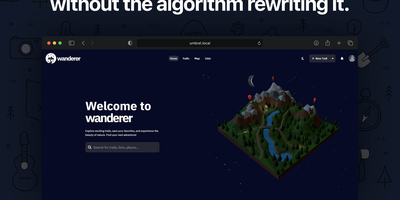
Wanderer provides a privacy-first alternative to AllTrails and Komoot, giving outdoor enthusiasts complete ownership of their GPS data on a self-hosted server. The platform accepts uploads in GPX, KML, FIT, and TCX formats, automatically extracting distance, elevation gain and loss, duration, and speed statistics to build a searchable trail catalogue. The built-in route planner uses the Valhalla routing engine to calculate hiking, cycling, and walking routes directly on the map, while MapLibre GL renders smooth vector tiles from OpenStreetMap data with configurable tile sources and overlay layers. Each trail supports rich metadata including difficulty ratings, categories, waypoints with descriptions, photo galleries, and summit log entries that track completion dates with optional GPS data. Meilisearch powers instant full-text search across trail names, descriptions, and tags, complemented by map-based spatial filtering and advanced date, distance, and elevation filters. The ActivityPub integration follows the same federation protocol as Mastodon, allowing users to follow explorers on other Wanderer instances and see their public trails, comments, and summit logs in a unified feed without requiring cross-instance accounts. The WASM-based plugin system enables third-party extensions for custom integrations. The Docker Compose stack runs three containers — SvelteKit frontend on port 3000, PocketBase backend with embedded SQLite, and Meilisearch — with startup completing in under 90 seconds. On RepoCloud, deploy Wanderer on a dedicated VPS with root SSH access, persistent storage for your trail database and uploaded photos, and complete control over routing, geocoding, and tile server configurations, all under the AGPL v3 license.
Misskey
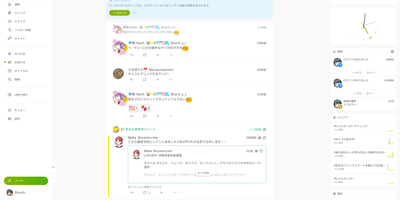
With 11,000+ GitHub stars and over 1,291 releases since 2016, Misskey is the most feature-rich open-source microblogging platform in the Fediverse — federation-first social networking with capabilities that go far beyond simple status updates. The TypeScript and Vue 3 frontend delivers a highly customizable interface with drag-and-drop widget layouts, switchable themes, per-user custom CSS, and AiScript-powered plugins that transform every instance into a unique social experience. ActivityPub federation enables seamless interaction with Mastodon, Pixelfed, PeerTube, and any ActivityPub-compatible platform across the decentralized network. Emoji reactions let users respond with custom instance emojis instead of simple likes, while Misskey Flavored Markdown adds animated text effects, sparkle decorations, and rich formatting to posts. The built-in Drive provides personal cloud file management with folder organization for images, videos, and audio — eliminating the need for external storage services. Antennas create custom filtered timelines based on keywords, users, or criteria for monitoring specific topics. Channels offer topic-specific feeds separate from the main timeline. Pages enable users to build personal websites directly within their instance. Clips save and organize posts into curated collections. The Node.js backend scales with PostgreSQL for persistence, Redis for caching, and optional S3-compatible storage for media. Docker Compose deployment provisions the complete stack including the database and cache in under 15 minutes. Running on a dedicated VPS on RepoCloud with guaranteed CPU, RAM, and SSD, full root SSH access, and a browser serial console. AGPL-3.0 licensed.
Friendica
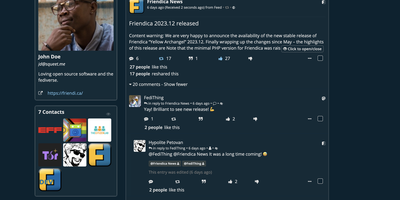
Friendica connects to more federation protocols than any other single platform: ActivityPub reaches Mastodon, Pleroma, Misskey, Lemmy, Pixelfed, and PeerTube; the Diaspora protocol bridges that network; and OStatus provides legacy compatibility. But protocol reach is just the foundation. Where most fediverse platforms stop at microblogging, Friendica offers long-form posts, photo albums, event calendars with RSVP, group discussions, and rich multimedia content. BlueSky and Tumblr connectors extend your reach into non-federated networks, while RSS import pulls content from any blog or news source into your timeline. Privacy controls let you scope each post to specific contacts, groups, or public visibility with per-post granularity rather than account-wide settings. Multiple themes customize the interface from Facebook-like layouts to minimal designs, and Fedilab provides native mobile access. Under the hood, the PHP application with MariaDB runs as either an Apache or FPM Docker image with Redis caching and background cron workers handling federation delivery, media processing, and notification dispatch. One of the oldest fediverse projects (1,650+ stars, 160+ contributors since 2010), Friendica has weathered every protocol evolution and platform migration the decentralized web has thrown at it, making it one of the most battle-tested social networking platforms available.
NeoDB
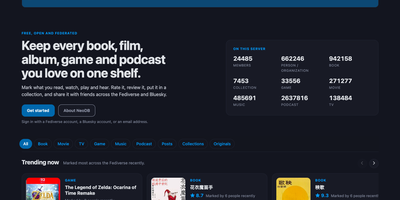
NeoDB is a self-hosted social catalog where you mark, rate, and review the books, films, music, games, and podcasts you love, then share your shelves with friends across the Fediverse instead of inside one company's app. Paste a link from Goodreads, IMDb, Steam, Spotify, Bandcamp, Apple Podcasts, or any podcast RSS feed to create a catalog entry in one click, or add an item by hand when no source exists. Mark each item as wishlist, in progress, complete, or dropped, then attach a rating, a review, progress notes such as reading at page 42, and private or public tags. Collections group items into shareable lists, and progress tracking turns a list into a personal reading challenge. Bring your history along from Goodreads, StoryGraph, Hardcover, Letterboxd, RateYourMusic, Steam, Douban, or podcast OPML files, and export a full archive of your data whenever you like. A home feed shows what friends are playing and watching, each activity can be limited to yourself, followers, or the public, and albums and podcasts play right inside the feed. Sign in with a Mastodon, Pixelfed, or Bluesky identity, import your social graph, post text and photos, and share reviews and collections to the Fediverse, Bluesky, or Threads. A Mastodon-compatible API lets most Mastodon apps work out of the box, and a documented REST API serves custom clients. Running on a dedicated VPS on RepoCloud with guaranteed CPU, RAM, and SSD, full root SSH access, and a browser serial console. AGPL-3.0 licensed.
Bonfire
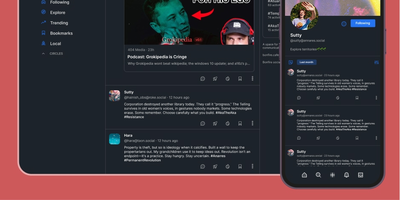
A social network shaped like your community, not like an advertiser's funnel. Bonfire is an open-source toolkit for building federated online spaces where a group hosts its own home, sets its own rules, and still talks with the wider fediverse. Pick a flavour to start: Social for familiar timelines and profiles, Community for groups and topics, Open Science for research collaboration, with coordination and cooperation spaces in development. Everything is an extension, so each instance enables only the pieces it wants, from boundaries and circles that control exactly who sees each post, to custom feeds, direct messages, bookmarks, and trending topics. Members follow people and groups across servers, boost and quote posts, and carry one identity through conversations that cross instance lines. Moderation is granular by design: instance, group, and personal controls combine, and public posts can stay readable without an account to welcome newcomers. Organisers customise branding, extensions, and defaults instead of accepting a platform's roadmap, and developers write new extensions when a community needs a feature nobody built yet. The result is a small, governable internet: your server, your members, connected to everyone. Running on a dedicated VPS on RepoCloud with guaranteed CPU, RAM, and SSD, full root SSH access, and a browser serial console. AGPL-3.0 licensed.
Mbin
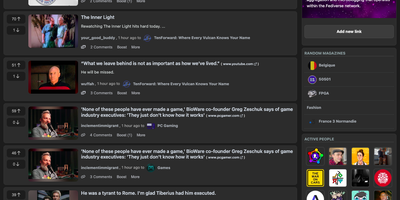
Mbin is a federated community platform that mixes magazine-based link aggregation and threaded discussion with short-form microblogging, so one self-hosted instance works as both a Reddit-style forum and a Mastodon-style social feed. Members create magazines around topics, then post links, articles, photos, and videos into them, vote submissions up or down, boost the best ones to their followers, and argue the details in threaded comment trees. The microblog stream sits beside the magazines for quick status posts, and a combined view blends both content types into a single feed you can sort by hot, new, active, or most commented. Because the whole platform speaks ActivityPub, your magazines and users federate with Mastodon, Lemmy, Pixelfed, Pleroma, and PeerTube, and follows, replies, and votes travel across instance boundaries in both directions. Magazine owners appoint moderators, pin threads, and handle reports, while instance admins control registration, federation allow and block lists, and which remote servers the instance talks to. Readers shape their own view with subscriptions to magazines, people, and tags, plus personal blocks for users, magazines, and entire instances. A documented REST API with OAuth 2.0 access lets mobile clients, bots, and integrations read and publish content, and Service-type accounts are supported for automated posters. Running on a dedicated VPS on RepoCloud with guaranteed CPU, RAM, and SSD, full root SSH access, and a browser serial console. AGPL-3.0 licensed.
Castopod
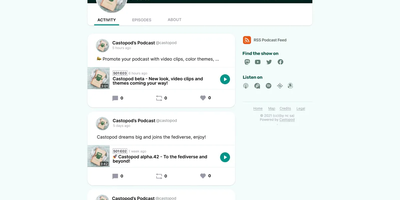
Every podcast you publish through Castopod automatically becomes a Fediverse social account that Mastodon, Pleroma, and Pixelfed users can follow, boost, and comment on from their own timelines. This ActivityPub integration transforms podcast distribution from a one-way broadcast into a two-way conversation where listeners interact with episodes through the social platforms they already use. Beyond federation, the platform manages the complete lifecycle: upload an episode, and auto-generated RSS feeds distribute it to Apple Podcasts, Spotify, Deezer, Podcast Addict, and every compatible directory. IABv2-compliant analytics measure downloads, geographic distribution, and listening apps while maintaining GDPR, CCPA, and LGPD compliance through anonymized data collection. Podcasting 2.0 namespace support unlocks chapters with images, SRT/VTT transcripts, location tags, and person credits that modern podcast apps surface to listeners. Video episodes publish alongside audio, and auto-generated clips feed social media sharing workflows. Monetization tools span Value4Value micropayments, premium subscriptions, funding links, and cookieless advertising. Multi-user roles operate per-podcast: contributors, editors, and admins each work within defined permission boundaries. The PHP application runs behind nginx with MariaDB and Redis on a RepoCloud VPS with dedicated CPU, RAM, and SSD. AGPL-3.0 licensed.