Supabase
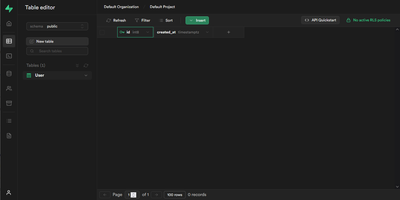
With over 107,000 GitHub stars and adoption by teams at Mozilla, 1Password, Peerlist, and thousands of startups, Supabase has become the most widely deployed open-source Firebase alternative — built entirely on PostgreSQL rather than a proprietary NoSQL store. Every project provisions a dedicated Postgres database with 40+ preinstalled extensions, auto-generating REST APIs via PostgREST, GraphQL via pg_graphql, and real-time change streams via an Elixir-based WebSocket engine that supports database change listeners, user presence tracking, and arbitrary broadcast messaging. Authentication covers email and password, phone OTP, magic links, and 20+ social providers including Google, GitHub, Apple, Azure, and SAML SSO, all enforced through Postgres Row Level Security policies that run inside the database itself. S3-compatible object storage delivers files through a CDN spanning 285+ cities with on-the-fly image transformations powered by imgproxy. Edge Functions run globally distributed TypeScript on the Deno runtime with Node.js compatibility and access to over two million NPM packages. The pgvector extension stores, indexes, and queries vector embeddings for AI-powered semantic search and retrieval-augmented generation workflows. Supabase Studio provides a browser-based dashboard with a table editor, SQL editor, schema visualizer, and log explorer. Official client SDKs ship for JavaScript, Python, Flutter, Swift, Kotlin, C#, Go, and Ruby. The self-hosted Docker Compose stack runs fourteen coordinated services including Kong API gateway, Supavisor connection pooler, and Logflare analytics. Running on a dedicated VPS on RepoCloud with guaranteed CPU, RAM, and SSD, full root SSH access, and a browser serial console. Apache 2.0 licensed.
Kubero
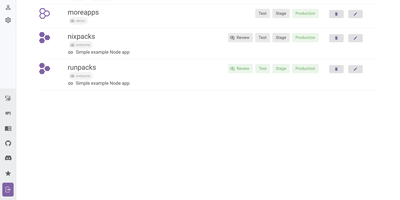
With over 4,300 GitHub stars and a v3 release adding built-in user management, team views, and multi-language support, Kubero has established itself as the most feature-complete open-source Heroku alternative running natively on Kubernetes. The platform operates as a Kubernetes operator with two containers — kubero-ui and the operator — storing all state in etcd without an external database. Developers push code via Git integration with GitHub, GitLab, Bitea, or Gitea, and Kubero automatically builds using Buildpacks, Nixpacks, Runpacks, or Dockerfiles, then deploys to the configured domain with SSL via cert-manager. CI/CD pipelines support up to four staging environments — review, test, staging, and production — with per-stage environment variable isolation and ephemeral review apps that spin up on pull request open and tear down on close. The template catalog includes over 170 pre-configured applications like WordPress, Grafana, and PostgreSQL deployable in one click, while managed add-ons provide highly available PostgreSQL, Redis, MySQL, Kafka, CouchDB, Elasticsearch, and MongoDB alongside your applications. Security features include Trivy vulnerability scanning, GitHub and OAuth2 single sign-on, basic auth, and a role-based permission system with API tokens. The NestJS backend with Vue.js and Vuetify frontend provides application metrics, real-time logs, a built-in web console for container access, scheduled cronjob management, and deployment notifications via Discord, Slack, or webhooks. Running on a dedicated VPS on RepoCloud with guaranteed CPU, RAM, and SSD, full root SSH access, and a browser serial console. GPL-3.0 licensed.