PostHog
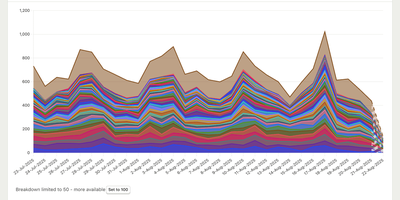
With over 37,000 GitHub stars and used by teams at Y Combinator, Airbus, and Phantom, PostHog replaces an entire stack of paid analytics tools — Mixpanel, Amplitude, Heap, LaunchDarkly, Hotjar, and Google Analytics — with a single open-source platform where every tool shares a common event layer and user context. Product analytics captures events automatically or via manual instrumentation with HogQL (SQL) access for custom queries, while web analytics provides GA-like dashboards for traffic, conversions, and Core Web Vitals. Session replay records user interactions with DOM snapshots and network waterfall analysis, linking directly to errors and feature flag exposures. Feature flags safely roll out changes to specific cohorts with multivariate support and instant rollback, while experiments run A/B tests with automatic Bayesian significance calculations and revenue attribution. Error tracking captures stack traces linked to session replays and user properties for immediate reproduction context. AI observability monitors LLM generations, traces, token usage, latency, and costs across model versions. The managed data warehouse syncs 120+ external sources including Stripe, Postgres, Salesforce, and HubSpot alongside product events, queryable through a unified SQL editor. An MCP server enables AI agents in Cursor, Claude Code, or VS Code to query analytics and execute SQL directly. Running on a dedicated VPS on RepoCloud with guaranteed CPU, RAM, and SSD, full root SSH access, and a browser serial console. MIT licensed.
Apache Doris
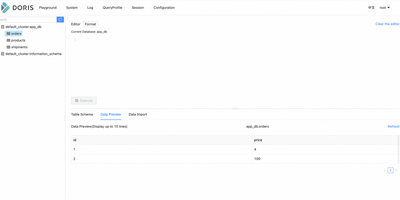
Dashboards should not wait minutes for yesterday's data, so Apache Doris answers analytical SQL over fresh data with a massively parallel, fully vectorized engine that processes column batches instead of row after row. Frontends receive queries over the MySQL protocol, plan them with a cost-based optimizer, and coordinate execution, while Backends store columnar tablets and run scans, joins, and aggregations in parallel pipelines across cores. Data lands continuously through stream and batch loads, broker imports from object storage, and change capture from operational databases, and it is queryable immediately for reporting that reflects the last minutes rather than the last nightly job. Tables outside Doris join the same SQL through catalogs for Hive, Iceberg, Paimon, Hudi, and JDBC sources, with local caching and materialized views accelerating the lakehouse queries your team runs every day. Search workloads live here too: an inverted index and a SEARCH function provide full-text retrieval, vector indexes support similarity search, and AI functions call language models from SQL for extraction and summarization, so hybrid queries mix keywords, semantics, and structured filters in one statement. Workload groups, resource controls, and compute-storage separation in cloud mode keep interactive dashboards fast while heavy ETL spills safely to disk. Running on a dedicated VPS on RepoCloud with guaranteed CPU, RAM, and SSD, full root SSH access, and a browser serial console. Apache-2.0 licensed.
Multiwoven
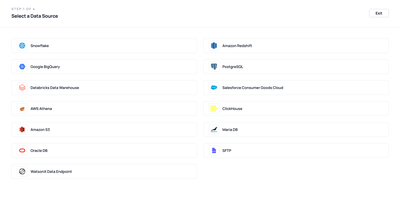
When warehouse data never reaches the CRM, ad platform, or help desk that needs it, Multiwoven is the open-source reverse ETL platform that syncs it there on a schedule. Sources include Snowflake, BigQuery, Redshift, Databricks, PostgreSQL, ClickHouse, MariaDB, Oracle, Amazon S3, and SFTP. Models define what to move: write SQL with a 100-row preview, pick tables in a visual selector, or reuse existing dbt models. Destinations span Salesforce, HubSpot, Klaviyo, Mailchimp, Zendesk, Slack, Airtable, Google Sheets, Stripe, Facebook Custom Audiences, HTTP endpoints, and vector stores such as Pinecone, Qdrant, and Weaviate. Each sync maps model columns onto destination objects like Salesforce Account, Contact, or Opportunity, then runs as a full refresh or as an incremental sync that moves only new or changed rows, optionally tracked by a cursor field. Schedules can be manual, an interval from minutes to weeks, or a cron expression. A dashboard reports sync activity, each run records its status with successful and failed row counts, and failed runs can trigger status emails. Workspaces keep sources, models, syncs, and destinations separate for each team, while Admin, Member, and Viewer roles and email invitations control access. A connector framework lets teams add sources or destinations that are not yet supported. Running on a dedicated VPS on RepoCloud with guaranteed CPU, RAM, and SSD, full root SSH access, and a browser serial console. AGPL-3.0 licensed.