HolyArrs
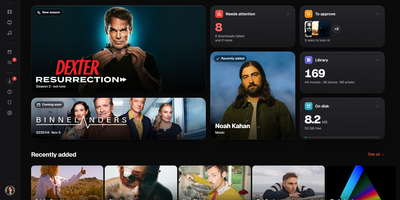
HolyArrs replaces the usual stack of six media apps with a single web app for your movies, shows, and music. Explore works like a streaming service: browse by genre, open a title page with ratings and cast, and ask for what you want to watch. Family members file requests, and you approve them one by one or let trusted people skip the queue. Pick rules decide which release wins by size, quality, and language, then the chosen release goes to qBittorrent, SABnzbd, Transmission, NZBGet, or Deluge and is filed in your library. Plex, Jellyfin, and Emby are told when it lands. Sources can be any Torznab or Newznab indexer, or a Prowlarr or Jackett instance. A calendar tracks what is airing next for everything you follow, and global search covers your library and the wider catalog. The built-in move tool reads Sonarr, Radarr, Lidarr, Prowlarr, Bazarr, Seerr, Overseerr, qBittorrent, and SABnzbd, previews the result with a dry run, and can be undone later. Stored keys are encrypted, and the old apps are only read, never changed. Running on a dedicated VPS on RepoCloud with guaranteed CPU, RAM, and SSD, full root SSH access, and a browser serial console. AGPL-3.0 licensed.
Cinephage
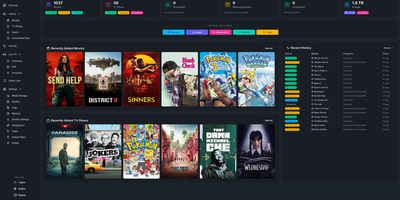
Cinephage puts your movies, series, live TV, subtitles, indexers, and download clients into one self-hosted media command center instead of a stack of separate automation services. Browse and organize libraries from a responsive interface that works on desktop and mobile, with file scanning and metadata matching keeping titles identified correctly. Search across configured indexers, compare releases with quality profiles and custom scoring rules, and send chosen downloads to your client without repeating setup for each media type. Let monitoring tasks watch for missing episodes, upgraded releases, and newly aired content, while the blocklist stops failed releases from coming back. Pull subtitles from multiple providers with language profiles, create dynamic smart lists from list sources or custom queries, and add matching titles automatically. Generate streaming links as .strm files for players such as Jellyfin, Emby, and Kodi, try live TV channels with guide data where configured, and receive library update notifications in your media server. Running on a dedicated VPS on RepoCloud with guaranteed CPU, RAM, and SSD, full root SSH access, and a browser serial console. GPL-3.0 licensed.
Trypost
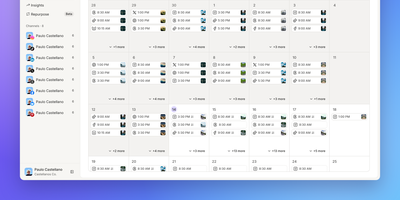
TryPost is an open-source social media scheduler that publishes natively to thirteen networks from one composer, calendar, and queue, whether the author is a person on your team or an AI agent connected over MCP. Write a post once and it adapts per network, with a live preview of each version, character quirks handled, and an AI assistant in the editor to rephrase, shorten, or expand when a caption fights back. Posts land on each channel's own posting times in its queue, the calendar shows the whole month at a glance, and anything can be dragged to a new slot when plans change. Members who need a second opinion send work for approval, and admins approve or reject in one click, which is how agencies keep many brands from becoming many headaches. Workspaces keep every client apart with its own channels, members, and settings, while signatures save the hashtag and call-to-action blocks you refuse to retype and labels color-code the calendar. Insights follow followers and post performance across channels, Repurpose copies videos you posted elsewhere onto your other networks automatically, and webhooks announce every created, published, or failed post to your other tools. Running on a dedicated VPS on RepoCloud with guaranteed CPU, RAM, and SSD, full root SSH access, and a browser serial console. AGPL-3.0 licensed.
Pages CMS
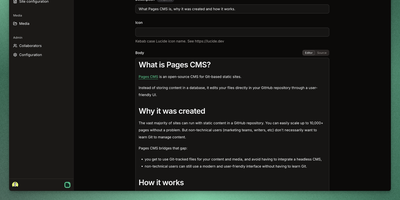
Editors can update a static website without learning Git, because Pages CMS puts a visual editor on top of the repository itself. A single .pages.yml file defines what is editable: collections of Markdown files that share a schema, standalone files such as site settings, and nested groups that organize the sidebar. Fields cover strings, rich text, code, dates, numbers, booleans, selects, images, files, references, objects, and repeatable blocks, with front matter stored as YAML, JSON, or TOML. Plain text files like robots.txt open in a raw editor, redirect files in a code editor, and CSV files as an editable datagrid. Collection lists can be searched, sorted, and shown flat or as a folder tree. The media manager supports drag-and-drop uploads, multi-file selection, allowed extensions, and safe or random renaming. People without GitHub accounts join through email invitations and edit content and media, with their saves committed through the GitHub App. Custom action buttons dispatch GitHub Actions workflows after a confirmation dialog or input form, so one click can rebuild a preview or deploy the site. Commit message templates and a choice of app or user commit identity shape how each save appears in Git history. The responsive interface works on mobile screens, and suits Jekyll, Hugo, Astro, Next.js, Eleventy, VuePress, and similar site generators. Running on a dedicated VPS on RepoCloud with guaranteed CPU, RAM, and SSD, full root SSH access, and a browser serial console. MIT licensed.
Romarr
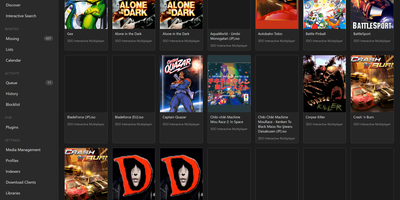
Name a game and Romarr goes and finds a copy you can prove is good. Search every indexer at once, through Prowlarr or directly, and each release comes back scored with the reasons written out: seeders, the right region, a plausible size, points off for hacks, betas, and repacks. The winner goes to whichever client speaks its protocol, from thirteen torrent daemons and eight debrid services to SABnzbd or a plain watched folder, and within a minute of finishing, the ROM itself is picked out of its archive, multi-track discs kept together as a set. Then comes the part no other library manager does: every import is checksummed against your No-Intro and Redump DATs and stamped verified, bad dump, or unknown. A verified dump is byte-for-byte the published one, a bad dump is refused unless you force it, and homebrew or translations import without ceremony as unknown. A verified copy automatically upgrades an unverified one, collections compare against a DAT to show exactly what you are missing, and duplicates are audited before anything moves. Finished games land in RomM, Gaseous, Retrom, or a simple folder, routed per platform, and your library server is told to rescan so the game appears with its art. Running on a dedicated VPS on RepoCloud with guaranteed CPU, RAM, and SSD, full root SSH access, and a browser serial console. MIT licensed.
Pixelfed
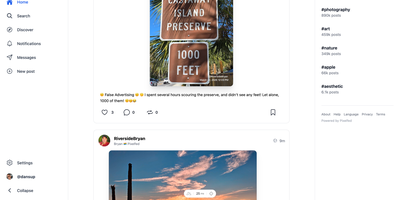
With nearly 7,000 GitHub stars and instances spanning hundreds of federated servers, Pixelfed has become the leading open-source alternative to Instagram — delivering ad-free, algorithm-free photo sharing across the Fediverse. Built on Laravel with a Vue.js frontend, Pixelfed provides a polished, mobile-responsive interface where users upload photos and videos, apply built-in filters, create multi-image posts with alt text, share ephemeral stories, organize content into curated collections, and exchange direct messages — all without tracking, algorithmic manipulation, or targeted advertising. Federation through the ActivityPub protocol means Mastodon, Pleroma, and other Fediverse users can follow Pixelfed accounts, view photo posts in their timelines, and interact through likes, boosts, and replies, while Pixelfed users can discover content through both local and federated timelines. Instance administrators control registration policies, content moderation rules, federation blocklists and allowlists, storage backends including local or S3-compatible options, and server-wide settings. The Mastodon-compatible API enables third-party mobile app support alongside the built-in Progressive Web App experience. Advanced features include blurhash image placeholders for smooth loading, federated groups for community building through FEP-400e and FEP-1b12 extensions, HTTP Signatures with Authorized Fetch for secure federation, and comprehensive data export for full portability. Deployment requires PHP 8.1+, MySQL or PostgreSQL, Redis, and a reverse proxy, with Docker Compose configurations available for streamlined setup. Running on a dedicated VPS on RepoCloud with guaranteed CPU, RAM, and SSD, full root SSH access, and a browser serial console. AGPL-3.0 licensed.
Shelfarr
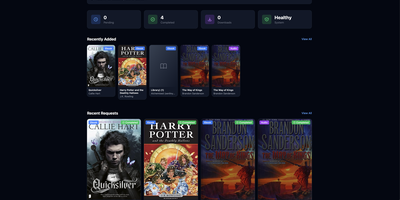
Shelfarr is the request button your book library was missing: anyone in your household can search millions of ebooks and audiobooks, request the format they want, and let automation fetch and shelve it. Discovery searches Open Library, Hardcover, and Google Books with covers, series, editions, and narrator details, so picking between the ebook and the audiobook takes a glance. Hardcover shelves and public reading lists can be previewed and requested, and following an author means their next release surfaces without a manual search. Requests wait for an admin's approval or move straight to searching, where your indexers are queried and every result is scored against your preferred formats, bitrate, and language. The winning release goes to the download client you route it to; finished files are renamed with your templates and delivered into your library's watched folders, which are told to rescan. Nothing found is not the end: searches retry with back-off and flag the request for attention instead of losing it. Family members get their own accounts with roles, two-factor authentication or single sign-on, notifications in the app or on Discord and Telegram, and admins keep manual uploads, API tokens, and download routing under their control. Running on a dedicated VPS on RepoCloud with guaranteed CPU, RAM, and SSD, full root SSH access, and a browser serial console. GPL-3.0 licensed.
Thingport
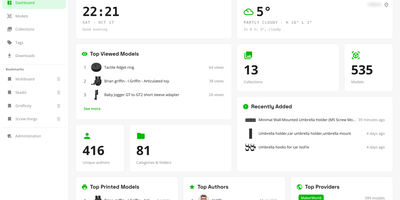
Authors delete listings, and the 3D models go with them, so Thingport stores its own copy of every printable file you import, in a self-hosted library you control. Ten sites feed the library, including MakerWorld, Printables, Thingiverse, and MyMiniFactory: paste a link or use the browser extension, and a model arrives with its files, photos, description, tags, author, and source link. Synced collections add newly bookmarked models as often as every hour. Files you already own come in as STL, 3MF, STEP, OBJ, or LightBurn uploads, ZIPs, folder trees, or drops into a watched consume folder. Each model gets an interactive 3D viewer with a thumbnail for every plate of a multi-plate 3MF. On first open, a check flags surface holes, non-manifold edges, flipped faces, and loose fragments before you slice. Sort with nested categories, collections, and tags, mark favourites, and find anything with full-text search. Optional AI sorts imports into your categories and tidies descriptions, using a local Ollama model or a cloud API. Open any file in Bambu Studio, OrcaSlicer, PrusaSlicer, Cura, or Creality Print, or download a model, tag, or collection as one ZIP. Every user gets a separate library, with invite-only registration, email verification, and single sign-on. A dashboard shows library statistics, profiles show a year-long activity heatmap, and MCP lets an AI assistant work with the collection. Running on a dedicated VPS on RepoCloud with guaranteed CPU, RAM, and SSD, full root SSH access, and a browser serial console. AGPL-3.0 licensed.

Noodle Gallery
Noodle Gallery is a self-hosted library for photos and videos that backs up the family's phones, finds pictures from plain-language descriptions, and lets several people curate shared timelines without a cloud provider in the middle. Shared Spaces give a family, trip group, or club one timeline with Owner, Editor, and Viewer roles and an activity log; photos are linked by reference, so contributors keep their own libraries and nothing is stored twice. Describe a scene, say a beach with boats, and search returns matching photos and videos; press Cmd or Ctrl plus K for a palette that jumps to people, tags, albums, and settings. Cats and dogs are detected and can be named and browsed beside your people, and each person appears once across your whole library and every Space you can reach. Tell Auto-Classification what clutter looks like (screenshots, memes, receipts) and it tags those photos, optionally archives them, and applies a similarity threshold per category; a searchable Memories page collects trip recaps and birthday highlights. Clips can be trimmed in the browser in seconds at original quality, with the full video restorable later, and duplicate videos are caught even after re-encoding. A guided wizard imports Google Photos Takeout archives with dates, GPS, and albums intact, and supported Immich installs switch over with a three-line config change. Running on a dedicated VPS on RepoCloud with guaranteed CPU, RAM, and SSD, full root SSH access, and a browser serial console. AGPL-3.0 licensed.

Reiverr
Finding something to watch, requesting it, downloading it, and pressing play all happen on one remote-friendly screen. Browse trending titles, genre rows, and streaming network shelves backed by TMDB, then open a series to pick the episodes to request. Download-ahead rules fetch the next few episodes as you watch, keep the last watched ones, and remove watched files after a chosen period, so the disk does not fill with finished shows. A built-in torrent client does the downloading through an indexer, and each user gets a storage quota that appears next to every request. The library page tracks unwatched and watched series and movies with filters for media type, files on disk, and sort order, plus an A to Z jump bar. A Downloads page lists what is fetching and what each request holds, and the Server page scans library folders, flags managed or external files, and shows logs. Existing media folders are discovered from disk and stay compatible with Jellyfin layouts. Direct playback supports audio track selection and sidecar subtitles. Apps for Samsung Tizen and Android TV talk to the same backend. Running on a dedicated VPS on RepoCloud with guaranteed CPU, RAM, and SSD, full root SSH access, and a browser serial console. AGPL-3.0 licensed.
Pinchflat NGX
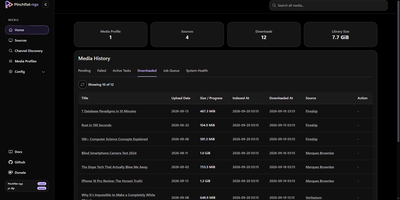
Pinchflat NGX is a self-hosted media manager that subscribes to YouTube channels and playlists, then downloads new videos into your own library automatically. Sources can be channels, playlists, or single videos, added by pasting a URL, searching in Browse, or importing a Google Takeout subscription list. Media profiles set quality, output templates, and retention, and each source can route its files to its own folder. The Sources page switches between a poster grid and a sortable table, with start, pause, and stop controls on every row. Channel Discovery suggests related channels with a score and evidence, and nothing is added until you accept it. A diagnostics page shows queue health, database size, and integrity checks, and notifications can use Discord embed formatting. Finished downloads trigger library refreshes on Plex, Jellyfin, and Emby, and an OPML feed serves podcast clients. OIDC single sign-on protects the web interface through providers like Authentik and Authelia. Running on a dedicated VPS on RepoCloud with guaranteed CPU, RAM, and SSD, full root SSH access, and a browser serial console. AGPL-3.0 licensed.
Tagr
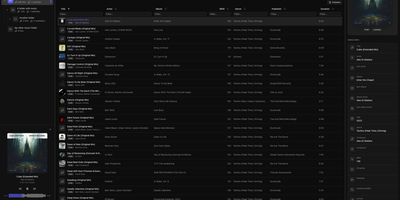
When a music library is full of wrong tags, missing covers, and blank ratings, Tagr lets you fix the whole collection from any browser, on desktop or phone. Three roles divide the work on your own server. Admins mount a music folder, press scan, and get a searchable table of every track, with sortable and filterable columns, more than 40 editable fields, and room for custom tags. Taggers make the changes: edit fields inline, swap album art, and match one song or a whole selection against MusicBrainz, ticking which fields to overwrite. Mistakes are cheap, because every edit is stored in a persistent change history with a revert action, viewable per song or per folder. Rule-based smart playlists, such as every track with an empty comment, show what still needs attention. Listeners browse and play without edit rights, using the waveform player, a Recently played view, and optional ListenBrainz scrobbling that each person connects to their own account. Supported formats include MP3, FLAC, WAV, AAC, OGG, M4A, M4B, WMA, AIFF, and Opus, with changes written straight back into the files. Swipe-friendly panels, an installable PWA, and five interface languages make the phone a comfortable place to work. Running on a dedicated VPS on RepoCloud with guaranteed CPU, RAM, and SSD, full root SSH access, and a browser serial console. AGPL-3.0 licensed.
Shoutrrr
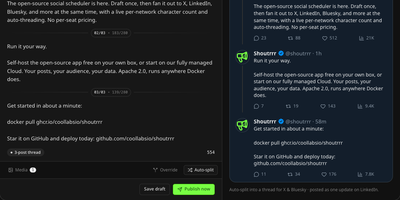
Write one post and Shoutrrr publishes it across X, Bluesky, LinkedIn, Facebook, Instagram, Threads, and Discord at the same moment, or holds it in a queue until the slot you picked. The composer counts characters against each network's limits as you type, attaches media with alt text, adjusts wording per platform when a message needs a local tweak, and splits long posts into threads where the network supports them. Recurring posting slots follow your workspace timezone, drafts drop into those slots from a month calendar, and anything can still go out instantly when news breaks. Every target publishes independently and retries on its own when a network hiccups, leaving a per-attempt trail you can inspect instead of a silent failure. Analytics chart follower and post-count trends for each account and report likes, reposts, replies, and impressions per post wherever the network's API allows. Teams share workspaces with role-based memberships and email invitations, keep clients in separate workspaces, and get in-app alerts the moment a post lands, fails, or needs an account reconnected. Account tokens sit encrypted at rest and refresh themselves, sign-in supports two-factor codes and passkeys, and the built-in MCP server hands AI assistants 22 tools to draft and schedule while publishing, retrying, and deleting refuse to run without your explicit confirmation. Running on a dedicated VPS on RepoCloud with guaranteed CPU, RAM, and SSD, full root SSH access, and a browser serial console. Apache-2.0 licensed.
DroppedNeedle
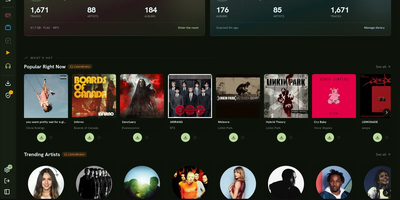
Self-hosted music requests, no Lidarr install needed: DroppedNeedle searches MusicBrainz, drives your own slskd or Usenet setup, and files only verified, tagged tracks in your library. Request a whole album or a single track, then retry or cancel from a dedicated requests page. The engine queries slskd, or SABnzbd with Newznab indexers or Prowlarr, and scores every candidate before anything downloads. Files must pass checks for readable tags, a sane duration, and an optional AcoustID fingerprint match. Close calls park for admin review. Failed requests are searched again until a verified copy arrives. Quality floors per format and storage caps keep the library tidy, and better copies replace old ones. The built-in player queues Jellyfin, Navidrome, Plex, local files, and YouTube previews with shuffle, a 10-band equalizer, and embedded lyrics. Prefer your own app? Symfonium, Finamp, Feishin, and other Subsonic or Jellyfin clients connect with revocable app passwords. Discovery rows draw on ListenBrainz and Last.fm history and global charts, and a weekly mix can queue up to five missing albums. Follow artists for new-release alerts, or add Ticketmaster or Skiddle keys for gig listings in cities you choose. Import Spotify playlists, or drag in a zip of music you bought. Admin, Trusted, and User roles decide whether a request starts at once or waits for approval. Running on a dedicated VPS on RepoCloud with guaranteed CPU, RAM, and SSD, full root SSH access, and a browser serial console. AGPL-3.0 licensed.
Kapowarr
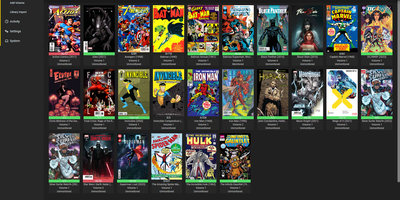
Kapowarr tracks the comic series you collect, hunts down missing issues, and files every download into a tidy, consistently named library on its own. Add a volume and Kapowarr pulls cover art, publisher details, and issue lists from ComicVine, then maps the series to a folder in your library. Run Search Monitored to grab a whole run in one click, or open Manual Search and pick exactly which release of an issue lands on disk. Downloads arrive through GetComics direct links on hosts including Mega, MediaFire, and Pixeldrain, and a configured torrent client covers releases that only circulate as torrents. The moment a download finishes, the issue is renamed to the format you defined and moved into the correct volume folder. Point Kapowarr at an existing collection and the import workflow matches folders against ComicVine, shows every match for your review, and only then starts renaming or moving files. Convert issues between archive formats, rename or move entire volumes in bulk, and clean up a messy library from the same screens. A link blocklist remembers dead download pages and blocks sources that stop working, so repeat searches skip the junk and go straight to links that deliver. Running on a dedicated VPS on RepoCloud with guaranteed CPU, RAM, and SSD, full root SSH access, and a browser serial console. GPL-3.0 licensed.
OpenQuok
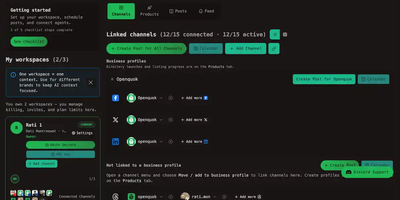
Monday starts with a blank composer and eleven open tabs. OpenQuok replaces those tabs with one open-source Content OS where social scheduling and directory launch share a workspace, a media library, and a review queue. You connect the accounts once: Facebook Page, Threads, Instagram, LinkedIn, X, YouTube, TikTok, Dev.to, Bluesky, Reddit, Skool. Then the week takes shape on a calendar you can drag around. A post begins in Global mode, one caption for everywhere. Unlock a channel and that network gets its own words, its own media, its own settings, with a preview that shows exactly what its audience will see. Drafts wait on the kanban board until a person signs off. Clients comment through preview links, and nothing reaches a live channel before that approval, no matter which tool drafted it. Agents queue drafts through MCP, the CLI, or the public API, and playbooks repeat the campaigns that worked last month. When launch day comes, the other half of the workspace opens. Your product profile already holds the copy, the readiness check names the missing fields, and each directory submission and live URL is tracked beside the posts announcing it. Separate workspaces keep separate brands honest, each with its own teammates, timezone, templates, and tags. Running on a dedicated VPS on RepoCloud with guaranteed CPU, RAM, and SSD, full root SSH access, and a browser serial console. AGPL-3.0 licensed.
37Studio
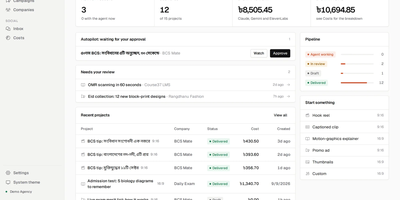
37Studio is a self-hosted AI video studio and social media desk that turns a short brief into on-brand videos, posts them to nine social platforms, and drafts replies to the messages that come back. Paste a company website and it builds a brand library of logos, photos, fonts, and colours, plus a knowledge base every later video and reply draws on. An editor agent builds each video as an animated composition, checks its own rendered frames, and takes revision requests in plain words. The same workflow yields hook reels, captioned clips, explainers, podcast clips, promo ads, and thumbnails, and any finished video can become a template. A two-hour recording becomes a shelf of short clips: transcription runs locally in about 100 languages at no cost, and YouTube or Drive links import directly. Publishing reaches Facebook Pages, Instagram, YouTube, TikTok, LinkedIn, X, Pinterest, Bluesky, and Mastodon in one action, now or scheduled, each with its own caption. Autopilot goes further: state a content plan in one sentence and a fresh video is made before every slot, waiting for one-click approval. Messenger, Instagram, and WhatsApp messages and social comments land in one inbox, with replies drafted in the customer's language under rules each brand sets. Exact AI spend shows on every project, and an MCP server lets your own AI tools run the studio. Running on a dedicated VPS on RepoCloud with guaranteed CPU, RAM, and SSD, full root SSH access, and a browser serial console. MIT licensed.
Mediarium
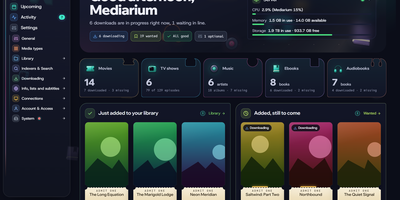
Find a title tonight and wake up to it named, filed, and ready to play: Mediarium is a self-hosted media manager that finds, downloads, repairs, and organizes movies, TV, music, ebooks, and audiobooks from one web page on your own server. Search once and it queries your Usenet and torrent indexers together, grabs the best release, unpacks it, applies your naming rules, and places it where Plex, Jellyfin, or Emby expects it. Quality profiles with upgrades and fallbacks keep hunting better copies automatically, while delay profiles, a blocklist with retries, and tags such as Kids or 4K keep the wrong releases out and collections tidy. Subtitles are matched to your exact file, with a timing fix when one runs out of sync. Family accounts carry permissions of their own: relatives who cannot add titles send requests you approve, and watch history read from your media server drives statistics and optional cleanup rules. The built-in Books app reads ebooks, plays audiobooks chapter by chapter, remembers your place everywhere, and even opens Kindle books. Torrents can run behind a built-in WireGuard VPN with a kill switch, downloads repair and unpack themselves, and notifications, backups, and a post-import script keep the routine invisible. Moving over reads your Radarr, Sonarr, Prowlarr, SABnzbd, and other existing setups without changing them. Running on a dedicated VPS on RepoCloud with guaranteed CPU, RAM, and SSD, full root SSH access, and a browser serial console. AGPL-3.0 licensed.