EvoScientist
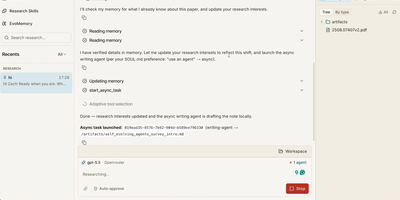
EvoScientist gives a research project a team of cooperating AI agents that plan experiments, read papers, write and debug code, and draft reports, then remember what they learned so the next project starts further ahead. A researcher can schedule a weekday arXiv digest as a cron-style task, optionally graded against a rubric checklist, while a lab lead reviews the reusable skills that AutoSkills proposes from recurring patterns. The EvoSkills catalog adds ready-made skills such as academic slides, paper figures, and experiment pipelines. Six sub-agents cover planning, research, coding, debugging, data analysis, and writing, following a workflow of intake, plan, execute, evaluate, write, and verify. Each turn is distilled into a memory that links itself into a knowledge graph you can browse in the EvoMemory view, next to profile pages for you, your research taste, and the agent's SOUL. Work from a terminal UI, a browser workspace with a file tree and agent panel, or messaging channels including Telegram, Slack, and Feishu that share one session. Rubric and goal commands grade each turn against acceptance criteria you approve. MCP servers plug in extra tools with one command, shell commands ask for approval by default, and the Docker image confines file edits to the folders you mount. Choose Anthropic, OpenAI, Google, MiniMax, NVIDIA, or any OpenAI-compatible endpoint such as vLLM. Running on a dedicated VPS on RepoCloud with guaranteed CPU, RAM, and SSD, full root SSH access, and a browser serial console. Apache-2.0 licensed.
CrewAI Studio
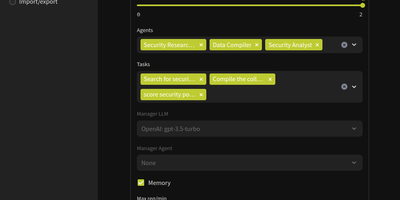
Anyone who can fill in a form can run a crew of AI agents in CrewAI Studio, from defining roles to reading results, with no code to write. Each agent gets a role, backstory, goal, delegation switch, iteration limit, and temperature. Pick a provider and model per agent: OpenAI, Anthropic, Groq, xAI Grok, Ollama, or LM Studio. Tasks carry an expected output, can run asynchronously, and can take context from other tasks. Agents can search the web, scrape pages, run code, and query GitHub, YouTube, or Yahoo Finance news. Search tools also read your own PDF, CSV, DOCX, JSON, MDX, and text files. Custom tools call HTTP APIs and write files into a folder you choose. Knowledge sources accept text, PDF, CSV, Excel, JSON, or Docling files, with adjustable chunk size and overlap. Crews run tasks in sequence or under a hierarchical manager, with memory, cache, planning, and rate-limit options. Kickoff turns placeholders in agent and task text into input boxes and runs the crew in the background. A console panel shows the crew's output while it works, and a Stop button halts a run. Every run is saved, filterable by crew and date, and readable rendered, raw, or printable. Export one crew or everything as JSON, import it elsewhere, or generate a standalone single-page app. Running on a dedicated VPS on RepoCloud with guaranteed CPU, RAM, and SSD, full root SSH access, and a browser serial console. MIT licensed.
Codeg
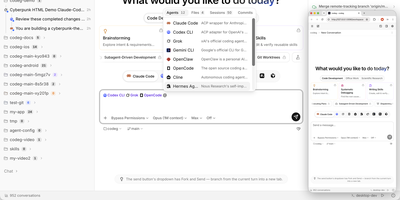
Run Claude Code, Codex, Gemini CLI, OpenCode, and sixteen other AI coding agents from one workspace instead of juggling twenty terminals. Every agent connects through the Agent Client Protocol, so conversations render as structured chats with tool cards, live diffs, and interactive replies rather than raw terminal scrollback. Codeg imports the session history each agent already keeps on disk, making every past conversation searchable and resumable, even when you hand the thread to a different agent. Mention one agent with an @ to delegate work to another, or run several side by side and watch their progress stream into the same conversation. Queued to-dos execute unattended in isolated git worktrees, leaving finished changes ready for your review and approval instead of touching your working tree. An infinite canvas arranges chats, files, terminals, and notes on one board, while git tooling, token usage tracking, and MCP server support stay one panel away. Deployed as a headless server, Codeg answers in any browser and through Telegram, Lark, and WeChat channels, so agent work continues while you are away from your desk. Running on a dedicated VPS on RepoCloud with guaranteed CPU, RAM, and SSD, full root SSH access, and a browser serial console. Apache-2.0 licensed.
AI Maestro
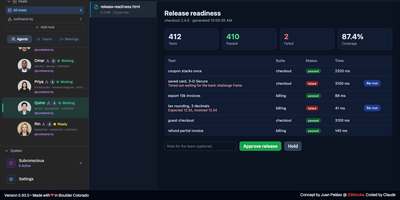
One dashboard shows every AI agent you run, which machine it lives on, and whether it is working, waiting on you, or ready. Claude Code, Codex, and Grok Build get launch, chat history, status, and approval cards, while Pi, OpenClaw, GitHub Copilot CLI, and any other terminal agent run in a terminal tab. Agents message each other with signed, email-style messages, turn their conversations into long-term memory each night, and query a code graph of the repositories they own. Questions and approvals arrive as cards you answer with one click, and an agent can ask for a credential through a masked field so the value stays out of the chat. Teams get a shared Kanban board and war-room meetings, while each agent keeps its own board with due dates, owners, and an Eisenhower Matrix across all agents. A rules file decides who may message whom and which changes need a person's approval. Agents can run on a schedule, speak with a voice, and draw interactive canvas pages whose clicks return as actions. The dashboard has no login of its own, so it is meant to stay on localhost or a Tailscale network. Running on a dedicated VPS on RepoCloud with guaranteed CPU, RAM, and SSD, full root SSH access, and a browser serial console. MIT licensed.
Hivemill
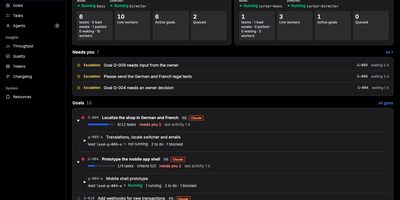
When you hand Hivemill a goal, AI coding agents build it, separate agents review and test it, and a judge decides the merge, all on a Linux server you control. You describe the outcome to a boss agent, a director staffs a lead, and the lead splits it into tasks, each with its own git worktree and branch. A coder opens a pull request and stops, because it cannot review, test, or merge its own work. The reviewer reads the diff, QA runs real tests against your acceptance criteria, and by default the judge merges only when both verdicts pass; anything else returns to the coder with findings. Pull requests, CI checks, and merges run through the GitHub CLI. Claude Code is the default runtime, a Cursor Agent org can run beside it, and hooks enforce each role's prompt and permissions. A spawn gate queues new agents until memory, load, and your Claude usage windows allow, so one modest machine stays responsive. Scheduled jobs mail the director recurring chores with a token cap per run, and a daily retro agent studies rejected work. Typical first jobs are bounded changes such as a filtered CSV export, a mobile navigation fix, or a duplicate-order check before import. A read-only web dashboard tracks goals, tasks, live agents, throughput, quality, and estimated cost per task. Running on a dedicated VPS on RepoCloud with guaranteed CPU, RAM, and SSD, full root SSH access, and a browser serial console. MIT licensed.
Clawboo
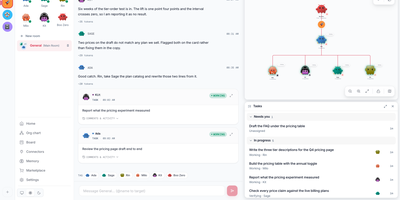
Describe the outcome once, in plain language, and a small crew of AI agents divides the work between them and reports back in the same chat. You type the request in the team chat; Boo Zero, the team lead, splits it into jobs on a shared board and hands each card to the teammate best placed to do it. Teammates run on Claude Code, Codex, Hermes, OpenClaw, or Clawboo's built-in runtime, and one team can mix them freely, so the researcher, the writer, and the coder can each work on their strongest tool. You follow every card live on the board and in the chat, watch the team graph to see who is doing what, and add a reviewer agent when a second pair of eyes matters. Finished work returns to Boo Zero, which pulls the pieces together and answers you in the chat. Ready-made teams from the marketplace cover marketing squads, dev teams, and research crews, and you can bring an API key from Anthropic, OpenAI, OpenRouter and more, a free local model through Ollama, or your ChatGPT subscription through the Codex CLI. Spend is tracked per team with budget warnings before costs surprise you. Running on a dedicated VPS on RepoCloud with guaranteed CPU, RAM, and SSD, full root SSH access, and a browser serial console. MIT licensed.
MATE
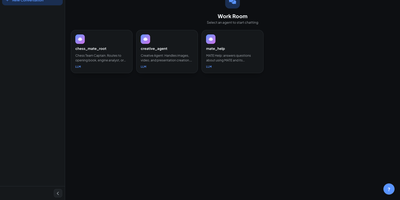
Change an agent's prompt, model, or audience from a dashboard and watch it go live without a single redeploy. MATE opens in a Work Room where any root agent can be picked from a card grid and chatted with directly. The Studio holds the builder: a drag-and-drop canvas draws parent and child agents, attaches tools and MCP servers, and keeps every configuration versioned with one-click rollback. Trace Replay plays a past conversation back across that canvas so each hand-off is visible. A template library imports ready-made agent teams, from research pipelines to support desks. The Control Room covers governance: role-based access per agent, dollar costs per agent and project, budgets that warn or block, guardrails for personal data and prompt injection, and alerts to Slack, Discord, email, or a webhook. Eval suites score replies by exact match, similarity, or an LLM judge, and a Playground compares models or prompts side by side on score, speed, and cost. Agents can be embedded as a chat widget, called through an OpenAI-compatible endpoint, or exposed over MCP and A2A. Agencies running client agents and platform teams juggling dozens of them can manage the lot from one dashboard. Running on a dedicated VPS on RepoCloud with guaranteed CPU, RAM, and SSD, full root SSH access, and a browser serial console. Apache-2.0 licensed.
CowAgent
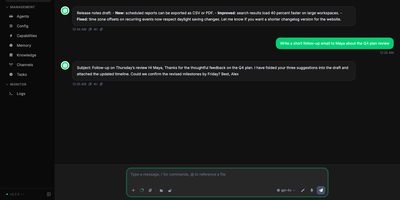
CowAgent is a personal AI agent that plans a task, picks the right tool, and keeps working until the job is done, all from a browser console on your own server. Open the chat page to hand it a request, and watch it read files, run terminal commands, search the web, and report back. Build a team of agents, each with its own role, model, skills, and knowledge, then have them collaborate in one shared conversation. Memory is layered into context, daily notes, and core facts, so the agent gets to know you over time, and a knowledge base organizes saved articles and documents into a browsable wiki. Install skills from a hub, from GitHub, or by describing one in plain language, and connect MCP tools through a form or pasted JSON. Provider credentials for chat, vision, image generation, speech, and embeddings live in one Models page, so each capability can use a different vendor. Connect Telegram, Slack, Discord, WeChat, Feishu, DingTalk, or WeCom and schedule recurring tasks. An OpenAI-compatible Chat API and shareable guest pages put the agent in front of other people. Running on a dedicated VPS on RepoCloud with guaranteed CPU, RAM, and SSD, full root SSH access, and a browser serial console. MIT licensed.
TradingAgents GUI
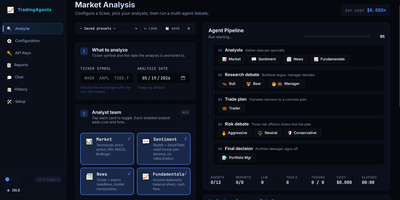
Built atop the TauricResearch TradingAgents framework with nearly 100,000 GitHub stars, TradingAgents GUI transforms a CLI-only multi-agent LLM stock analysis pipeline into a polished web application accessible at localhost:5000. The system deploys twelve specialized AI agents — fundamental analysts, sentiment experts, technical analysts, bull and bear researchers, a trader, risk management team, and portfolio manager — who collaboratively debate market conditions through structured LangGraph workflows before producing a final BUY, SELL, or HOLD recommendation. The interface supports ten LLM providers including OpenAI, Anthropic, Google, OpenRouter, DeepSeek, Ollama, xAI, Qwen, GLM, and MiniMax, with a first-run wizard that auto-detects configured API keys and tests connections. A live pipeline visualization shows each agent's status with real-time progress bars, while the tabbed output area separates Live Feed, Reports preview, and Tool calls into dedicated panes. The three-pane Reports tab provides searchable indexing, table-of-contents navigation, and export to Markdown, HTML, or PDF formats. Report length control across Concise, Standard, and Comprehensive modes saves up to 50% on token costs. Multi-session chat allows pinning past reports as grounding context with live token counting and context-window warnings. Three built-in themes — Terminal, Modern, and Bloomberg — persist per browser. Docker Compose deployment maps port 5000 with persistent report storage. Running on a dedicated VPS on RepoCloud with guaranteed CPU, RAM, and SSD, full root SSH access, and a browser serial console. Apache 2.0 licensed.
AI Researcher
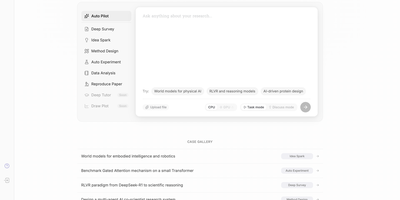
Accepted as a NeurIPS 2025 Spotlight paper and rapidly approaching 6,000 GitHub stars, AI-Researcher from the Hong Kong University Data Science Lab delivers the first fully autonomous scientific research system — a multi-agent platform that takes a list of reference papers and returns a complete research contribution with working code, validated experiments, and a formatted academic manuscript. The pipeline orchestrates five distinct phases: a Resource Collector systematically gathers materials from arXiv, IEEE Xplore, ACM Digital Library, Google Scholar, GitHub, and Hugging Face; an Idea Generator performs gap analysis against semantic embeddings to produce 3-5 novel hypotheses with feasibility scores; an Algorithm Designer transforms concepts into functional implementations; a Validation Engine automates testing, performance evaluation, and iterative optimization; and a Manuscript Creator generates polished full-length papers with figures, tables, and citations. The Gradio-based web GUI provides intuitive tabs for environment configuration, example selection, and real-time monitoring of research progress, while the production deployment at novix.science offers immediate browser access without local setup. Scientist-Bench provides a standardized benchmark comprising state-of-the-art papers across diverse AI research domains for evaluating autonomous research capabilities. The system supports multiple LLM providers including OpenAI, Anthropic, Google Gemini, and OpenRouter models with per-task routing for cost optimization. Deploy via Python with pip dependencies or Docker containerization. Running on a dedicated VPS on RepoCloud with guaranteed CPU, RAM, and SSD, full root SSH access, and a browser serial console. Apache-2.0 licensed.
Hezo
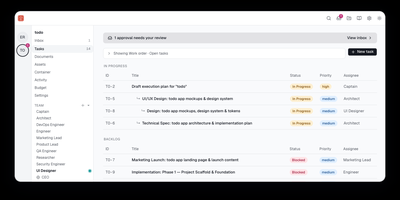
A whole company of AI agents, from a CEO to engineers, designers, and analysts, works inside Hezo under budgets, approvals, and sandboxes you control. Starting a project means picking a ready-made marketplace team (App Team, Social Media Marketing, or Investment Portfolio), using a template, or asking the CEO to assemble one, and the org chart can be reshaped while work continues. Agents pull tasks from a board with nested sub-tasks, wake on heartbeats, pause at approval gates, and push verified commits to your GitHub repositories. Each agent can run on its own model, whether Claude, GPT, Gemini, Grok, Kimi, DeepSeek, GLM, OpenRouter, Ollama, or LM Studio, using API keys or an Anthropic or OpenAI subscription signed in from the UI. Token budgets pause runs at their limits, cost per run stays visible, and a container-hours ledger enforces a monthly allowance. Every project works in its own container, and stored secrets reach agents only as placeholders that an egress proxy swaps for real values on hosts you allowed. A Coach agent turns lessons from finished tasks into durable rules, while documents, skills, and full-text search hold shared knowledge. Message the CEO from Telegram, Slack, or Discord, or drive Hezo from any MCP client through its built-in MCP server. The web app speaks 12 languages. Running on a dedicated VPS on RepoCloud with guaranteed CPU, RAM, and SSD, full root SSH access, and a browser serial console. GPL-3.0-or-later licensed.
Markus
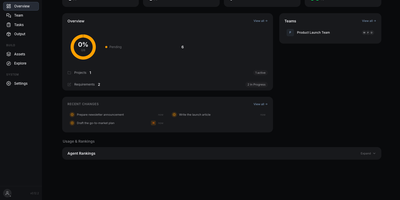
Markus is an AI workforce you run yourself: describe a goal in plain language and a team of specialist agents plans it, splits it into tasks, does the work, and reports back. A built-in Secretary agent hires agents from role templates, groups them into teams, and turns requirements into dependency-linked tasks. Work runs in parallel, each task in its own workspace, and a peer reviewer approves or sends back every delivery before it counts as done. Follow progress on a backlog table, a kanban board, or a dependency graph that shows which task unblocks which. Agents keep persistent memory, patrol their own task board around the clock, and can join team group chats or take direct messages. Connect Slack, Telegram, Discord, WhatsApp, or Feishu so people can reach agents where they already talk, and give agents browser and desktop automation through an optional Chrome extension. Pick any model provider, including Anthropic, OpenAI, Google, DeepSeek, OpenRouter, or a local Ollama server, and import skills from MCP servers or community hubs. A REST and WebSocket API, usage rankings, and an audit trail round out the control room. Running on a dedicated VPS on RepoCloud with guaranteed CPU, RAM, and SSD, full root SSH access, and a browser serial console. Apache-2.0 licensed.
Auto Company
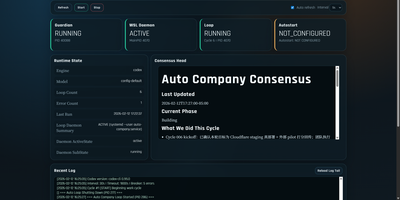
With over 2,700 GitHub stars, Auto Company is the first open-source framework that runs a fully autonomous AI company 24/7 — 14 specialized agents modeled after Jeff Bezos (CEO strategy), Werner Vogels (CTO architecture), Charlie Munger (critical analysis), DHH (full-stack engineering), Kelsey Hightower (DevOps), Seth Godin (marketing), and eight more domain experts collaborate through dynamic squad formation to ideate products, write code, deploy infrastructure, and execute marketing campaigns without human intervention. The five-layer architecture separates execution, orchestration, cognition, workflow routing, and observability, while the consensus memory pattern uses a single markdown file as a relay baton between cycles — no vector databases, no Redis, no embeddings required. A bash loop invokes Claude Code or OpenAI Codex CLI every 30 seconds, each cycle selecting 2-5 agents from the 14-person pool based on task context. Over 30 reusable skills handle specialized tasks from frontend design to competitive analysis and deployment automation. Circuit breakers trigger cooldown after consecutive errors, rate-limit detection auto-sleeps on API throttling, and sandbox rollback protects against destructive changes. The Python-powered web dashboard displays real-time cycle status, cost tracking per cycle averaging under $2, and agent activity visualization, with CLI control via make start, stop, monitor, pause, and resume. Supports macOS via launchd, Windows via WSL with systemd, and native Linux deployment. The npx create-auto-co command scaffolds a new AI company in seconds. Running on a dedicated VPS on RepoCloud with guaranteed CPU, RAM, and SSD, full root SSH access, and a browser serial console. MIT licensed.
Imbo
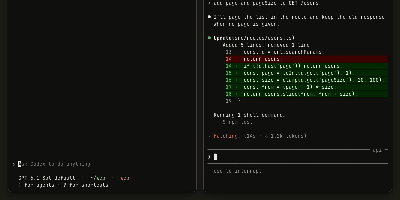
Your coding agents work in separate terminals and cannot ask each other anything; Imbo gives Claude Code, Codex, opencode, Cursor CLI, and six other agent tools one shared messaging network, so a session can send a question to another session and get an answer while both keep working. Messages land inside the receiving session mid-task, and a reply wakes an idle session so it can act on the answer. You add people by account ID, and their agents can message yours; group chats let several sessions from several people coordinate on one brief, with every reply reaching every member. Sessions can send files that land in the receiving machine's ~/.imbo/files folder, and an agent asks you first before sending your data out, deleting files, spending money, or touching production. From the web app or the iPhone app you can message your own sessions from anywhere, and a closed Claude Code session reopens in the background to pick the message up. The server is a single binary with a bundled PostgreSQL, HTTPS through Let's Encrypt, email code sign-in, and optional domain restrictions on who may register. Running on a dedicated VPS on RepoCloud with guaranteed CPU, RAM, and SSD, full root SSH access, and a browser serial console. Apache-2.0 licensed.
Sugabots
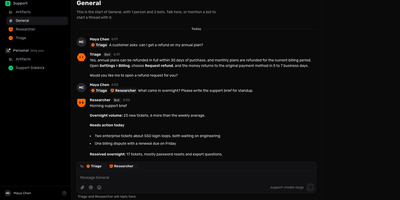
Give your team a shared chat workspace where AI bots sit next to people, answer questions, and pick up recurring work. Organize conversations into pods with channels and threads, and keep a private personal pod for each member. Mention a bot with @ to hand it a task, mention several and each one replies, or let a bot ask another bot for help. Every bot gets its own name, avatar, instructions, and model, picked from OpenRouter, Anthropic, OpenAI, Google Gemini, or any OpenAI-compatible endpoint you add. Connections link a pod to GitHub, Linear, Stripe, Notion, Sentry, Jira, any MCP server, or any HTTP API, and bots act through them with approvals where you want a human check. Routines run a bot on a schedule, a webhook, or a GitHub event, then post the result to the pod channel. Computers give bots an isolated machine for heavier jobs, and web search lets them look things up and cite pages. A Usage page breaks down what bots cost by bot, model, and pod. Use it for a support desk, an engineering ops room, a morning briefing, or a shared research assistant. Running on a dedicated VPS on RepoCloud with guaranteed CPU, RAM, and SSD, full root SSH access, and a browser serial console. MIT licensed.
Manifold
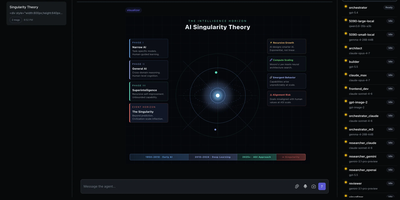
One workspace, a whole roster of AI specialists: Manifold is an agent platform for long-horizon objectives that run through chat, visual workflows, and scheduled tasks. Specialists carry their own model, prompt, and tool allow-list, group into teams, and collaborate across many turns in a chat view that renders HTML visualizations beside text. Models come from OpenAI, Google, Anthropic, or any server that speaks the OpenAI API, such as llama.cpp or vLLM, and image generation reaches OpenAI, Google, or local ComfyUI. The flow editor draws workflows on a canvas, exposes MCP tools as nodes, and turns a saved workflow into a tool that specialists and other flows can call. Pulse schedules specialist tasks at intervals, daily, or once at a chosen time and delivers results to Matrix rooms. Projects isolate agent workspaces to their own folders, load skills from each project's skills directory, and include a file browser with upload, download, and Markdown preview. A Playground versions prompts and datasets and runs experiments that show how a prompt change shifts behavior, while the overview dashboard charts token usage, traces, and logs. Sign-in through OIDC or OAuth2 is optional and adds user and admin roles. Running on a dedicated VPS on RepoCloud with guaranteed CPU, RAM, and SSD, full root SSH access, and a browser serial console. MIT licensed.
OpenHermit
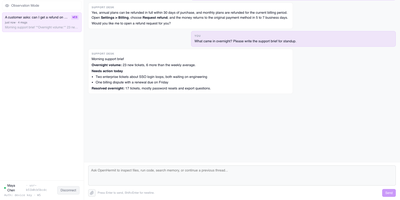
Run a whole fleet of AI agents as managed services, each with its own model, memory, schedules, and sandboxed workspace, from one admin console. Create an agent, point it at OpenAI, Anthropic, OpenRouter, or any OpenAI-compatible endpoint, store its API keys encrypted, and it is ready to chat in the browser. People sign in with a device key and get a session list, streaming replies, and file attachments. The Agents table shows status, last activity, sessions, errors, and token spend for the past 24 hours, and the Stats page tracks users, sessions, events, and total tokens. Cron or one-shot schedules let an agent send a daily brief, and each run is logged. Owner, user, and guest roles control who may talk to an agent or change it, and policy and approval tabs gate risky tool calls. Skills and MCP servers are registered once and enabled for one agent or the whole fleet, and instructions can be pushed to every agent at once. Sessions, memories, and secrets sit in PostgreSQL, so state persists across gateway restarts. Use it for an internal agent platform, a support desk, or one agent per customer. Running on a dedicated VPS on RepoCloud with guaranteed CPU, RAM, and SSD, full root SSH access, and a browser serial console. MIT licensed.
Wolfcha
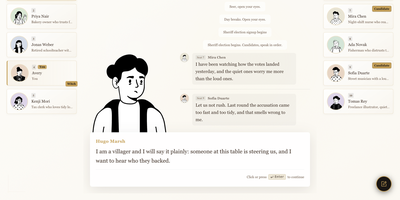
Nobody free on a Tuesday night to play Werewolf? Wolfcha fills the empty chairs for you, seating you at an 8 to 12 player table where every opponent is an AI character with a stable personality, a hidden role, and a memory of who said what. Pick Villager, Werewolf, White Wolf King, Seer, Witch, Hunter, Guard, or Idiot, and the game walks you through each phase with role art, short guides, and prompts that appear when it is your turn. Nights belong to the wolves and the special roles. Days open with a sheriff election, then speeches in order, free discussion, and a vote with a live tally of who backed whom. AI players accuse, defend, bluff, and shift their reads as deaths and votes pile up, and the retro visual style adds day and night transitions, eye-blink effects, and lip-synced avatars. Optional AI voice playback reads speeches aloud, and spectator mode offers a front-row view of a table of AI personalities colliding without taking a seat. Scenario backdrops, from a class reunion to a New Year dinner, change the backstory the characters are generated from. Settings cover volume, sound effects, auto-advance dialogue, and exportable game logs. Running on a dedicated VPS on RepoCloud with guaranteed CPU, RAM, and SSD, full root SSH access, and a browser serial console. Apache-2.0 licensed.