Talivia
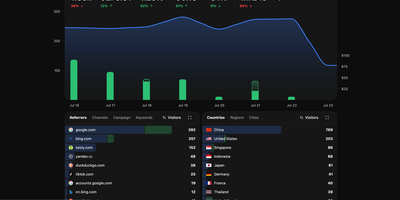
Founders do not need another chart of pageviews; they need to know which visit became money, and Talivia is a self-hosted, revenue-first analytics platform that fuses website traffic with payment data so every metric answers in dollars. Connect Stripe, LemonSqueezy, Polar, Dodo, or Yolfi, and the dashboard pairs visitor counts with revenue, conversion rate, revenue per visitor, refunds, and disputes, so a traffic spike that never buys anything stops masquerading as success. Referrers, campaigns, keywords, and countries are ranked by the money they produce, which reduces budget decisions to one question: which channel brought customers who actually paid? When a page underperforms, session replay shows what visitors actually did there and the moment they gave up, so you debug journeys instead of guessing from aggregates. Events and multi-step funnels trace the path from landing page to checkout, while bot traffic detection stops crawlers from inflating your conversion statistics. The live visitor feed shows who is browsing right now, with country, device, browser, acquisition source, events, and spend for each session as it unfolds. Public links publish any dashboard as a read-only page for investors or clients, and teammates join the workspace with their own accounts when they need to dig deeper. Visitors, replays, and payment records all stay in your own PostgreSQL database, so customer journeys never pass through a third-party analytics cloud. Running on a dedicated VPS on RepoCloud with guaranteed CPU, RAM, and SSD, full root SSH access, and a browser serial console. MIT licensed.

Polar
Used by Tailwind Labs and recognized as an official GitHub funding partner, Polar is the open-source billing infrastructure that lets developers ship production-ready monetization in hours instead of weeks. Meter tokens, API calls, agent runs, GPU seconds, and storage with event-level precision, then compose usage billing with subscriptions, seats, credits, trials, and discounts into whatever pricing model your product requires. As Merchant of Record, Polar handles sales tax, VAT, chargebacks, receipts, and regulatory compliance across all supported countries so you receive clean payouts without building tax infrastructure. Integrate via the full REST API with official SDKs for JavaScript, Python, PHP, and Go, plus framework adapters for Next.js, Astro, Remix, SvelteKit, and Laravel enabling checkout integration in minutes. Automatically deliver benefits upon purchase including GitHub repository access, Discord roles, license keys, file downloads, and meter credits through configurable automation rules. The built-in customer portal provides subscription management, payment method updates, invoice history, and benefit access with full white-label branding. Monitor revenue, costs, and margins through real-time analytics dashboards showing the unit economics every AI startup needs to scale. Running on a dedicated VPS on RepoCloud with guaranteed CPU, RAM, and SSD, full root SSH access, and a browser serial console. Apache License 2.0 licensed.

Operational
Operational watches your product for the moments that matter, signups, payments, failed webhooks and cron jobs, and pushes the important ones to your phone as they happen. Your code sends structured events with a name and a JSON payload through a simple API, using the official Node.js or PHP SDKs or the WordPress plugin, and every event lands in a searchable feed organized by project and category. Mark an event notify and it becomes a push notification on your phone through the installable web app, while everything else waits quietly in the feed for when you actually want to look. Related events nest inside each other as contexts, so a failed checkout can carry its payment attempt, gateway response and retry history in one expandable bundle instead of forty scattered log lines. Events can carry action buttons that trigger your webhooks, letting you approve a refund, restart a job or retry a delivery from the notification itself. Teammates share projects with their own accounts, a test mode lets you rehearse integrations without polluting the real feed, and a built-in MCP server exposes your events to AI tools. Running on a dedicated VPS on RepoCloud with guaranteed CPU, RAM, and SSD, full root SSH access, and a browser serial console. AGPL-3.0 licensed.
Lago
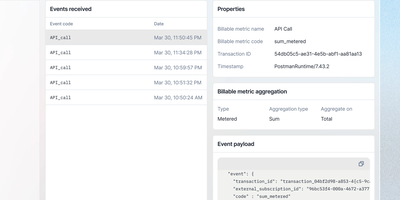
Trusted by Mistral AI, PayPal, Groq, and Synthesia with over 10,300 GitHub stars and Y Combinator backing, Lago is the open-source billing engine that handles usage-based, subscription-based, and hybrid pricing models through a single API-first platform — replacing the need to build custom billing logic or depend on opaque SaaS pricing infrastructure. Real-time event ingestion via ClickHouse processes billable events with deduplication and multiple aggregation methods including count, sum, unique count, max, and weighted sum, while graduated pricing tiers, package-based billing, and percentage-based fees model any pricing strategy from simple subscriptions to complex marketplace commission structures. Automated invoice generation calculates charges according to configurable billing cycles with grace periods, proration for mid-cycle changes, and credit note issuance for refunds and adjustments. Prepaid credits enable pay-in-advance models where customers purchase credit blocks and draw down as usage accumulates, while entitlements tie feature access directly to billing plans for automated provisioning and de-provisioning. Payment orchestration integrates natively with Stripe, Adyen, and GoCardless with automatic retry logic, dunning workflows for failed payments, and multi-gateway routing. Revenue analytics provide cross-stream visibility into MRR, usage trends, churn, and revenue drivers through dedicated API endpoints. The customer portal embeds into your application for self-service invoice access and usage monitoring. Running on a dedicated VPS on RepoCloud with guaranteed CPU, RAM, and SSD, full root SSH access, and a browser serial console. AGPL-3.0 licensed.
KillBill
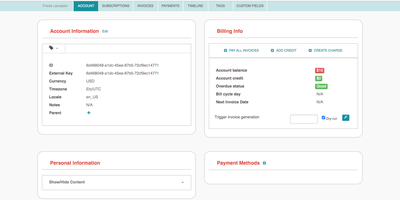
Kill Bill handles the complete subscription billing lifecycle from plan definition through invoice generation to payment collection across any gateway, with 15 years of Fortune 500 production use and 5,600+ GitHub stars behind it. Plans, trials, add-ons, and pricing tiers live in a versioned XML catalog that propagates changes without code deploys. The multi-phase subscription engine manages trial periods, promotional discounts, evergreen billing, usage-based metering, and hybrid pricing models with automatic proration on plan upgrades and downgrades. Automated invoice generation calculates charges, applies credits and adjustments, and triggers payment collection through pluggable gateways including Stripe, Adyen, Braintree, PayPal, and CyberSource. The Java plugin framework extends every billing domain with custom logic for tax calculation via Avalara AvaTax or Vertex, fraud detection through Accertify or Feedzai, and ERP integration without modifying the core. The Kaui admin dashboard gives finance and operations teams account management, subscription controls, invoice views, payment configuration, billing timeline visualization, MRR tracking, advanced search, and full audit history with object-level change tracking. Multi-tenancy isolates billing data across thousands of brands with tenant-specific catalogs, payment configs, and RBAC policies. REST APIs expose every operation with webhook notifications for downstream integration. Deploys via Docker Compose on MySQL or PostgreSQL. Running on a dedicated VPS on RepoCloud with guaranteed CPU, RAM, and SSD, full root SSH access, and a browser serial console. Apache 2.0 licensed.
Meteroid
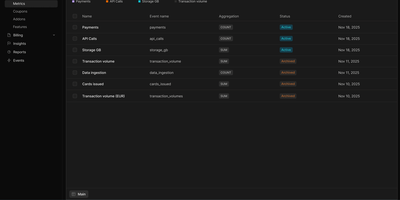
Meteroid delivers the billing infrastructure that SaaS companies need when Stripe Billing gets too rigid and building in-house gets too expensive. The Rust backend ingests usage events via REST API or Kafka with deduplication by event ID and customer ID, storing time-series data in ClickHouse for sub-second aggregation queries across billions of events. Billable metrics transform raw events — API calls, compute time, tokens, storage, transactions — into accurate charges using configurable aggregation functions, dimensions, and filters without pre-aggregation. The plan builder supports any pricing structure: flat rate, per-unit, tiered graduated, tiered volume, package, and hybrid combinations with multiple price components per plan. Versioned plans enable pricing changes without affecting existing subscribers through grandfathering, while experiments let you A/B test pricing with controlled rollouts. Subscription management handles the full lifecycle — creation, upgrades, downgrades, mid-cycle proration, scheduled changes, and cancellation with configurable grace periods. The TypeScript frontend provides a complete web dashboard for managing customers, plans, subscriptions, invoices, and revenue analytics with MRR tracking, churn analysis, and cohort insights. Automated invoice generation handles complex scenarios including usage-based line items, credits, discounts, and tax calculations with PDF rendering. Stripe Connect integration enables payment collection directly through the platform. Running on a dedicated VPS on RepoCloud with guaranteed CPU, RAM, and SSD, full root SSH access, and a browser serial console. AGPL-3.0 licensed.
Keygate
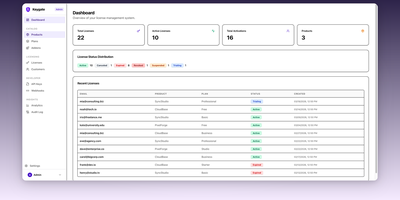
Software makers who would rather not rent a licensing backend use Keygate to issue, sell, and enforce license keys from infrastructure they control. You create desktop, SaaS, or hybrid products and sell them as subscriptions, perpetual licenses, perpetual licenses with a maintenance period, trials, or floating concurrent licenses that are checked out, heartbeated, and returned automatically. The admin dashboard manages products, plans, customers, licenses, API keys, webhooks, analytics, audit logs, team members, email templates, and branding, with search, filters, and CSV or JSON export. Your application activates and verifies keys through the license API, enforces per-device or per-user activation limits with grace periods, and can verify Ed25519 signed tokens offline with a public key. Usage metering tracks API calls, storage, bandwidth, or custom metrics against quotas with hourly, daily, monthly, or yearly reset cycles and webhook threshold warnings. Connecting Stripe makes checkout create licenses automatically, follows plan and seat changes with proration, handles refunds and cancellations, sends dunning emails after failed payments, and gives customers a billing portal and self-service license management. Team seats, feature entitlements, purchasable add-ons, scoped API keys, and optional S3-backed release hosting round out the selling stack in one binary with one PostgreSQL database. Running on a dedicated VPS on RepoCloud with guaranteed CPU, RAM, and SSD, full root SSH access, and a browser serial console. AGPL-3.0 licensed.
Papermark
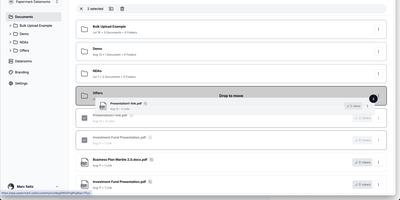
With nearly 9,000 GitHub stars and adoption by over 60,000 companies across 100 countries, Papermark is the open-source DocSend alternative that turns document sharing into a data-rich conversation between you and your viewers. Every shared document generates page-by-page analytics showing exactly which pages capture attention, how long viewers spend on each section, where they drop off, and whether they return for a second look, with real-time notifications the moment a document is opened. Virtual data rooms support unlimited folders with drag-and-drop organization, bulk uploads, granular per-viewer permissions, dynamic watermarking that stamps each page with the viewer's identity, and NDA gating that requires agreement before access. Custom branding applies your logo, colors, and custom domain to every shared link and download page, while email verification and password protection add authentication layers. The AI Data Room Copilot lets viewers chat with uploaded documents, ask questions, and receive contextual summaries directly within the data room interface. The developer platform exposes 43 REST API operations covering data rooms, documents, folders, links, visitors, and analytics, with an MCP server for AI agent integration and a CLI for automation. Built on Next.js with TypeScript, Prisma ORM, PostgreSQL, NextAuth.js authentication, and shadcn/ui components. Running on a dedicated VPS on RepoCloud with guaranteed CPU, RAM, and SSD, full root SSH access, and a browser serial console. AGPLv3 licensed.
Flexprice
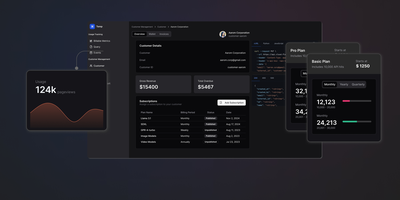
Flexprice is a developer-first billing platform built specifically for AI-native and SaaS companies that need usage-based, credit-based, and hybrid pricing models without building custom billing infrastructure. The metering engine ingests millions of usage events in real time through HTTP APIs or SDK calls, supporting sum, count, unique count, latest value, and multiplier aggregation strategies across custom event schemas like API calls, token counts, compute minutes, and GPU time. Credit management handles prepaid wallets with promotional grants, rollover caps, auto top-ups, and priority-based credit application during invoice generation. The pricing engine supports per-unit, tiered, volume, package, and flat-rate models with per-customer overrides, committed minimums, and enterprise contract terms. Feature entitlements enforce boolean toggles, metered usage limits, and configuration values per plan, enabling applications to gate functionality through simple API checks. Automated invoicing calculates charges from real-time usage data with proration for mid-cycle upgrades and downgrades, generating detailed line items linked to tracked consumption. The architecture separates event ingestion through Kafka from billing computation via Temporal workflow orchestration, allowing each layer to scale independently with ClickHouse handling high-performance usage aggregation. Stripe Connect integration processes payments and manages customer payment methods. Running on a dedicated VPS on RepoCloud with guaranteed CPU, RAM, and SSD, full root SSH access, and a browser serial console. AGPLv3 licensed.
Lotus
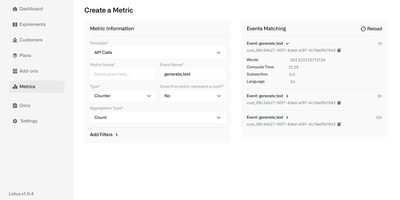
Lotus is an open-source pricing and billing engine that lets SaaS teams meter usage, design plans, and experiment with pricing without rebuilding their billing stack every time the model changes. You define how customers are charged: per seat, per API call, per gigabyte, in tiers, with prepaid credits, or as a bespoke enterprise arrangement negotiated over email. Plans are versioned and deployed like releases, so changing a price never means editing the plan that half your customers already signed. Usage events stream in from your product and are aggregated against each customer's plan, turning raw events into billable quantities your finance team can audit line by line. Before a new model goes live, you backtest it against historical usage to see exactly who would have paid what, and forecast the revenue before a single invoice changes. Experiments compare pricing variants on real customers, so the packaging debate ends with numbers instead of opinions. The control panel sits on top of your existing quote-to-cash stack, pulling from your payment, CRM, and data systems rather than demanding a rip-and-replace migration. Engineers integrate through the API: send events, read balances, and let Lotus handle the proration math when plans change mid-cycle. Running on a dedicated VPS on RepoCloud with guaranteed CPU, RAM, and SSD, full root SSH access, and a browser serial console. MIT licensed.
RefRef
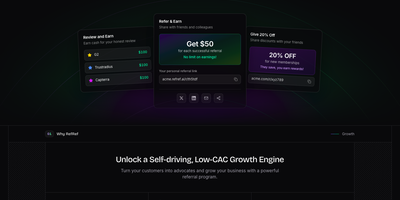
Turn your happiest customers into a tracked referral channel, with rewards, payouts, and fraud checks handled in one place. A small JavaScript snippet on your site records which referrer drove each new customer, and personalized landing pages greet visitors with the name of the friend who invited them. You design reward structures per program, mixing one-off bonuses, recurring commissions, or loyalty incentives, then decide how money moves. Manual approval queues every reward for review, or automatic rules validate and disperse payments on a schedule you set. Referrers get their own portal showing referral links, conversion counts, and reward balances, and affiliates work from a dedicated partner portal with the same visibility. Nudges automatically remind quiet referrers to share again, and fraud monitoring flags suspicious activity before it turns into payouts. Engagement analytics chart program performance across referrers, campaigns, and time, and a sandbox testing environment rehearses the whole flow before real customers arrive. Google sign-in and email delivery through Resend slot in through environment settings, and the Docker Compose deployment brings up the portal, database, and seed data in one command. Running on a dedicated VPS on RepoCloud with guaranteed CPU, RAM, and SSD, full root SSH access, and a browser serial console. AGPL-3.0 licensed.
Mechon
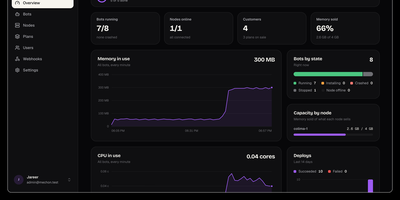
Turn your spare servers into a Discord bot hosting business: Mechon gives your customers a clean panel while every bot runs locked inside its own sandbox. You define the plans you sell, pools of bots, memory, CPU, and disk, with per-customer overrides when a good client needs more. Customers create a bot from a discord.js, discord.py, or Bun template, paste a token, and deploy by uploading a folder, pushing from git, or shipping from CI. Every bot runs as its own Linux user in a locked-down container with a read-only filesystem and kernel-enforced limits on memory, CPU, processes, and disk, so one customer's runaway bot cannot read another's token or starve its neighbors. The live console streams logs as they happen, with memory, CPU, and disk usage per bot and capacity per server. Deploy history records every release and rolls back the bad ones. An API and signed webhooks connect the panel to Paymenter, WHMCS, or Stripe, and the operator keeps the servers, the customers, and all of the money. Server nodes run one agent next to Docker and dial out to the panel, so no inbound ports need opening on your machines. Running on a dedicated VPS on RepoCloud with guaranteed CPU, RAM, and SSD, full root SSH access, and a browser serial console. MIT licensed.

Feedlog
FeedLog gives SaaS teams an AI support agent, a shared inbox, and a feedback-to-roadmap loop in one open-source platform they can host themselves. Customers ask questions inside your product through an embeddable widget, and the agent answers from your help center articles, which you mark as approved knowledge before it can use them. When a question needs a person, the conversation moves into a shared inbox with its full context intact, so customers never repeat themselves and your team replies with email notifications keeping the thread alive. The same widget collects bug reports and feature ideas into feedback boards with posts, voting, comments, and status workflows, while similar-feedback detection finds duplicates and merges fragmented requests before they scatter your priorities. Prioritized work becomes a public roadmap showing what is planned, in progress, and completed, and shipped changes close the loop as changelog entries you can draft with AI from your update notes. Guest access, email and password, Google, GitHub, and SSO sign-in options decide how customers identify themselves, and human support guidance routes billing, account, and privacy requests straight to people. An MCP server connects AI assistants to your boards and articles so agents can query and manage feedback in natural language. Running on a dedicated VPS on RepoCloud with guaranteed CPU, RAM, and SSD, full root SSH access, and a browser serial console. MIT licensed.