KrakenD
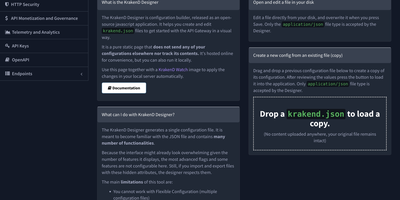
KrakenD processes over 18,000 requests per second on a single instance while consuming under 50MB of RAM at 1,000 concurrent connections, operating as a stateless API gateway that requires no database whatsoever. The Community Edition has earned over 2,600 GitHub stars by outperforming database-dependent alternatives like Kong and Tyk in independent benchmarks. Written entirely in Go, it uses declarative JSON or YAML configuration files that integrate directly into GitOps workflows for version-controlled infrastructure management. The gateway aggregates responses from multiple backend services into a single API call, transforms request and response payloads with field filtering, grouping, and mapping, and applies zero-trust security policies including JWT validation, OAuth 2.0, CORS, HSTS, clickjacking protection, and XSS prevention. Traffic management features include multi-layer rate limiting at both the router and proxy levels, circuit breakers for backend fault isolation, spike arrest policies, and concurrent call support that requests the same data from multiple backends in parallel for improved response times. Telemetry integrates with OpenTelemetry, Prometheus, Grafana dashboards, Datadog, Zipkin, and Jaeger for distributed tracing and metrics collection. The gateway extends through Go plugins, Lua scripting, Martian modifiers, and Google CEL expressions for custom request processing logic. AI workload routing supports OpenAI, Anthropic, Gemini, and other model endpoints with built-in fallback, retries, and load balancing. Deploy via Docker with the devopsfaith/krakend image as a single binary. Running on a dedicated VPS on RepoCloud with guaranteed CPU, RAM, and SSD, full root SSH access, and a browser serial console. Apache 2.0 licensed.
Kong
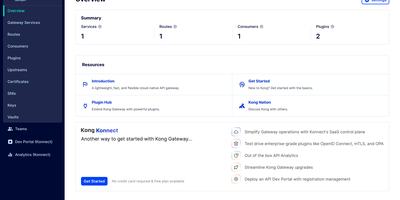
With over 43,000 GitHub stars and adoption by companies including Nasdaq, Samsung, and Expedia, Kong Gateway is the world's most deployed open-source API gateway, processing billions of API requests daily across hybrid-cloud and multi-cloud architectures. Built on the battle-tested NGINX engine with OpenResty's LuaJIT runtime, Kong delivers sub-millisecond proxy latency while supporting REST, gRPC, GraphQL, WebSocket, SOAP, and Kafka protocols. The plugin architecture includes authentication via JWT, Basic Auth, HMAC, key authentication, OAuth 2.0, and LDAP, alongside rate limiting with configurable windows per consumer, IP address, or API key. The AI Proxy plugin provides a universal LLM API that routes across OpenAI, Anthropic, Google Gemini, AWS Bedrock, Azure AI, Databricks, Mistral, and Hugging Face through a single standardized interface, while MCP proxy capabilities convert REST APIs into MCP tools and provide traffic governance for AI agents. Kong supports declarative configuration via YAML for GitOps workflows, a RESTful Admin API for dynamic configuration, and decK CLI for version-controlled infrastructure-as-code management. Upstream health checking with active and passive probes enables automatic failover, and the ring balancer distributes traffic across upstream targets with consistent hashing, round-robin, or least-connections algorithms. The Kong Plugin Hub hosts over 100 community and official plugins covering logging, monitoring, transformation, security, and traffic control. Running on a dedicated VPS on RepoCloud with guaranteed CPU, RAM, and SSD, full root SSH access, and a browser serial console. Apache 2.0 licensed.
Apache ShenYu
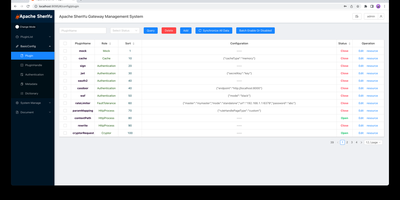
Put one governed doorway in front of every service you run: Apache ShenYu is an API gateway that proxies, secures, and manages traffic for HTTP, Dubbo, gRPC, WebSocket, and MQTT backends from a single entry point. Every request flows through an ordered, hot-pluggable plugin chain, so you compose exactly the behavior each route needs instead of accepting a fixed gateway feature set. Selectors give you coarse, service-level routing and rules refine it down to individual methods, matched against headers, paths, and parameters. Authentication and edge security come from JWT, OAuth 2.0, request-signing, and WAF plugins, while rate limiting, circuit breaking, and load balancing protect fragile upstreams from traffic spikes. You reshape calls in flight with request, response, and parameter mapping, and convert protocols so a gRPC or Dubbo service answers ordinary HTTP clients. Newer releases add AI gateway plugins that proxy LLM calls with prompt processing, token limits, and sensitive-word filtering, plus an MCP server plugin for exposing tools to AI agents. The ShenYu Admin console on its own port manages plugins, selectors, rules, users, and permissions, then pushes changes live to every gateway replica over WebSocket, ZooKeeper, Nacos, etcd, or HTTP long polling. Metrics, tracing, and logging plugins stream operational data to Kafka or Elasticsearch, and client SDKs for Java, Go, Python, and .NET let services register themselves automatically. Running on a dedicated VPS on RepoCloud with guaranteed CPU, RAM, and SSD, full root SSH access, and a browser serial console. Apache-2.0 licensed.
APIPark
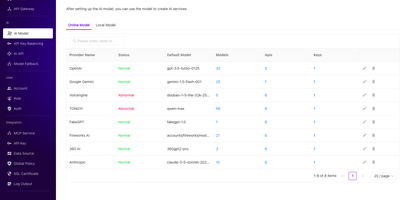
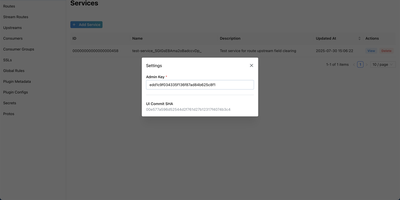
One gateway, every AI model: APIPark gives your applications a single, consistent API for OpenAI, Anthropic, Google Gemini, DeepSeek, and 100+ other models, and gives your team a portal to publish and share whatever gets built on top. Standardized request and response formats mean swapping a provider or rewriting a prompt never touches client code. Pair a model with a prompt template and it becomes a ready-made API for sentiment analysis or translation, listed in the developer portal with its own readme and generated API docs. Model Fallback swaps in the highest-priority available model when one misbehaves. API key balancing spreads traffic across several keys for the same provider. Already have REST services? Import an OpenAPI document, file the service under a category and tags, and let consumers subscribe, with optional manual review before anyone gets access. Any service can be switched on as an MCP tool that AI assistants can discover and call, and local open-source models can be deployed and exposed the same way. Usage charts follow requests, traffic, and tokens per service and consumer. Request logs flow out to files, HTTP endpoints, Kafka, NSQ, or Syslog. Running on a dedicated VPS on RepoCloud with guaranteed CPU, RAM, and SSD, full root SSH access, and a browser serial console. Apache-2.0 licensed.
Apache APISIX
With 17,000 GitHub stars, 460+ contributors, and deployments across telecommunications, automotive, and financial services running on over 10,000 CPU cores at the largest known installations, Apache APISIX delivers a fully dynamic API gateway achieving 140,000 QPS on eight cores with sub-millisecond latency through NGINX's event-driven architecture and LuaJIT-compiled plugin execution. The 100+ open-source plugins cover authentication (JWT, OAuth 2.0, OIDC, Keycloak, LDAP), observability (Prometheus, Datadog, SkyWalking, OpenTelemetry), traffic management (rate limiting, circuit breaking, canary releases, traffic splitting), and security (CORS, IP restriction, CSRF protection) — all hot-reloadable without process restarts via etcd-based real-time configuration synchronization. Multi-protocol support handles HTTP, gRPC, MQTT, TCP, UDP, and WebSocket traffic for both north-south API access and east-west service mesh communication. AI gateway capabilities proxy requests to 20+ LLM providers with semantic caching, token-aware rate limiting, provider failover routing, and content moderation. Custom plugins extend the gateway in Lua, Go, Java, Python, or WebAssembly. Radixtree route matching handles 100,000+ routes without performance degradation. Functions as a Kubernetes ingress controller with native service discovery for Consul, Nacos, and Eureka. Deploy via Docker or Helm charts with horizontal scaling through etcd cluster coordination. Running on a dedicated VPS on RepoCloud with guaranteed CPU, RAM, and SSD, full root SSH access, and a browser serial console. Apache 2.0 licensed.
Unla
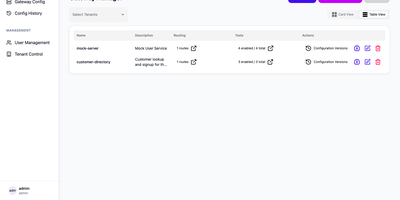
Unla puts a friendly front door on every API you already run, so AI clients can call it as an MCP server without anyone writing a line of glue code. Describe an endpoint in YAML or the form editor, name its arguments, choose where each one goes in the request, and the gateway exposes it as a tool over SSE or streamable HTTP. Import an OpenAPI file to generate a whole server at once, or proxy a third-party MCP server and route it under a prefix of your choice. The Gateway Manager shows every server as a card or table row with its routes, enabled tools, and tool counts. Every save creates a numbered config version with its author and timestamp, so changes are easy to audit and roll back. Tenants keep teams separate, user accounts carry roles, and CORS settings sit next to each route. Configuration hot reloads, syncs across replicas, and persists to disk, SQLite, PostgreSQL, or MySQL. Running on a dedicated VPS on RepoCloud with guaranteed CPU, RAM, and SSD, full root SSH access, and a browser serial console. MIT licensed.
Fusio
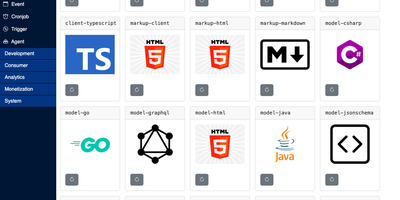
Fusio turns the data and services you already run into a managed API that partners, apps, and AI agents can actually use. The workflow starts small: add a database connection and a table becomes a REST endpoint, or proxy a remote service and route traffic between internal microservices. Each operation pairs an HTTP path with an action and a schema, so requests are validated and an OpenAPI specification plus client SDKs for major languages come out without extra effort. Custom behavior lives in reusable actions, and an AI assistant can draft actions and schemas from a plain-language prompt. Native Model Context Protocol support then offers those actions to autonomous agents as tools. Third-party developers get a self-service portal with documentation, testing tools, and their own keys. Every endpoint can be protected with scopes and rate limits. Asynchronous work runs through events, webhooks, cronjobs, and triggers. When the API becomes a product, plans, quotas, and transactions handle billing, and analytics follow usage, performance, and errors. A marketplace installs ready-made actions and apps, and the generator and test panels speed up development. Running on a dedicated VPS on RepoCloud with guaranteed CPU, RAM, and SSD, full root SSH access, and a browser serial console. Apache-2.0 licensed.
Doorman
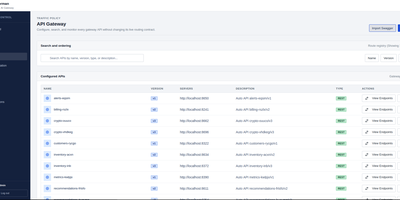
Doorman puts one controlled front door in front of every API you run, instead of teaching each service to reinvent keys, quotas, and abuse protection. It routes REST, SOAP, GraphQL, gRPC, gRPC-Web, and AI traffic through a single gateway while its control plane handles the surrounding work. Catalog APIs in a visual builder, configure protocols and endpoints, validate schemas, and manage semantic versions with deprecation and sunset dates as interfaces evolve. Control who may call what through users, roles, groups, and subscriptions, then attach credit tiers and quotas so heavy consumers stay inside the plan you sold them. Slow abusive clients with rate limits, throttling, and bandwidth caps, and keep flaky upstreams from cascading through retries and circuit breaking. Follow every request in searchable logs, review security controls and audit activity, and move configuration between environments with import and export. Start in a self-contained in-memory mode for a small deployment, then switch to shared MongoDB and Redis when several gateway instances need the same counters, revocations, and routing state. Running on a dedicated VPS on RepoCloud with guaranteed CPU, RAM, and SSD, full root SSH access, and a browser serial console. Apache 2.0 licensed.
Unkey
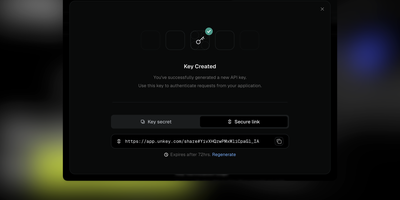
Unkey is the open-source platform that unifies API key management, rate limiting, deployment, and observability into a single control plane. The Go API service validates keys with sub-millisecond latency using regional Redis caches and MySQL 8.0 persistent storage, while ClickHouse captures every verification event for per-key and per-keyspace analytics with filterable time-series charts, request counters, and active key tracking. Keyspaces organize API keys by product, environment, or tier, each configurable with custom prefixes, byte lengths, IP whitelists, encrypted key recovery, and delete protection. Per-key settings include expiration dates, rate limit quotas with configurable windows, RBAC roles and permissions, owner identities linking multiple keys to a single user or organization, and key rotation with grace periods from immediate revocation through 24-hour overlap. The deployment pipeline connects GitHub repositories for automatic Docker container builds, generates preview environments per commit, promotes tested versions to production, and validates releases with OpenAPI diff detection flagging breaking changes before production. The edge gateway authenticates and rate-limits requests at the closest region before routing to the nearest API instance. Immutable audit logs track every key creation, verification, deletion, and configuration change with actor, timestamp, and event metadata. The CLI provides terminal access to key management, analytics queries, and deployment operations. On RepoCloud, deploy Unkey on a dedicated VPS with Docker, root SSH access, and complete control over your API infrastructure, all under the AGPL license.