Agentic Security
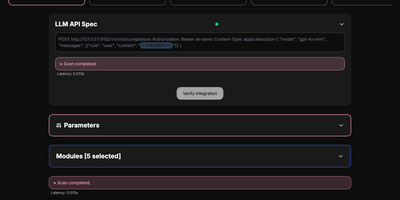
Find out how easily your chatbot can be talked into misbehaving before a stranger on the internet does. Agentic Security points a library of attack prompts at any LLM endpoint you can describe in a few lines of HTTP, then reports which attack families got through. Paste a request template with a marker where the attack goes, press Verify Integration to confirm the endpoint answers, and start the scan. Pick from jailbreak corpora on Hugging Face, obfuscation mutations like Base64, ROT13, mirrored words, and scrambled text, or drop your own CSV of prompts into a folder. Presets cover OpenAI, DeepSeek, Groq, Gemini, Claude, Azure, and custom APIs. Set a token budget, switch on concurrency, and watch a per-module table of failure rates and estimated cost fill in live. Download failed prompts as a CSV, export the full log, or generate a config and run the same scan as a CI gate with failure thresholds. Re-run the same scan after every model or system prompt change to spot regressions early. Running on a dedicated VPS on RepoCloud with guaranteed CPU, RAM, and SSD, full root SSH access, and a browser serial console. Apache-2.0 licensed.
DodoGuard
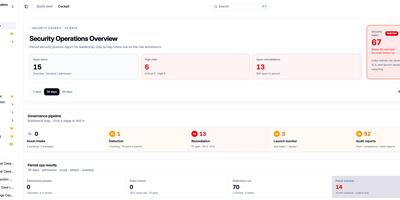
Before an AI agent meets real users, put it through a security checkup it cannot sweet-talk. DodoGuard is a web console and command line where teams register their agents, run evaluation and red-team tasks against them, and decide if each one is cleared for launch. The overview page shows a security index, open risks, remediation counts, and a pipeline that runs from asset intake through detection and remediation to launch monitoring and audit reports. An asset ledger lists every managed agent with its platform, environment, and risk level. A guided wizard creates assessment tasks that pick a test library for prompt injection, instruction leakage, tool misuse, and output risks, then runs black-box conversations against the agent. Evaluation configs cover prompts, providers, variable cases, and several assertion types, with OpenAI, Anthropic, Azure, Bedrock, Ollama, and any OpenAI-compatible endpoint supported. Findings land in a closed-loop board where owners confirm, fix, retest, and close each risk, and finished tasks export as reports for release evidence. Docker Compose with SQLite brings up the web UI on port 3000, and the same engine runs in continuous integration. Security teams use it for launch gates, platform owners use it for regression checks after prompt changes, and auditors use it for evidence. Running on a dedicated VPS on RepoCloud with guaranteed CPU, RAM, and SSD, full root SSH access, and a browser serial console. MIT licensed.