Svix
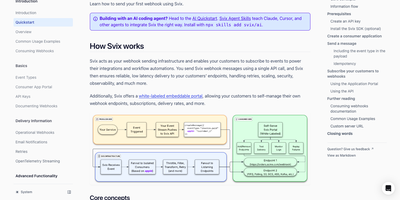
Development teams hand their outgoing webhooks to Svix, which delivers each event to customer endpoints with retries, signed payloads, and a delivery record for every attempt. Your app makes one API call when something happens, a user signs up, an invoice is paid, a build finishes, and Svix delivers the event to every subscribed endpoint your customers registered. Endpoints that fail get automatic retries on a schedule, deliveries are logged attempt by attempt, and failed messages can be resent instead of vanishing. Customers organize their integrations as applications, subscribe endpoints to the event types they care about, filter by channels, and verify signed payloads so forged requests get rejected. You define the event catalog once, and fanout, throttling, and endpoint bookkeeping stop being code you maintain. Official libraries for nine languages and a CLI make the first integration an afternoon task, and the whole service runs from a Docker Compose stack with Postgres and Redis when you want it on your own infrastructure. Your product gains the webhook system customers expect, without your team becoming a deliverability department. Running on a dedicated VPS on RepoCloud with guaranteed CPU, RAM, and SSD, full root SSH access, and a browser serial console. MIT licensed.
Convoy
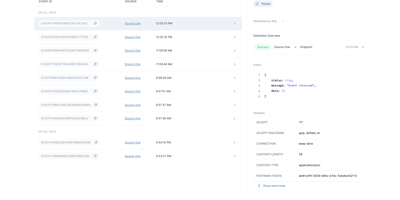
Convoy is an enterprise-grade webhooks gateway that manages both incoming and outgoing webhook traffic to guarantee reliable event delivery without exposing internal microservices to the public internet. Organizations deploy the platform at the edge to ingest events from message brokers such as Apache Kafka, RabbitMQ, and Google Cloud PubSub, or receive HTTP webhooks from third-party services directly. The gateway enforces delivery policies through configurable rate limiting per endpoint, circuit breaking during downstream outages, and automated retries using constant or exponential backoff with jitter. Developers can generate customer-facing webhook portals embedded via iframes, allowing end users to inspect delivery attempts, verify HMAC-SHA256 signatures, and manually replay failed events. Comprehensive security controls include static egress IP proxying to prevent server-side request forgery, automated rolling secret keys, and instant alerting via Slack or email when endpoints fail consecutively. Running on a dedicated VPS on RepoCloud with guaranteed CPU, RAM, and SSD, full root SSH access, and a browser serial console. Elastic License 2.0 licensed.