MySQL
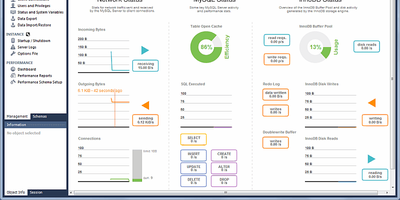
Powering Facebook, Uber, Twitter, and Booking.com, MySQL processes billions of queries daily as the world's most widely deployed open-source relational database. Its default InnoDB storage engine delivers full ACID compliance with row-level locking, crash recovery, and foreign key enforcement, making it the backbone of mission-critical e-commerce, SaaS, and financial applications. MySQL's Document Store bridges relational and NoSQL paradigms, allowing developers to work with schema-less JSON collections alongside traditional SQL tables through the X DevAPI protocol. For high availability, InnoDB Cluster combines Group Replication, MySQL Router, and MySQL Shell into an integrated solution with automatic failover, while InnoDB ClusterSet extends this across data centers for disaster recovery. The database supports multiple storage engines including MyISAM for read-heavy analytics, Memory for temporary high-speed caching, and Archive for compressed historical data. Native JSON functions like JSON_TABLE() transform document data into relational result sets, and spatial data types enable GIS applications. MySQL integrates with every major programming language through official connectors for Python, Java, Node.js, PHP, C++, and .NET, and works seamlessly with frameworks like Django, Laravel, Rails, and Spring. Replication topologies support read replicas for horizontal scaling, and the new Change Stream Applier in MySQL 26.7 enables configurable parallel transaction application with up to 1,024 workers per channel. Running on a dedicated VPS on RepoCloud with guaranteed CPU, RAM, and SSD, full root SSH access, and a browser serial console. GPLv2 licensed.
libSQL
libSQL bridges the gap between SQLite's legendary simplicity and the server-accessible database model developers expect from PostgreSQL and MySQL, adding network access, replication, and vector search while maintaining full file format and API compatibility. The sqld (SQL daemon) component transforms SQLite into a network-accessible database server accepting queries via HTTP with JSON payloads, WebSocket connections, and a Hrana protocol optimized for low-latency edge access. Client libraries for TypeScript, JavaScript, Rust, Go, and Python connect to sqld identically to any traditional client-server database, while the LD_PRELOAD compatibility layer enables switching existing SQLite applications from local to remote mode without code changes. Embedded replicas synchronize a local SQLite copy inside your application process with the primary server, delivering sub-millisecond read latency while maintaining consistency through streaming replication. Bottomless replication continuously backs up database state to S3-compatible object storage with generation-based snapshots and WAL page shipping, providing point-in-time recovery without manual backup scheduling. Native vector search enables semantic similarity queries directly within SQL using cosine distance functions, eliminating the need for external vector database infrastructure. Read replica support distributes query load across multiple sqld instances, and integration with mvSQLite adds multi-version concurrency for high-availability deployments. Created by Turso with 17,100+ stars and active production deployment. Running on a dedicated VPS on RepoCloud with guaranteed CPU, RAM, and SSD, full root SSH access, and a browser serial console. MIT licensed.
Dolt
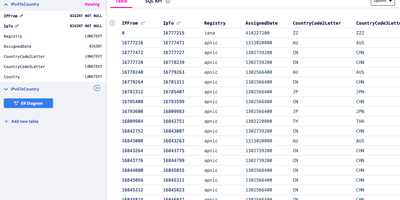
Dolt is a SQL database that versions your tables the way Git versions files, so every row carries a history you can branch, diff, merge, and roll back. The command line mirrors Git command for command: dolt init, add, commit, checkout, log, and blame operate on tables instead of files, and merges happen cell by cell, with conflicting cells landing in dolt_conflicts tables you resolve by choosing ours or theirs. Run dolt sql-server and the same database answers on the MySQL wire protocol, so the mysql client, TablePlus, DataGrip, and your existing application drivers connect unchanged, while stored procedures like DOLT_CHECKOUT and DOLT_MERGE and system tables like dolt_diff and dolt_log put version control inside SQL itself. Teams push and pull databases through remotes on DoltHub, S3, GCS, or a filesystem, fork a database to test a risky migration, and cherry-pick the good commits back. AI agents get their own branches to write into, and a human reviews the row-level diff before anything merges to main. Data publishers ship corrections as commits subscribers can pull, and analysts query any historical snapshot with AS OF instead of restoring backups. Running on a dedicated VPS on RepoCloud with guaranteed CPU, RAM, and SSD, full root SSH access, and a browser serial console. Apache-2.0 licensed.
Its a Plan
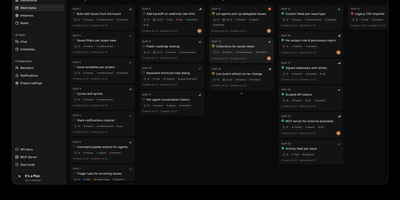
Autonomous AI coding agents work side-by-side with software engineers inside Its a Plan, a keyboard-driven project tracking and sprint planning workspace designed for rapid software delivery. Product teams organize development cycles through customizable Kanban boards, prioritized backlogs, nested sub-issues, and interactive roadmap timelines designed for rapid keyboard navigation. Engineers can assign work directly to AI agents or mention them inside discussion threads to trigger automated code fixes, documentation updates, and test suite generation. Integrated runners connect to popular coding models via standard protocol interfaces, executing assigned tasks in isolated environments before reporting pull requests and results back to the issue thread. Administrators manage team permissions through role-based access controls, authenticate users with passwordless passkeys or identity providers, and broadcast instant notifications via Telegram and transactional email. The platform dispatches configurable webhooks across development tools, enabling seamless bi-directional status synchronization with external version control platforms and continuous integration pipelines. Custom labels, milestone estimates, and progress metrics provide engineering managers with immediate visibility into sprint velocity and delivery bottlenecks. Running on a dedicated VPS on RepoCloud with guaranteed CPU, RAM, and SSD, full root SSH access, and a browser serial console. AGPL-3.0 licensed.
Database Lab Engine
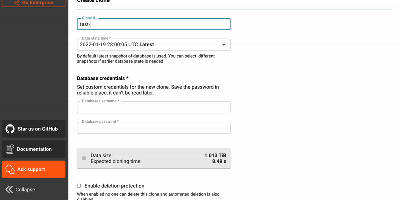
Testing a migration against a toy database proves almost nothing. Database Lab Engine is an open-source platform that clones production-sized PostgreSQL databases in seconds, giving every developer, CI job, and query experiment a full-fidelity copy without waiting hours for a restore or paying to store ten of them. The trick is thin cloning: copy-on-write snapshots taken on ZFS or LVM let a one-terabyte database materialise as a writable branch in about ten seconds, with dozens of independent clones sharing one physical dataset until their changes diverge. Teams point CI at a fresh clone for every migration, so 100 percent of schema changes get rehearsed against real data shapes and volumes before they touch production; analysts get disposable copies for testing query rewrites and index ideas; and a bad experiment costs one delete, not one restore. Clones are managed through a web UI, API, and CLI, draw from self-managed Postgres or managed sources on RDS, Cloud SQL, and Supabase, and carry popular extensions in their containers. Resets, upgrades, deletion protection, retention rules, and resource quotas keep the fleet tidy as it grows into branches and snapshots numbering in the dozens. Running on a dedicated VPS on RepoCloud with guaranteed CPU, RAM, and SSD, full root SSH access, and a browser serial console. Apache-2.0 licensed.
Neon
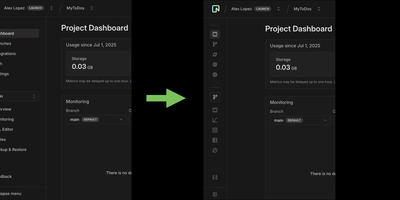
Neon reimagines PostgreSQL with a serverless architecture that decouples storage from compute, enabling instant copy-on-write database branching, autoscaling under load, and scale-to-zero when idle with sub-second cold starts. The lakebase architecture distributes durability across three layers: stateless compute nodes running unmodified PostgreSQL, safekeepers providing Paxos-based WAL quorum replication, and a pageserver that materializes pages on demand while offloading immutable history to S3-compatible object storage via MinIO or AWS S3. Copy-on-write branching creates full database clones as metadata operations without duplicating data, enabling developers to spin up isolated test environments, run parallel CI/CD pipelines, or recover from data loss through point-in-time restore across the configurable history window. Autoscaling dynamically adjusts CPU and memory based on live traffic without manual capacity planning, while scale-to-zero ensures costs drop to storage-only during idle periods. Neon maintains 100% PostgreSQL compatibility with broad extension support including PostGIS, pg_cron, pgvector, pg_stat_statements, and hundreds more, so existing applications connect with standard PostgreSQL drivers and ORMs unchanged. The API-first control plane enables programmatic provisioning, branch management, and multi-tenant fleet operations for platform builders and AI agent integrations. Acquired by Databricks in May 2025 and backed by over 22,800 GitHub stars. Deploys via Docker Compose with pageserver, safekeepers, storage broker, and compute nodes backed by MinIO object storage. Running on a dedicated VPS on RepoCloud with guaranteed CPU, RAM, and SSD, full root SSH access, and a browser serial console. Apache 2.0 licensed.
MatrixOne
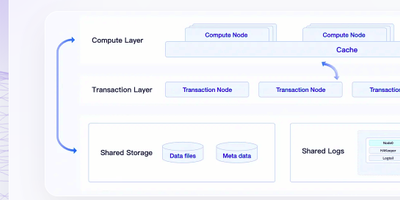
Transactions, analytics, full-text search, and vector retrieval stop needing four separate systems: MatrixOne folds them into one hyper-converged database engine that speaks the MySQL 8.0 wire protocol, so existing drivers, JDBC applications, Navicat, and BI tools connect unchanged. A single TAE storage engine serves OLTP and OLAP together, with compute and storage separated so query nodes scale independently of the data they scan. Vector columns carry IVF and HNSW indexes with L2, cosine, and inner-product distance, powering RAG and semantic search at billions scale beside your relational tables instead of in a sidecar database. Full-text indexing joins the same query, so hybrid searches combine keyword relevance and embedding similarity in one statement. Git-style version control for data lets teams clone, branch, and roll back datasets the way they already treat code, which makes experiments and audits reproducible. Streaming ingestion through Kafka connectors keeps analytical tables current, and the 4.2 line sharpens window-query performance, composite-index planning, and physical backup and restore that preserves table history. Running on a dedicated VPS on RepoCloud with guaranteed CPU, RAM, and SSD, full root SSH access, and a browser serial console. Apache-2.0 licensed.
Skytable
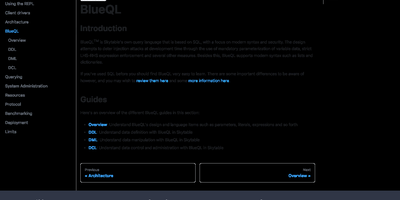
Some data refuses to sit still in rows and columns. Skytable is an open-source NoSQL database that stores information in spaces and models instead of rigid tables, letting a record carry strings, numbers, nested lists, and other complex types the way your application actually thinks about them. Developers query it with BlueQL, a language that feels familiar to anyone who writes SQL but adds modern collection syntax and mandatory parameterisation that blunts injection attacks before they start. Underneath, the engine keeps working data in memory, drives multithreaded asynchronous network I/O, batches writes, and persists through a custom append-only storage layer with delayed-durability transactions that trade a tunable sliver of risk for a lot of speed. Client drivers connect applications directly, an interactive shell handles administration and exploration, authentication protects the root account and additional users, and clustering work in progress aims at the high-availability deployments larger systems expect. Teams reach for it when a document store feels too shapeless, a relational database feels too stiff, and latency budgets leave no room for either. Running on a dedicated VPS on RepoCloud with guaranteed CPU, RAM, and SSD, full root SSH access, and a browser serial console. AGPL-3.0 licensed.