Tick Stock Panel
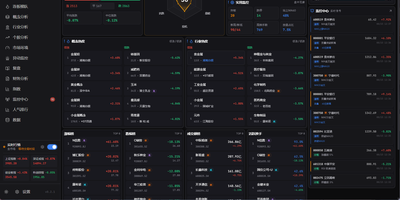
Screen equities against dozens of technical indicators, backtest algorithmic trading strategies, and spot intraday market anomalies using Tick Stock Panel, a self-hosted quantitative analysis workbench. Traders can filter entire exchanges across technical indicators including moving averages, relative strength index, and Bollinger bands with near-instantaneous execution. The platform provides a full backtesting environment where users test customized entry and exit rules, account for simulated slippage and commission fees, and review streamed performance metrics. Dedicated monitoring modules track intraday volume spikes, price breakouts, and multi-day limit streaks with automated alert dispatching to messaging channels and voice announcements. Users can explore individual stock profiles featuring multi-dimensional technical breakdowns, financial balance sheets, and automated event post-mortems generated via integrated language models. Visual factor mining tools allow analysts to discover uncorrelated signals and assemble composite portfolio screens without external database overhead. An interactive dashboard aggregates sector rotations, hot concept heatmaps, and customizable watchlists into modular operational views. Running on a dedicated VPS on RepoCloud with guaranteed CPU, RAM, and SSD, full root SSH access, and a browser serial console. MIT licensed.
TRIP
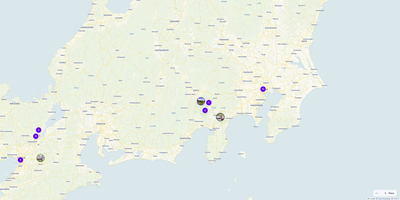
Plan multi-day expeditions, map custom waypoints, and coordinate shared group travel itineraries with TRIP, a private self-hosted journey management platform free from commercial tracking. Travelers can drop custom pins across global topographic or satellite maps, tagging locations with categories, visit durations, cost estimates, accessibility notes, and pet-friendly attributes. The visual trip builder organizes individual stops into ordered daily schedules, helping you calculate travel intervals and rearrange destination sequences using intuitive drag-and-drop tools. You can attach reference photos, booking confirmations, external links, and packing checklists directly to each itinerary milestone. Shared workspace controls enable travel companions to collaborate on upcoming road trips, leave comments on specific attractions, and coordinate shared responsibilities in real time. Dynamic filtering lets you isolate culinary destinations, outdoor hikes, or cultural landmarks by budget and travel style. Offline caching ensures your navigational routes and saved coordinates remain accessible in remote backcountry areas with spotty cellular coverage. Running on a dedicated VPS on RepoCloud with guaranteed CPU, RAM, and SSD, full root SSH access, and a browser serial console. MIT licensed.
Zerobyte
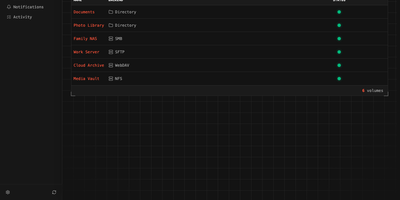
Replace fragile cron scripts and complex terminal commands with Zerobyte, a self-hosted web control center that schedules, monitors, and restores encrypted backups across any cloud or local storage infrastructure. System administrators can connect local drives, NFS shares, SMB exports, WebDAV mounts, and SFTP endpoints as backup sources with custom inclusion and exclusion rules. The visual interface lets you dispatch incremental, client-side encrypted snapshots to local directories, Amazon S3, Google Cloud Storage, Azure Blob, and forty cloud storage providers supported via rclone. You can schedule automated jobs using cron expressions, configure custom retention windows to automatically prune obsolete archives, and run repository health checks directly from the browser. Interactive file trees allow operators to inspect historical snapshot contents, download specific documents, or restore entire directory structures to their original locations in a single click. Configurable pre-backup and post-backup HTTP webhooks help pause databases before snapshots, execute dump commands, and alert teams through Discord, Slack, Telegram, or ntfy notifications. Multi-repository mirroring duplicates critical backups to secondary cloud providers for disaster recovery. Running on a dedicated VPS on RepoCloud with guaranteed CPU, RAM, and SSD, full root SSH access, and a browser serial console. AGPL-3.0 licensed.
SuperPlane
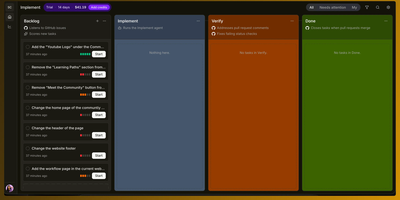
SuperPlane is an open-source engineering automation platform that turns routine backlog tickets into verified, review-ready pull requests while orchestrating complex multi-system workflows across your developer tools. Engineers use the visual infinite canvas to assemble event-driven pipelines with trigger nodes, conditional routing, loops, and human-in-the-loop approval gates. You can delegate pull request code reviews, automated QA testing, documentation generation, and release management to coding agents operating within strictly defined policy boundaries. Custom operational consoles let teams build live monitoring dashboards displaying key delivery metrics, active incident states, and execution histories from connected tools. Integrations connect natively with GitHub, GitLab, Datadog, PagerDuty, Slack, AWS, and leading AI models through webhook events and bi-directional actions. Every automation run maintains durable state persistence across process restarts, ensuring failed steps resume with full input payloads and debugging context intact. Developers can define reusable work orders, configure canvas memory for long-term state retention, and execute fleet commands over SSH or containerized runners. Running on a dedicated VPS on RepoCloud with guaranteed CPU, RAM, and SSD, full root SSH access, and a browser serial console. Apache 2.0 licensed.
DeepWiki
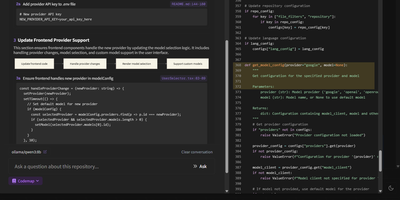
Transform complex code repositories into searchable, interactive wikis with DeepWiki, an automated documentation platform that maps architectural relationships and provides instant answers to technical questions about any codebase. Software engineers can submit public or private repositories from GitHub, GitLab, or Bitbucket to generate comprehensive project overviews, component breakdowns, and interactive Mermaid diagrams illustrating data pipelines and class hierarchies. The built-in Ask interface allows developers to query system logic using retrieval-augmented answers grounded directly in repository source files. Teams can trigger iterative deep research sessions that perform multi-step codebase investigations to explain intricate execution paths, uncover hidden dependencies, and summarize complex algorithms across hundreds of files. Interactive Codemap tours provide guided walkthroughs of critical entry points, letting reviewers inspect synchronized code viewer panels with exact line references while onboarding to unfamiliar services. Developers can export complete wiki structures for offline sharing, customize documentation depth from high-level summaries to granular module analyses, and connect local or cloud model endpoints to process sensitive internal code securely. Running on a dedicated VPS on RepoCloud with guaranteed CPU, RAM, and SSD, full root SSH access, and a browser serial console. MIT licensed.

Bar Assistant
Turn your scattered collection of liquor bottles and bar tools into a master mixology station with an intelligent digital cellar. Bar Assistant tracks your personal liquor cabinet, inventory levels, and available mixers against a catalog of more than 500 cocktail recipes. The platform calculates exact alcohol by volume ratings, computes ingredient costs per serving, and dynamically highlights every cocktail you can craft with on-hand supplies. Built-in recipe scrapers extract formula details, measurements, and glassware requirements directly from web links, JSON payloads, or YAML files. Multi-bar workspaces allow home mixologists and commercial venues to separate private collections from communal drink menus while handling complex ingredient substitutions, custom infusions, and shopping lists. Integrated Meilisearch indexing powers instant typo-tolerant searches across spirit categories, flavor tags, and cocktail strengths. Visual cocktail cards display high-resolution drink photography, user ratings, glassware requirements, and step-by-step garnish instructions. Deploy Bar Assistant on RepoCloud with dedicated VPS compute, full root SSH credentials, and in-browser console access, backed by an open-source MIT license.
Peekaping
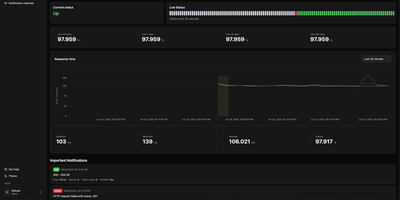
Keep users ahead of outages by consolidating infrastructure monitoring into Peekaping, a unified uptime monitoring and incident communication platform that alerts engineering teams to network and application failures before customers experience disruptions. Users can configure automated synthetic checks across HTTP endpoints, database engines, message queues, and container runtimes to verify response latency, payload integrity, and SSL certificate expiration. When performance thresholds degrade or connections drop, the platform broadcasts structured incident notices across twenty-two notification channels including Slack, Discord, Telegram, PagerDuty, and custom webhooks. Visual dashboards display live heartbeat timelines, historical latency percentiles, and rolling availability scores for each monitored endpoint. System administrators can assemble custom public status pages with custom domains, branded color schemes, and component grouping to inform external stakeholders during planned maintenance or unforeseen service degradations. Teams can schedule recurring maintenance windows to pause alert notifications during routine deployments and generate API tokens to automate monitor creation directly from CI/CD deployment pipelines. Running on a dedicated VPS on RepoCloud with guaranteed CPU, RAM, and SSD, full root SSH access, and a browser serial console. MIT licensed.
CaddyUI
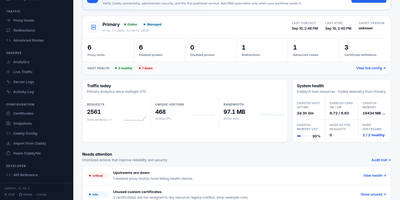
Providing an intuitive control plane for modern reverse proxy infrastructure, CaddyUI enables system administrators to manage proxy hosts, automated TLS certificates, and traffic routing without hand-editing configuration files. Operators can create and adjust reverse proxy destinations, URL path rewrites, custom headers, and redirection rules using structured forms that validate against the proxy engine before saving. The platform coordinates automatic ACME certificate requests and renewals, displaying live certificate expiration timelines, validation stages, and internal self-signed certificate authority options for local network services. Fleet management tools synchronize proxy rules across multiple distributed server instances, preventing configuration drift across staging and production clusters. Automated post-deployment health checks verify upstream endpoint availability, HTTP status codes, and latency thresholds, instantly rolling back to the previous configuration if an expectation fails. An integrated observability suite delivers real-time visitor traffic analytics, geographic maps, HTTP response code breakdowns, and single-click client IP blocking to counter malicious probing attempts. Administrators can schedule automated database backups, configure multi-user access with role permissions, and integrate CrowdSec threat intelligence to protect backends. Running on a dedicated VPS on RepoCloud with guaranteed CPU, RAM, and SSD, full root SSH access, and a browser serial console. Apache 2.0 licensed.
GeoLens
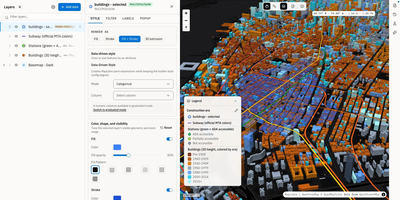
Transforming scattered spatial files into an interactive data catalog, GeoLens empowers engineering and GIS teams to organize geospatial assets, execute semantic searches, and build interactive 3D maps on self-hosted infrastructure. Users can ingest shapefiles, GeoJSON boundaries, database tables, and Cloud-Optimized GeoTIFF rasters into a centralized inventory with automatic source freshness auditing. Natural language queries evaluate dataset relevance across spatial boundaries and thematic tags, allowing analysts to uncover hydrology networks or zoning footprints without knowing exact layer names. The browser-based composition canvas lets cartographers extrude three-dimensional building footprints, overlay elevation terrain contours, color features by attribute values, and reorder layer hierarchies with drag-and-drop ease. Finished map projects publish immediately as secure shareable web links or responsive embeds for external dashboards. Desktop GIS operators can connect directly from QGIS or ArcGIS through native OGC API Features and STAC endpoints to query live vector tiles and run spatial filters. Teams can export filtered geometries into GeoPackage, FlatGeobuf, GeoParquet, or PMTiles archives to support downstream analysis workflows. Running on a dedicated VPS on RepoCloud with guaranteed CPU, RAM, and SSD, full root SSH access, and a browser serial console. Apache 2.0 licensed.
Bindery
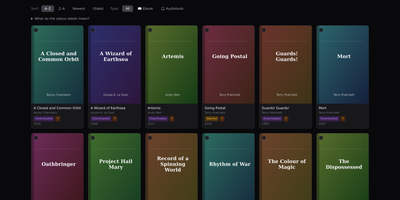
Stop wrestling with dead scrapers and scattered reading folders by orchestrating your digital library through Bindery, an automated ebook and audiobook management platform that tracks favorite authors, monitors release schedules, coordinates indexer searches, and organizes media collections. Users can configure monitoring profiles to automatically track author bibliographies across OpenLibrary, Google Books, and Hardcover without fear of dead endpoints breaking their library. Dual-format tracking allows each book entry to hold separate digital ebook and multi-part audiobook files in distinct directory roots. The integrated search engine evaluates Newznab and Torznab indexers in parallel, scoring releases by edition tags, audio bitrate, narrator names, and release year to grab the highest quality versions. Download jobs pass seamlessly to background clients like SABnzbd, NZBGet, Transmission, or Deluge, moving completed files into custom library folder structures with hardlinks. An interactive release calendar highlights upcoming publications, while the manual metadata editor locks custom titles, genres, and series ordering against upstream refreshes. Readers can browse curated collections directly through the built-in OPDS feed on mobile reading apps or export organized media straight into Calibre and Audiobookshelf. Running on a dedicated VPS on RepoCloud with guaranteed CPU, RAM, and SSD, full root SSH access, and a browser serial console. MIT licensed.
Fess
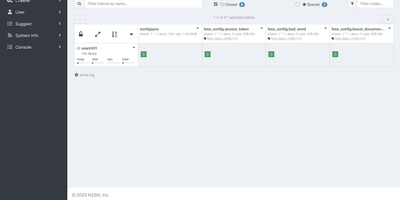
Eliminate indexing blind spots across fragmented company networks with Fess, a distributed enterprise search engine that crawls internal document repositories, corporate intranets, and cloud services to provide employees with instant, permission-aware file discovery. Organizations can schedule automated crawlers across web pages, network shares, databases, and third-party storage platforms to extract text and generate visual thumbnails from PDFs, spreadsheets, presentations, and compressed archives. Users can search indexed records using natural language queries, filtering results by file metadata, creation dates, categories, and geographic coordinates while viewing contextual snippets with highlighted keyword matches. Granular role-based permissions mirror directory security structures from Active Directory and LDAP so staff only see search results for documents they have explicit authorization to inspect. The browser-based administrative console lets operations teams define path mapping rules, manage virtual hosts, monitor active crawl jobs, inspect error logs, and configure scheduled re-indexing workflows without modifying server configuration files. Security teams can establish single sign-on across the organization using SAML or OpenID Connect authentication providers to secure administrative workflows and search portals. Running on a dedicated VPS on RepoCloud with guaranteed CPU, RAM, and SSD, full root SSH access, and a browser serial console. Apache 2.0 licensed.
AiSOC
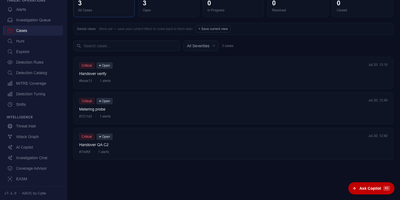
AiSOC delivers an open-source AI Security Operations Center that unifies event ingestion, graph correlation, autonomous triage, and purple-team adversary emulation into a single self-hosted console. Security analysts triage alerts across an interactive Investigation Rail that visualizes six-event attack timelines, pivot-path entity graphs, and recommended containment steps. The underlying LangGraph agentic engine reasons over ingested telemetry, querying MITRE ATT&CK frameworks, CISA Known Exploited Vulnerabilities catalogs, and Shodan intelligence while recording every prompt, tool execution, and evidentiary citation in an immutable Investigation Ledger. Incident responders execute automated containment playbooks, including host network isolation, credential revocation in identity providers, and firewall blocklist updates with human-in-the-loop sign-offs. Threat hunters input plain-English hypotheses into the natural-language hunt workbench to generate and execute ES|QL, SPL, and KQL queries against historical telemetry stores. Platform operators connect over seventy vendor connectors spanning CrowdStrike, SentinelOne, Microsoft Defender, AWS Security Hub, Okta, and Cloudflare to normalize streaming events into Open Cybersecurity Schema Framework standards. Running on a dedicated VPS on RepoCloud with guaranteed CPU, RAM, and SSD, full root SSH access, and a browser serial console. MIT licensed.

BrightBean Studio
BrightBean Studio provides an open-source social media management suite that centralizes multi-account publishing, visual calendar scheduling, idea tracking, and cross-channel analytics into a unified self-hosted dashboard. Content creators and marketing agencies draft cross-network posts within an interactive composer that provides real-time channel previews and custom caption overrides for individual networks. The visual drag-and-drop calendar maps publishing queues across recurring weekly time slots, while an integrated Kanban board organizes brainstorming concepts from unassigned ideation to production-ready schedules. Community managers monitor unified social inboxes aggregating direct messages, mentions, and comments across Facebook, Instagram, LinkedIn, YouTube, TikTok, Bluesky, Threads, Pinterest, and Mastodon. Team leads configure multi-tier approval workflows with threaded editorial comments and issue passwordless 30-day magic links so external clients can approve drafts without registration. Built-in performance dashboards aggregate engagement rates, follower growth curves, and watch time metrics directly from native network APIs without relying on third-party data aggregators. Running on a dedicated VPS on RepoCloud with guaranteed CPU, RAM, and SSD, full root SSH access, and a browser serial console. AGPL-3.0 licensed.
BottleCRM
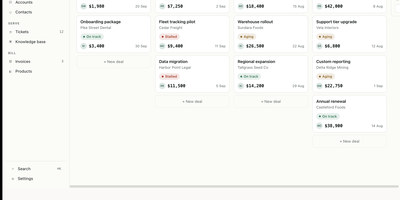
BottleCRM delivers a self-hosted customer relationship management platform that unifies sales lead qualification, visual deal pipeline tracking, helpdesk ticketing, and client invoicing into one workspace. Sales representatives capture prospects through embeddable website forms or CSV imports, qualifying leads before converting them into synchronized account, contact, and opportunity records. Account executives manage visual Kanban deal boards with stage aging timers and weighted pipeline forecasting, dragging cards across qualification phases while preserving complete interaction timelines. Customer support teams handle incoming inquiries with multi-level ticket hierarchies, business-hours service level agreement clocks, automated escalations, approval workflows, and canned response macros. Billing managers generate professional quotes and invoices directly from won deals, applying customizable line-item tax rates and tracking payment statuses through customer self-service portals. Development teams connect autonomous AI agents and third-party software using personal access tokens against the documented REST API to automate data entry and workflow updates. Running on a dedicated VPS on RepoCloud with guaranteed CPU, RAM, and SSD, full root SSH access, and a browser serial console. MIT licensed.
Profilarr
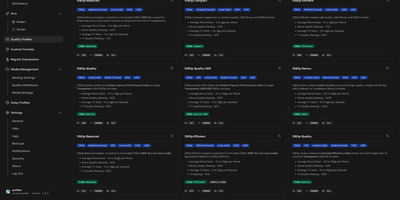
Profilarr orchestrates media library quality profiles, custom formats, and release matching rules across all your Radarr and Sonarr servers from a single centralized management console. Instead of manually copying regex strings and scoring tables between home server instances, you can link community configuration databases like TRaSH Guides and Dictionarry to automate standardization. The visual pattern workbench lets you test regular expressions directly against real-world media release titles, highlighting matches for audio codecs, HDR formats, and release group tags. You can simulate release scoring before deploying, inspecting exactly why a candidate download gets accepted or rejected based on your custom ranking conditions. Media managers can define custom delay profiles, establishing protocol priorities and minimum score thresholds to prevent premature grabs before high-quality releases surface. Granular synchronization tools push updated profiles and formatting rules to multiple production Arr instances simultaneously while preserving your local server overrides. When indexers publish new release naming conventions, you can update conditions once in your central database and roll out updates across your entire infrastructure. Running on a dedicated VPS on RepoCloud with guaranteed CPU, RAM, and SSD, full root SSH access, and a browser serial console. GNU AGPLv3 licensed.
Artifact Keeper
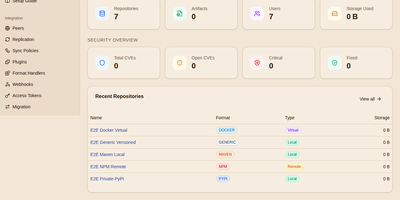
Artifact Keeper serves as a self-hosted universal software artifact repository that consolidates container images, application libraries, and infrastructure bundles under a unified management control plane. Software development teams can publish and resolve dependencies using their existing build tools, including Docker, Helm, npm, PyPI, Maven, Cargo, NuGet, and Terraform without installing proprietary client plugins. Remote repositories act as transparent pull-through caching proxies for public upstreams like Docker Hub and PyPI, accelerating internal CI/CD build speeds while insulating production pipelines from external registry outages. Virtual repositories combine multiple local, remote, and third-party endpoints into single URLs, resolving packages across prioritized internal teams and public registries automatically. Automated security scanners evaluate incoming packages for Common Vulnerabilities and Exposures using Trivy and Grype engines, assigning letter grades and enforcing quarantine policies to block vulnerable binaries before production release. Administrators can sign package metadata with cryptographic GPG keys, configure peer mesh replication across geographic regions, and manage team permissions using OpenID Connect, SAML, and granular access tokens. Running on a dedicated VPS on RepoCloud with guaranteed CPU, RAM, and SSD, full root SSH access, and a browser serial console. MIT licensed.
Moltis
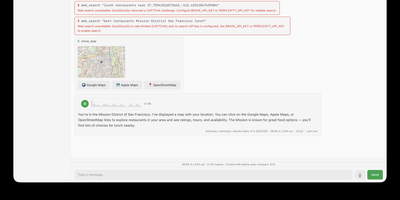
Moltis gives individuals and teams a completely private personal AI agent server that bridges conversational assistants to everyday messaging platforms while executing real-world computing tasks inside secure execution environments. Users can interact with autonomous agents across Telegram, Discord, WhatsApp, Slack, Matrix, and browser interfaces to draft correspondence, automate research, and schedule recurring cron tasks. The system coordinates multi-agent delegation by spinning up specialized sub-agents with dedicated roles for code generation, pull request reviews, quality assurance testing, and technical documentation. Built-in sandboxing isolates tool operations within container boundaries or WebAssembly modules, ensuring shell commands, web scraping routines, and script executions cannot alter underlying operating system files without explicit permission. Native Model Context Protocol integration allows operators to attach external data endpoints, database connectors, and custom command-line utilities without rewriting core routing logic. Persistent memory preserves conversational context and document embeddings across multiple sessions, allowing assistants to recall prior discussions, user preferences, and project guidelines indefinitely. Administrators can configure granular tool approvals, manage WebAuthn passkey authentication, and review real-time WebSocket communication logs through an embedded control panel. Running on a dedicated VPS on RepoCloud with guaranteed CPU, RAM, and SSD, full root SSH access, and a browser serial console. MIT licensed.
Omni
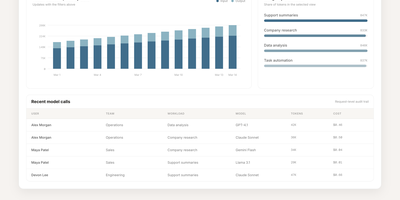
Omni is an open-source workplace AI agent and enterprise search platform that unites your company's scattered tools into a single context-aware workspace where team members can find answers and automate cross-application workflows. Employees can query connected knowledge sources including Google Drive, Gmail, Slack, Jira, GitHub, Confluence, and HubSpot to locate project specifications, customer records, and operational documents without jumping across tabs. The integrated AI assistant answers complex multi-step inquiries, summarizes lengthy email threads, and cites exact source passages so workers can verify factual accuracy before making business decisions. Granular permission inheritance mirrors existing access controls across every connected service, guaranteeing that sensitive personnel files, financial statements, and confidential repositories remain hidden from unauthorized staff. Engineers can construct bespoke data connectors and define automated agent skills through the extensible Python and TypeScript software development kits, triggering multi-service actions directly from interactive chat dialogues. Administrators can monitor background synchronization jobs, inspect audit trails, manage single sign-on access, and configure custom extraction pipelines using centralized operational dashboards. Running on a dedicated VPS on RepoCloud with guaranteed CPU, RAM, and SSD, full root SSH access, and a browser serial console. Apache 2.0 licensed.