OpenClaw Dashboard
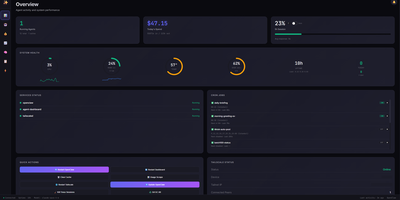
OpenClaw Dashboard is a secure real-time monitoring dashboard for OpenClaw AI agents that tracks live sessions, API costs, rate limits, and host health from one browser page. The overview refreshes every five seconds with live session activity, token totals, and lifetime spending, so you can see what every agent is doing right now. Cost views break spending down by model, session, and time period, and rate limit panels track Claude and Gemini usage against rolling windows with browser alerts before quotas run out. A live feed streams agent messages across all sessions, and a session browser adds search, status filters, timelines, and a 30 day activity heatmap. You can read agent memory files (MEMORY.md, HEARTBEAT.md, daily notes) and edit workspace files, skills, and configuration with JSON validation and automatic backups. Host panels report CPU, memory, disk, and temperature with 24 hour sparklines, plus Docker containers, cron jobs, real-time logs, and one-click service restarts. A security page shows firewall rules, open ports, fail2ban status, and SSH login history, and sign-in uses PBKDF2 hashed passwords with optional TOTP two-factor codes. Running on a dedicated VPS on RepoCloud with guaranteed CPU, RAM, and SSD, full root SSH access, and a browser serial console. MIT licensed.
MindRoom
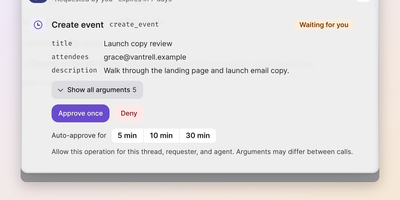
Your team's group chat could have a colleague who has read every email, ticket, and document, remembers all of it, and answers in seconds; MindRoom puts AI agents like that into your chat rooms as full participants. Each agent is a real user on the open Matrix protocol, so you talk to it in MindRoom Chat on web or mobile, in any other Matrix client, or through bridges in Slack, Telegram, WhatsApp, and Discord. Give every agent its own model: a local model for private rooms, a frontier model for hard coding problems, and switch per room or thread whenever the work changes. Agents connect to more than 100 tools, including Gmail, calendars, GitHub, Google Drive, Home Assistant, and any MCP server, and they search your own documents and knowledge bases for answers with sources. Memory persists across conversations and platforms, so an agent remembers people, preferences, and project context months later and can turn repeated work into reusable skills. Before an agent sends an email or runs a command, an approval card shows exactly what will happen; you tap once to allow it, and sandboxed workers keep executed code away from your credentials. Schedule morning briefings, silent inbox checks, and recurring digests in plain language, or wake an agent from any other system with a single HTTP request. Running on a dedicated VPS on RepoCloud with guaranteed CPU, RAM, and SSD, full root SSH access, and a browser serial console. Apache-2.0 licensed.
Mikka
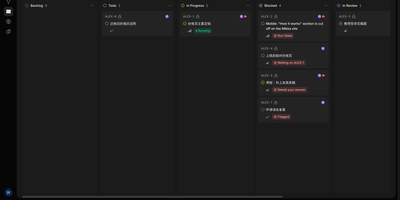
Instead of babysitting three coding agents in three terminal windows, you describe the work once and let Mikka run the team: its Coordinator bot plans the job, dispatches runs to Claude Code, Codex, or Cursor on your connected machines, and only interrupts you when a decision is actually yours. Every piece of work lives in a thread with its own conversation, so dispatched runs appear as cards that report progress, ask questions, and flag blocks while you watch, reply, or stop them from the web, desktop, or phone. Unclear requests come back as choice cards before anything runs, and finished work moves through review and verification runs, back to a fix run when a check fails, then to acceptance where the pull request merges as you. Runs use leases and checkpoints, so a machine that drops mid-task hands the work to another connected computer with the same repository. You can create your own bots beside the Coordinator, each with its own chat, memory, and threads, and answers can arrive as charts, tables, stat cards, and task chips with sources cited. Daemons connect over SSH or from the desktop app, other agents drive Mikka through MCP, and Telegram or Slack messages reach the Coordinator too. Running on a dedicated VPS on RepoCloud with guaranteed CPU, RAM, and SSD, full root SSH access, and a browser serial console. AGPL-3.0 licensed.
Coddy
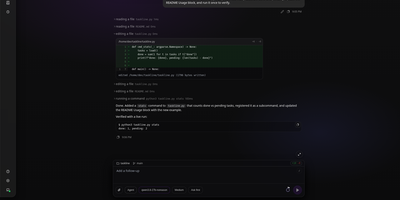
A single static binary is all it takes to put a tireless AI agent on your server, ready to read your codebase, run shell commands, edit files, and report back through a web UI, a terminal console, your editor, or a Telegram chat. Start it as a server and the embedded web interface gives you streaming chat sessions with visible tool calls, session history, plan documents, a background task board, and a visual map of connected nodes. Point any OpenAI-compatible client at its HTTP API, or drive the same sessions from Zed, VS Code, or Obsidian through the built-in ACP editor server. Delegate bounded work to subagents that run in isolated contexts with narrowed permissions, then resume them later in their own sessions if a run stops short. Teach it your project once: rules are picked up from .coddy, .cursor, .claude, and .codex folders, AGENTS.md files are honored as work proceeds, and installable skill packs turn repeatable procedures into slash commands. Schedule recurring jobs as plain Markdown files on a cron timetable, keep long-term memory across conversations, and connect external tool servers over MCP globally or per workspace. A Prometheus exporter reports provider calls, tokens, and task health for the whole fleet. Running on a dedicated VPS on RepoCloud with guaranteed CPU, RAM, and SSD, full root SSH access, and a browser serial console. MIT licensed.
OpenAgentCore
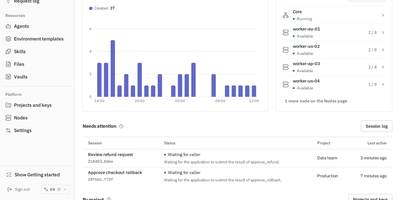
OpenAgentCore puts Codex, Claude Code, and MiniMax Code behind one self-hosted Agents API, so your applications start agent sessions through the official OpenAI SDK while the work runs on machines you control. Set OPENAI_BASE_URL to your installation and issue a Project API key, and the same client code that talks to OpenAI now talks to your Core. Each session runs a native harness, exactly as it runs on a developer's machine, with the model provider, model ID, and protocol you configure per harness or per session. Choose where sessions execute: microsandbox nodes you operate, Docker, E2B, or a self-hosted workstation, VM, or container connected by the oac-daemon with a credential scoped to one environment. Idle microsandbox sessions release their compute and resume on a compatible node with workspace files intact, so long investigations do not rent a machine while they sleep. The Web console walks operators through setup, tracks sessions and turns, manages models and credentials, and issues keys, while the separate Core API serves operators and the Agents API serves applications. Durable execution state in PostgreSQL keeps events, results, and schedules recoverable across restarts. Sandbox providers, workspace filesystems, harnesses, and model providers all plug in through defined protocols, so every layer can be replaced on its own. Running on a dedicated VPS on RepoCloud with guaranteed CPU, RAM, and SSD, full root SSH access, and a browser serial console. MIT licensed.
Engraphis
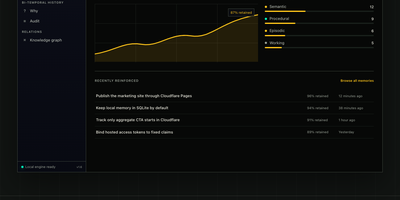
Engraphis is a durable memory layer for coding agents that answers questions like what did we decide about the auth layer three weeks ago, and why, with inspectable project memory that survives across sessions and repositories instead of evaporating when a chat ends. Store a decision once and recall it later in a new session, scoped by workspace, repository, and session so one project's facts never leak into another's context. Recall blends vector, lexical, graph, and code-aware retrieval, then packs the strongest evidence into a hard context budget your agent can actually use. Every returned fact keeps its provenance attached, and the engine cites its support or abstains when the evidence is too weak to trust. Facts are never silently overwritten: bi-temporal history preserves earlier versions, and a timeline view surfaces superseded knowledge when you need to know what used to be true. Index a repository into a code-symbol graph and ask what calls a function before you change it. Conflicting or quarantined memories wait in a review queue for a human decision. Running on a dedicated VPS on RepoCloud with guaranteed CPU, RAM, and SSD, full root SSH access, and a browser serial console. Apache 2.0 licensed.
Preloop
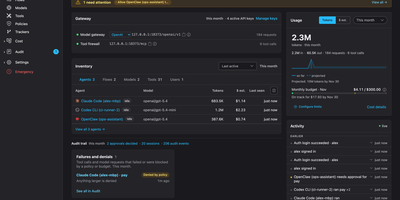
Preloop is a self-hostable control plane that governs every AI agent tool call and model call, and can run ticket-triggered agent work that returns as reviewable pull requests. An MCP firewall can allow, deny, or hold any tool call for approval, with require-justification rules written as YAML and CEL policy. Human approvals arrive on mobile, watch, Slack, Mattermost, email, webhook, or the command line, and agents can ask a person a question before continuing. The model gateway speaks OpenAI, Anthropic, and Gemini formats, applies budgets and allowed-model lists, and attributes token spend by model, agent, session, API key, flow, and user. Flows start agents from GitHub, GitLab, Bitbucket Cloud, Jira, webhooks, or CI jobs, in hosted containers or on private runners that connect over an outbound WebSocket. Twenty-one presets review pull requests, implement issues, triage tickets, scan for vulnerabilities, and collect evidence packs. Operators can steer a running agent from the console, phone, or watch with notes, then review the resulting pull request. One session timeline records tool calls, model calls, policy decisions, approvals, spend, outcomes, and synchronized recordings. Fleet Map shows people, devices, agents, models, and observed work in one view. An account kill switch blocks gateway and tool traffic and stops managed runs, with audited recovery. Running on a dedicated VPS on RepoCloud with guaranteed CPU, RAM, and SSD, full root SSH access, and a browser serial console. Apache-2.0 licensed.
Magic Cloud
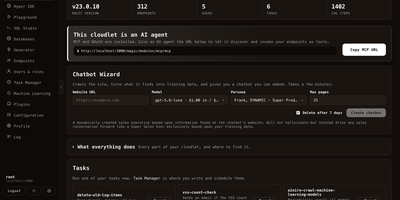
Magic Cloud turns a plain-English app description into a working backend, secured API, and frontend that run on your own server. Point the endpoint generator at a database and it writes CRUD endpoints with roles and validation; paste an OpenAPI or Swagger URL and it wraps any third-party API as documented endpoints. A dashboard shows endpoint counts, users, scheduled tasks, and logs. A built-in MCP URL gives Claude, Cursor, or Codex a way to discover and call every endpoint as a tool. The Chatbot Wizard crawls a website and hands back an embeddable chatbot grounded in that content. Hyper IDE edits any file on the server with an ask-the-AI prompt bar underneath, and Rewind steps through a recorded execution line by line. A visual Web Designer assembles pages from blocks, a Task Manager schedules background jobs, and Chat Ops answers questions about what the cloudlet can do and then does it. Role-based access guards each endpoint, and a SQL Studio handles direct queries. Running on a dedicated VPS on RepoCloud with guaranteed CPU, RAM, and SSD, full root SSH access, and a browser serial console. MIT licensed.
DopplerTask
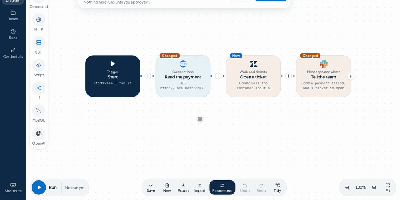
DopplerTask is the control layer where AI agents build your automations and you decide what goes live. You describe the outcome in plain language, and your agent assembles a task from a library of eighty-one ready-made steps spanning messaging, ticketing, sales, operations, documents, databases, queues, and AI models. The proposal lands in a visual editor that people and agents share, with new and changed steps marked and the old value of each field beside the new one. Nothing goes live until you approve it, and the previously approved version keeps running untouched in the meantime. Once a task is live it can start from a webhook, a schedule, a message queue, a manual click, or the agent itself, and every run is recorded with the output of each step, the person who started it, and the person who approved the version. Failed runs resume from the step that failed, with retries and continue-on-failure where you want them. Agents reference your credentials by name only; the values stay encrypted on your server, beyond the agent's reach, and separate tokens for people and agents plus single sign-on keep access tidy. Running on a dedicated VPS on RepoCloud with guaranteed CPU, RAM, and SSD, full root SSH access, and a browser serial console. MIT licensed.
Evonic
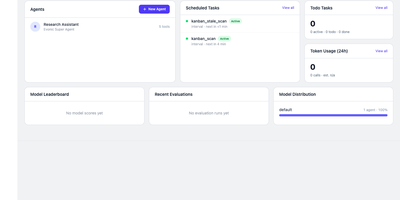
AI agents that delegate to each other, remember past conversations, and stay inside your safety rules all live in one self-hosted platform called Evonic. Every agent in Evonic has its own identity, model, tools, knowledge base, channels, and skills, and a guided first-run wizard creates the first one in minutes against OpenRouter, Together AI, Ollama, DeepSeek, llama.cpp, or any custom OpenAI-compatible endpoint. Agents message and delegate to each other, run commands in a Docker, Podman, or bubblewrap sandbox, and execute on a local folder, an SSH server, or a tunnel device that needs no public IP. A built-in Kanban board hands tasks to agents, a scheduler fires cron jobs and reminders, and Telegram, WhatsApp, and Discord channels put agents where users already chat. Markdown knowledge bases with wiki-links form an interactive graph, a memory engine recalls facts across sessions, and an organizer sub-agent extracts entities and merges duplicates. Safety layers inspect actions for mass deletion or remote code execution and escalate to a human, and an injection guard blocks prompt manipulation. Evaluation dashboards score models across domains, a token monitor tracks usage per agent and model, and bundled skills, 12 plugins, backup and restore, and themed light and dark modes round it out. Running on a dedicated VPS on RepoCloud with guaranteed CPU, RAM, and SSD, full root SSH access, and a browser serial console. AGPL-3.0 licensed.
Tingly Box
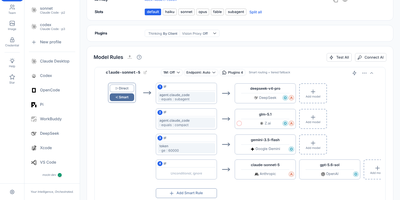
Give every agent your team runs the same front door, and the model chaos behind it becomes manageable. Tingly Box is a self-hosted gateway with a web console where providers, keys, routing rules, and team usage live in one place. Claude Code, OpenCode, Codex, Xcode, and other clients simply call the endpoint. A request arrives. The gateway reads your rules, weighs cost against speed against the policy you wrote, picks a model and a token, translates the protocol if the two ends disagree, and streams the answer back. Existing subscription quotas are spendable here, connected by OAuth beside ordinary API keys, and per-scenario profiles let quick edits and deep refactors land on different models by default. Team mode shares that endpoint properly. Model rules are managed centrally, each member receives a dedicated key, data stays isolated per user, and the usage dashboard shows exactly who consumed what. The gateway also speaks images, generating and editing through the same address with a playground for testing prompts before clients depend on them. Agents remain reachable after you leave the desk, driven through Telegram, DingTalk, Feishu, Lark, Weixin, or WeCom, with guardrails and an MCP gateway available as power-ups. Virtual models give new rules a safe target for testing and benchmarking before real traffic moves over. Running on a dedicated VPS on RepoCloud with guaranteed CPU, RAM, and SSD, full root SSH access, and a browser serial console. MPL-2.0 licensed.
MCP Gateway & Registry
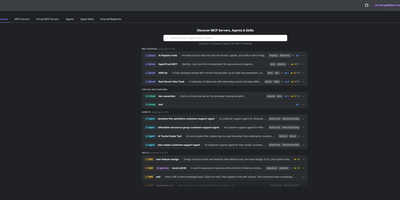
Every team wiring its own MCP servers by hand ends up with credentials scattered across dotfiles and no list of what exists; MCP Gateway and Registry replaces that with one governed front door. Register an MCP server, an A2A agent, a reusable skill, or a custom entity type once, and the Discover page lists it with tags, ratings, and search by natural language. Coding assistants and agents connect to a single authenticated gateway backed by Keycloak, Entra ID, Okta, Auth0, or Cognito, with scopes that decide who may call which tool. Virtual servers bundle tools from several backends behind one endpoint. Connected Accounts brokers third-party logins for Slack, Atlassian, and GitHub so tokens stay off laptops. Every registration is security scanned, and an admission gate holds unsafe items for review. The settings area offers audit log filtering with JSONL and CSV export, federation with outside registries, per-group rate limits, and a searchable configuration viewer. OpenTelemetry metrics and health checks are built in. Running on a dedicated VPS on RepoCloud with guaranteed CPU, RAM, and SSD, full root SSH access, and a browser serial console. Apache-2.0 licensed.
E2A
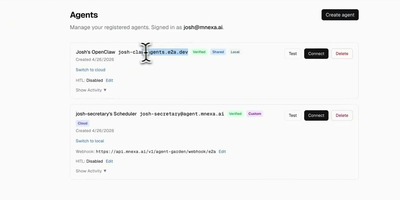
E2A is an open-source email API that lets any application send transactional email and gives AI agents real two-way inboxes of their own, so an assistant can hold a conversation over email without borrowing a person's mailbox. Register an agent and it gets a working address on a shared domain in seconds, or verify your own domain for branded addresses, then connect through the hosted MCP server, a coding-agent plugin with browser OAuth, signed webhooks, a WebSocket stream, REST polling, or the TypeScript and Python SDKs. A local agent behind a firewall needs no public URL at all: it listens over WebSocket and replies in-thread with conversation identifiers keeping multi-turn exchanges coherent across humans and other agents. Every inbound message arrives with structured SPF, DKIM, and DMARC evidence, with the DMARC alignment verdict included, so your agent can judge how far to trust a sender instead of trusting the From header. Flip on the human-in-the-loop gate per agent and outbound messages pause for a person to approve, edit, or reject from the dashboard, the SDK, MCP tools, or magic links in their own inbox, with expiry rules and recipient allowlists narrowing which sends get held. Inbound content screening flags prompt-injection payloads before the agent ever sees them. Support bots triage intake, scheduling agents coordinate meetings, and commerce agents answer order questions from one persistent address. Running on a dedicated VPS on RepoCloud with guaranteed CPU, RAM, and SSD, full root SSH access, and a browser serial console. Apache-2.0 licensed.
ClawMetry
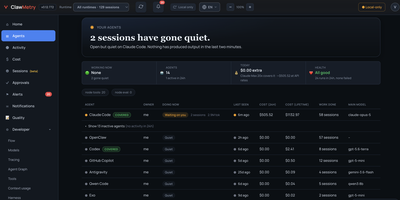
Without an SDK, a proxy, or a single line of agent code changed, ClawMetry reads the session files your AI agents already write and puts every session, tool call, token, and dollar on one live dashboard. The sessions view replays a run turn by turn, with a timeline that gives each tool call its own duration and cost, so a four-minute shell command stands apart from a call that took milliseconds. Usage charts split tokens and spend by runtime, model, session, and day. A live flow diagram follows messages from chat channels through the gateway to models and tools, and a context view tracks window use per turn along with compaction events. The Brain tab streams reasoning, tool calls, and errors as they happen, while memory, skills, health, logs, and cron jobs each get a tab of their own. OTLP receivers accept traces, metrics, and logs from runtimes that keep no local files. The MIT-licensed app reads OpenClaw, NVIDIA NemoClaw, Goose, and Qwen Code for free. Paid plans add the other 28 runtimes, including Claude Code, Codex, and Cursor, plus approval queues for risky tool calls, budget limits, anomaly detection, and a cost optimizer. Session data stays on your server unless you choose to run cloud sync. Running on a dedicated VPS on RepoCloud with guaranteed CPU, RAM, and SSD, full root SSH access, and a browser serial console. MIT licensed.
Omni
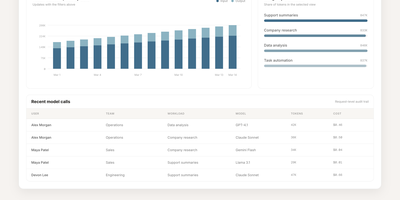
Omni is an open-source workplace AI agent and enterprise search platform that unites your company's scattered tools into a single context-aware workspace where team members can find answers and automate cross-application workflows. Employees can query connected knowledge sources including Google Drive, Gmail, Slack, Jira, GitHub, Confluence, and HubSpot to locate project specifications, customer records, and operational documents without jumping across tabs. The integrated AI assistant answers complex multi-step inquiries, summarizes lengthy email threads, and cites exact source passages so workers can verify factual accuracy before making business decisions. Granular permission inheritance mirrors existing access controls across every connected service, guaranteeing that sensitive personnel files, financial statements, and confidential repositories remain hidden from unauthorized staff. Engineers can construct bespoke data connectors and define automated agent skills through the extensible Python and TypeScript software development kits, triggering multi-service actions directly from interactive chat dialogues. Administrators can monitor background synchronization jobs, inspect audit trails, manage single sign-on access, and configure custom extraction pipelines using centralized operational dashboards. Running on a dedicated VPS on RepoCloud with guaranteed CPU, RAM, and SSD, full root SSH access, and a browser serial console. Apache 2.0 licensed.
Shell Online
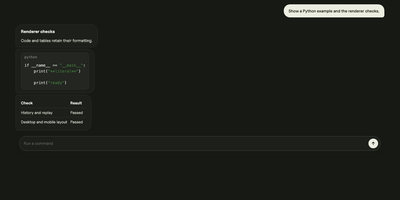
Shell Online lets a terminal session running on your own computer follow you to any browser, so your coding agent keeps working while you are away from your desk. Prefix the command you already run, such as shell claude, shell codex, or shell opencode, and your terminal prints a link, a password, and a QR code that open the same live session on a phone, tablet, or another computer. You watch output as it happens and reply to prompts from wherever you are, and closing the browser leaves the process running until it exits on its own. Inviting a teammate takes the same link: share it read-only so they can watch without typing, or let them type into the session with you. Terminal traffic is end-to-end encrypted by default, file access stays off until you deliberately expose a chosen directory, and a scoped MCP grant can let another agent inspect or steer a session for a limited time. With an account, linked machines and their sessions gather in one web app with team sharing. The relay the sessions pass through can run on your own server with the standalone Docker deployment, pointed at by the unchanged CLI. Running on a dedicated VPS on RepoCloud with guaranteed CPU, RAM, and SSD, full root SSH access, and a browser serial console. MIT licensed.
Hivekeep
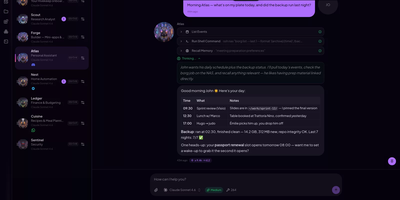
Most AI chats forget you by tomorrow; Hivekeep keeps a team of agents on your own server that remember everything, work together, and answer wherever you already talk. Each agent has a name, a role, and one continuous conversation that never resets, backed by long-term memory it can search. Agents hand tasks to one another, spawn helpers, and run scheduled jobs. Queenie, the built-in setup agent, connects providers and creates your first teammates through plain chat. They reach you on Telegram, Slack, Discord, WhatsApp, Signal, Matrix, or the installable web app, and a channel can move from one agent to another mid-conversation. Agents write custom tools, build mini-apps that open beside the chat, edit files in a workspace with a code editor, and add plugins from a marketplace. Credentials go straight into an AES-256-GCM vault that the model never reads. A context viewer and a token-usage dashboard show what each prompt contains and what each agent, model, and day costs. Running on a dedicated VPS on RepoCloud with guaranteed CPU, RAM, and SSD, full root SSH access, and a browser serial console. MIT licensed.
Automatos AI
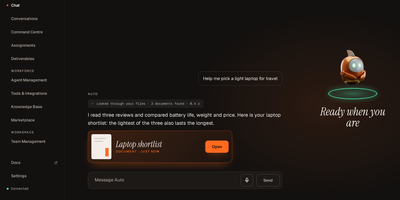
Command a whole team of AI agents from one chat box and collect finished reports, code, and content on a server you control. Say what you need and Auto routes the request to the right agent, tool, or Playbook, streams its thinking, shows every tool call, and files a ticket for another agent when the job needs one. Each agent has its own model, persona, skills, and success metrics, and the Command Centre shows the board, live status, calendar, and questions waiting for you. Playbooks turn repeatable work into multi-step automations, and Missions coordinate several agents on one goal. The marketplace installs ready-made agents, skills, and packages, and Composio connects more than a thousand outside apps once you add your own key. Models come from OpenRouter, direct provider keys, NVIDIA's free hosted models, or your own Claude Code sessions paired as agents. Knowledge bases index your documents into a searchable graph, analytics break spend down by provider and agent, and installable themes redraw the interface with voice control built in. Nothing here is locked behind a paywall, the local edition has no login so put it behind your own gate, and the whole stack starts from one Docker Compose command. Running on a dedicated VPS on RepoCloud with guaranteed CPU, RAM, and SSD, full root SSH access, and a browser serial console. Apache-2.0 licensed.