CCX
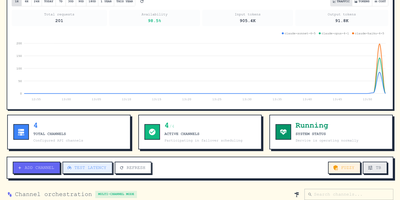
CCX gives every coding agent and chat client one stable address, and the real model providers can come and go behind it. Point Claude Code, Codex, or any SDK at the gateway and it forwards requests to the first healthy channel in a failover sequence, then moves down the list when an upstream returns errors. Each channel carries its own keys, model allowlist, proxy, and custom headers, and the Add Channel dialog detects a base URL and keys from pasted text. The admin console tracks requests, availability, tokens, and cost over ranges from one hour to a year, with a chart per model and a live success rate beside each channel. Drag a channel to change its priority, park it in the standby pool, or open its log to see the status, timing, and key of every call. Separate tabs cover Claude Messages, OpenAI Chat, Images, Vectors, Codex, and Gemini, and a dark theme and language switch are built in. Access is guarded by a proxy key and an optional admin key. Running on a dedicated VPS on RepoCloud with guaranteed CPU, RAM, and SSD, full root SSH access, and a browser serial console. MIT licensed.
Respan Gateway
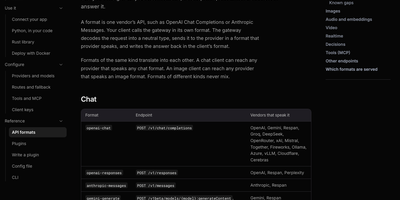
Respan Gateway is a single-binary LLM gateway that lets the SDK you already use call any AI model from any provider, translating between OpenAI, Anthropic, and Gemini API formats on the way through. Point an OpenAI, Anthropic, or Gemini client at it and you reach chat models on sixteen providers, plus any OpenAI-compatible endpoint of your own, with streaming, tools, images, and reasoning translated. Traffic control works the way operators think: name a route, send it to the cheapest or fastest provider, retry on failure, fall back to a second vendor, or hedge a slow call by racing another provider. Models that never had tools get them anyway, because MCP servers and built-in search, browsing, code, document, and memory tools run inside ordinary chat requests behind the gateway. Realtime voice crosses vendors too, with an OpenAI Realtime client able to talk to Gemini Live, alongside images, speech, transcription, embeddings, and video through one endpoint. A live request log in the web UI shows the client key, model, provider, status, tokens, cost, and latency of every call, so runaway agents and surprise bills are visible immediately. Everything is a plugin on one public Rust API, from routing and pricing to tracing, with examples for guardrails, PII masking, and billing. One TOML file configures keys, providers, routes, and tools, validates before it starts, and reloads on signal. Running on a dedicated VPS on RepoCloud with guaranteed CPU, RAM, and SSD, full root SSH access, and a browser serial console. Apache-2.0 licensed.
RustFS
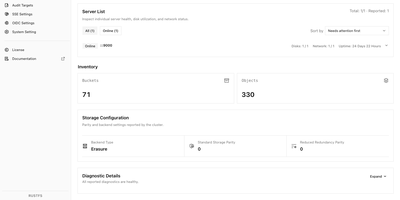
Tools and applications that already speak S3 can use RustFS as their storage backend, so backup jobs, data pipelines, and services keep working while the data stays on infrastructure you control. A built-in web console on port 9001 manages buckets, object uploads and downloads, access keys, users, groups, and IAM policies, with a status page for cluster health, capacity, and scanner activity. Versioning, Object Lock retention, bucket quotas, and server-side encryption with Vault or AWS KMS backends protect objects once they land. Lifecycle rules expire or transition data, and tiering moves cold objects to remote targets such as Amazon S3 or Wasabi. Bucket replication and site replication keep clusters in sync, and event notifications call webhooks when objects change. Single-node mode suits a lab or small server, while distributed mode adds erasure coding, bitrot protection, background healing, and pool expansion or decommissioning as capacity grows. Sign-in works with local users, OIDC single sign-on, or OpenStack Keystone, and FTPS and WebDAV are available by default, with SFTP and the Swift API as opt-in builds. A preview of S3 Tables exposes an Iceberg REST catalog for tools such as DuckDB and PyIceberg, and a documented migration path moves existing MinIO deployments across. Typical uses include backups, container registries, logs and traces, data lakes, and AI training sets. Running on a dedicated VPS on RepoCloud with guaranteed CPU, RAM, and SSD, full root SSH access, and a browser serial console. Apache-2.0 licensed.
MetaMCP
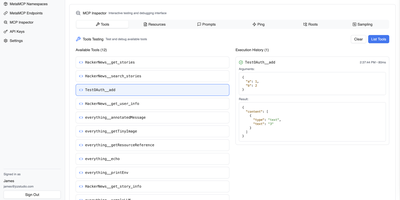
With 2,600+ GitHub stars, MetaMCP solves the MCP server sprawl problem by aggregating any number of upstream servers into a single authenticated endpoint that any MCP client connects to once. Group servers into namespaces — development tools in one, data sources in another — then publish each namespace as its own SSE, Streamable HTTP, or OpenAPI endpoint with API-key authentication in headers or query parameters, or full OAuth per the MCP Spec 2025-06-18 standard. The aggregation engine discovers tools, resources, and prompts from all active servers in parallel, prefixes tool names with server identifiers to prevent collisions, and applies configurable middleware including tool filtering to reduce context-window bloat and description overrides to improve LLM comprehension. The web management UI lets you configure MCP servers with stdio, SSE, or Streamable HTTP transports, toggle servers active or inactive per namespace, create and revoke API keys per endpoint, and inspect discovered tools with their schemas. Nested MetaMCP support enables hierarchical architectures where one MetaMCP instance consumes another, creating multi-level tool organization with automatic name resolution. Compatible with Claude Desktop, Claude Code, Cursor, Open WebUI, and any MCP-compatible client through a single connection URL. The Docker container packages the TypeScript backend with PostgreSQL for configuration persistence, exposing the management UI on port 12005 and MCP endpoints on configurable ports. Running on a dedicated VPS on RepoCloud with guaranteed CPU, RAM, and SSD, full root SSH access, and a browser serial console. MIT licensed.
Knowhere
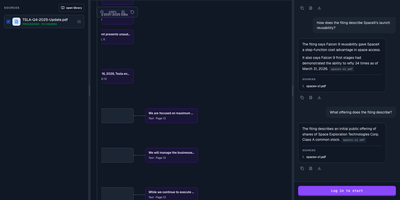
With 2,600+ GitHub stars since its May 2026 open-source launch, Knowhere solves the last-mile problem of document intelligence for AI systems — transforming complex unstructured PDFs, reports, and multi-page documents into structured JSON chunks that LLMs can consume without hallucination. The platform processes documents through an AI-native parsing pipeline that handles 20+ page documents with deep hierarchies, intricate tables, and multimodal content including images with OCR, achieving 95% precision in information extraction while reducing token costs by 50% compared to raw document ingestion. The knowledge tree architecture maintains historical context across multiple documents, enabling cross-document graph navigation for agentic retrieval that goes beyond simple chunk-based RAG. Built on Python 3.11+ with MinerU as the default PDF parser, the backend API runs alongside async workers that process document ingestion, graph construction, and embedding generation. The self-hosted Docker Compose stack packages the API server, processing workers, and Next.js dashboard for managing API keys, webhooks, and document-processing jobs, backed by PostgreSQL and Redis. Both Python and Node.js SDKs provide programmatic access for integration into existing AI pipelines and agent frameworks. LLM providers include DeepSeek and Alibaba Cloud DashScope with configurable key rotation for rate-limit management. Deploy on a dedicated VPS on RepoCloud with guaranteed CPU, RAM, and SSD, full root SSH access, and a browser serial console. Apache 2.0 licensed.
Ferro Labs AI Gateway
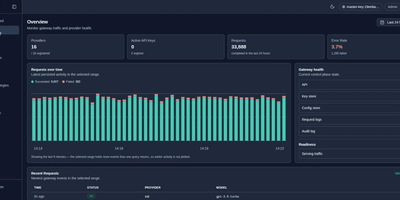
Thirty model providers, one OpenAI-compatible endpoint: Ferro Labs AI Gateway routes every request from your applications to the provider that should answer. Eight routing strategies cover fallback chains, weighted load balancing, lowest latency, lowest cost, content-based rules, A/B tests, and conditional targets, each with retries and circuit breakers. Guardrail plugins filter blocked words, redact personal data, scan for leaked secrets, block prompt injection, validate response schemas, and enforce rate limits and per-key spend budgets. Identical prompts can come back from a response cache, and tool servers connect through MCP so the gateway can run the tool-call loop itself. The console opens with a getting-started checklist, then charts traffic, token throughput, latency percentiles, and cost by model. Providers, routing targets, and plugins each get their own page, a playground sends test chats through the real routing path, and request logs plus an audit trail record who changed what. Scoped admin and read-only keys give every operator separate access, and configuration history allows a rollback. OpenTelemetry traces and Prometheus metrics feed existing dashboards. Running on a dedicated VPS on RepoCloud with guaranteed CPU, RAM, and SSD, full root SSH access, and a browser serial console. Apache-2.0 licensed.
GPUWorks
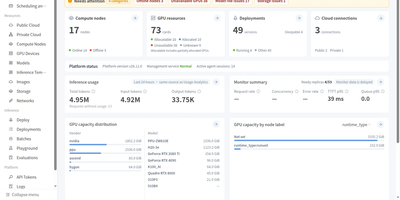
When your GPUs are spread across a rack in the office, rented cloud instances, and a Mac on a desk, GPUWorks pools them into one cluster that serves open models behind a single OpenAI-compatible endpoint. Pick a model from the built-in catalog of launch specs for vLLM and SGLang across NVIDIA, AMD, Huawei Ascend, T-Head PPU, Hygon, and Apple Silicon hardware, and the deploy page estimates the memory needed for weights, KV cache, and engine overhead, shows which GPUs the scheduler chose, and explains why it rejected the others. Several models can share one card through memory quotas or take turns with sleep and wake, while replicas, multi-node parallelism, and prefill and decode disaggregation scale a deployment out. The gateway handles chat, embeddings, rerank, audio, image, and realtime requests with API keys, per-key token usage, and failover routing. A monitor center charts time to first token, throughput, concurrency, and KV cache hit rates, usage analytics break tokens down by key and model, and a built-in benchmark sweeps concurrency to find your latency limit. GPU health checks and an AI assistant help diagnose failing cards, and a Playground lets you try any deployment in the browser. Nodes connect outbound, so they need no open ports, and models can be imported offline for air-gapped sites. Running on a dedicated VPS on RepoCloud with guaranteed CPU, RAM, and SSD, full root SSH access, and a browser serial console. Apache-2.0 licensed.
LiteLLM
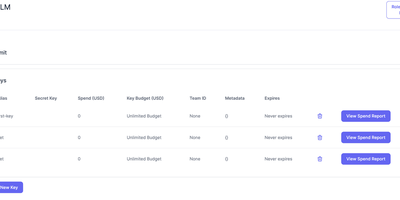
Backed by 56,000+ GitHub stars and over 240 million Docker pulls, LiteLLM delivers the open-source AI gateway trusted by Netflix, Lemonade, Rocket Money, and thousands of engineering teams to route every LLM request through one unified API. The Rust-core gateway adds sub-millisecond overhead per request with 8ms P95 latency at 1,000 RPS, 15x throughput improvement and 11x lower memory footprint compared to Python-only proxies. A single OpenAI-compatible endpoint connects to 100+ providers and 1,800+ models spanning OpenAI, Anthropic, Google Gemini, AWS Bedrock, Azure OpenAI, Vertex AI, Hugging Face, vLLM, Nvidia NIM, Ollama, and Mistral with day-zero support for new model releases. The Auto Router V2 classifies request complexity across four tiers using rule-based scoring, semantic keyword matching, and adaptive Thompson sampling to route each request to the most cost-effective model without API calls or training data. Virtual API keys enable multi-tenant governance with per-team, per-user, and per-project cost tracking, budget caps with automatic fallback rerouting, and role-based access control. Built-in guardrails provide PII masking, prompt injection detection, and model-graded evaluation before requests reach providers. The Agent Gateway extends routing from model calls to agent workflows with MCP server integration. Observability integrates with Langfuse, Arize Phoenix, OpenTelemetry, and MLflow for complete request tracing. Running on a dedicated VPS on RepoCloud with guaranteed CPU, RAM, and SSD, full root SSH access, and a browser serial console. MIT licensed.
llama-swap
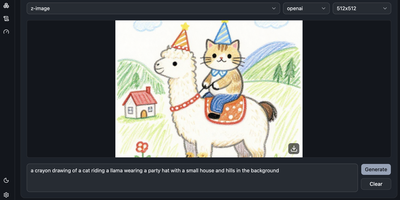
llama-swap puts one OpenAI-compatible and Anthropic-compatible endpoint in front of all your local models and loads whichever one each request names, unloading the one it replaces. Define models in a single YAML file, and chat, embedding, speech, transcription, and image requests reach the right backend automatically. The web UI includes a playground for chatting with any model, token metrics for every request, a request inspector that shows raw payloads and responses, buttons to load and unload models by hand, and a live log stream for the proxy and each upstream process. Profiles switch model routing at runtime, a swap matrix keeps selected models loaded together, and a time-to-live setting frees memory after idle periods. API keys restrict who can call the endpoints, and filters strip or force request parameters. Docker and Podman commands start and stop containers per model, and a Prometheus endpoint exposes system and GPU metrics. Running on a dedicated VPS on RepoCloud with guaranteed CPU, RAM, and SSD, full root SSH access, and a browser serial console. MIT licensed.
Open Connector
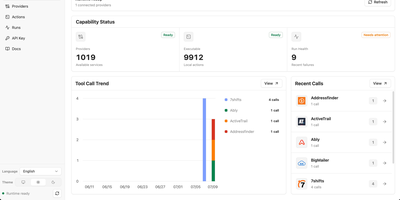
With over 5,000 GitHub stars since its June 2026 launch, OOMOL OpenConnector bridges the gap between AI agents and the real world by handling the authentication nightmare that stops LLMs from calling external APIs safely. The runtime connects to more than 1,000 SaaS providers — GitHub, Gmail, Notion, Slack, Microsoft, HubSpot, Google Workspace, and hundreds more — through 10,000+ prebuilt typed Actions that agents can discover and execute without ever touching raw credentials. OAuth2 flows, API key rotation, custom credentials, and no-auth providers are all managed centrally with AES-encrypted storage, scoped runtime tokens, and configurable action allowlists and blocklists that enforce least-privilege access. Agents interact through five access surfaces: the Model Context Protocol endpoint at /mcp for Claude and other MCP-capable hosts, a full REST API at /v1 for programmatic control, an auto-generated OpenAPI specification for code generation, a TypeScript SDK for application integration, and the oo CLI for local agent relay. The built-in Web Console provides browser-based administration for configuring OAuth apps, managing connections, inspecting action schemas, and reviewing execution logs with redacted inputs. Deploy via Docker Compose with SQLite for single-server setups, run from source on Node.js 22+, or push to Cloudflare Workers with D1 and R2 for edge deployment. Running on a dedicated VPS on RepoCloud with guaranteed CPU, RAM, and SSD, full root SSH access, and a browser serial console. Apache 2.0 licensed.
GPUStack
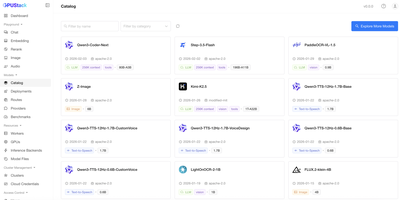
GPUStack is a control plane that turns a pile of GPU servers into a model-serving platform, where you pick a model from a catalog and the system decides which machine, engine, and settings run it. Deploy language, embedding, reranker, speech, and image models from the Catalog page, then watch each replica move from downloading to Running on the Deployments screen. A built-in Playground offers chat, side-by-side model comparison, embedding and rerank testing, audio, and image generation and editing, so a model gets judged before it is wired into an app. Add GPU workers with a generated Docker command, register a Kubernetes cluster, or provision cloud machines, and manage several clusters from one server. Create API keys for teammates, apply access control, and read token, GPU-hour, and storage usage by user, key, or model. Auto Tune benchmarking searches for the highest throughput that still meets your latency targets. GPU Instances hand out SSH-accessible machines for fine-tuning and interactive work. Single sign-on works through OIDC or SAML. Running on a dedicated VPS on RepoCloud with guaranteed CPU, RAM, and SSD, full root SSH access, and a browser serial console. Apache 2.0 licensed.
RushDB
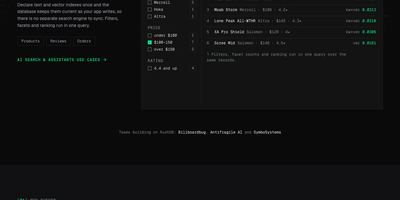
RushDB is a database your AI agents can actually understand, because it remembers the shape of everything you write. Send nested JSON and each object becomes a record, automatically linked to its parent, while field names, types, and values are cataloged on every write. Agents introspect that catalog before querying, so they ask questions the data can answer instead of hallucinating tables that never existed. The same records answer five query styles: a JSON query language, SQL over the PostgreSQL wire protocol, Cypher over HTTP or Bolt, Gremlin, and Mongo-style document queries. Vector, full-text, and hybrid search run against the same store, so an agent can find the record that mentions a phrase and the records merely similar to it. Everything ships as one binary with one data directory, speaking HTTP on port 3000, PostgreSQL on 5432, and Bolt on 7687 to the drivers and tools you already use. Point your SDKs, SQL clients, BI tools, or local MCP-connected agents at it, and back it up, replicate it, or restore to a point in time with the engine's own tooling. Running on a dedicated VPS on RepoCloud with guaranteed CPU, RAM, and SSD, full root SSH access, and a browser serial console. Apache-2.0 licensed.
MatrixOne
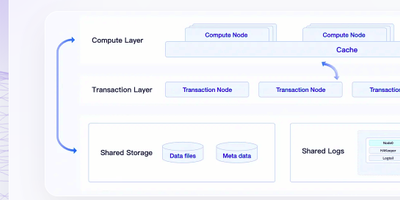
Transactions, analytics, full-text search, and vector retrieval stop needing four separate systems: MatrixOne folds them into one hyper-converged database engine that speaks the MySQL 8.0 wire protocol, so existing drivers, JDBC applications, Navicat, and BI tools connect unchanged. A single TAE storage engine serves OLTP and OLAP together, with compute and storage separated so query nodes scale independently of the data they scan. Vector columns carry IVF and HNSW indexes with L2, cosine, and inner-product distance, powering RAG and semantic search at billions scale beside your relational tables instead of in a sidecar database. Full-text indexing joins the same query, so hybrid searches combine keyword relevance and embedding similarity in one statement. Git-style version control for data lets teams clone, branch, and roll back datasets the way they already treat code, which makes experiments and audits reproducible. Streaming ingestion through Kafka connectors keeps analytical tables current, and the 4.2 line sharpens window-query performance, composite-index planning, and physical backup and restore that preserves table history. Running on a dedicated VPS on RepoCloud with guaranteed CPU, RAM, and SSD, full root SSH access, and a browser serial console. Apache-2.0 licensed.
Rivet
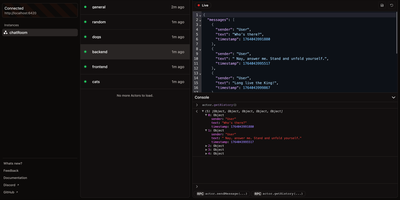
Stateful serverless actors that run indefinitely, sleep when idle, and persist state across restarts without external database round trips. Rivet provides a vendor-neutral alternative to Cloudflare Durable Objects, delivering long-running processes with co-located in-memory state and per-actor SQLite databases on any infrastructure you choose. The Rust engine comprises four packages: Pegboard for actor orchestration, Gasoline for durable execution, Guard for traffic routing via Envoy, and Epoxy implementing multi-region KV storage through EPaxos consensus. Each actor maintains instant-access in-memory state plus a dedicated SQLite database for relational queries, backed by RocksDB on single nodes or PostgreSQL with NATS pub/sub for multi-node clusters. RivetKit SDKs in TypeScript, Rust, and Python support built-in WebSocket connections, task queues, scheduling, and CRDT-based real-time collaboration. The v2.3 rewrite moved the core runtime from JavaScript to native Rust via WebAssembly, eliminating main-thread blocking across Node.js, Bun, Deno, and Cloudflare Workers. A built-in dashboard provides actor inspection with real-time Prometheus metrics. Deploys as a single Docker container on port 6420 with optional PostgreSQL for persistence. Available on RepoCloud with a dedicated VPS under the Apache 2.0 license.
OpenLLM
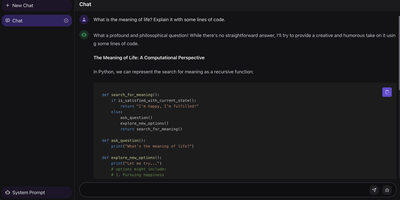
OpenLLM serves any large language model as an OpenAI-compatible API endpoint from a single CLI command, handling model download, backend selection, quantization, and port binding automatically. It supports the full spectrum of popular models including Llama 3.3, Qwen2.5, DeepSeek, Mistral, and Phi3, choosing between vLLM and PyTorch inference backends based on hardware capabilities. When vLLM is available, continuous batching with PagedAttention achieves up to 23x throughput improvement over naive serving, while GPTQ and bitsandbytes quantization reduces memory requirements for GPU-constrained deployments. The server exposes a RESTful API on port 3000 with full OpenAI client library compatibility, enabling drop-in replacement for commercial providers in any application using the standard chat completions format. A built-in web chat UI at the /chat endpoint provides immediate interactive testing without external clients. Custom model repositories allow teams to maintain private catalogs of fine-tuned models alongside the default repository that tracks the latest releases. Deployment workflows generate production-ready Docker images automatically, with Kubernetes manifest support for orchestrated scaling. Native integration with LangChain and LlamaIndex supports RAG pipelines, Transformers Agents enables tool-calling workflows, and HuggingFace Hub handles model discovery. Server-Sent Events enable real-time token streaming across all API endpoints. Backed by BentoML's production ML infrastructure. Running on a dedicated VPS on RepoCloud with guaranteed CPU, RAM, and SSD, full root SSH access, and a browser serial console. Apache 2.0 licensed.
colibri
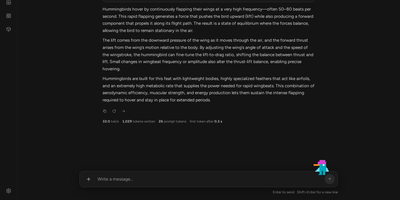
colibri lets you run huge open language models, including ones with hundreds of billions of parameters, on the computer you already own by keeping only the parts a model needs for each token in fast memory. Thirteen engines cover chat models such as GLM-5.2, DeepSeek V4 Flash, Qwen3.6, Kimi K3, and Mistral-Large-4, the Qwen-Image-2.1 picture generator, and small decision models. A one-step setup checks your RAM, disk, and graphics card, recommends a model that fits, downloads it with resume, and opens the dashboard. It runs on the CPU alone, on any Vulkan GPU, on NVIDIA cards through CUDA, and on Apple Silicon through Metal for several engines, and it reads published GGUF files as they are. One server speaks the OpenAI and Anthropic APIs, so Claude Code, coding CLIs, and SDKs connect with a base URL, and it adds tool calling, image and document input, and up to 16 simultaneous conversations. The browser dashboard has a chat with folded reasoning, an expert map, a live monitor, a profiling page, and a System One page that returns a probability for every allowed answer. A built-in MCP server lets an AI assistant detect hardware, install, start, and stop colibri. Running on a dedicated VPS on RepoCloud with guaranteed CPU, RAM, and SSD, full root SSH access, and a browser serial console. Apache-2.0 licensed.
Relay Pulse
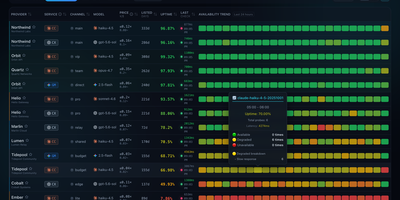
An API relay that answers HTTP 200 with an empty reply is not alive, and Relay Pulse exists to catch exactly that. Every minute, or any interval you set, it sends a tiny real request to each relay, asks a simple arithmetic question, and counts the probe as healthy only when the right answer comes back. Results land in a color-coded availability matrix where green, yellow, and red blocks show good, slow, and failed checks across the last 90 minutes, 24 hours, 7 days, or 30 days. Each row lists provider, service type, channel, model, price multiplier, days listed, uptime percentage, and the latest latency, and hovering a block reveals its probe counts and a breakdown of why it degraded. Filters narrow the table by category, provider, service, channel, vendor, or model, and the page switches between table and card views, four themes, and English or Chinese. Sponsor levels can pin trusted channels to the top, hot and cold boards separate active relays from dormant ones, and Telegram or QQ bots push status changes. Configuration reloads without a restart, templates cover Claude, Codex, and Gemini style endpoints, and a JSON API exposes current status. Running on a dedicated VPS on RepoCloud with guaranteed CPU, RAM, and SSD, full root SSH access, and a browser serial console. MIT licensed.
Manifest LLM Gateway
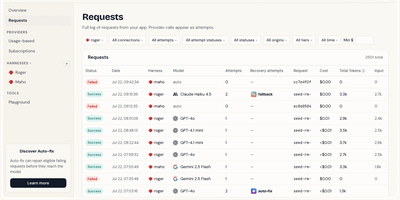
Manifest LLM Gateway is a self-hosted gateway that puts every model you pay for behind one OpenAI- and Anthropic-compatible endpoint. Connect provider API keys, reuse subscriptions like ChatGPT Plus or Claude Max, or point it at Ollama and LM Studio on your own hardware. Send a request with the model set to auto and your routing rules choose the target by model, header, complexity, or task type, with fallbacks that take over the instant a model fails. Each agent or app gets its own harness, a named connection with a private key, spending limits, and notifications when usage climbs. The Requests view logs every call and every retry attempt, with status, cost, tokens, and the full request and response body readable as a conversation. Autofix repairs a malformed request, for example one using a renamed parameter, and resends it before your app ever sees an error. A Playground tests models from the dashboard, a command line tool and MCP server handle setup from a terminal or an AI assistant, and an n8n node plugs it into automations. Over 35 provider connections cover more than 300 models. Running on a dedicated VPS on RepoCloud with guaranteed CPU, RAM, and SSD, full root SSH access, and a browser serial console. MIT licensed.