JSON Crack
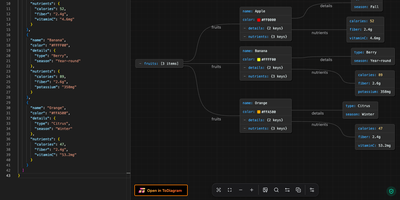
Deeply nested JSON stops being a wall of braces once JSON Crack, a free visual editor, renders it as an interactive graph you can zoom, search, and export. Paste or type JSON, YAML, XML, or CSV, and Live Transform redraws the graph on every keystroke while a validity badge flags syntax errors. Flip between graph and tree views, rotate the layout from left-to-right to top-to-bottom, collapse branches, and jump between matches with node search. Dark and light themes suit any screen. Import a file or point the editor at a remote URL, then export the picture as PNG, JPEG, or SVG with a custom or transparent background, or copy it straight to the clipboard. The Tools menu runs jq and JSONPath queries, validates data against a JSON Schema, and generates TypeScript, Go, Kotlin, Rust, or JSON Schema definitions from your sample. Teams can embed the viewer through an iframe widget, a postMessage API, or the jsoncrack-react component. Everything is parsed in the browser, so sensitive payloads stay on the device. Developers use it to untangle API responses, review configuration files, and explain data structures to colleagues. Running on a dedicated VPS on RepoCloud with guaranteed CPU, RAM, and SSD, full root SSH access, and a browser serial console. Apache-2.0 licensed.
Hoppscotch
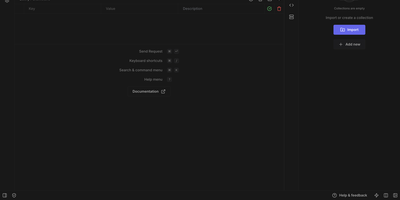
Backed by nearly 80,000 GitHub stars and recognized as one of the most popular developer tools in the open-source ecosystem, Hoppscotch delivers a complete API development platform that runs instantly in any browser with zero installation. The platform supports six protocols out of the box including REST with full HTTP method coverage, GraphQL with schema introspection and multi-column documentation, WebSocket for full-duplex communication, Socket.IO, MQTT for IoT messaging, and Server-Sent Events for real-time streaming. Request collections organize your API calls into logical groups with support for sub-folders, environment variables with scope inheritance, pre-request scripts and post-request test scripts written in JavaScript, and automatic code snippet generation in over twenty languages and frameworks. Teams can collaborate in real-time with shared workspaces, role-based access controls, and cloud synchronization across devices. Migration from Postman, Insomnia, or OpenAPI specifications happens with a single click import. The self-hosted edition deploys via Docker Compose with PostgreSQL for data persistence, supporting SSO authentication through SAML and OAuth providers, SMTP configuration with OAuth2, and admin dashboard for user management. The platform also ships as a native desktop application for macOS, Windows, and Linux with offline support, plus a CLI tool for running collections in CI/CD pipelines. A built-in proxy mode bypasses CORS restrictions during development, and an interceptor enables request debugging and response modification. Running on a dedicated VPS on RepoCloud with guaranteed CPU, RAM, and SSD, full root SSH access, and a browser serial console. MIT licensed.
Conduit
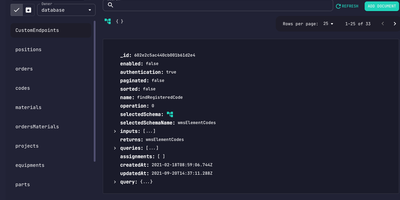
Conduit is a self-hosted backend platform that gives your application user accounts, databases, APIs, chat, and notifications out of the box, so you can skip months of boilerplate and ship the product itself. Define a data schema in the admin dashboard and Conduit generates CRUD and query endpoints for it automatically, backed by your choice of MongoDB or PostgreSQL. The Router module exposes every capability over REST, GraphQL, and WebSockets, and publishes Swagger documentation for each route as you build. Authentication covers a wide range of sign-in methods, and the Authorization module layers resource-level permission rules on top of every account. Realtime chat ships as a ready module with rooms and message history that clients join over WebSockets. Email and SMS modules send through multiple providers, and SMS doubles as a two-factor authentication channel that hardens sign-ins. File uploads land in the Storage module with several cloud providers supported, and PushNotifications keeps your mobile users informed. An Embeddings module adds text-to-vector generation and semantic search when you want AI features inside your app. Forms collect submissions and forward responses to an email address, covering contact pages and lead capture. A CLI bootstraps a working deployment in minutes, and production installs run on Docker Compose or Kubernetes. Running on a dedicated VPS on RepoCloud with guaranteed CPU, RAM, and SSD, full root SSH access, and a browser serial console. MIT licensed.
Spica
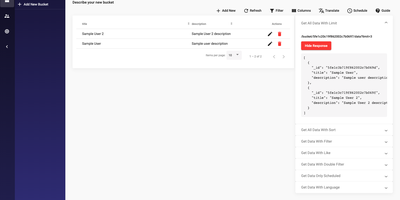
Spica skips the month of backend plumbing every new project starts with: data models, CRUD endpoints, logins, file storage, and an admin panel nobody wants to build. It hands you that whole layer as a running platform, so your first day is spent modeling your actual product. Define your data in Buckets and the REST API, with a GraphQL API alongside it, is generated automatically, complete with rules on each bucket as an entry-level security layer. Add custom policies so each user role reaches exactly the data and technical areas it should, then place your business logic in cloud functions triggered by events. Content teams get a back-office they can actually use: customized bucket views with a few clicks, inline image editing, data history, and localization for editors working in more than one language. Identities cover your users and editors, storage serves your files, and webhooks push events out to tools like Slack or Zapier when something changes. Run it as a backend engine for an application you are building, or purely as a headless CMS feeding a frontend that lives somewhere else. Running on a dedicated VPS on RepoCloud with guaranteed CPU, RAM, and SSD, full root SSH access, and a browser serial console. AGPL-3.0 licensed.