Kept
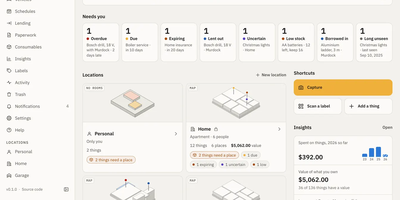
Kept is a self-hosted home inventory that answers where things are, what they are, and what is due. Locations, rooms, shelves, and boxes nest inside each other, so moving a box moves everything in it, and each location can be viewed as a list, a grid, or a 3D map with pins for low stock, loans, and due items. Every thing gets a short ID and a QR code for label sheets or roll printers, and scanning a label opens the box. Capture a thing, receipt, or whole room from the installable phone web app, offline too; an AI provider you choose, including Ollama, then suggests details for you to confirm. Receipts, manuals, and warranties attach to items, reminders arrive in the app, by email, by push, or in a calendar feed, and an insurance report exports photos, serials, and receipts. Lending tracking, vehicle readings and services, moving-house box lists, and stocktakes cover the rest of the household, with shared locations and roles for everyone you live with. An assistant answers questions like where the HDMI cable is, and an MCP endpoint lets Claude or other AI agents add and move things, with changes waiting for your approval. Nightly backups and imports from Homebox and CSV round it out. Running on a dedicated VPS on RepoCloud with guaranteed CPU, RAM, and SSD, full root SSH access, and a browser serial console. AGPL-3.0 licensed.
Traccar
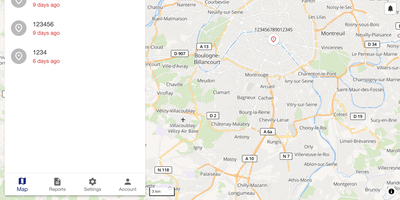
Whether it is a delivery van, a trailer in a storage yard, or a dog on a hike, Traccar is the GPS tracking server that puts it on one live map you host and control. Every position and event lands in your own SQL database. Over 200 protocols covering 2000+ tracker models decode out of the box, so a Teltonika fleet unit and a budget dongle share one device list. Pick a device to see speed, address, ignition, and total distance. Routes replay on a timeline slider, and a ruler tool measures distances. Geofences can be polygons, polylines, or circles, linked to devices or groups, colored as you like, and limited by calendar schedules. Alerts for overspeed, fuel drops, offline devices, alarms, and maintenance arrive by web, email, push, SMS, Telegram, or WhatsApp. Reports cover trips, stops, summaries, charts, events, and positions, with Excel export and scheduled email delivery. Commands go out over the tracker's own connection or by SMS, queued for offline devices. Computed attributes derive ignition or fuel values from raw inputs using expressions. Resellers get admin, manager, user, and read-only roles with device limits, plus white-label branding. Traccar Client lets a smartphone report as a tracker, and Traccar Manager monitors devices from mobile. Teams who want AI assistants to query their devices can add the MCP endpoint, which is optional. Running on a dedicated VPS on RepoCloud with guaranteed CPU, RAM, and SSD, full root SSH access, and a browser serial console. Apache-2.0 licensed.
Homebox
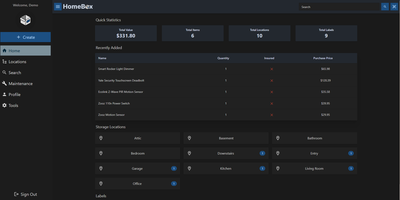
With over 7,000 GitHub stars and active community maintenance through version 0.26.0 released in June 2026, Homebox fills the gap between inadequate spreadsheets and overcomplicated enterprise asset management by providing a purpose-built inventory system designed specifically for home users, families, and small groups. The Go backend with SQLite storage deploys as a single Docker container consuming under 50MB of RAM at idle, running on hardware as modest as a Raspberry Pi while the responsive web interface adapts seamlessly across desktops, tablets, and smartphones. The entity-based architecture introduced in v0.26 unifies items and locations into a shared structure supporting custom fields, attachments, entity types, and reusable templates for consistent data entry across inventory categories. QR code generation creates printable labels that scan with any smartphone camera to instantly display item details, photos, serial numbers, and associated documents. Warranty tracking records purchase dates, prices, and expiration dates while maintenance scheduling sends reminders for recurring service tasks. Location hierarchies organize items spatially with nested sub-locations, and flexible label tagging enables cross-cutting categorization beyond physical placement. Multi-user support shares collections with family members or roommates with OIDC single sign-on integration for Active Directory, Okta, and other identity providers. CSV import and export handles bulk operations, while the full REST API enables automation and third-party integrations. Collection-level ZIP export packages complete inventories with attachments for backup or migration. Running on a dedicated VPS on RepoCloud with guaranteed CPU, RAM, and SSD, full root SSH access, and a browser serial console. AGPL-3.0 licensed.
Nestarr
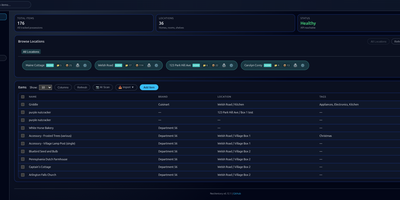
Every box, shelf, and spare part in your home gets a searchable record in Nestarr, complete with photos, receipts, manuals, custom fields, and the exact location path that leads back to it. Properties break down into rooms, shelves, and containers, so the record for a spare charger can read house, garage, top shelf, blue bin instead of a hopeful guess. Scan a UPC barcode and product details fill in automatically; point the AI photo identification at an unfamiliar gadget and it proposes a name and record to start from. Manufacturer and extended warranties sit on each item with expiry alerts timed so coverage gets claimed before it lapses, and recurring maintenance schedules track care for appliances and equipment beside the inventory itself. Print a QR label for an item or a location through NIIMBOT or CUPS printers, stick it on the box, and a later scan lands on the exact record. Multiple properties cover second homes and rentals, scheduled backups copy the database and uploads to Google Drive, and the household shares access through admin, editor, and viewer roles with Google or OIDC single sign-on for bigger setups. Running on a dedicated VPS on RepoCloud with guaranteed CPU, RAM, and SSD, full root SSH access, and a browser serial console. MIT licensed.