DeepTutor
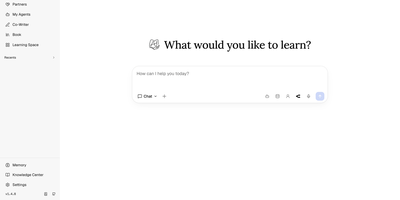
With 34,000+ GitHub stars and a v1.5 release driven by 36 merged community pull requests, DeepTutor from Hong Kong University's Data Science Lab delivers a full agent-native learning workspace that goes far beyond chatbot wrappers. Eight integrated surfaces — Chat, Deep Solve, Quiz Generation, Deep Research, Math Animator, Co-Writer, Book generation, and Mastery Practice — share a unified context so the objective follows the learner, not the tool. The platform's three-layer memory architecture (L1 working, L2 session, L3 long-term) makes personalization inspectable rather than opaque, letting users see exactly what the system remembers and why. Knowledge retrieval operates across five pluggable engines — LlamaIndex with FAISS vectors, PageIndex for page-level citations, GraphRAG for knowledge-graph traversal, LightRAG for local or server-offloaded retrieval, and linked Obsidian vaults — with document parsing via MinerU, Docling, markitdown, or PyMuPDF4LLM. Partners extend the tutoring brain to 15+ messaging platforms including Slack, Discord, Telegram, Matrix with E2EE, and Mattermost, each carrying private memory with branch, resume, and replay capabilities. Subagent integration brings Claude Code, Codex, Gemini, and Kimi directly into learning sessions. The system supports 30+ LLM providers from OpenAI and Anthropic to Ollama for fully local operation, with multi-user isolation, admin controls, and a full CLI interface. Running on a dedicated VPS on RepoCloud with guaranteed CPU, RAM, and SSD, full root SSH access, and a browser serial console. Apache 2.0 licensed.
Kolibri
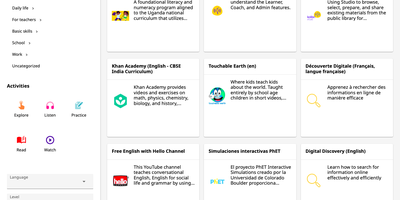
Where the internet is slow or missing, Kolibri still gives learners a library of videos, exercises, books, and interactive apps from one local server. Content arrives as channels, curated collections imported from Kolibri Studio, another Kolibri device on the network, or a USB drive. Learners browse by category, search by keyword, and filter by activity type (Watch, Listen, Practice, Read, or Explore), language, or channel. Most exercises ask for five correct answers in a row, some offer hints, completed resources award points, and bookmarks save a place in any resource. Guest browsing needs no account, or administrators can require sign-in and limit learners to the lessons and quizzes assigned to them. Coaches organize learners into classes and groups, assign lessons and quizzes, and follow an activity feed that flags learners who need help. Reports go down to single answers, and an attendance tool records who was present at each class session. Administrators create learner, coach, and admin accounts, import or export users and classes from CSV files, and download session and summary logs as CSV. Facilities can be imported and synced over a local network, so progress from offline schools reaches one central device. The interface is translated into many languages, including Spanish, French, Swahili, Arabic, and Hindi, and device settings choose the default language, landing page, and storage locations. Running on a dedicated VPS on RepoCloud with guaranteed CPU, RAM, and SSD, full root SSH access, and a browser serial console. MIT licensed.
Lumen Learning Platform
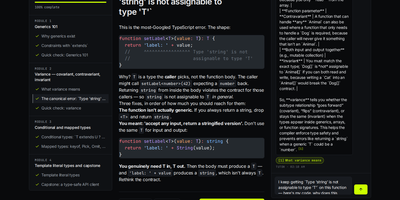
Tell Lumen what you want to learn in one sentence and it interviews you, drafts a brief, and builds a private course with modules, lessons, and quizzes, showing progress as it goes. Every learner owns the whole loop: define a goal, build the course, study it, and share it only when you choose to. An AI tutor sits beside each lesson, streams answers grounded in that course, and attaches citations that jump to the lesson it drew from. A trace view shows every planner step, tool call, and retrieval score behind an answer, and a replay view steps through how a course was authored. Quizzes feed a spaced-repetition review queue, a mastery view tracks progress, and finishing a course issues a verifiable Open Badges credential. Browse a public catalog with subject, level, and tag filters, clone any listed course into your own draft, and press Ctrl+K to search courses or switch themes. Add your own OpenAI, Anthropic, Groq, or Mistral key, or run without a key and keep the rest of the app working. An admin area moderates shared courses, and an MCP server lets coding agents list courses and ask the tutor. Running on a dedicated VPS on RepoCloud with guaranteed CPU, RAM, and SSD, full root SSH access, and a browser serial console. MIT licensed.