WonderCMS
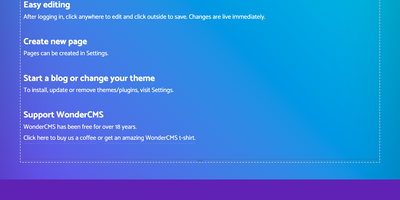
Click, type, publish: WonderCMS turns every page of your website into its own editor. Log in, click any text on the live page, type, and click away to save. A new page takes one click: type an address that does not exist yet, click, and a blank page opens ready for writing. Pages and subpages can be reordered, hidden from the menu with an eye icon, or made private, and each keeps its own title, keywords, and description. Any page can be the home page, and editable blocks keep a footer, sidebar, or banner in sync across the site. An optional plugin adds a visual editor with a formatting toolbar. Themes and plugins install, update, disable, and remove from Settings, including blog, SEO, and privacy-minded statistics modules. The Files tab uploads images, documents, audio, and video to link from any page. The login address is one you choose and answers with a 404, ten wrong passwords pause attempts for fifteen minutes, and a password change ends every session. One click downloads a ZIP backup of the whole site, and a daily update check offers a one-click update with a backup button right above it. Setup means unzipping and uploading five files, and the first visit creates the site and shows the admin password. Moving to a new folder, subfolder, or domain needs no reconfiguration. Running on a dedicated VPS on RepoCloud with guaranteed CPU, RAM, and SSD, full root SSH access, and a browser serial console. MIT licensed.
Mosparo
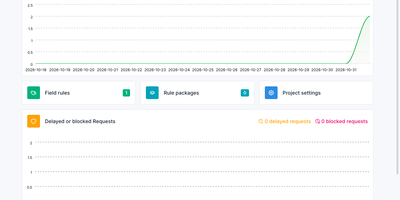
CAPTCHAs make every visitor solve a puzzle to prove they are human; Mosparo takes the opposite route and checks the submitted content itself, no challenges, no image grids, and no tracking cookies. Drop the customizable checkbox widget into any form and Mosparo inspects each field separately, scoring the entry against your rules the way an email spam filter scores a message. Build field rules for banned words, domains, email addresses, IP addresses and subnets, providers, Unicode blocks, user agents, and websites, each with its own rating weight, or subscribe to shared rule packages that refresh themselves automatically. Every submission lands in an admin inbox with its spam rating, IP address, and verification status, and dashboard charts show valid versus spam traffic plus delayed or blocked requests over time. Legitimate users notice nothing but a plain checkbox, which stays fully usable with assistive technology, while everything Mosparo stores is encrypted and automatically deleted after 14 days. Run one instance for many sites with separate projects, project groups, and member roles, and connect your forms over the documented API from any stack that can send an HTTP request. Running on a dedicated VPS on RepoCloud with guaranteed CPU, RAM, and SSD, full root SSH access, and a browser serial console. MIT licensed.
SendPortal
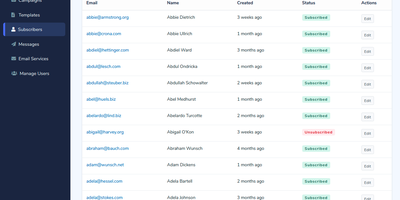
SendPortal is a self-hosted email marketing platform for building subscriber lists, sending campaigns, and tracking exactly what happens to every message after it leaves your server. Grow the list three ways: add contacts one by one, import them in bulk from CSV, or push them through the API, which creates or updates subscribers by email address and attaches tags. Tags and custom segments organize audiences, sending product updates to power users and sale announcements to everyone else. A campaign pairs a subject line, which can insert first name, last name, and email placeholders, with an optional HTML template holding content, unsubscribe, and browser view placeholders. Automatic CSS inlining at dispatch keeps designed emails rendering properly in inboxes that ignore style sheets. Send a test email to yourself before anything goes out, then choose immediate delivery or schedule the campaign for later. Pick Queue Draft to review messages before they leave, or Send Automatically when the audience and content are already right. Open and click tracking, bounce records, and unsubscribe events then flow back through provider webhooks into per campaign reports and a searchable message log. Run several brands or clients side by side in separate workspaces inside one interface. Delivery runs through Amazon SES, Postmark, SendGrid, Mailgun, Mailjet, or your own SMTP server, so deliverability stays with providers built for it. Running on a dedicated VPS on RepoCloud with guaranteed CPU, RAM, and SSD, full root SSH access, and a browser serial console. MIT licensed.
UVdesk
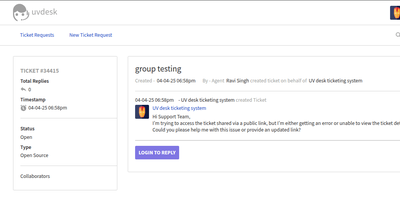
For teams that answer customers by email, UVdesk is a free, self-hosted helpdesk that keeps every conversation in one shared queue. Customers have three ways in: a connected mailbox, the support portal, or a public ticket link that opens a conversation without a login. Gmail, Yahoo, Outlook, or any IMAP mailbox can feed the queue, with no limit on how many. Agents work in a threaded ticket view, where they reply, forward to a colleague, leave private notes, add collaborators, and pin important messages. Saved replies answer repeat questions, and prepared responses set a status, tag, priority, or assignment from the ticket footer. Administrators route work through groups and teams, and agent privileges decide which tickets each person may see. Workflows run events, conditions, and actions in the background, while spam settings reject senders by address, domain, or IP. A knowledge base of folders, categories, and articles, with revision history and related articles, lets customers find answers without writing in. Customers can rate the support they received, and the Kudos report lists those ratings by agent, group, team, type, priority, customer, or source. Portal branding covers a logo, brand colors, a tag line, and custom CSS and JavaScript. The community edition places no cap on agents, groups, teams, customers, or tickets. Running on a dedicated VPS on RepoCloud with guaranteed CPU, RAM, and SSD, full root SSH access, and a browser serial console. OSL-3.0 licensed.
Shopware
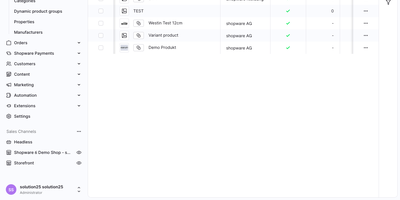
Shopware is where a merchant's products, prices, stock, orders, and customers live when the catalog must sell through a storefront, a headless front end, and marketplace feeds at once. Merchants manage products, variants, prices, stock, orders, and customers in a single administration, then publish them to any number of sales channels, from the classic storefront to comparison portals and social shopping feeds. Shopping Experiences gives the marketing team a drag-and-drop editor for landing pages, category layouts, and shop pages, so campaigns launch without a developer touching templates. The Rule Builder turns conditions about carts, customers, and products into living business logic that controls shipping costs, payment availability, advanced prices, and who qualifies for which promotion. Flow Builder acts on shop events automatically, sending order documents, changing order statuses, or calling external URLs when those rules match, removing hours of manual back-office work. Promotions support percentage and fixed discounts, voucher codes, usage limits, and validity windows, while cross-selling, reviews, tags, and configurable search help shoppers find and trust the catalog. Customer groups with net or gross pricing, multi-currency and tax handling, and unlimited languages let the same installation sell into several countries at once. The Store API can drive a custom headless storefront or a point-of-sale client while the standard storefront keeps running untouched, and 3,100+ community extensions add payment providers, shipping integrations, and marketing tools. Running on a dedicated VPS on RepoCloud with guaranteed CPU, RAM, and SSD, full root SSH access, and a browser serial console. MIT licensed.
ProcessWire
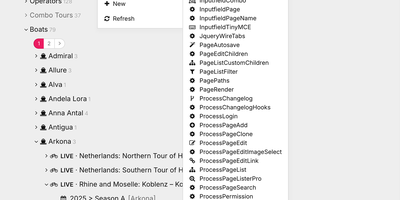
ProcessWire shapes a website around your content instead of the other way around: define your own fields, group them into templates, and manage every page from a tree that mirrors the structure of your site. Any field can sit on any template, from text and numbers to images, files, page references, and repeatable groups with show-if and required-if dependencies. Templates are ordinary files you write however you like, so a page can render HTML, JSON, XML, or an RSS feed with no theming layer in the way. Editors work in a fixed-header admin with light and dark modes, a keyboard-driven search, and a rich text editor that accepts dragged-and-dropped images, while chosen fields can also be edited in place on the live page with a double-click. Lister builds filtered page lists across any field with the columns you pick. Images can be resized, cropped, rotated, and given a focus area for automatic crops. Multi-language text fields, language-specific URLs, and a translation tool for template strings let one page serve several audiences. Role-based access control sets view, edit, and create rights per template, optional two-factor authentication protects logins, and the Modules screen installs and configures plugins. A core upgrade means replacing the wire directory. Running on a dedicated VPS on RepoCloud with guaranteed CPU, RAM, and SSD, full root SSH access, and a browser serial console. MPL-2.0 licensed.
osTicket
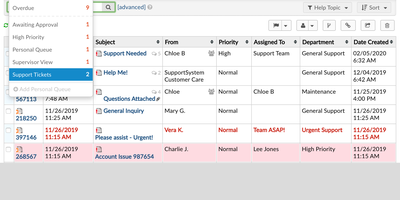
With nearly 3,900 GitHub stars, over 1,800 forks, and continuous development since 2013 culminating in the v1.18.4 release in June 2026, osTicket remains one of the most deployed open-source help desk systems worldwide, trusted by organizations from small businesses to universities and government agencies. The PHP backend on Apache or IIS with MySQL stores every ticket, response, and attachment while the web interface provides separate agent and customer portal views with role-based access control across departments, teams, and individual agents. Customers submit tickets through web forms, email piping, or phone-entry by agents, and configurable ticket filters automatically route incoming requests to the correct department, assign agents or teams, set priority levels, apply SLA plans, and trigger canned responses based on matching criteria including custom field values. Agent collision avoidance locks tickets during response composition to prevent duplicate replies, while SLA plans with business hour schedules track due dates and escalate overdue tickets automatically. Custom forms and fields let organizations capture structured data specific to each help topic — from IT asset tags to billing account numbers — with configurable required and internal-only visibility. The advanced search system with saved queries and CSV export enables reporting across all ticket metadata and custom fields. The customer portal provides ticket tracking, profile management, and knowledge base access. OAuth2 plugin support enables modern email authentication with Microsoft 365 and Google. Running on a dedicated VPS on RepoCloud with guaranteed CPU, RAM, and SSD, full root SSH access, and a browser serial console. GPL-2.0 licensed.
MyBB
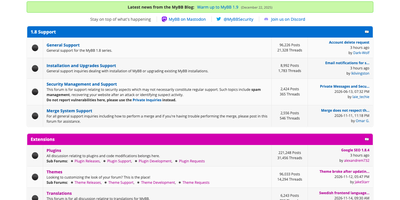
MyBB is a free, extensible discussion forum platform where communities hold threaded conversations, run polls, trade private messages, and moderate their own boards. Styled thread prefixes mark threads as solved or by topic, and polls let members vote for several options, close after a set number of days, and allow undoing a vote. Members quote several posts in one reply, answer from a quick reply box without reloading, and rate each other positive, neutral, or negative in public reputation reports. The private messenger addresses many recipients, shows when each message was read, pulls back unread ones, and exports messages as CSV, text, or HTML. Moderators act on selected posts inline, run custom moderation macros, delay actions by days, clear approval queues, and issue warnings that trigger automatic bans or restrictions at set levels. The Admin Control Panel promotes users by post count, reputation, or registration age, schedules mass mail by user group, and charts daily activity. Themes layer multiple stylesheets and attachable base colors, while plugins hook into the front end and admin area and edit templates. An official Merge System converts an existing phpBB, vBulletin, SMF, XenForo, or other forum into MyBB module by module. A task scheduler lifts expired bans, clears old search history, and logs every run, and large boards can add database fail-over, replication, and memory caching. Running on a dedicated VPS on RepoCloud with guaranteed CPU, RAM, and SSD, full root SSH access, and a browser serial console. LGPL-3.0 licensed.
selfoss
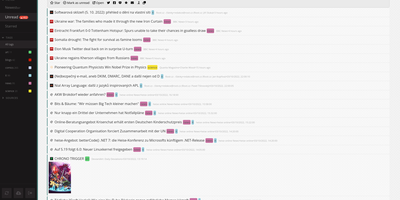
Every site you follow, folded into one calm river of headlines that you host yourself. selfoss is an open-source RSS reader and feed aggregator that gathers updates from websites, blogs, news outlets, and social platforms into a single reading stream on your own server. The newest, unread, and starred views keep triage fast: skim the river, star what deserves a slower read, and mark the rest done; tags with their own colours sort sources into topics, and full-text search finds the article you half-remember. Feeds refresh on a schedule you set through a cron job or timer, thumbnails and favicons are cached locally, and sharing buttons send finds to other services. Because it is plain PHP with SQLite by default, it runs almost anywhere, on the smallest hosting, with no database server to babysit; MySQL and PostgreSQL are there when the archive grows. Optional login protects the reader, public mode can share a stream, and the responsive layout reads as well on a phone as on a wide monitor. Your reading habits stay on hardware you control, and the archive keeps growing for exactly as long as you keep the server. Running on a dedicated VPS on RepoCloud with guaranteed CPU, RAM, and SSD, full root SSH access, and a browser serial console. GPL-3.0 licensed.
Directory Lister
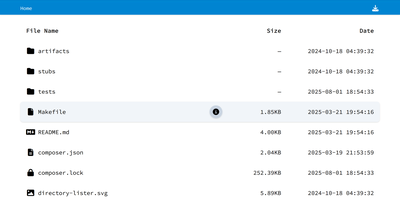
Drop Directory Lister into a folder and that folder becomes a tidy public file library. Visitors browse directories in the browser, search filenames, sort the listing the way they think, and download single files or the whole directory as one zip. There is nothing to configure for the first run, which makes it the fastest honest answer to "how do I just share these files" for release archives, documentation bundles, media collections, and project downloads. A README placed in a folder renders right on the listing page, so instructions travel with the files instead of living in a separate post nobody opens. File hashes appear beside downloads for people who verify what they fetched, and light and dark themes keep the listing presentable on a project site or a personal server. Multiple languages localize the interface for the audience actually downloading. Point it at the folder, share the link, and the files present themselves. One caution belongs in the pitch itself: everything in the exposed folder is public, hidden files included, so this is a publishing tool, never a place for private material. Running on a dedicated VPS on RepoCloud with guaranteed CPU, RAM, and SSD, full root SSH access, and a browser serial console. MIT licensed.
Textpattern
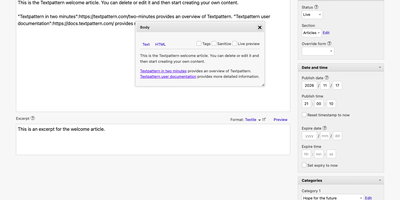
Writers who want to keep their markup in their own hands publish blogs, magazines, portfolios, and company sites with Textpattern, a lightweight open-source CMS driven by a readable tag-based template language. An author fills Title, Body, and Excerpt in the Write panel, flips between Text, HTML, and Preview tabs, formats with Textile or plain HTML, and files each piece under a section with up to two categories and a URL-only title for a clean permalink. Draft, Pending, Hidden, Live, and Sticky statuses track where a piece stands, publish and expire dates schedule its arrival and departure, and freelancers submit work as Pending for review before anything goes live. Six built-in roles (Publisher, Managing Editor, Copy Editor, Staff Writer, Freelancer, and Designer) limit each account to the panels it needs. Designers edit page templates, form templates, and stylesheets in the browser and reshape the markup without touching the server. Custom fields, an article image, and per-article form overrides make one setup work as a photoblog, a portfolio, or a news site. The Images panel creates thumbnails and stores captions and alternate text once for every place a picture appears. Plugins extend the editor and admin area, admin themes restyle the back end, the interface is translated into over 50 languages, and one codebase can power several websites, each with its own theme and admin login. Running on a dedicated VPS on RepoCloud with guaranteed CPU, RAM, and SSD, full root SSH access, and a browser serial console. GPL-2.0 licensed.
Pricore
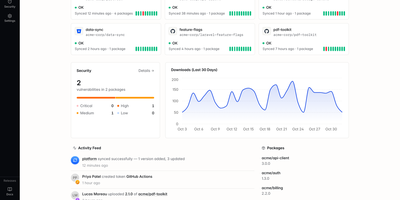
Private PHP packages get a proper Composer v2 registry on your own server, with a dashboard in place of the rebuild script. Point Pricore at GitHub, GitLab, Bitbucket, Gitea, Forgejo, Gogs, or any Git server over SSH or HTTPS, and it reads each composer.json, indexes every tag and branch, and serves the versions to Composer. Webhooks pick up a new tag within seconds, and monorepo support turns a packages/* directory into several packages whose versions follow the repository's tags. Registry mirrors import packages from Satis and other Composer registries, including commercial ones behind HTTP Basic or Bearer authentication, with optional dist archives. Packagist advisories feed automatic security audits, so vulnerable versions appear in the dashboard and composer audit works against the registry. Scoped tokens separate install-only access for CI from publish and API permissions for administrators, and every request is also checked against the member's role. The dashboard shows repository sync health, vulnerabilities by severity, download trends, an activity feed, and a package page with versions, advisories, and install commands. A versioned REST API with OpenAPI 3.1 documentation scripts the same actions, and a built-in MCP server lets Claude, Cursor, or VS Code search packages and check advisories after a one-time browser sign-in. Running on a dedicated VPS on RepoCloud with guaranteed CPU, RAM, and SSD, full root SSH access, and a browser serial console. Apache-2.0 licensed.

FireFlyIII
With over 24,000 GitHub stars and active development since 2014, Firefly III is the self-hosted personal finance manager that gives you complete control over your financial data without ever contacting external servers. The double-entry bookkeeping system tracks every transaction with source and destination accounts, ensuring accurate balance calculations and audit trails across checking, savings, credit card, cash, and asset accounts. Budget management sets monthly spending limits by category with visual progress tracking and rollover support for unused allocations. Rule-based transaction automation applies categorization, tags, and budget assignments automatically based on configurable conditions matching description, amount, source, and destination patterns. Recurring transactions schedule regular bills, subscriptions, and income entries with automatic creation on configured dates. Piggy banks divide savings accounts into virtual sub-accounts for goal tracking with target amounts and deadlines. Financial reports include income versus expense summaries, budget performance charts, category breakdowns, tag reports, and net worth tracking with weekly, monthly, and yearly time ranges. Multi-currency support handles any currency with configurable exchange rates for international finance tracking. The REST JSON API covers nearly every feature for integration with external tools, import utilities, and the companion Firefly III Data Importer for bank statement processing. Two-factor authentication provides account security. Self-hosting deploys via Docker containers or directly on PHP 8.5+ with MySQL or PostgreSQL. Running on a dedicated VPS on RepoCloud with guaranteed CPU, RAM, and SSD, full root SSH access, and a browser serial console. AGPL-3.0 licensed.

Shlink
With over 5,100 GitHub stars and eight years of active development since 2016, Shlink has become the definitive self-hosted URL shortener for teams that need unlimited links, full visitor analytics, and complete data ownership without per-link pricing or monthly caps. The PHP backend built on the Mezzio framework with Doctrine ORM serves redirects through any number of custom domains on a single instance, generating unique short codes or accepting custom slugs including multi-segment paths and emoji characters. Every click is tracked with anonymized visitor data including geolocation by country, city, and coordinates, browser and operating system identification, referrer source, and device type classification, all stored in your choice of MySQL, MariaDB, PostgreSQL, Microsoft SQL Server, or SQLite. Dynamic redirect rules route visitors to different destinations based on geolocation, device type, or browser language, enabling targeted campaigns from a single short URL. The REST API exposes every operation with OpenAPI documentation and an interactive sandbox at api-spec.shlink.io, while the CLI provides equivalent functionality for scripting and automation. The official progressive web app at app.shlink.io manages multiple Shlink instances from a single interface with URL creation, tag management, and detailed visit charts. Real-time event integration supports both Mercure and RabbitMQ for webhook-style notifications on new visits. Third-party imports migrate existing short URLs from Bitly and YOURLS with visit history preserved. Running on a dedicated VPS on RepoCloud with guaranteed CPU, RAM, and SSD, full root SSH access, and a browser serial console. MIT licensed.
Aimeos
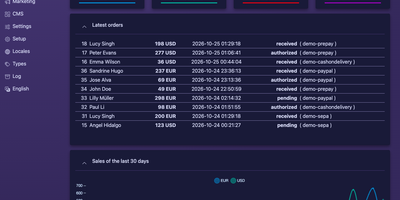
One admin backend can run a single online shop or a whole marketplace of independent sellers. The dashboard shows the latest orders and sales graphs. Panels cover products, stock, customers, subscriptions, orders, suppliers, and coupons. Aimeos handles bundle, voucher, virtual, configurable, custom, and event products. Block and tier pricing work out of the box. Discounts, vouchers, and a flexible basket rule system are built in. Subscriptions renew through recurring payments. Checkout offers more than 100 payment gateways. Storefronts come in 30+ languages, with full right-to-left support and AI-based text translation. Rich snippets help search engines read product pages, and layouts are optimized for phones and tablets. Switch on multi-vendor mode and sellers can register themselves, then manage their own site as administrators or as editors with limited rights. A JSON REST API following jsonapi.org feeds custom frontends, progressive web apps, and native mobile apps. A GraphQL API handles administration. The built-in MCP server lets AI assistants such as Claude or ChatGPT search, create, update, and delete products, orders, and customers within the permissions of the account that connects. Prisma brings AI into the admin interface to write product descriptions, translate content, generate images, and remove backgrounds with the provider you choose. Every component is modular, so any part can be extended or replaced. Running on a dedicated VPS on RepoCloud with guaranteed CPU, RAM, and SSD, full root SSH access, and a browser serial console. MIT and LGPLv3 licensed.
VitoDeploy
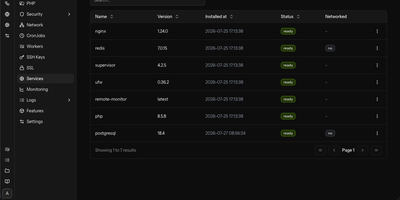
VitoDeploy replaces a pile of SSH sessions and shell scripts with one browser tab for provisioning servers and deploying websites, on a control panel you host yourself. Spin up a server on AWS, Akamai (Linode), DigitalOcean, Vultr, Hetzner, or Proxmox in a few clicks. Attach any Ubuntu machine you already own as a custom server. Add sites built with PHP, Laravel, or WordPress, or run Node.js and Bun apps behind a reverse proxy. Pull code from GitHub, GitLab, Gitea, or Bitbucket. Set environment variables and HTTP basic authentication. Issue Let's Encrypt, wildcard, or custom SSL certificates. Create MySQL, MariaDB, or PostgreSQL databases, manage their users, and send backups to Amazon S3, Wasabi, FTP, SFTP, Dropbox, or local disk. Manage firewall rules, cron jobs, Supervisor workers, Redis, and multiple PHP versions from the same screens. Watch CPU, memory, and disk use for each server, then open a live SSH shell without leaving the page. Agencies split clients into projects, invite teammates as Admins or Users, and send alerts to Slack, Discord, Telegram, or email. Workflows automate deployments, backups, and maintenance. Plugins, DNS record management, export and import of your setup, and a REST API round out the toolkit. The panel itself needs only 1 GB of RAM and 1 CPU core, then manages your other machines over SSH. Running on a dedicated VPS on RepoCloud with guaranteed CPU, RAM, and SSD, full root SSH access, and a browser serial console. AGPL-3.0 licensed.
TYPO3
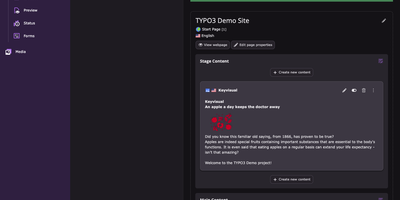
TYPO3 lets an organization run any number of multilingual websites from one installation, with editors working in a page tree and administrators deciding who may touch what. Editing happens in a context panel that slides in beside the page layout, and a guided wizard creates new pages step by step. Translations can be copied or connected to their source with change tracking, and sites can mix languages, including right-to-left scripts. Workspaces keep edits away from the live site until they are previewed and approved, while access lists, page permissions, and mounts control which parts of the tree each backend user may change. Marketing teams get a QR code module and a short URL module with hit counters and expiry dates, and redirects are created automatically whenever a page slug changes. The Form Framework builds forms with multiple file uploads in one field, CKEditor 5 text editing, and email notifications customized in the backend. A dashboard shows widgets such as recent documents and backend logins, and a Bookmark Manager groups shortcuts into large page trees. The Camino starter theme gives integrators a ready-made frontend with several color schemes, and developers shape sites further with Fluid templates and TypoScript, plus extensions from extensions.typo3.org. Running on a dedicated VPS on RepoCloud with guaranteed CPU, RAM, and SSD, full root SSH access, and a browser serial console. GPL-2.0 licensed.
UWAS
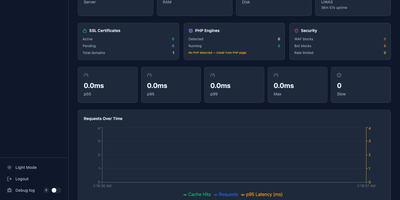
One 18 MB Go binary does the job of Apache, Nginx, Varnish, Caddy, and cPanel combined. Point UWAS at your /var/www directory and it auto-detects sites, provisions Let's Encrypt certificates, enables HTTP/3 via QUIC, and activates a two-tier caching engine with L1 memory shards and L2 disk storage, all before you write a single line of configuration. The React 19 admin dashboard provides 42 management pages for domains, PHP versions, databases, cron jobs, DNS records, file management, backup and restore, SFTP users, and uptime monitoring with real-time SSE updates. PHP sites run through FastCGI with connection pooling and full .htaccess compatibility, so WordPress, Laravel, and legacy applications work without migration effort. The built-in WAF catches SQL injection, XSS, path traversal, and shell exploits, while per-domain rate limiting and bandwidth caps protect against abuse. Reverse proxy mode supports five load balancing algorithms, circuit breakers, canary deployments, and mirroring for blue-green rollouts. Git deploy clones your repository, runs the build, checks health, and restarts the service with rollback on failure. An MCP server lets AI agents manage domains, cache, and deployments through natural language. The Nginx and Apache migration CLI converts existing configurations to UWAS format automatically. Deploy on a dedicated VPS on RepoCloud with guaranteed CPU, RAM, and SSD, full root SSH access, and a browser serial console. AGPL-3.0 licensed.