Bluesky PDS
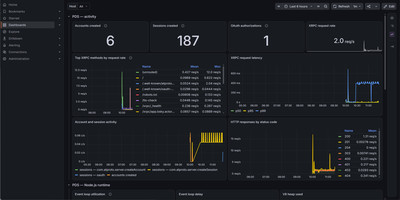
Bluesky PDS is the official Personal Data Server for hosting your own account on the AT Protocol network, so your posts, follows, and media live on infrastructure you control and still appear across the whole federated Bluesky social graph. An interactive installer sets up the container stack with the Caddy web server handling HTTPS for your domain and wildcard subdomains, creating the data directory, generating secrets, and registering the service with the network's identity directory. You create accounts directly or by invite code, sign in from the standard Bluesky web, iPhone, and Android apps by pointing them at your server address, and brand the sign-in, sign-up, and account screens with your own service name, logo, colors, and background images. Email verification and password resets go through your SMTP provider, rate limiting and blob upload limits are configurable, and the data directory holds everything needed to back up or migrate the instance to a new host later. Built-in tooling covers day-to-day operation: an admin command updates the service, automatic updates run through Watchtower, logs stream to Docker or a file, health and firehose WebSocket endpoints confirm the network can reach you, and an optional Prometheus and Grafana stack tracks accounts, sign-ins, and request latency. Account migration moves an existing identity onto your server when you are ready to leave a hosted provider. Running on a dedicated VPS on RepoCloud with guaranteed CPU, RAM, and SSD, full root SSH access, and a browser serial console. MIT and Apache-2.0 licensed.
Bonfire
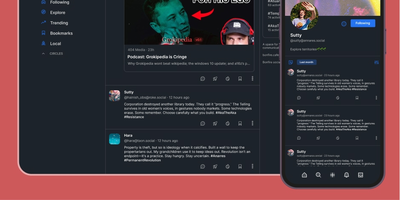
A social network shaped like your community, not like an advertiser's funnel. Bonfire is an open-source toolkit for building federated online spaces where a group hosts its own home, sets its own rules, and still talks with the wider fediverse. Pick a flavour to start: Social for familiar timelines and profiles, Community for groups and topics, Open Science for research collaboration, with coordination and cooperation spaces in development. Everything is an extension, so each instance enables only the pieces it wants, from boundaries and circles that control exactly who sees each post, to custom feeds, direct messages, bookmarks, and trending topics. Members follow people and groups across servers, boost and quote posts, and carry one identity through conversations that cross instance lines. Moderation is granular by design: instance, group, and personal controls combine, and public posts can stay readable without an account to welcome newcomers. Organisers customise branding, extensions, and defaults instead of accepting a platform's roadmap, and developers write new extensions when a community needs a feature nobody built yet. The result is a small, governable internet: your server, your members, connected to everyone. Running on a dedicated VPS on RepoCloud with guaranteed CPU, RAM, and SSD, full root SSH access, and a browser serial console. AGPL-3.0 licensed.
Synapse
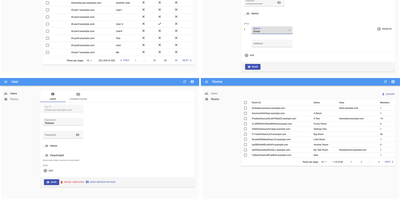
Your chat server should be able to talk to everyone else's chat server: Synapse is the reference homeserver for the Matrix network, hosting your users, rooms, and message history on infrastructure you control while federating openly with thousands of other servers. People keep their own identity on your domain and still message friends, colleagues, and communities elsewhere, because rooms are shared across servers instead of locked inside one company's silo. Any Matrix client works against it, from Element on phones and desktops to a shelf of community clients, and end-to-end encrypted conversations stay readable only by their participants. Bridges and application services wire the network into Slack, Discord, Telegram, IRC, and other systems, so existing conversations can move across gradually instead of in one painful migration weekend. Single sign-on through SAML or OpenID Connect folds chat accounts into the identity provider your organization already runs, and guests, registration controls, and rate limits stay in your hands. Media uploads, message history, and user data live in your PostgreSQL database and your file storage, with retention and federation policies set per room or for the whole server. When one process is no longer enough, worker processes split the load, Prometheus metrics show where it goes, and the admin API handles accounts, rooms, and moderation programmatically. Running on a dedicated VPS on RepoCloud with guaranteed CPU, RAM, and SSD, full root SSH access, and a browser serial console. AGPL-3.0 licensed.

BookWyrm
Instead of handing your reading history to a retail platform and letting an algorithm decide what you read next, BookWyrm lets a self-hosted community of readers make the recommendations. Shelve every book as to-read, currently reading, stopped, or finished, record start and finish dates with progress updates along the way, and set an annual reading goal to keep the habit honest. Rate and review finished books, drop a comment while you are mid-chapter, or save a quotation worth keeping, and all of it can appear on the book page alongside reviews aggregated from other connected instances. Follow friends to see their shelves fill up, join a group to build a shared reading list, or create your own list and choose whether it stays closed, accepts suggestions for approval, opens to everyone, or belongs to the group. Posts, shelves, and lists each carry their own privacy level, public, unlisted, followers-only, or private, and you can approve followers by hand before they see anything. Because instances federate over ActivityPub, your readers can follow you from another BookWyrm community or straight from Mastodon, and book metadata is shared between servers so small instances do not catalog alone. Running on a dedicated VPS on RepoCloud with guaranteed CPU, RAM, and SSD, full root SSH access, and a browser serial console. Anti-Capitalist Software License licensed.