
MCSManager
Hosting a Minecraft survival world, a Terraria server, and a Palworld host no longer means juggling SSH sessions and screen windows, because MCSManager puts every instance behind one web panel. A built-in marketplace installs game servers from ready-made templates, filtered by operating system and tagged with the Java version each one needs, while any Docker Hub image, uploaded ZIP archive, or plain process can run as an instance with its own start command, stop command, and live terminal. Docker instances get memory, CPU, port mapping, and volume settings, and each instance can auto start, auto restart, and run scheduled tasks. For Minecraft servers, the plugin and mod manager (Beta) searches Modrinth and CurseForge, and the file manager handles maps, configs, and uploads. Administrators create user accounts and assign instances to them, so friends or paying customers only see their own servers, which suits small hosting businesses that sell game servers. Extra machines join as nodes and connect to the same panel, and the drag-and-drop dashboard can be rearranged to taste. The interface supports many languages. Running on a dedicated VPS on RepoCloud with guaranteed CPU, RAM, and SSD, full root SSH access, and a browser serial console. Apache-2.0 licensed.
Tugtainer
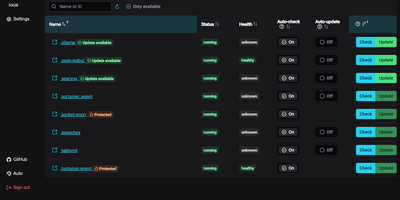
Tugtainer delivers a visual command center for Docker environments that automates container image updates, monitors registry releases, and manages application lifecycles across multiple servers without command-line intervention. System administrators can inspect running containers across all connected hosts, trigger immediate image pulls, and configure automated cron schedules for recurring health and registry checks. Flexible update policies allow teams to flag production databases as notification-only while automatically updating stateless web applications whenever new image tags publish. When updating linked services, the platform analyzes Docker Compose project definitions and custom dependency labels to stop and restart containers in strict dependency order, preventing broken network links and orphaned volume mounts. Administrators can authenticate private container registries, browse image layers and tags, and view real-time container log streams directly within the browser console. Automated pruning jobs continuously reclaim server disk space by deleting obsolete, untagged images and dangling build layers after successful deployments. Multi-channel alerting integrates with over fifty notification providers, delivering real-time update summaries and error warnings directly to Discord, Telegram, Slack, and email webhooks. Running on a dedicated VPS on RepoCloud with guaranteed CPU, RAM, and SSD, full root SSH access, and a browser serial console. MIT licensed.
1Panel
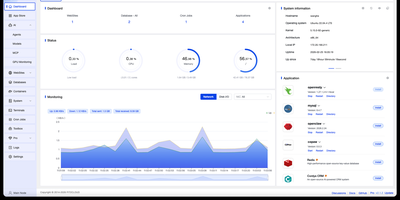
Backed by over 36,000 GitHub stars and 120 contributors with 123 releases since 2022, 1Panel has rapidly become the go-to open-source alternative to cPanel and Plesk for modern Linux server management. The platform delivers a clean Vue.js dashboard powered by a Go backend using the Gin framework, providing visual management of Docker containers, images, networks, and volumes without touching the command line. Its curated app marketplace offers one-click installation of 165+ trusted open-source applications including Nextcloud, Bitwarden, Umami analytics, WordPress, and NocoBase, each running in isolated containers for maximum security. Native AI capabilities set 1Panel apart from every competing panel: deploy Ollama LLMs directly from the dashboard, spin up OpenClaw personal agents, monitor GPU utilization, and manage AI models through a unified interface. Website management includes automatic domain binding, Let's Encrypt SSL certificate provisioning, and Nginx configuration with zero manual setup. Security runs deep with built-in firewall rules, fail2ban integration, container isolation, WAF protection, and comprehensive audit logging enabled from day one. Automated backups support AWS S3, Cloudflare R2, and local storage with one-click restore from any snapshot. The panel supports Debian, Ubuntu, CentOS, and Rocky Linux across x86_64, aarch64, armv7l, ppc64le, and s390x architectures. Running on a dedicated VPS on RepoCloud with guaranteed CPU, RAM, and SSD, full root SSH access, and a browser serial console. GPL-3.0 licensed.
Webmin
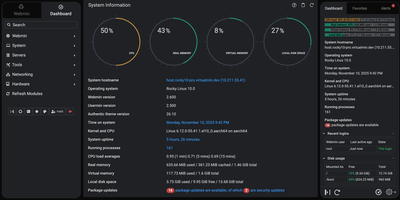
Skip the shell and the configuration file: Webmin handles user accounts, disk quotas, services, and server software on Linux and Unix machines from a browser tab. More than 100 standard modules sit under seven menus: Webmin, System, Servers, Tools, Networking, Hardware, and Cluster. System covers Users and Groups, Scheduled Cron Jobs, Running Processes, System Logs, Log File Rotation, Disk Quotas, Filesystem Backup, and systemd Bootup and Shutdown, plus Software Package Updates, which can hold selected packages on APT and DNF systems. Servers edits Apache, Nginx, BIND DNS, Postfix, Dovecot, MySQL and MariaDB, and PostgreSQL through forms. Networking brings an nftables firewall editor, Fail2Ban jails, and IPsec VPN settings. Tools adds File Manager, Custom Commands, and a Terminal that opens right in the browser. Hardware lists firmware, PCI, USB, storage, and sensor details. The dashboard keeps live CPU, memory, and disk gauges, stats history graphs, and a pending updates alert in view. Webmin Users limits each account to the modules it needs, while two-factor authentication, IP access control, and SSL settings guard the panel itself. Cluster modules reach other hosts registered in the Webmin Servers Index and run cron jobs, shell commands, and package installs on many servers at once. Running on a dedicated VPS on RepoCloud with guaranteed CPU, RAM, and SSD, full root SSH access, and a browser serial console. BSD-3-Clause licensed.
pvecenter
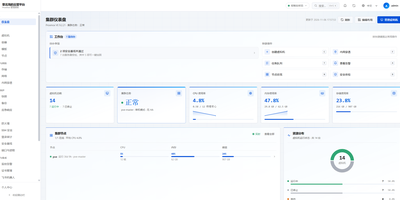
Handing a teammate the keys to a Proxmox cluster usually means handing over far too much, so pvecenter puts a narrower, self-service web panel in front of it. The dashboard shows node health, CPU, memory, storage, and recent tasks, and several Proxmox hosts can be managed from one place. Virtual machines are created through a guided wizard or in batches, then powered, cloned, migrated, resized, snapshotted, and reached through an in-browser console. LXC containers get their own pages, and a template pipeline builds cloud-init templates from cloud images. Bridges, VLANs, address pools, and the native Proxmox firewall are managed with rule templates pushed to many guests at once. Backups can run now or on a schedule, with restore, delete protection, and integrity checks. Administrators define reusable resource sizes, per-user quotas, roles, two-factor sign-in, and an audit log of every write. A security baseline scores hosts and offers guided hardening, SSH brute-force protection bans repeat offenders, and an AI inspection assistant explains findings and asks approval for every change. Alerts reach email, Feishu, and webhooks, and certificates renew automatically. The interface is Chinese-first, with a language switch and an English guide. Running on a dedicated VPS on RepoCloud with guaranteed CPU, RAM, and SSD, full root SSH access, and a browser serial console. Apache-2.0 licensed.
GameAP
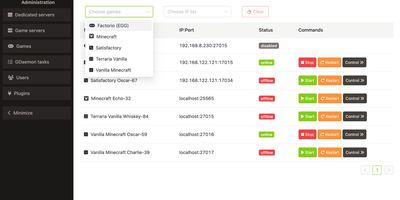
Start, stop, and restart Minecraft, Counter-Strike, Rust, FiveM, and other game servers from one browser panel instead of juggling SSH sessions. A live console streams server output and accepts RCON commands, so admins can kick players, change maps, and watch logs as they happen. The file manager edits configs, uploads and downloads files, searches inside a folder, shows checksums, and creates or extracts archives on the server itself. Scheduled tasks handle automatic restarts, updates, and backups at daily, hourly, or custom intervals. Roles and per-server permissions let a community hand out console, file, and player-management rights without sharing shell access, and single sign-on tickets let a billing system log customers straight in. Typed settings with validation and dropdown choices keep game parameters safe to edit, CPU and RAM limits cap each server, and Pterodactyl or Pelican eggs can be imported to reuse existing game definitions. One panel manages servers across many dedicated machines, plugins extend it, a documented REST API automates provisioning, and the interface speaks English, Russian, Spanish, and German. Running on a dedicated VPS on RepoCloud with guaranteed CPU, RAM, and SSD, full root SSH access, and a browser serial console. MIT licensed.
HestiaCP
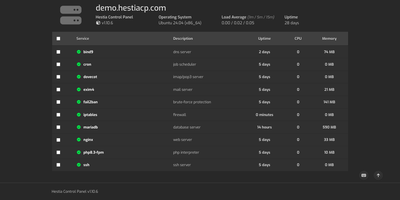
Hestia Control Panel turns a fresh Debian or Ubuntu server into a multi-user hosting platform, with websites, email, DNS zones, and databases managed from one dashboard. Web domains run on Nginx with PHP-FPM or on Apache, pick a PHP version from 5.6 through 8.5, and get FastCGI or proxy caching and per-domain Let's Encrypt certificates, wildcards included. Quick Install App sets up WordPress, Drupal, Joomla, Laravel, Nextcloud, and more from the panel or the command line. Mail domains run Exim and Dovecot with ClamAV, SpamAssassin, DKIM, and Roundcube or SnappyMail, and rate limits apply per user or mailbox. BIND serves your own nameservers with DNSSEC and DNS clusters, and MariaDB, MySQL, and PostgreSQL come with phpMyAdmin and phpPgAdmin. Packages set per-user quotas, accounts get chrooted SFTP or SSH access, and users can enable two-factor authentication and SSH keys. Fail2ban, iptables rules, and ipset lists block brute-force attacks and bad addresses. Backups go to local disk, FTP, SFTP, or any of 50-plus Rclone cloud providers and restore from Hestia or VestaCP archives. Scoped access keys open a REST API, the v-command line interface scripts user, domain, and backup tasks, and a file manager and service monitor ship in the panel. Running on a dedicated VPS on RepoCloud with guaranteed CPU, RAM, and SSD, full root SSH access, and a browser serial console. GPL-3.0 licensed.

Nanocl
One server, treated properly: Nanocl runs your containers and full virtual machines from a single declarative Statefile, reconciling what is running against what the file says, so a lone host gets cluster discipline without cluster ceremony. Containers group into Cargoes with replica counts, ordered init containers, and health-aware restarts; finite jobs run to completion and stop. When a workload needs a real kernel or a custom disk image, it boots as a QEMU virtual machine beside the containers instead of forcing a second platform. Publishing is built in: the proxy controller terminates TLS and routes HTTP and TCP traffic, and the DNS controller keeps service names resolving while workloads come and go. Secrets for registries, certificates, and environment variables attach where they are used, never inside the file itself. The daily loop is a CLI and an API: list processes, follow logs, exec into a container, watch events, and back up the entire deployment state before you change it. Namespaces keep projects apart on the same host, and Statefile arguments, templates, and sub-states carry one definition from staging to production. Running on a dedicated VPS on RepoCloud with guaranteed CPU, RAM, and SSD, full root SSH access, and a browser serial console. MIT or Apache-2.0 licensed.
Lodestone
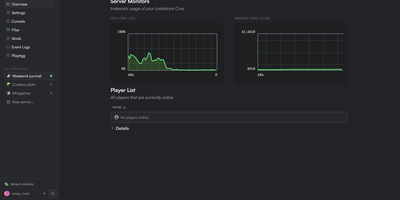
Lodestone Host is a free, open source Minecraft server manager that lets you create, mod, monitor, and share servers from a browser dashboard instead of juggling terminals and config files. A guided wizard builds Vanilla, Fabric, Forge, NeoForge, or Paper servers, or starts from a Fabric modpack found through Modrinth search, a pasted link, or an uploaded .mrpack file, and it downloads the right Java for every server. The instance page shows live CPU and memory charts and the player list, with a searchable console that accepts commands and a file manager that edits configs in the browser. Mods and plugins install straight from Modrinth, filtered to the instance's version and loader, with badges for what is already installed and what players need on their own client too. Lodestone Connect invite links bring friends in without port forwarding, and the companion launcher installs the right mods before joining; optional playit.gg tunnels offer another route in. Give helpers their own accounts with permission to create or delete servers and to view, start, stop, or open the console of chosen ones, then hand scripts and bots scoped, expiring API keys or the JSON-friendly CLI. Survival worlds, creative plots, and minigame servers can all run on hardware you control, sized to your players and not to a hosting provider's RAM tiers. Running on a dedicated VPS on RepoCloud with guaranteed CPU, RAM, and SSD, full root SSH access, and a browser serial console. AGPL-3.0 licensed.
Runtipi
Runtipi makes any Linux server a personal app platform where installing services like Plex, Nextcloud, or Home Assistant takes a single click from a curated store of 265+ applications. With 9,500+ GitHub stars and 50 contributors, the React frontend backed by NestJS orchestrates Docker Compose projects for each installed app, automatically generating environment files, compose configurations, and Traefik reverse proxy labels for domain routing and SSL certificate provisioning via Let's Encrypt. The integrated Traefik reverse proxy handles all incoming traffic routing, HTTPS termination, and forward-auth protection for securing applications behind Runtipi's authentication layer without manual configuration. One-click updates notify administrators of new app versions and apply container image upgrades with automatic pre-update backup creation, while the restore feature rolls back application data to any saved snapshot. Custom app stores extend the ecosystem through Git repositories following the Runtipi app definition format, enabling organizations and communities to maintain private catalogs alongside the official store. The Docker Compose override system preserves user customizations across updates, allowing advanced modifications without losing changes. Architecture-aware filtering detects ARM64 or x86 platforms and displays only compatible applications. All apps deploy as standard Docker containers, and compose files can be exported for independent operation without lock-in. Running on a dedicated VPS on RepoCloud with guaranteed CPU, RAM, and SSD, full root SSH access, and a browser serial console. GPL-3.0 licensed.
Websoft9
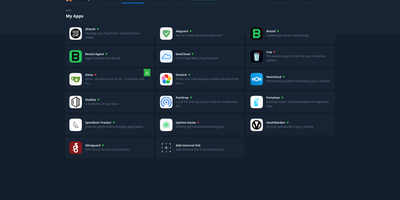
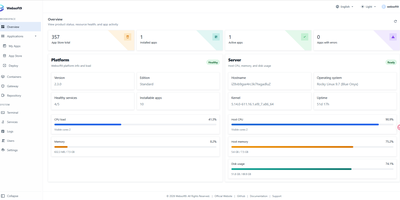
One server, three hundred applications, zero Kubernetes: Websoft9 is a self-hosted platform that turns a single VPS into your private app store, with a web console for finding, installing, and running open source software. Browse the catalog, click install, and applications arrive as containers with their databases and settings wired up, ready behind your domain. Bind domains and issue free Let's Encrypt certificates through the built-in proxy, schedule local backups for apps and databases, and open a browser terminal or file manager when you need hands-on control. The overview shows what is running and what it uses, My Apps keeps every service one click from start, stop, or rebuild, and updates roll out from the same console. Small teams use it to stand up WordPress, GitLab, Mattermost, and internal tools on one machine instead of renting a separate hosted plan for each, and everything stays on hardware you own. Running on a dedicated VPS on RepoCloud with guaranteed CPU, RAM, and SSD, full root SSH access, and a browser serial console. LGPL-3.0 licensed.
Yacht
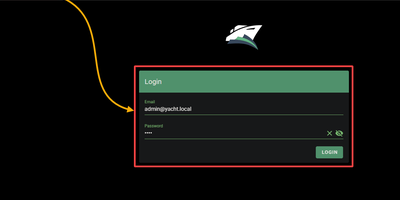
Docker deployment reimagined as an app store: browse a visual catalog of applications, click to deploy with sensible defaults, and customize ports, volumes, and environment variables only when you need to. Point Yacht at any Portainer-compatible template JSON URL and it parses every application into a browsable, searchable interface with pre-configured settings ready for one-click launch. The template framework is fully decentralized — anyone can host template files on GitHub, a personal server, or any URL, creating a community-driven ecosystem of deployment packages without central gatekeeping. Template variables prefixed with ! automatically substitute server-level settings, so !config resolves to your configured path across every deployment without repetitive manual editing. The Python backend handles container lifecycle — start, stop, restart, kill, removal — while streaming real-time logs, providing browser-based shell access, and monitoring resource statistics through the Vuetify dashboard. Docker Compose stacks sit alongside individual containers in the same management interface. Advanced editing lets you modify port mappings, volumes, environment variables, and restart policies on running containers without redeployment. The develop branch introduces agent-managed remote host support for expanding management to additional Docker hosts. Authentication can be disabled for environments behind external proxies like Authelia or Traefik forward auth. Running on a dedicated VPS on RepoCloud with guaranteed CPU, RAM, and SSD, full root SSH access, and a browser serial console. CC-BY-4.0 licensed.
Minecraft Server Manager
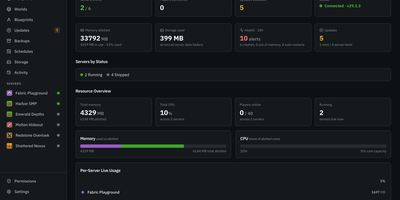
One Minecraft server is easy, but a Fabric test world, a Paper survival realm, and a Forge modpack on the same machine need a proper control room. Minecraft Server Manager runs every server as its own resource-capped container and offers create, start, stop, restart, rebuild, and delete from the browser, with a graceful RCON stop and crash detection. A guided wizard offers Simple and Advanced modes with plain-English help. Modpacks stay pinned to an exact version, and upgrades come with a preview, an automatic backup, health monitoring, and one-click rollback. Search Modrinth, CurseForge, Hangar, SpigotMC, and GitHub Releases from one browser, add mods by link, or import .mrpack files and zips, with checksum-verified downloads. A live console streams logs with filters and an RCON command bar, and player tools cover whitelists, ops, bans, IP bans, and teleports. Cron schedules run restarts, backups, and RCON commands, backups follow retention rules, and storage analytics enforce disk quotas. Crash reports are parsed and can be shared to mclo.gs for automated insights, and blueprints export a server as a recipe. A one-click BlueMap live map and an optional public status page show the world off. Admin, operator, and viewer roles with per-server permissions keep helpers in their lane. Friends-only survival worlds, modded community realms, and hosts running many test servers are what it was built for. Running on a dedicated VPS on RepoCloud with guaranteed CPU, RAM, and SSD, full root SSH access, and a browser serial console. MIT licensed.
Roxy-WI
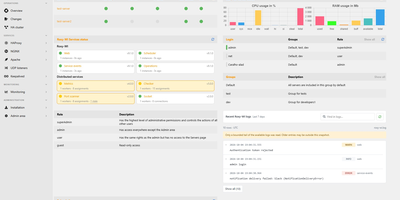
Proxies and load balancers spread across a fleet of servers finally share one calm web console in Roxy-WI. Connect existing hosts over SSH and manage HAProxy, NGINX, Apache, and Keepalived from a single place, with service actions, logs, statistics, and a Runtime API panel for HAProxy. The configuration workspace splits files into expandable sections, searches across them, and switches between a form editor and plain source, and saved versions make comparing and restoring earlier files straightforward. An overview page shows service health for every server at a glance, including worker status and recent application logs. High availability gets its own tools: choose Keepalived or Corosync/Pacemaker, review quorum, fencing, and witness setups, run a readiness audit with per-node evidence, and plan node maintenance with a drain review. Request diagnostics trace a domain through DNS, the virtual IP, TCP, TLS and SNI, and candidate backends to explain why traffic fails. Certificates come from Let's Encrypt or from a CertWarden connector. Groups, roles, and OIDC or LDAP sign-in decide who may touch which servers. Running on a dedicated VPS on RepoCloud with guaranteed CPU, RAM, and SSD, full root SSH access, and a browser serial console. Apache-2.0 licensed.
Zomboid Control Panel
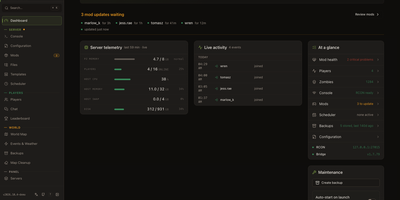
Friends are joining your Project Zomboid server, a mod just broke, and the log is scrolling faster than anyone can read. Zomboid Control Panel puts the fix in a browser tab. Start, stop, restart, and save the server from a dashboard that shows status, uptime, players online, host memory and CPU, disk space, and mods waiting for updates. A setup wizard installs a fresh Build 41 or Build 42 server through SteamCMD, or connects to one that already exists locally or over RCON. The mod manager tracks Workshop items, flags updates, imports Steam collections, scans for file conflicts, duplicate mod IDs, and missing dependencies, and sorts the load order. A structured INI editor covers server settings, sandbox options, spawn points, and regions, with a raw view for power users. Player pages handle kicks, bans, whitelists, access levels, and notes, and the live world map shows who is where. Events and weather controls trigger storms, hordes, and sounds. A scheduler runs timed restarts with countdown warnings, backups keep restorable world snapshots, and a Discord bot relays chat and answers slash commands. Admin, technician, moderator, and custom roles, plus OpenID Connect sign-in, decide who touches what. Community servers with several moderators, friends-only worlds, and hosts managing multiple servers from one panel all fit. Running on a dedicated VPS on RepoCloud with guaranteed CPU, RAM, and SSD, full root SSH access, and a browser serial console. MIT licensed.
Komari
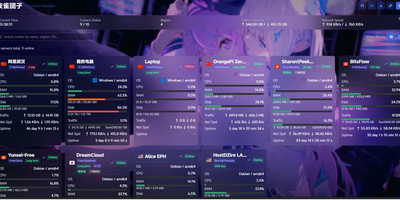
Komari turns a scattered fleet of VPS boxes into one clean status wall that shows which servers are alive, struggling, or about to expire. Every node reports CPU, GPU, memory, swap, disk, load, network speed, traffic totals, and uptime to a real-time dashboard, with history views from ten minutes to thirty days or any custom range. Flip between a card grid and a table, search by name, region, or operating system, and tag each machine with its price, billing cycle, and days until renewal. Latency tasks send ICMP, TCP, or HTTP probes and plot the results in per-node charts. Offline alerts wait out a per-node grace period before firing, expiry reminders warn before a plan lapses, and Webhook and custom JavaScript channels deliver them. A multi-tab browser terminal that reattaches after disconnects, remote command execution, and a remote file manager with an editor let you fix problems without leaving the panel. Agents install with a script, a binary, Docker, or an auto-discovery key for batch rollouts, and administrators can switch an agent's version remotely. Plugins run on an embedded JavaScript runtime and can add scheduled jobs, HTTP hooks, static pages, and notification channels. Administrators can add two-factor authentication, OAuth sign-in, API keys for a JSON-RPC 2.0 endpoint, themes from a theme market, and backups. Running on a dedicated VPS on RepoCloud with guaranteed CPU, RAM, and SSD, full root SSH access, and a browser serial console. MIT licensed.
Mistgate
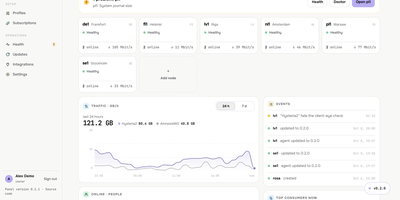
Running a VPN for family, friends, or a small team usually means babysitting servers one SSH session at a time, and Mistgate replaces that with one panel that keeps the whole fleet configured. Add a server from the browser by typing its address and root password: the panel pins the host key, checks the host, opens the ports, and installs the signed node agent for you. Each person gets one subscription link that their app turns into the server list, or a personal AmneziaVPN key per device, so a lost phone can be revoked without touching anyone else. Groups decide which protocol profiles a person receives, while per-user traffic quotas, expiry dates, device limits, and per-device speed limits keep sharing fair. Hysteria2 brings QUIC-based speed with port hopping, obfuscation, and certificate options; VLESS REALITY and AmneziaWG 2.0 and 3.1 cover networks where one protocol gets blocked, and Cloudflare WARP can serve as the exit for all three. Every five minutes the panel connects to each server the way a real client app would, a doctor on every node runs host checks with safe fixes, and alerts reach you on Telegram before your users notice. The public address shows strangers a decoy site while the admin hides behind a secret path, and encrypted backups go to your Cloudflare R2 bucket on a schedule. Running on a dedicated VPS on RepoCloud with guaranteed CPU, RAM, and SSD, full root SSH access, and a browser serial console. AGPL-3.0 licensed.
Froxlor
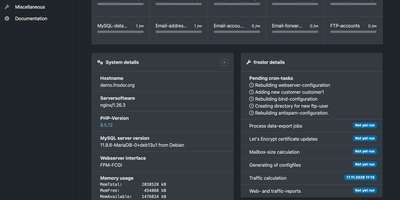
Froxlor lets an administrator host many customers on Debian and Ubuntu servers, with resellers, resource limits, and every service managed from one browser panel. Customers get their own panel for domains, subdomains, email, FTP accounts, and MySQL databases, and resellers receive a pool of resources to hand out. Domains can run on Apache 2.4 or Nginx, use a PHP-FPM configuration chosen per domain, and bind to specific IPv4 addresses, IPv6 addresses, or ports. Let's Encrypt certificates are issued and renewed from the panel, customers can store their own certificate per domain, and Nginx domains can enable HTTP/3. Email addresses, forwarders, and catchall mailboxes run on Postfix and Dovecot, and Rspamd spam filtering is tuned for each email account. Bind9 or PowerDNS serves the DNS zones, and ProFTPd provides FTP accounts with their own directories. Customers can add SSH keys for shell access, protect directories with passwords, set path options, and export their data. Traffic for HTTP, FTP, and mail is collected per customer and charted by month, and several MySQL servers can be assigned to customers. A JSON API with per-user keys, a console tool, and a CSV domain importer cover automation, and the interface can be themed. A configuration page shows ready-made service templates for the chosen distribution and exports the selection as JSON for use on another server. Running on a dedicated VPS on RepoCloud with guaranteed CPU, RAM, and SSD, full root SSH access, and a browser serial console. GPL-2.0-or-later licensed.