PipesHub
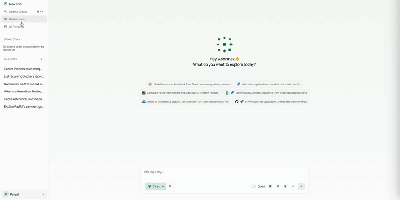
Unify fragmented corporate knowledge across chat channels, documents, and cloud drives with PipesHub, an open-source workplace context platform providing permission-aware search and verifiable answers for teams and autonomous agents. Employees can query enterprise knowledge bases through a conversational interface that retrieves relevant information across Google Workspace, Microsoft 365, Slack, Confluence, Jira, and GitHub while strictly respecting individual user access permissions. Knowledge workers can verify every answer through clickable citation blocks that trace claims directly back to source documents, spreadsheet rows, or chat messages. Teams can assemble custom AI agents visually using a drag-and-drop builder, combining retrieval collections with interactive toolsets to automate multi-step operations like drafting customer responses or creating issue tickets. Autonomous agents connect via Model Context Protocol to inspect shared company knowledge and perform external actions across connected SaaS tools. Organizations can index scanned PDFs, slide decks, markdown pages, and spreadsheets with OCR and document parsing, maintaining synchronized records through automated schedules. Administrators can inspect synchronized records, monitor query history, and manage connector credentials across all integrated business applications. Running on a dedicated VPS on RepoCloud with guaranteed CPU, RAM, and SSD, full root SSH access, and a browser serial console. Apache License 2.0 licensed.
AKB
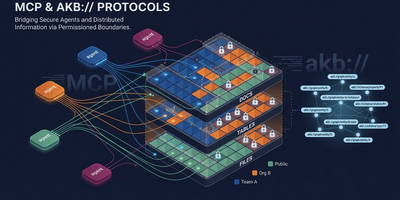
Achieving 98.4% Recall@5 on LongMemEval-S without a reranker, AKB is the agent-native knowledge infrastructure giving Claude Code, Cursor, Windsurf, and any MCP-aware agent persistent organizational memory — a drop-in replacement for Confluence or Notion where AI agents read and write directly rather than scraping human-formatted pages. Documents are stored as Markdown with YAML frontmatter in Git bare repositories (full version history, branching, diff), while PostgreSQL 16 serves as source of truth for chunk text, metadata, and BM25 vocabulary, with dense embeddings handled by a pluggable vector store (pgvector default, Qdrant optional, or managed Seahorse). Agents interact through 20+ MCP tools — akb_put, akb_search, akb_browse, akb_relations, akb_sql, akb_edit, akb_history — performing hybrid dense plus BM25 search fused via Reciprocal Rank Fusion in one call. The URI graph (depends_on, related_to, implements relations) lets agents traverse knowledge connections without external graph databases. Multi-tenant vault isolation is enforced at the PostgreSQL ACL level with per-user roles and SET LOCAL ROLE for SQL sandboxing. Event fanout streams structured events to Redis Streams for external consumers (synthesis bots, digest agents, audit trails), and a hash-chained append-only audit log integrates with enterprise SIEMs. Ships with agent plugins for Claude Code and Codex (session capture, wiki ingest, lifecycle hooks), Kubernetes kustomize manifests, and Open Knowledge Format export. Running on a dedicated VPS on RepoCloud with guaranteed CPU, RAM, and SSD, full root SSH access, and a browser serial console. BSL 1.1 licensed (free under 100 seats, auto-converts to Apache 2.0 after four years).
Omni
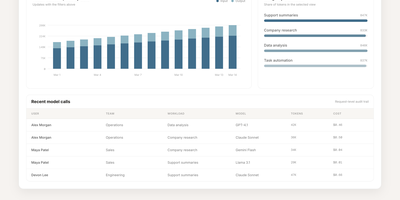
Omni is an open-source workplace AI agent and enterprise search platform that unites your company's scattered tools into a single context-aware workspace where team members can find answers and automate cross-application workflows. Employees can query connected knowledge sources including Google Drive, Gmail, Slack, Jira, GitHub, Confluence, and HubSpot to locate project specifications, customer records, and operational documents without jumping across tabs. The integrated AI assistant answers complex multi-step inquiries, summarizes lengthy email threads, and cites exact source passages so workers can verify factual accuracy before making business decisions. Granular permission inheritance mirrors existing access controls across every connected service, guaranteeing that sensitive personnel files, financial statements, and confidential repositories remain hidden from unauthorized staff. Engineers can construct bespoke data connectors and define automated agent skills through the extensible Python and TypeScript software development kits, triggering multi-service actions directly from interactive chat dialogues. Administrators can monitor background synchronization jobs, inspect audit trails, manage single sign-on access, and configure custom extraction pipelines using centralized operational dashboards. Running on a dedicated VPS on RepoCloud with guaranteed CPU, RAM, and SSD, full root SSH access, and a browser serial console. Apache 2.0 licensed.
Arkon
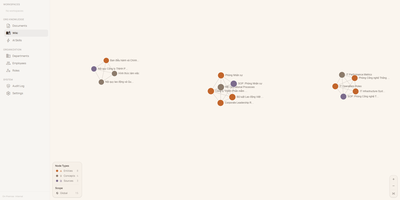
With 1,200+ GitHub stars since its April 2026 launch, Arkon provides an enterprise-grade knowledge management layer that turns scattered organizational documentation into AI-accessible structured context. The platform runs as a centralized MCP server, compiling your SOPs, policies, technical docs, and institutional knowledge into a versioned wiki with draft-approval workflows, then serving that wiki to Claude Desktop, Claude.ai, Cursor, and any MCP-compatible client through a single permission-scoped endpoint. OAuth 2.1 with PKCE authentication eliminates manual token management — employees authenticate through a browser login while the system discovers endpoints automatically via RFC 8414. The RBAC v2 system supports custom roles with granular permissions, department-scoped AI Skills, workspace isolation, and comprehensive audit logging so every query and access event is traceable. RAG retrieval powered by pgvector embeddings enables AI clients to search across all organizational documents with source attribution, while the AI Skills system lets teams define reusable instruction sets scoped to specific departments or roles. The architecture runs seven Docker containers coordinated by Compose: PostgreSQL with pgvector for embeddings and metadata, Redis for caching, MinIO for document storage, a FastAPI backend, two ARQ async workers for embedding generation and document processing, and a Next.js frontend portal accessible on port 3119. API keys are encrypted at rest with Fernet, and no telemetry leaves the deployment. Running on a dedicated VPS on RepoCloud with guaranteed CPU, RAM, and SSD, full root SSH access, and a browser serial console. PolyForm Internal Use licensed.