Open Source App Cloud Marketplace
Deploy, host, and scale with one click, at half the cost. Then customize with AI agents.
GlitchTip
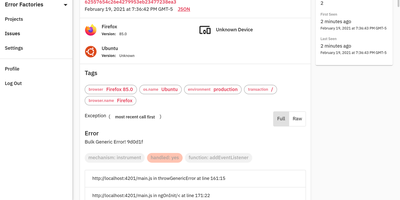
GlitchTip speaks Sentry's protocol without Sentry's operational weight - open-source error tracking that your existing SDKs already understand. The pitch is pragmatic: instrument your application with the official Sentry SDKs you already know - any language they cover - and point the DSN at your own GlitchTip instance instead. Errors, exceptions, log messages, and Content Security Policy violations flow into one place for triage, grouped into issues with stack traces, with alerts delivered by email or webhook the moment things break. Where self-hosted Sentry has ballooned into a docker-compose stack of twenty-plus containers, GlitchTip is a deliberately lean Django and PostgreSQL application a small team can actually run. Beyond errors, it bundles three more monitoring concerns: performance monitoring takes a works-out-of-the-box approach - no dashboard building, just your slowest web requests, database queries, and transactions surfaced automatically; uptime monitoring pings your sites and alerts on failures, or runs in reverse as a dead-man's-switch heartbeat for cron jobs that must check in on schedule; and log search puts application logs alongside errors for faster debugging. Unlimited projects and team members, MIT-licensed, built by Burke Software - your event volume is limited only by your own hardware.
Sugabots
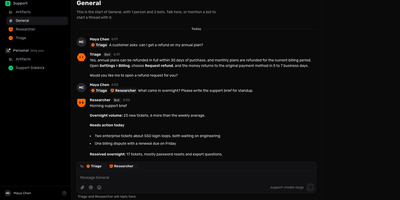
Give your team a shared chat workspace where AI bots sit next to people, answer questions, and pick up recurring work. Organize conversations into pods with channels and threads, and keep a private personal pod for each member. Mention a bot with @ to hand it a task, mention several and each one replies, or let a bot ask another bot for help. Every bot gets its own name, avatar, instructions, and model, picked from OpenRouter, Anthropic, OpenAI, Google Gemini, or any OpenAI-compatible endpoint you add. Connections link a pod to GitHub, Linear, Stripe, Notion, Sentry, Jira, any MCP server, or any HTTP API, and bots act through them with approvals where you want a human check. Routines run a bot on a schedule, a webhook, or a GitHub event, then post the result to the pod channel. Computers give bots an isolated machine for heavier jobs, and web search lets them look things up and cite pages. A Usage page breaks down what bots cost by bot, model, and pod. Use it for a support desk, an engineering ops room, a morning briefing, or a shared research assistant. Running on a dedicated VPS on RepoCloud with guaranteed CPU, RAM, and SSD, full root SSH access, and a browser serial console. MIT licensed.
Suparagent
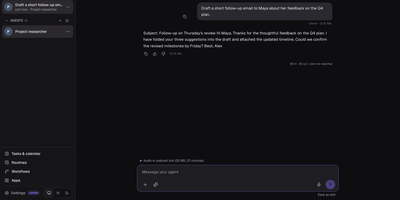
Suparagent turns a single server into a workspace of named AI coworkers that each have a job, a memory, and a folder of their own. Chat with an agent in the browser, pick an engine per conversation, and watch replies stream in as the sidebar keeps every thread searchable. Approval modes decide how much freedom an agent gets: ask first, accept edits, or plan only, so nothing touches a file or runs a command without your say. Routines send a prompt to an agent on chosen weekdays, through a webhook, or on demand, and every run lands in its own conversation. A kanban board with month, week, and upcoming views tracks tasks by owner and priority, and a canvas builds multi-step workflows from schedule triggers, model steps, agent steps, conditions, and approvals. Agents save notes you can edit, delegate to specialists in shared rooms, and reuse saved skills and templates. A usage panel totals turns and tokens by conversation, engine, and day, with a CSV export. Invite teammates with a one-time link, pair a phone, and keep agents working when your laptop is closed. Running on a dedicated VPS on RepoCloud with guaranteed CPU, RAM, and SSD, full root SSH access, and a browser serial console. Apache-2.0 licensed.
LangBot
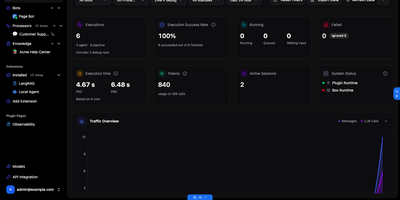
Connect one AI assistant to every chat app your customers already use, then manage it from a single admin panel. Create a bot for Slack, Discord, Telegram, LINE, Lark, DingTalk, WeCom, Matrix, KOOK, or QQ, or embed the Page Bot widget on a website with one script tag. Event routing sends each message to the processor you choose, and a pipeline controls triggers, safety rules, the model and prompt, and how replies are sent. A built-in Debug Chat streams answers as you edit, in private or group sessions. Knowledge bases split uploaded documents into chunks and search them by vector, full-text, or hybrid matching, with query rewriting and reranking options. Add providers like OpenAI, Anthropic, DeepSeek, Gemini, and Ollama, then give each pipeline its own models. The dashboard counts executions, success rate, token usage, and active sessions, and tabs list model calls, user feedback, and error logs. Sessions show the full conversation for each user, with a button to reset context. Install plugins and MCP servers from the extension marketplace to add tools. Use it for a support bot, a community assistant, an internal helpdesk, or a multi-channel front desk. Running on a dedicated VPS on RepoCloud with guaranteed CPU, RAM, and SSD, full root SSH access, and a browser serial console. Apache-2.0 licensed.
Pizza Bot
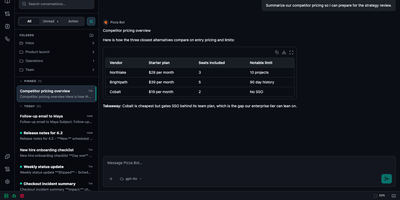
Start an AI task, close the tab, and come back to finished work waiting in an inbox. Pizza Bot keeps agents running when you navigate away or disconnect, sorting results into Unread for completed work and Action for approvals that need your decision. Conversations can be grouped into folders, pinned, searched, and forwarded from any message, without hiding matching items from the global queues. Schedules run a prompt on a cron expression with a time zone, and webhooks start a run from an external alert. A shared pool of Markdown memories carries your preferences into every conversation. Skills package step-by-step playbooks with scoped tools, and plugins bundle skills with MCP servers, so a request can be handed to a specialist subagent whose progress shows in an Activity panel. Connect Amazon Bedrock, Anthropic, Google Gemini, OpenAI, OpenRouter, Requesty, Opper, or Ollama, or point OpenAI at any compatible endpoint. Local folders are visible to the agent only after you grant them, read-only by default. Open it in the browser from one container behind a bearer token, or use the desktop app or terminal client against the same server. Running on a dedicated VPS on RepoCloud with guaranteed CPU, RAM, and SSD, full root SSH access, and a browser serial console. Apache-2.0 licensed.
JadeAI
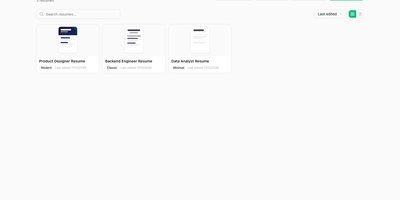
JadeAI is a self-hosted resume builder that pairs a clean drag-and-drop editor with AI help for writing, polishing, and tailoring every application. Pick from 50 templates, then adjust colors, fonts, spacing, and margins in a live preview, with undo and redo keeping every experiment reversible. Paste a job description to get a keyword match, an ATS score, and concrete suggestions, then generate a cover letter in a formal, friendly, or confident tone. A grammar check flags weak verbs and vague claims, a translation tool converts the whole resume into ten languages, and an in-editor chat assistant rewrites sections on request. Upload an existing PDF or image and the AI extracts every field for you. Practice with six preset interviewers, from HR to technical to leader, then review a scored report with a competency radar and an improvement plan. Export to PDF, one-page PDF, DOCX, HTML, TXT, or JSON, and share a link with an optional password and a view counter. Every user brings their own OpenAI, Anthropic, or compatible API key. Running on a dedicated VPS on RepoCloud with guaranteed CPU, RAM, and SSD, full root SSH access, and a browser serial console. Apache-2.0 licensed.
Markus
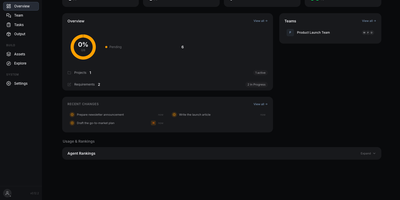
Markus is an AI workforce you run yourself: describe a goal in plain language and a team of specialist agents plans it, splits it into tasks, does the work, and reports back. A built-in Secretary agent hires agents from role templates, groups them into teams, and turns requirements into dependency-linked tasks. Work runs in parallel, each task in its own workspace, and a peer reviewer approves or sends back every delivery before it counts as done. Follow progress on a backlog table, a kanban board, or a dependency graph that shows which task unblocks which. Agents keep persistent memory, patrol their own task board around the clock, and can join team group chats or take direct messages. Connect Slack, Telegram, Discord, WhatsApp, or Feishu so people can reach agents where they already talk, and give agents browser and desktop automation through an optional Chrome extension. Pick any model provider, including Anthropic, OpenAI, Google, DeepSeek, OpenRouter, or a local Ollama server, and import skills from MCP servers or community hubs. A REST and WebSocket API, usage rankings, and an audit trail round out the control room. Running on a dedicated VPS on RepoCloud with guaranteed CPU, RAM, and SSD, full root SSH access, and a browser serial console. Apache-2.0 licensed.
CowAgent
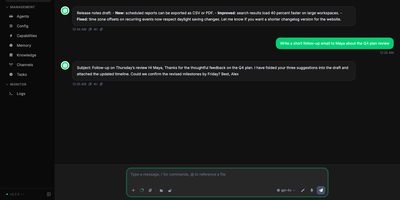
CowAgent is a personal AI agent that plans a task, picks the right tool, and keeps working until the job is done, all from a browser console on your own server. Open the chat page to hand it a request, and watch it read files, run terminal commands, search the web, and report back. Build a team of agents, each with its own role, model, skills, and knowledge, then have them collaborate in one shared conversation. Memory is layered into context, daily notes, and core facts, so the agent gets to know you over time, and a knowledge base organizes saved articles and documents into a browsable wiki. Install skills from a hub, from GitHub, or by describing one in plain language, and connect MCP tools through a form or pasted JSON. Provider credentials for chat, vision, image generation, speech, and embeddings live in one Models page, so each capability can use a different vendor. Connect Telegram, Slack, Discord, WeChat, Feishu, DingTalk, or WeCom and schedule recurring tasks. An OpenAI-compatible Chat API and shareable guest pages put the agent in front of other people. Running on a dedicated VPS on RepoCloud with guaranteed CPU, RAM, and SSD, full root SSH access, and a browser serial console. MIT licensed.
Nyro
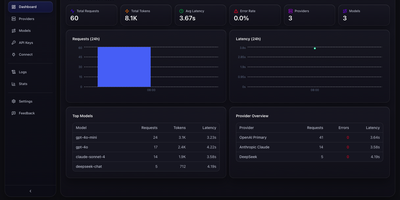
Point Claude Code, Codex CLI, Gemini CLI, or any OpenAI, Anthropic, or Gemini SDK at one address and Nyro routes every request to whichever model provider you choose. The gateway translates protocols on the fly, including streaming, reasoning blocks, and tool calls, so a tool built for one API can run on a model from another. Define virtual model names, bind each to one or more providers, and pick weighted load balancing or priority failover; unhealthy targets are skipped and recover automatically. Issue API keys with limits on requests and tokens per minute and per day, and bind each key only to the models it may call. Exact and semantic caching return repeated answers instantly. A request log records provider, model, token counts, latency, and streaming speed, and usage charts break traffic down by model and provider. The Connect page generates ready-to-paste samples in Python, TypeScript, and cURL, plus one-click configuration for popular coding CLIs. Choose an embedded database for a single host or an external PostgreSQL or MySQL server for production, and run the gateway, the admin UI, or both as separate processes. Running on a dedicated VPS on RepoCloud with guaranteed CPU, RAM, and SSD, full root SSH access, and a browser serial console. Apache-2.0 licensed.
Unla
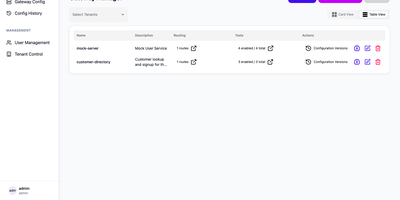
Unla puts a friendly front door on every API you already run, so AI clients can call it as an MCP server without anyone writing a line of glue code. Describe an endpoint in YAML or the form editor, name its arguments, choose where each one goes in the request, and the gateway exposes it as a tool over SSE or streamable HTTP. Import an OpenAPI file to generate a whole server at once, or proxy a third-party MCP server and route it under a prefix of your choice. The Gateway Manager shows every server as a card or table row with its routes, enabled tools, and tool counts. Every save creates a numbered config version with its author and timestamp, so changes are easy to audit and roll back. Tenants keep teams separate, user accounts carry roles, and CORS settings sit next to each route. Configuration hot reloads, syncs across replicas, and persists to disk, SQLite, PostgreSQL, or MySQL. Running on a dedicated VPS on RepoCloud with guaranteed CPU, RAM, and SSD, full root SSH access, and a browser serial console. MIT licensed.
OpenHermit
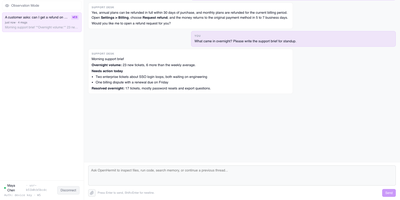
Run a whole fleet of AI agents as managed services, each with its own model, memory, schedules, and sandboxed workspace, from one admin console. Create an agent, point it at OpenAI, Anthropic, OpenRouter, or any OpenAI-compatible endpoint, store its API keys encrypted, and it is ready to chat in the browser. People sign in with a device key and get a session list, streaming replies, and file attachments. The Agents table shows status, last activity, sessions, errors, and token spend for the past 24 hours, and the Stats page tracks users, sessions, events, and total tokens. Cron or one-shot schedules let an agent send a daily brief, and each run is logged. Owner, user, and guest roles control who may talk to an agent or change it, and policy and approval tabs gate risky tool calls. Skills and MCP servers are registered once and enabled for one agent or the whole fleet, and instructions can be pushed to every agent at once. Sessions, memories, and secrets sit in PostgreSQL, so state persists across gateway restarts. Use it for an internal agent platform, a support desk, or one agent per customer. Running on a dedicated VPS on RepoCloud with guaranteed CPU, RAM, and SSD, full root SSH access, and a browser serial console. MIT licensed.