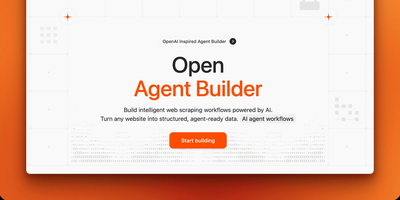
Open Agent Builder
Open Agent Builder delivers a visual canvas for orchestrating AI agent workflows without writing Python scripts or managing complex codebases. The React Flow-powered drag-and-drop interface supports seven node types — Agent, Scraper, Transform, If/Else, Loop, User Approval, and MCP Tool — each configurable with provider-specific settings for Anthropic Claude (Haiku 4.5 and Sonnet 4.5), OpenAI GPT-5, Groq, or any OpenAI-compatible endpoint. The LangGraph orchestration engine handles state management, conditional routing, and human-in-the-loop approval gates while Firecrawl integration converts any website into structured, LLM-ready data through scrape, crawl, and map operations. E2B sandboxed code execution powers Transform nodes for secure data manipulation without risking host system integrity. Real-time streaming updates show execution progress node-by-node as workflows run, with Convex providing reactive database synchronization for workflow state and execution history. The TypeScript-first architecture (96.8% TypeScript) built on Next.js 16 App Router with Tailwind CSS delivers a responsive interface across devices. Clerk handles multi-user authentication with JWT integration for secure workspace isolation. Deploy via npm install and environment configuration with Firecrawl, Convex, and Clerk API keys. Running on a dedicated VPS on RepoCloud with guaranteed CPU, RAM, and SSD, full root SSH access, and a browser serial console. MIT licensed.
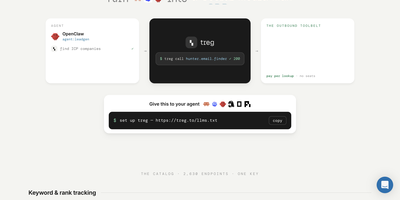
Treg
With over 330 GitHub stars and described as "OpenRouter, but for agent tools instead of models," Treg is the unified tool registry that gives your AI agent one base URL, one token, and instant access to approximately 2,800 cataloged endpoints across 56 providers — SEO and backlink analysis via Semrush and Moz, social media intelligence from TikTok and Instagram, people and company enrichment through Crunchbase and Hunter, media buying, scraping, and SERP data — all priced per call from fractions of a cent with no provider signup required. The FastAPI backend with PostgreSQL stores credential bindings and injects them server-side into every proxied request, ensuring API keys and OAuth tokens never touch the agent or local machine while every call is audit-logged. Teams register their own paid API accounts, OAuth connections, vendor CLIs like Stripe, GitHub CLI, Vercel, and gcloud, plus custom SKILL.md definitions — all callable by every teammate's agent through a single treg token with automatic credential injection. The evidence-based tool selector shows success rate, response speed, and last-seen timestamp for each provider, so agents pick tools on measured performance rather than guesswork. Bring-your-own-key routes bypass metering entirely, and the one-dollar free credit on every new team lets agents start calling immediately. The Vue.js web dashboard provides team management, audit logs, catalog browsing, and guided onboarding. Self-host with pip install tools-registry[server] on a dedicated VPS on RepoCloud with guaranteed CPU, RAM, and SSD, full root SSH access, and a browser serial console. Apache-2.0 licensed.
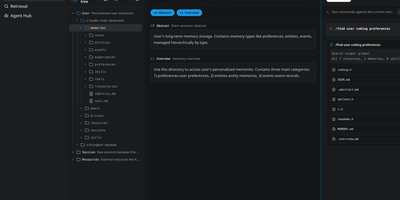
OpenViking
OpenViking is a self-hosted context database that gives AI agents persistent, structured memory by organizing knowledge, skills, and session history into a hierarchical virtual filesystem accessible through the viking:// URI protocol. Instead of dumping everything into a flat vector store and hoping semantic search finds the right chunks, agents navigate their context with familiar commands like ls, tree, and find, locating exactly the information they need through deterministic paths combined with semantic search. Every resource is automatically processed into three layers: a 100-token L0 abstract for quick filtering, a 2,000-token L1 overview for content navigation, and the full L2 detail loaded only when confirmed necessary. This tiered approach cuts token consumption by 83 to 96 percent compared to conventional RAG while improving task completion rates by 15 to 49 percent on benchmark tests. The built-in memory self-iteration loop automatically analyzes task execution and user feedback, updating agent memory directories so the system continuously learns and improves. You can connect to any LLM provider, including Ollama for fully local inference, OpenAI, or compatible gateways. The Web Studio UI at the /studio endpoint provides visual browsing of the entire context filesystem, and the REST API on port 1933 supports programmatic access. Deploy via Docker, Kubernetes with the included Helm chart, or as a standalone service. Running on a dedicated VPS on RepoCloud with guaranteed CPU, RAM, and SSD, full root SSH access, and a browser serial console. AGPL-3.0 licensed.
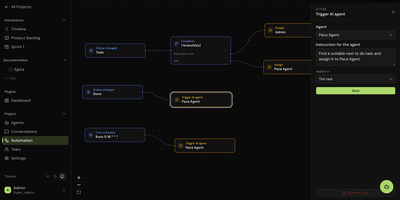
Paca
Paca is a self-hosted project management platform and Scrumban workspace where autonomous artificial intelligence agents collaborate with human software engineers as first-class Scrum teammates instead of external chat assistants. Engineering teams manage sprints, backlogs, and task lifecycles through a shared real-time board powered by Socket.IO where both humans and agents pick up assignments and post progress updates. A native Model Context Protocol server connects external coding assistants such as Claude Desktop and Claude Code directly into projects, tasks, and sprint data without custom scraping scripts. Distributed agents execute in isolated runtime sandboxes powered by the OpenHands software development kit, co-authoring behavior-driven development Gherkin scenarios with product owners and maintaining living system design documents. Visual event-driven automation builders compose multi-branch trigger, condition, and action pipelines that evaluate task dependency gates and cron schedules. A sandboxed WebAssembly plugin runtime allows developers to write custom backend logic and custom board views using Go or Rust. Running on a dedicated VPS on RepoCloud with guaranteed CPU, RAM, and SSD, full root SSH access, and a browser serial console. Apache 2.0 licensed.
Novu
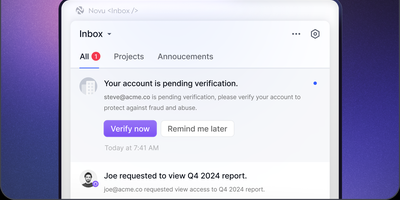
Powering notification delivery for thousands of organizations with over 39,000 GitHub stars, Novu is the open-source communication infrastructure that eliminates the need to build separate integrations for every messaging channel. The TypeScript-based platform provides a single API endpoint that routes notifications across In-App Inbox, Email via SendGrid, Mailgun, AWS SES, and Postmark, SMS through Twilio, Vonage, and Plivo, Push via Firebase Cloud Messaging, Expo, and APNS, and Chat through Slack, Discord, Microsoft Teams, and WhatsApp. The embeddable React Inbox component delivers real-time WebSocket-powered notifications with read/unread states, action buttons, and user-controlled preferences directly inside your application. The workflow engine orchestrates complex multi-channel delivery with conditional branching, time delays, digest batching to reduce notification fatigue, throttle controls, and per-step channel fallbacks. Novu Connect introduces Agent Communication Infrastructure enabling AI agents built with LangChain, Claude, or custom frameworks to hold threaded two-way conversations with humans across any supported channel through a single conversation model with identity resolution and credential management. The backend runs on Node.js with NestJS, MongoDB for notification storage, Redis with BullMQ for job queuing, and Socket.io for real-time delivery. Self-hosting deploys via Docker Compose with the dashboard accessible at port 4200. Running on a dedicated VPS on RepoCloud with guaranteed CPU, RAM, and SSD, full root SSH access, and a browser serial console. MIT licensed.
EDDI
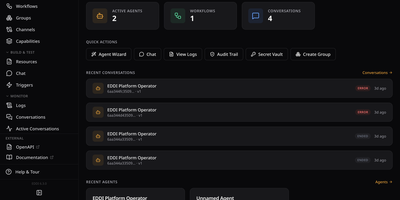
Deploy autonomous conversational AI agents and coordinate complex multi-agent workflows through EDDI, an open-source orchestration middleware that turns declarative configuration files into secure, production-grade enterprise assistants. Engineering teams connect AI models from twelve different commercial and local providers, using bilateral Model Context Protocol tools to let external desktop clients and coding assistants interact directly with running conversational services. Autonomous agents collaborate through structured group interaction patterns including round table discussions, peer reviews, Delphi consensus rounds, and devil's advocate debates to refine generated solutions before delivery. Declarative workflow extensions automate external REST API calls with dynamic request templating, extracting structured properties into persistent conversation memory and chaining multi-step service interactions without custom script glue. Built-in secret vaults safely manage sensitive API credentials, while the centralized web dashboard provides live conversation inspection, token quota enforcement, and comprehensive audit logging for regulatory compliance. Running on a dedicated VPS on RepoCloud with guaranteed CPU, RAM, and SSD, full root SSH access, and a browser serial console. Apache 2.0 licensed.
PentaGI
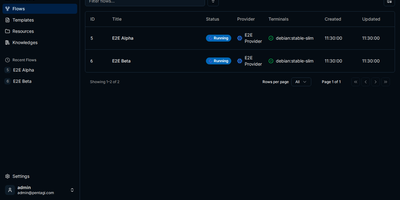
Autonomous red team execution without manual script coordination is what PentaGI delivers through a multi-agent penetration testing platform engineered for automated security assessments. Security engineers configure testing scopes, target IP ranges, domain lists, and rules of engagement through an interactive web console with real-time execution graphs. Autonomous agent personas break down high-level assessment goals into discrete tactical phases, orchestrating network port discovery, service banner fingerprinting, web application crawling, and CVE verification. Specialized agents query integrated Graphiti knowledge graphs and local vulnerability repositories to synthesize attack paths, validate exploitability, and confirm finding veracity before issuing alerts. Operators monitor live agent terminal streams, inspect sandboxed tool executions, and adjust active LLM provider routes across OpenAI, Anthropic, or local Ollama endpoints. The template editor allows red teams to compose reusable testing playbooks with customizable security prompt chains, safety constraints, and automated remediation reporting. Audit logs capture full command histories, raw tool outputs, and LLM reasoning steps to generate compliance-ready technical documentation. Running on a dedicated VPS on RepoCloud with guaranteed CPU, RAM, and SSD, full root SSH access, and a browser serial console. MIT licensed.
Letta
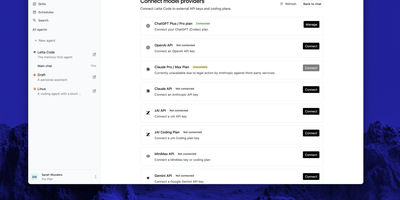
With over 24,000 GitHub stars and origins in the MemGPT research paper on virtual context management, Letta has evolved into the leading open-source platform for building AI agents that maintain persistent memory, identity, and continuity across sessions rather than operating as stateless prompt-response loops. The core architecture uses memory blocks — structured, labeled text chunks that reside permanently in the agent's context window — allowing agents to programmatically rewrite their own memory, learn new skills, and improve through a sleeptime dreaming process that runs reflection and memory organization during idle periods. The self-hosted App Server deploys via Docker and exposes a WebSocket API on port 4500, letting the TypeScript Agent SDK connect from any application using local, remote, or cloud backends. Agents support git-versioned memory through MemFS where every memory change is tracked and auditable, multi-agent communication via subagents, scheduled tasks, and integration with messaging platforms including Slack, Discord, Telegram, WhatsApp, and Signal. The platform is fully model-agnostic, routing to OpenAI, Anthropic, xAI, or self-hosted open-weight models through Ollama depending on cost, performance, and data residency requirements. The Agent File format serializes complete agent state — memory, skills, prompts, and conversation history — into portable snapshots. Desktop applications for macOS, Windows, and Linux provide native interfaces alongside the terminal CLI and web chat at chat.letta.com. Running on a dedicated VPS on RepoCloud with guaranteed CPU, RAM, and SSD, full root SSH access, and a browser serial console. Apache-2.0 licensed.
HolaOS
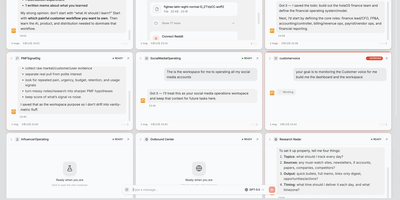
With over 6,500 GitHub stars, HolaOS bills itself as an "open agent computer" that reimagines the traditional operating system as a shared workspace where humans and AI agents collaborate across files, browsers, and 100+ integrated tools simultaneously. Unlike chat-only interfaces, HolaOS places live application UIs—Notion-style editors, browsers, custom workspace apps—side by side with the agent conversation, so operators always see what agents are doing and can intervene at any moment. The persistent memory system stores workspace knowledge locally as Markdown files and embedded vectors via SQLite vec, enabling RAG-powered recall that survives session boundaries without the typical context window bloat. Safe Session Compaction reserves roughly 70% of the model context window for fresh reasoning while folding older history into structured checkpoints that retain goals, constraints, progress, and decisions. Agents connect to Linear, GitHub, Slack, Jira, HubSpot, Gmail, and dozens more through one-click OAuth, automatically fetching relevant signals and converting scattered app data into working memory. BYOK support for Claude, GPT, and Gemini models lets operators use their own API keys at zero markup, while built-in Kimi K3 and GLM-5.2 models provide ready-to-use alternatives. Skills package reusable workflows that any agent can invoke on demand, and scheduled triggers enable autonomous digests, monitors, and reports. The runtime supports independent server deployment alongside the desktop client. Running on a dedicated VPS on RepoCloud with guaranteed CPU, RAM, and SSD, full root SSH access, and a browser serial console. Modified Apache 2.0 licensed.
Sim Studio
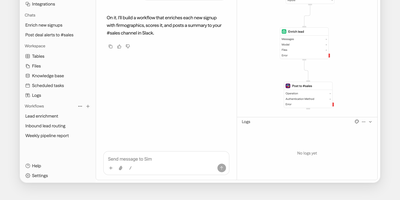
Sim Studio lets teams build, deploy, and monitor AI agent workflows by dragging blocks onto a visual canvas and wiring them into executable pipelines, backed by over 1,000 integrations. The React Flow editor represents each step as a node: LLM calls, tool invocations, conditional branches, and data transformations form directed acyclic graphs that run as complete agent pipelines. Every major LLM provider works natively, including OpenAI, Anthropic, Google Gemini, Groq, and Cerebras, plus local models through Ollama and vLLM. Integrations span Gmail, Slack, Microsoft Teams, Telegram, WhatsApp, Notion, Google Workspace, Airtable, GitHub, Jira, Linear, Perplexity, Firecrawl, PostgreSQL, Supabase, Pinecone, and Qdrant. Built-in tables provide a database layer, a file store offers shared team storage, and knowledge bases powered by PostgreSQL with pgvector enable retrieval-augmented generation. Finished workflows deploy as REST API endpoints, scheduled jobs, or Slack bots, with block-by-block execution traces for full observability. Real-time collaborative editing via Socket.io supports simultaneous multi-user construction. Alternatively, describe agent behavior in natural language and Sim assembles the workflow automatically. Built on Next.js App Router, Bun runtime, Drizzle ORM, and Tailwind CSS. 29,400+ GitHub stars and 100,000+ builders. Apache-2.0 licensed.
BitRouter
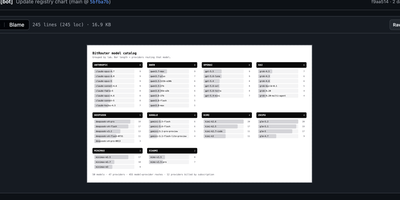
BitRouter is a context-aware LLM router that learns which model delivers the cheapest successful outcome per workflow step, cutting agent costs by up to 80% while maintaining 96% quality versus all-frontier baselines. Point any agent runtime at http://localhost:4356 with a one-line OPENAI_BASE_URL change and BitRouter routes to OpenAI, Anthropic, Google, Groq, DeepSeek, Mistral, Moonshot, MiniMax, Nvidia, and any OpenAI-compatible endpoint simultaneously, normalizing authentication, streaming, and cross-protocol translation between wire formats. The act-observe-evaluate-learn loop traces every hop with cost, tokens, and latency attribution, scores each decision against a versioned policy-lock.yaml, then tightens routes automatically with no LLM judge in the path. Native MCP gateway auto-discovers tools from connected servers and makes them routable and governed alongside model calls. Agent Client Protocol integration enables the TUI to manage Claude Code, Codex, OpenCode, OpenClaw, Gemini, and Copilot sessions in real time with inline tool-call approval and live streaming. Built-in guardrails inspect, redact, or block risky content before requests leave your network. Virtual keys scope API access per agent or user without exposing upstream credentials. Per-agent spend caps and loop guards contain runaway cost automatically. Multi-account failover reroutes mid-run so rate limits never re-pay completed work. Ships as a single Rust binary via npm or Cargo. Running on a dedicated VPS on RepoCloud with guaranteed CPU, RAM, and SSD, full root SSH access, and a browser serial console. Apache 2.0 licensed.
Open SEO
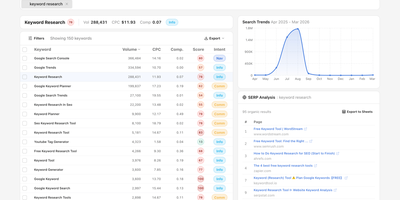
OpenSEO provides an alternative to the $100+/month SEO suite monopoly by connecting directly to DataForSEO APIs on a pay-as-you-go basis — you bring your own API key and pay only for the queries you actually make. The platform delivers focused workflows for keyword research with volume, difficulty, CPC, intent, and live SERP inspection; rank tracking with historical position monitoring; backlink analysis with referring domain quality scoring; technical site audits that crawl pages and surface issues; competitor insights comparing SERP positions across keyword sets; and AI visibility monitoring that tracks brand mentions, citations, and prompts across AI models. The integrated MCP server exposes all tools to AI coding agents including Claude Code, OpenClaw, Hermes, and Cursor, while Agent Skills provide reusable SKILL.md workflows that guide agents through complex SEO research tasks. Google Search Console integration reads first-party performance data including clicks, impressions, CTR, and position metrics with URL-level index status inspection. The Prompt Explorer compares how different AI models respond to SEO-relevant queries. Self-host via Docker for personal use or deploy to Cloudflare for team access with automatic database backups. The hosted version at openseo.so adds a 28% markup on DataForSEO requests. Running on a dedicated VPS on RepoCloud with guaranteed CPU, RAM, and SSD, full root SSH access, and a browser serial console. MIT licensed.
Paperclip
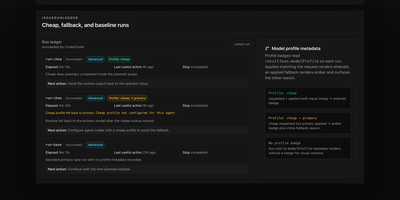
With over 77,000 GitHub stars accumulated in under five months since its March 2026 launch, Paperclip has become the default control plane for teams running multiple AI agents in production. Rather than juggling dozens of terminal tabs with Claude Code sessions, Codex instances, and Gemini CLI workers, Paperclip organizes all agents into a company structure with org charts, reporting lines, role-based permissions, and per-agent monthly budgets that trigger hard-stops when exceeded. The platform supports any runtime through its adapter system — Process adapters manage local CLI agents like Claude Code, Codex, Cursor, Pi, and OpenCode as child processes, while HTTP adapters trigger remote agents via webhooks to OpenClaw, serverless platforms, or custom endpoints. Heartbeat-based execution wakes agents on configurable schedules, injecting goal context, budget state, and workspace paths directly into the invocation payload. The Work and Task System provides atomic checkout with execution locks, first-class blocker dependencies, and structured work products to eliminate duplicate effort. Governance features include approval workflows, decision tracking, emergency stops, and full audit trails tracing every mutation to an actor. Deployment runs as a single Node.js process with embedded PostgreSQL locally or scales to external Postgres for production, installable in one command via npx paperclipai onboard. Running on a dedicated VPS on RepoCloud with guaranteed CPU, RAM, and SSD, full root SSH access, and a browser serial console. MIT licensed.
AKB
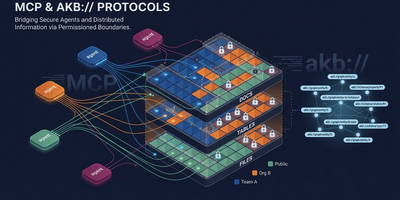
Achieving 98.4% Recall@5 on LongMemEval-S without a reranker, AKB is the agent-native knowledge infrastructure giving Claude Code, Cursor, Windsurf, and any MCP-aware agent persistent organizational memory — a drop-in replacement for Confluence or Notion where AI agents read and write directly rather than scraping human-formatted pages. Documents are stored as Markdown with YAML frontmatter in Git bare repositories (full version history, branching, diff), while PostgreSQL 16 serves as source of truth for chunk text, metadata, and BM25 vocabulary, with dense embeddings handled by a pluggable vector store (pgvector default, Qdrant optional, or managed Seahorse). Agents interact through 20+ MCP tools — akb_put, akb_search, akb_browse, akb_relations, akb_sql, akb_edit, akb_history — performing hybrid dense plus BM25 search fused via Reciprocal Rank Fusion in one call. The URI graph (depends_on, related_to, implements relations) lets agents traverse knowledge connections without external graph databases. Multi-tenant vault isolation is enforced at the PostgreSQL ACL level with per-user roles and SET LOCAL ROLE for SQL sandboxing. Event fanout streams structured events to Redis Streams for external consumers (synthesis bots, digest agents, audit trails), and a hash-chained append-only audit log integrates with enterprise SIEMs. Ships with agent plugins for Claude Code and Codex (session capture, wiki ingest, lifecycle hooks), Kubernetes kustomize manifests, and Open Knowledge Format export. Running on a dedicated VPS on RepoCloud with guaranteed CPU, RAM, and SSD, full root SSH access, and a browser serial console. BSL 1.1 licensed (free under 100 seats, auto-converts to Apache 2.0 after four years).
Omnigent
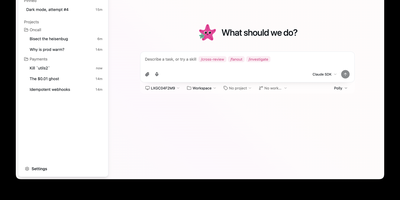
Open-sourced by the Databricks AI team under Apache 2.0 and reaching over 8,500 GitHub stars within two months of launch, Omnigent introduces the meta-harness concept: a common orchestration layer that sits above existing AI coding agents and makes them interoperable parts of a governed, collaborative system. The platform wraps Claude Code, Codex, Cursor, OpenCode, Hermes, Pi, and any custom agent defined in a simple YAML configuration file into sandboxed sessions with a uniform API, then exposes each session through the terminal, a web UI, a native desktop application, mobile interfaces, and a REST API. Built-in multi-agent workflows include Polly, a coding orchestrator that delegates tasks to parallel sub-agents in separate git worktrees and routes each diff to a reviewer from a different vendor, and Deep Research, which plans sub-queries, searches the live web through MCP servers, reads full pages, and cross-checks claims across independent sources. Contextual security policies go beyond static allow/deny rules by maintaining per-session state to enforce spend caps, model routing, approval gates for destructive actions, PII blocking, and repository-scoped write restrictions across server-wide, per-agent, and per-session levels. The OS sandbox restricts filesystem and network access while intercepting egress requests to inject credentials only on approved calls. Cloud sandbox providers including Modal, Daytona, E2B, CoreWeave, Kubernetes, and Databricks launch disposable execution environments per session. Running on a dedicated VPS on RepoCloud with guaranteed CPU, RAM, and SSD, full root SSH access, and a browser serial console. Apache 2.0 licensed.
Octop
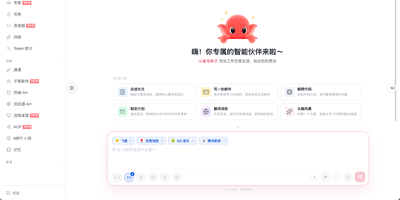
Modern engineering teams and busy households deploy Octop to run private, autonomous AI agents equipped with persistent memory workspaces, scheduled cron jobs, and direct browser automation. Users can orchestrate specialist agents tailored for software development, IT operations, content generation, and system diagnostics through an interactive React dashboard. The platform connects directly to Discord, Feishu, DingTalk, and WeCom, allowing team members to delegate complex tasks without leaving their everyday messaging apps. An integrated remote desktop and browser control engine lets agents navigate websites, capture screenshots, fill forms, and operate graphical software autonomously. Administrators can assign distinct MBTI personality profiles to agents, establish granular role-based permissions, configure scheduled cron workflows, and integrate custom Model Context Protocol servers for external tool access. Long-term memory persists across conversations through dedicated workspace files, ensuring contextual continuity whenever switching between underlying language models or team collaborators. Running on a dedicated VPS on RepoCloud with guaranteed CPU, RAM, and SSD, full root SSH access, and a browser serial console. MIT licensed.
QwenPaw
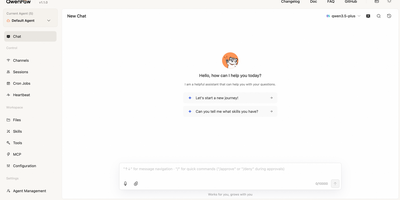
Designed as a unified personal AI workstation, QwenPaw operates as an autonomous digital copilot that coordinates scheduled automations, interactive coding sessions, and multi-channel team communication across everyday messaging apps. Users can dispatch long-running research tasks, process office documents including PDF, Excel, and Word files, and execute browser-based data collection without manual intervention. The built-in web console and terminal interface provide full visibility into agent reasoning, allowing operators to inspect intermediate thinking steps, review proposed file edits, and approve sensitive tool calls. Through direct connectors for Discord, Telegram, DingTalk, Lark, and WeChat, teams can trigger specialized skills or query shared workspaces directly from their existing group channels. A self-evolving personal memory system continuously indexes chat interactions and local resources into editable Markdown files, ensuring knowledge persists across restarts and task delegations. Built-in guardrails including a sandboxed execution runtime, tool access policies, and automated skill scanners protect underlying host files from unauthorized modifications during autonomous scripting runs. Running on a dedicated VPS on RepoCloud with guaranteed CPU, RAM, and SSD, full root SSH access, and a browser serial console. Apache 2.0 licensed.
AMUX
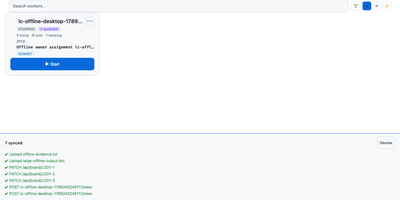
To coordinate swarms of autonomous coding agents across complex software projects, AMUX provides a concurrency-safe kanban workspace with real-time thought stream inspection and live steering controls. Engineers assign development tasks through an interactive board where autonomous worker processes claim cards using compare-and-swap mutexes to eliminate race conditions between parallel sessions. Operators monitor active reasoning streams, inspect streaming terminal outputs, and inject guidance commands mid-turn without interrupting background execution. A cryptographic origin router relays messages between agents, enabling workers to delegate sub-tasks, request automated peer code reviews, and share environment state safely. Built-in schedulers trigger recurring automated maintenance routines, dependency updates, and bug triage sweeps on cron-like timers or autonomous loop cadences. Teams can switch language models dynamically on active sessions to tackle complex architecture challenges with high-capability reasoning engines while conserving resources on routine tasks. An integrated self-healing supervisor watches over agent runtimes, automatically compacting context windows, restarting crashed terminal sessions, and resuming pending instructions seamlessly. Running on a dedicated VPS on RepoCloud with guaranteed CPU, RAM, and SSD, full root SSH access, and a browser serial console. MIT licensed.