Rivet
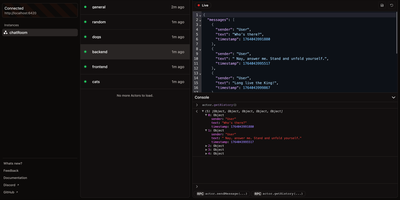
Stateful serverless actors that run indefinitely, sleep when idle, and persist state across restarts without external database round trips. Rivet provides a vendor-neutral alternative to Cloudflare Durable Objects, delivering long-running processes with co-located in-memory state and per-actor SQLite databases on any infrastructure you choose. The Rust engine comprises four packages: Pegboard for actor orchestration, Gasoline for durable execution, Guard for traffic routing via Envoy, and Epoxy implementing multi-region KV storage through EPaxos consensus. Each actor maintains instant-access in-memory state plus a dedicated SQLite database for relational queries, backed by RocksDB on single nodes or PostgreSQL with NATS pub/sub for multi-node clusters. RivetKit SDKs in TypeScript, Rust, and Python support built-in WebSocket connections, task queues, scheduling, and CRDT-based real-time collaboration. The v2.3 rewrite moved the core runtime from JavaScript to native Rust via WebAssembly, eliminating main-thread blocking across Node.js, Bun, Deno, and Cloudflare Workers. A built-in dashboard provides actor inspection with real-time Prometheus metrics. Deploys as a single Docker container on port 6420 with optional PostgreSQL for persistence. Available on RepoCloud with a dedicated VPS under the Apache 2.0 license.
Fusio
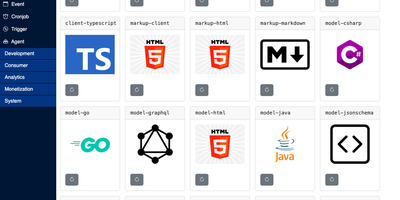
Fusio turns the data and services you already run into a managed API that partners, apps, and AI agents can actually use. The workflow starts small: add a database connection and a table becomes a REST endpoint, or proxy a remote service and route traffic between internal microservices. Each operation pairs an HTTP path with an action and a schema, so requests are validated and an OpenAPI specification plus client SDKs for major languages come out without extra effort. Custom behavior lives in reusable actions, and an AI assistant can draft actions and schemas from a plain-language prompt. Native Model Context Protocol support then offers those actions to autonomous agents as tools. Third-party developers get a self-service portal with documentation, testing tools, and their own keys. Every endpoint can be protected with scopes and rate limits. Asynchronous work runs through events, webhooks, cronjobs, and triggers. When the API becomes a product, plans, quotas, and transactions handle billing, and analytics follow usage, performance, and errors. A marketplace installs ready-made actions and apps, and the generator and test panels speed up development. Running on a dedicated VPS on RepoCloud with guaranteed CPU, RAM, and SSD, full root SSH access, and a browser serial console. Apache-2.0 licensed.