OpenReplay
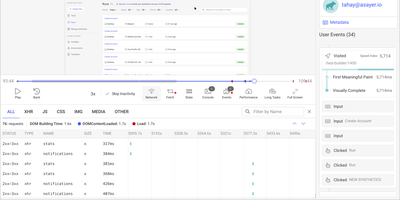
Backed by 12,400+ GitHub stars and positioned as the self-hosted alternative to FullStory and Hotjar, OpenReplay delivers the open-source session replay platform that keeps every byte of user behavior data on your own infrastructure. The JavaScript tracker captures pixel-perfect recordings of clicks, scrolls, form inputs, and navigation with automatic sensitive data masking, while simultaneously logging network requests, console errors, JavaScript exceptions, and Redux, VueX, MobX, NgRx, Pinia, and Zustand store state changes for complete technical context. DevTools mode reconstructs each session with full stack traces, GraphQL queries from Apollo and Relay, Fetch and Axios request payloads, CPU and memory metrics, and page speed waterfall charts — effectively giving developers a browser inspector tied to any user session. Product analytics surfaces conversion funnels, user journeys, click heatmaps, web vitals trends, and retention cohorts without requiring custom instrumentation. Co-browsing connects support agents to live user sessions with cursor control and WebRTC audio, enabling real-time assistance without third-party screen-sharing software. Integrations push session context into Sentry, Datadog, CloudWatch, Stackdriver, and Elastic for front-to-back debugging. Feature flags enable gradual rollouts with session-level targeting. The platform deploys to any cloud via Docker and Kubernetes with auto-scaling ingestion handling up to 50,000 sessions per month on the open-source edition. Running on a dedicated VPS on RepoCloud with guaranteed CPU, RAM, and SSD, full root SSH access, and a browser serial console. AGPLv3 licensed.
Flowise
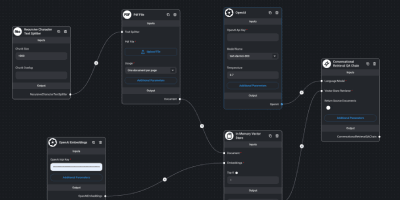
Drag nodes onto a canvas and ship an LLM app: Flowise is an open-source visual builder for AI agents and LLM applications, written in Node.js on LangChain.js and licensed Apache-2.0. You assemble flows by dragging nodes onto a canvas: models, prompts, memory, vector stores, retrievers, and tools, then wire them together and test in the built-in chat panel. Three builder types cover increasing complexity: Assistant for simple RAG chat over uploaded files, Chatflow for single-agent systems with techniques like rerankers and Graph RAG, and Agentflow for multi-agent orchestration with branching, looping, shared flow state, and human-in-the-loop checkpoints. Over 100 integrations connect data sources, vector databases, and both proprietary and open-source models, plus MCP client and server nodes for standard tool interop. Finished flows are exposed as REST APIs, embedded chat widgets, or via JS and Python SDKs - each flow gets an endpoint the moment it is saved, removing the deployment gap between a working prototype and something your application can call. Execution logs, visual step debugging, and external log streaming trace behavior, while input moderation and rate limiting act as guardrails; RBAC, SSO, and workspaces cover team deployments. Self-hosting keeps prompts, encrypted credentials, and conversation data on your own instance, which matters when flows handle internal documents or customer data - and wiring a model, prompt, memory, and vector store on the canvas replaces the boilerplate a hand-coded LangChain project would need.
Bifrost
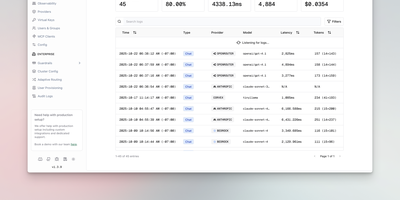
Bifrost is an open-source AI gateway that unifies 23+ LLM providers into a single OpenAI-compatible endpoint with automatic failover, semantic caching, and built-in cost governance, so one provider going down never takes your production AI application with it. Point your existing OpenAI or Anthropic SDK at Bifrost's local endpoint and gain access to OpenAI, Anthropic, AWS Bedrock, Google Vertex, Azure, Groq, Mistral, and Ollama without changing application code. Define fallback chains that automatically switch providers when one returns errors or exceeds latency thresholds, keeping response times stable during outages. The built-in web dashboard at port 8080 lets you configure providers, create virtual API keys, monitor live request traffic, and review analytics without editing configuration files. Semantic caching combines exact hash matching with vector similarity search via Weaviate, serving cached responses for identical or paraphrased prompts in sub-millisecond time to cut costs on repetitive workloads. The MCP gateway connects AI agents to external tools like filesystems, databases, and web APIs, exposing them to clients such as Claude Desktop and Cursor with per-key allow-lists. Four-tier budget hierarchy at customer, team, virtual key, and provider levels enforces spend caps, rate limits, and model restrictions across your organization. Extend functionality through custom Go plugins for analytics, monitoring, or security middleware. Native Prometheus metrics and OpenTelemetry distributed tracing give operations teams full production observability. Running on a dedicated VPS on RepoCloud with guaranteed CPU, RAM, and SSD, full root SSH access, and a browser serial console. Apache 2.0 licensed.

MLflow
Trusted by thousands of organizations with over 30 million monthly downloads and 20,000+ GitHub stars, MLflow is the largest open-source AI engineering platform providing end-to-end lifecycle management for traditional ML models, LLMs, and AI agents. The OpenTelemetry-based tracing system captures complete request flows through any LLM provider or agent framework — including OpenAI, LangChain, DSPy, Vercel AI, PydanticAI, and smolagents — with one-line auto-instrumentation that tracks inputs, outputs, token usage, and costs at every intermediate step. MLflow's evaluation engine offers 50+ built-in metrics and LLM judges for systematic quality assessment, detecting issues across correctness, latency, adherence, relevance, and safety dimensions before code reaches production. The Prompt Registry versions, tests, and deploys prompts with full lineage tracking while automated optimization algorithms improve prompt performance using evaluation feedback. The AI Gateway provides a unified API endpoint for all LLM providers, enforcing rate limits, cost controls, and access policies across the organization. MLflow 3.0 introduces the LoggedModel abstraction linking traces, metrics, and prompts to specific model versions across Python, TypeScript, Java, and R SDKs. The model registry manages deployment workflows with automated quality gates, while experiment tracking records parameters, metrics, and artifacts across training runs. Running on a dedicated VPS on RepoCloud with guaranteed CPU, RAM, and SSD, full root SSH access, and a browser serial console. Apache License 2.0 licensed.
Dub
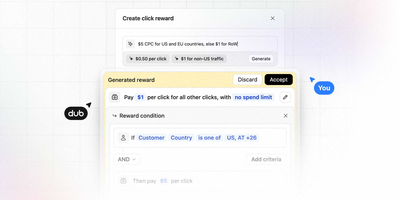
With 24,000 GitHub stars and infrastructure processing over 100 million clicks and 2 million links monthly for marketing teams at Twilio, Buffer, Framer, Perplexity, and Vercel, Dub is the most widely adopted open-source link attribution platform — unifying branded short links, real-time conversion analytics, and affiliate programs in a single self-hostable tool. Create short links on custom domains with built-in QR code generation, device and geographic targeting rules, A/B testing for destination URLs, deferred deep linking for mobile apps, and custom social media preview cards. The attribution engine tracks the complete customer journey from first click through lead capture to final sale, calculating lifetime value, retention rates, and multi-touch attribution across campaigns. Real-time analytics visualize clicks, leads, and revenue with filtering by geography, device, browser, referrer, operating system, and UTM parameters — plus an "Ask AI" feature that generates personalized reports from natural language queries. The partner program module enables embedded referral and affiliate programs with custom reward structures, automated payouts, and partner dashboards for product-led growth. Programmatic link creation via native SDKs for TypeScript, Python, Go, PHP, and Ruby supports enterprise-scale campaigns with real-time webhook notifications on link events. Migration assistants import existing links from Bitly, Rebrandly, and Short.io with redirects preserved. Running on a dedicated VPS on RepoCloud with guaranteed CPU, RAM, and SSD, full root SSH access, and a browser serial console. AGPLv3 licensed.
Anakin
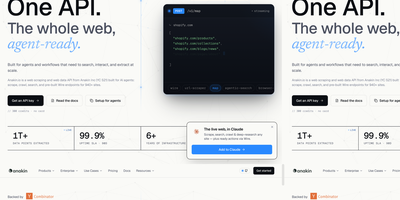
Backed by Y Combinator and powering scraping infrastructure across 195 countries, Anakin delivers a production-grade web scraping API purpose-built for AI agents and RAG pipelines that need clean, structured data from sites that actively block conventional scrapers. The single Go binary server handles JavaScript-heavy SPAs through its Camoufox anti-detect browser service with automatic fingerprint rotation, while the HTTP-first handler chain tries lightweight extraction before escalating to full browser rendering — keeping response times under 2 seconds for static pages. The built-in React 19 dashboard provides visual scraping with live results, job tracking with status filters, domain configuration management with handler chain CRUD, and proxy performance monitoring via Thompson Sampling scoring. Structured JSON extraction leverages Gemini AI to transform raw HTML into typed schemas without manual selector maintenance. SDKs span Python, TypeScript, Go, .NET, Java, and Ruby, while the MCP server exposes all 21 tools directly to Claude, Cursor, Windsurf, and any Model Context Protocol-compatible agent. The hosted platform extends the open-source engine with AI web search returning full page content with citations, multi-source agentic research across 20+ sources per query, Wire pre-built actions covering 944 websites with 5,201 structured endpoints, persistent browser sessions for authenticated scraping, and website change monitoring with scheduled alerts. Deploy via Docker Compose with three containers or run the binary directly with optional PostgreSQL persistence. Running on a dedicated VPS on RepoCloud with guaranteed CPU, RAM, and SSD, full root SSH access, and a browser serial console. AGPL-3.0 licensed.
ToolJet
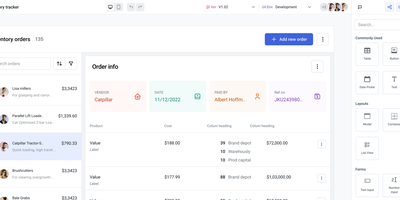
Retool's job, self-hosted: ToolJet is an open-source low-code platform for building internal tools, dashboards, and admin panels. Apps are assembled in a drag-and-drop visual builder with 60+ responsive components, including tables, charts, forms, and lists, and connected to 80+ data sources: PostgreSQL, MySQL, MongoDB, REST and GraphQL APIs, cloud storage, and common SaaS tools. When visual configuration is not enough, you can run JavaScript or Python inline for queries and transformations. A built-in no-code database (ToolJet Database) covers apps that need their own tables without provisioning an external database, Workflows add node-based automation for background jobs with dedicated worker containers and a Redis-backed queue, and multi-page apps with multiplayer editing, inline comments, and mentions support team development. Security is designed for internal data: credentials are AES-256-GCM encrypted, data flows proxy-only through your server so database contents never reach a third-party cloud, and granular per-app access control plus SSO gate each tool. Where Retool-style platforms bill per builder and sometimes per end user, the self-hosted Community Edition serves unlimited builders and users at hosting cost, and full source availability means the platform itself can be forked, audited, and extended. The stack is Node.js and React on PostgreSQL, deployed via Docker.

Orbit
Orbit is a free, realtime project management platform that unifies issue tracking, kanban boards, sprint cycles, and collaborative documents into a keyboard-driven workspace with native AI agent integration. Engineers can manage backlog items across customizable kanban boards, execute timeboxed sprint cycles with automated burndown charts, and link pull requests directly to the tasks they resolve. Team members compose specifications and meeting notes in rich-text documents with nested collections, inline comment threads, public sharing links, and self-contained interactive web pages that render alongside active project milestones. The built-in standup board aggregates workspace activity into an interactive kanban filtered to individual assignees, while comprehensive analytics dashboards report issue throughput, scope modifications, churn rates, and team distributions. Autonomous coding assistants connect directly through the integrated Model Context Protocol server to inspect project status, triage incoming tickets, file detailed bug reports, and trigger automated notifications across workspace channels. Custom views allow teams to filter issues by priority, estimate, or assignee and save shared workspace perspectives for recurring planning sessions. Running on a dedicated VPS on RepoCloud with guaranteed CPU, RAM, and SSD, full root SSH access, and a browser serial console. Apache-2.0 licensed.
FalkorDB
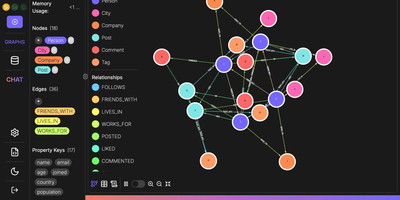
FalkorDB is the first queryable property graph database to leverage sparse adjacency matrices and linear algebra for graph traversal, replacing traditional pointer-chasing with GraphBLAS-accelerated computation. Originally the RedisGraph engine, it was relaunched as FalkorDB in 2023 and rewritten from C to Rust in 2026 for improved memory safety and performance. The database supports the OpenCypher query language with proprietary extensions, translating queries into linear algebra expressions that exploit AVX hardware acceleration. Indexing options include full-text search, vector similarity for embedding-based retrieval, and range indexing, while connectivity supports both the RESP protocol for Redis clients and the Bolt protocol for Neo4j-compatible tooling. The GraphRAG SDK enables ingestion of documents in text, PDF, and Markdown formats into knowledge graphs, with schema-guided entity extraction, hybrid retrieval combining vector and graph traversal, relationship expansion, and cited answers for LLM applications. Official client libraries cover Python, Node.js, Java, Rust, Go, PHP, and C#. Multi-tenant support handles over 10,000 concurrent graphs with zero overhead and full isolation. Docker deployment runs the falkordb/falkordb image on ports 6379 for the database server and 3000 for the built-in browser UI, with persistent volume storage and optional authentication. A production falkordb-server image excludes the browser for lighter deployments. On RepoCloud, deploy FalkorDB on a dedicated VPS with root SSH access, persistent storage for your graph data, and complete control over authentication, thread count, and memory configuration, all under the SSPLv1 license.
pgAdmin
pgAdmin 4 is the reference administration GUI for PostgreSQL, bundled by virtually every Linux distribution and supporting versions 14 through 18 including EDB Advanced Server — browse schemas in a hierarchical tree, write and optimize queries with AI assistance, design entity-relationship diagrams visually, monitor live sessions, and run backup/restore operations entirely from the browser. Built on Python Flask with a ReactJS frontend, version 9.17 delivers a comprehensive web-based platform accessible from any device. The Query Tool provides syntax highlighting, auto-completion, query history, an EXPLAIN plan visualizer with graphical node representation, AI-powered SQL generation from natural language prompts, and AI Insights for execution plan analysis that identifies performance bottlenecks. The Graph Visualiser renders query results as line charts, bar charts, stacked charts, and pie charts directly in the interface. The ERD Tool auto-generates entity-relationship diagrams from existing schemas for visual database design. The Schema Browser presents databases, schemas, tables, views, functions, sequences, roles, and extensions in a navigable hierarchy. Server monitoring dashboards display real-time active sessions, locks, transaction throughput, and vacuum status. GUI-driven backup and restore wraps pg_dump and pg_restore with format and compression options. Authentication supports internal, LDAP, Kerberos, OAuth2/OIDC, and webserver modes. The Helm chart includes an HTTPRoute template for Kubernetes Gateway API deployments. Bundled pg_dump, pg_restore, and psql utilities version 18.4. Deploy via Docker with the official dpage/pgadmin4 image. Running on a dedicated VPS on RepoCloud with guaranteed CPU, RAM, and SSD, full root SSH access, and a browser serial console. PostgreSQL License.
ChartDB
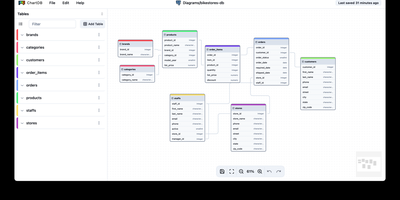
Paste one SQL query result into a browser and get an interactive entity-relationship diagram instantly, with no installations, no credentials, and no account required. ChartDB's "Smart Query" runs a single statement in your existing database client that exports table definitions, relationships, indexes, and column types as JSON metadata, meaning the application never touches your database passwords. The canvas renders draggable entities with cardinality markers, collapsible grouping areas, and sticky notes for documentation. AI-powered DDL export generates migration scripts between dialect pairs like PostgreSQL to MySQL or SQLite to CockroachDB, analyzing your schema to produce target-specific DDL with correct type mappings and constraint translations. Import paths cover Smart Query JSON, raw DDL scripts, and DBML files from tools like dbdiagram.io. The AI layer connects to OpenAI or any compatible inference server including local vLLM instances running models like Qwen2.5-32B. Database coverage includes PostgreSQL (with Supabase and Timescale extensions), MySQL, SQL Server, MariaDB, SQLite (with Cloudflare D1), CockroachDB, ClickHouse, and Oracle. Exports to SVG with inline styles or SQL DDL in any target dialect. Ships as a React/Vite frontend behind Nginx in Docker, deployable on RepoCloud with dedicated VPS resources under the AGPL-3.0 license.
Aptabase
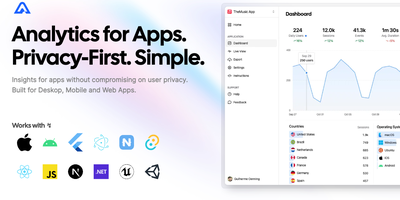
Web analytics tools ignore native mobile, desktop, and game apps; Aptabase was built for exactly those. If Firebase Analytics would force a privacy-policy footnote you don't want to write, this is the alternative - session-based metrics with no cookies, no IDFA or GAID, no device fingerprinting, and a daily-rotated salt that makes cross-day re-identification mathematically impossible. That design means GDPR, CCPA, and PECR compliance out of the box and "Data Not Collected" App Store privacy labels without ATT prompts. The SDK coverage is the widest in its category: eleven first-party libraries spanning Swift, Kotlin, Flutter, React Native, Tauri, Electron, .NET MAUI, NativeScript, Unity, Unreal Engine, and JavaScript for web - each MIT-licensed, following platform conventions, and accepting a custom host parameter that points at your instance. Integration is minutes: initialize with an app key, call trackEvent with optional properties, and the dashboard shows sessions, events, app versions, OS breakdowns, and country-level geography. The self-hosted stack is a .NET server over PostgreSQL for metadata and ClickHouse for high-volume event ingestion, giving cloud-parity features under an AGPL license. For indie iOS/Android apps, Electron and Tauri tools, and Unity or Unreal games, it replaces Firebase without the Google entanglement.
Bugsink
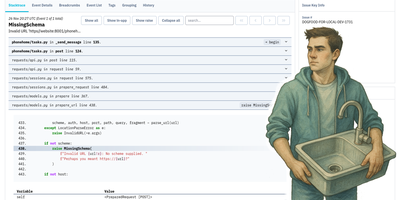
Bugsink has earned over 1,800 GitHub stars as the lightweight self-hosted error tracking platform that replaces Sentry without per-event billing by accepting error reports from any Sentry-compatible SDK across Python, JavaScript, Node.js, Ruby, Java, PHP, Go, and every other language Sentry supports. Simply update the DSN in your existing Sentry configuration and Bugsink captures the same stack traces, local variables, request context, and breadcrumbs that Sentry processes, displayed through a focused interface designed for debugging rather than dashboarding. Automatic issue grouping collapses duplicate error events into single actionable issues based on exception type, message, and stack frame context, turning thousands of raw events into a manageable list. Issue status tracking supports resolved, resolved-in-next-release, and muted states with automatic regression detection when resolved issues recur. Release tracking associates events with deploy versions to correlate error spikes with specific rollouts. Tag-based search filters issues by environment, release, user, browser, operating system, or any custom key-value pair sent by the SDK. Alerting notifies your team through Slack, Discord, Mattermost, and email when new issues appear or resolved issues regress, with per-project webhook configuration and user-level notification preferences. Per-project retention policies with automatic event eviction manage storage growth. A REST API with OpenAPI documentation enables custom integrations and dashboards. Source map support links minified JavaScript to original source. Deploy via Docker with the bugsink/bugsink image. Running on a dedicated VPS on RepoCloud with guaranteed CPU, RAM, and SSD, full root SSH access, and a browser serial console. PolyForm Shield licensed.
GoRaven
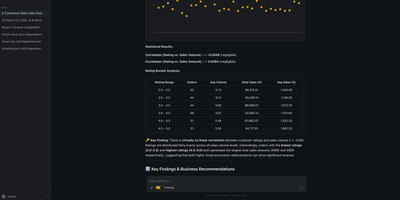
GoRaven transforms AI chat from a question-answer window into a full engineering workstation where agents read files, write code, run shell commands, query databases via MCP tools, and deliver structured results — orchestrating across OpenAI, Claude, DeepSeek, Gemini, Qwen, GLM, and Ollama with task-based routing that allocates the right model for each job based on cost and capability. Built on a Go backend using the Freedom framework with Iris HTTP and a React/TypeScript frontend powered by Vite and Tailwind CSS, each user operates in an isolated workspace with team-shared project areas and centrally managed model quotas. The skill marketplace packages prompts, scripts, and workflows as reusable installable units with automatic dependency resolution and centralized versioning. MCP toolchain integration connects agents to internal APIs, databases, private services, and CLI tools so they query data, invoke services, and trigger actions directly. RAG-powered knowledge bases ingest policies, documentation, and business data for real-time retrieval during planning, coding, and Q&A with source attribution. Long-running task support decomposes complex work through a main agent coordinating sub-agents that execute in parallel across sessions. Plugin hooks inject custom logic at conversation start and end, tool calls, and SSE event streams without forking core code. The operations dashboard tracks usage metrics, model consumption, and team activity. Supports SQLite, MySQL, or PostgreSQL with Redis or local memory caching. Deploy with a single Docker command. Running on a dedicated VPS on RepoCloud with guaranteed CPU, RAM, and SSD, full root SSH access, and a browser serial console. Apache 2.0 licensed.
Hasura
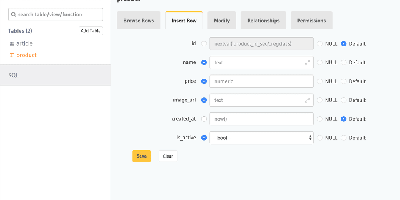
A PostgreSQL database becomes a production-grade GraphQL API the moment Hasura GraphQL Engine points at it: track tables and relationships - existing schemas included - and full query, mutation, and subscription types appear with where, order_by, limit, offset, and on_conflict arguments, no resolvers or boilerplate written. Its Haskell core compiles GraphQL to efficient SQL, and any query becomes a real-time live query with a single keyword, powering dashboards and collaborative UIs over standard GraphQL subscriptions. Authorization is where Hasura earns its enterprise reputation: role-based access control with row- and column-level permission policies driven by session variables from JWTs, auth webhooks, or headers - each role effectively sees its own GraphQL schema containing only what it may touch, integrating cleanly with Auth0, Firebase, or homegrown auth. Event triggers fire webhooks on inserts, updates, and deletes for asynchronous business logic; Actions extend the schema with custom REST handlers; remote schema stitching merges external GraphQL services into one endpoint; and auto-generated REST endpoints serve clients that skip GraphQL. A browser console handles data modeling and API exploration, the CLI manages migrations and metadata as code, and deployment is a single stateless Docker container beside Postgres.
GitNexus
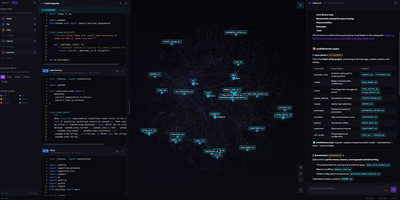
GitNexus turns any codebase into an interactive knowledge graph that maps every dependency, call chain, functional cluster, and execution flow, giving AI coding assistants the deep structural awareness they need to stop breaking things. Drop a repository URL or ZIP file into the browser-based explorer and watch Tree-sitter parsers decompose your code into a navigable property graph you can zoom, click, and query. The MCP server integrates directly with Cursor, Claude Code, Codex, Antigravity, and other editors through 16 specialized tools covering architectural queries, impact analysis, safe multi-file renames, change detection, and cross-repo contract matching. Need to know the blast radius before touching a shared utility? The impact analyzer traces every caller, implementer, and downstream consumer in milliseconds. Teams reviewing pull requests get automated blast-radius annotations powered by the same graph. The registry architecture lets a single MCP server manage multiple indexed repositories simultaneously, so switching between projects requires zero re-indexing. For visual exploration, the web interface renders interactive community-clustered graphs where you can trace execution paths, browse file trees, and chat with an AI agent grounded in the graph's structural data rather than raw file snippets. Everything runs locally; your source code never leaves the machine. Running on a dedicated VPS on RepoCloud with guaranteed CPU, RAM, and SSD, full root SSH access, and a browser serial console. PolyForm Noncommercial 1.0.0 licensed.
Langfuse
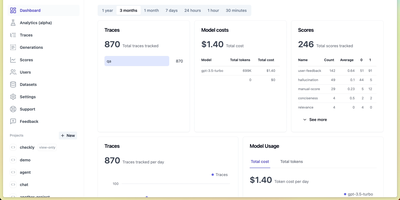
Backed by Y Combinator and trusted by over 2,300 companies processing billions of observations monthly, Langfuse is the most widely adopted open-source platform for building, monitoring, evaluating, and debugging LLM applications. The hierarchical tracing engine captures every LLM call, tool invocation, retrieval step, and agent action as nested spans based on OpenTelemetry, with automatic cost calculation, latency tracking, and token usage attribution across sessions and users. Prompt Management separates prompts from code with versioned artifacts, label-based deployments, one-click rollbacks, and runtime SDK fetching with server-side caching, while linking every generation back to its exact prompt version for attribution analytics. The evaluation system supports LLM-as-a-judge scoring, heuristic code evaluators, user feedback collection, and manual annotation workflows that run automatically on production traces or against curated datasets. The Playground enables interactive prompt testing on real production inputs with side-by-side model comparison across providers. Datasets and Experiments define test cases for systematic benchmarking with comparative result visualization. Native SDKs for Python and TypeScript provide decorator-based instrumentation, while 100+ integrations cover LangChain, LlamaIndex, OpenAI SDK, LiteLLM, Vercel AI SDK, and any OpenTelemetry-instrumented framework. The analytics dashboard surfaces cost breakdowns, quality scores, latency percentiles, and usage trends across models and prompt versions. Running on a dedicated VPS on RepoCloud with guaranteed CPU, RAM, and SSD, full root SSH access, and a browser serial console. MIT licensed.
Kaneo
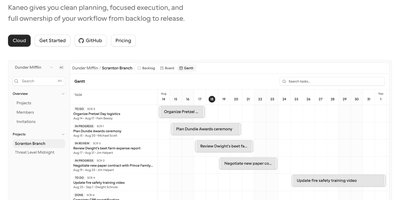
With nearly 8,000 GitHub stars since its December 2024 launch, Kaneo has rapidly gained traction as the minimalist alternative to bloated project management platforms like Jira and Linear. Built on TypeScript with React and Hono, the interface strips away complexity to focus on execution — plan in list view, track in kanban board, and schedule on interactive Gantt chart timelines where dragging bar handles adjusts start and due dates with optimistic UI updates. Native GitHub integration synchronizes issues bidirectionally, links pull requests to tasks, and keeps product planning aligned with development execution without context switching. The built-in Model Context Protocol server at /api/mcp enables AI tools like Claude and Cursor to manage tasks, projects, and labels directly, while the official @kaneo/mcp npm package provides stdio access for local MCP clients. Authentication supports password, magic link, GitHub OAuth, and Google sign-in with organization-level access management. Rich text editing for task descriptions and comments, label-based initiative grouping, priority levels, assignee management, and due date tracking provide focused planning without ceremony. Deploy with the drim CLI for automatic HTTPS and database setup, Docker Compose for custom configurations, or Helm charts for Kubernetes clusters — all requiring just 2GB RAM and PostgreSQL. Running on a dedicated VPS on RepoCloud with guaranteed CPU, RAM, and SSD, full root SSH access, and a browser serial console. MIT licensed.