Canvix
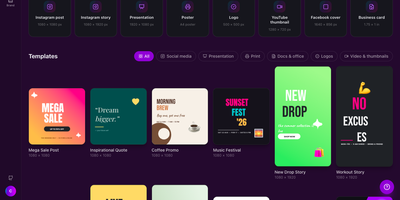
Canvix is a self-hosted design studio that lets anyone create social posts, presentations, posters, logos, and thumbnails in the browser with a drag-and-drop editor, 110 ready-made templates, and exports with no watermarks. You start from a template sized for the platform you are publishing to, then drag in shapes, lines, stickers, and your own images, moving, resizing, and rotating everything directly on the canvas. Text gets proper typography controls, with bundled fonts, styles, spacing, alignment, and curved text that arcs across the design. Layers can be reordered and locked while smart guides snap elements into alignment, and a full undo history plus autosave means a closed tab never costs you the work. Finished designs export as PNG, JPG, SVG, PDF, or video at up to three times resolution, ready to publish anywhere. Free accounts keep each person's designs private to them, while share links open a design for anyone to view or continue editing. Version snapshots let you roll a design back when an experiment goes wrong. The AI tools, magic edit, magic write, background removal, and translation, run against your own API keys, so nothing is metered. An optional MCP endpoint even lets AI assistants create and edit designs for you. Running on a dedicated VPS on RepoCloud with guaranteed CPU, RAM, and SSD, full root SSH access, and a browser serial console. MIT licensed.
LinkBreeze
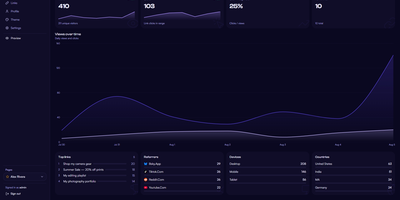
LinkBreeze is a self-hosted link-in-bio platform that lets you publish unlimited, fully themed link pages from your own server instead of renting one by the month. A guided setup wizard covers the admin credentials, profile, and theme, then a floating phone-frame preview refreshes as you edit while autosave stores your changes. Each page gets its own slug, theme, SEO tags, QR code, and analytics, so one install can serve a personal profile, a band, and a shop. Eleven built-in themes cover Aurora, Glassmorphism, Neon Cyberpunk, and Terminal Mono, backed by a token customizer for fonts, backgrounds, card styles, and raw CSS. Links pull in favicons automatically, accept thumbnails, and can be scheduled to appear and vanish on set dates, while embed widgets drop in YouTube, Spotify, SoundCloud, Vimeo, and Bandcamp players. A migration wizard imports profiles from Linktree, Bento, Hopp.bio, LittleLink, or an HTML or JSON export. Visitors can subscribe with an email address that you export to CSV, save your page as a vCard contact, or scan a QR code that downloads as SVG or PNG. Cookieless analytics track views, clicks, referrers, devices, and countries with hashed visitor IPs, and Plausible, Umami, Matomo, or Google Analytics can be added with one paste. The admin panel supports TOTP two-factor authentication, a UTM builder, JSON backup and restore, and seven interface languages. Running on a dedicated VPS on RepoCloud with guaranteed CPU, RAM, and SSD, full root SSH access, and a browser serial console. MIT licensed.
Marketing Dashboard
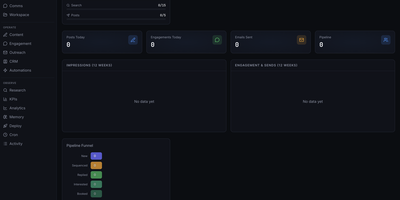
This is a marketing operations control center that replaces fragmented CRM, outreach, content, and analytics tools with a unified self-hosted interface designed for AI agent-assisted go-to-market teams. The CRM module manages leads through a configurable pipeline funnel with stages from New through Sequenced, Replied, Interested, and Booked, tracking source attribution, industry segments, company size, lead quality scores, and LinkedIn URLs per contact. Outreach sequencing supports email campaigns with pause controls, audit endpoints, suppression workflows, and engagement tracking. The content operations surface provides calendar views, content item management, performance metrics, and approval queues for editorial control. Analytics and KPI dashboards show impressions, engagement, and send volumes over configurable time periods, with optional connectors to Plausible, Google Analytics 4, X, and LinkedIn for cross-platform reporting. The OpenClaw-native agent runtime enables dynamic agent and squad discovery, workspace management, session monitoring, and communications surfaces. Automation scheduling uses cron job templates with OpenClaw-compatible schedule variants including cron expressions, every intervals, and at timestamps. The tech stack combines Next.js 16 App Router with React 19, Tailwind CSS 4, Recharts, and Zustand for state management. Authentication supports session cookies, API keys, and optional Google OAuth with role-based access controls. All state persists locally in SQLite via better-sqlite3 with no required external infrastructure. On RepoCloud, deploy Marketing Dashboard on a dedicated VPS with persistent SQLite storage, root SSH access, and complete control over your marketing operations data, all under the MIT license.

BullFlow
Generic AI writing sounds like nobody in particular; BullFlow writes from your own company knowledge instead. It first builds a private knowledge base from your documents, images, audio, and video plus structured records for your company, brand, products, customers, and cases. Ingestion runs entirely on local open models: OCR reads scans, semantic splitting and chunking prepare text, and hybrid vector plus full-text search retrieves passages with their sources and relevance scores shown under every answer. A creation agent then works in one conversation: it searches the knowledge base, drafts articles with images embedded in the text, generates image sets or short videos, and exports finished pieces as PDF or Word. Output adapts to where it is going, long-form articles for article platforms, multi-image posts with matching copy for image feeds. A separate distribution gateway sends one finished piece to many accounts across Chinese and international social platforms, checks account health on a schedule, and returns publish results and metrics by webhook. Around all of that sits a commercial shell: multiple tenants with isolated data, roles from super admin to finance, credit billing measured per token, image, and second, subscriptions, invoices, referral commissions, and a conversion funnel in the operations backend. Scheduled rules can generate and publish on a timetable with nobody watching, and notifications report each completion or failure. Running on a dedicated VPS on RepoCloud with guaranteed CPU, RAM, and SSD, full root SSH access, and a browser serial console. MIT licensed.
Bisibility
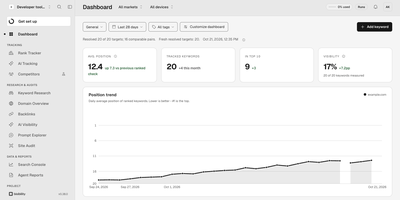
Bisibility puts your Google rankings, keyword research, and backlink profile in one application that runs on your server instead of behind a per-seat subscription. Track every keyword by market and device, watch positions move over time, and open the stored snapshot of the actual results page behind any check to see exactly what Google showed. Alerts flag the movements that matter, while competitor share of voice shows whose visibility is growing at your expense. The keyword explorer surfaces suggestions with search volume, trends, cost per click, difficulty, and intent, and shows the estimated price before a lookup runs, so research never surprises your wallet. Backlink and domain views break down referring domains, anchors, and new and lost links next to estimated traffic and top pages for any site you type in. Search Console clicks, impressions, and queries are kept beyond the usual retention window, and a recurring prompt tracker follows how AI answer engines cite your brand over time. Results flow outward through a versioned API, MCP access, signed webhooks, and CSV exports. Running on a dedicated VPS on RepoCloud with guaranteed CPU, RAM, and SSD, full root SSH access, and a browser serial console. AGPL-3.0 licensed.
GEOInflow
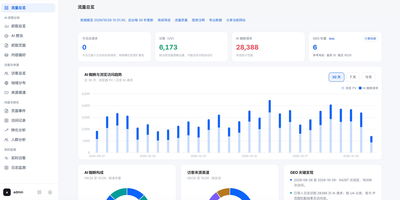
GEOInflow is a self-hosted analytics platform that shows website owners which AI crawlers visit their pages, what those crawlers read, and how much traffic and revenue AI search actually sends back. Import a sitemap, CSV, or JSON inventory and the coverage report compares it against observed crawl logs, flagging important pages that no AI crawler has ever requested and directories where coverage keeps dropping. The built-in catalog recognizes 61 AI crawler identities, including crawlers from OpenAI, Anthropic, Perplexity, Google, Microsoft, ByteDance, Baidu, Kimi, and Tencent Hunyuan, and separates training, AI search, and user-triggered visits. Verification combines declared user agents with official IP ranges and DNS evidence, so a spoofed crawler name never counts as a confirmed visit. Browser tracking connects AI search referrals to landing pages, custom events, goals, funnels, and conversions, letting teams measure whether visibility in AI answers turns into signups and sales. Alongside the GEO reports, teams get pageviews, unique visitors, referrers, geography, devices, heatmaps, retention, and visitor paths, with CSV, JSON, and ZIP exports for any selected scope. Workspaces, team permissions, and public sharing links let agencies and publishers give each client or department its own dashboards without exposing raw data or other sites. Running on a dedicated VPS on RepoCloud with guaranteed CPU, RAM, and SSD, full root SSH access, and a browser serial console. MIT licensed.

OpenPost
OpenPost is an open-source content creation and publishing suite that unifies multi-platform social scheduling, graphic design, and video editing into a single self-hosted control center. Creators can compose one primary announcement and tailor bespoke copy, media attachments, and thread structures across sixteen distinct networks including Bluesky, Mastodon, X, Threads, LinkedIn, YouTube, and Discord. The integrated browser canvas lets you design multi-slide carousels with custom typography, layer ordering, and automated background removal without juggling external design software. A built-in multitrack video suite allows you to trim footage, render subtitle captions, insert transitions, and slice clips directly by highlighting spoken words in generated transcripts. Social managers can organize campaigns through an interactive visual calendar, stagger deliveries across automated queues, and monitor unified comment streams to answer incoming audience inquiries directly from a single inbox. Teams can organize multiple independent client brands into partitioned workspaces with role-based permissions, automated repost policies, and programmable scheduling webhooks via native REST and Model Context Protocol endpoints. Running on a dedicated VPS on RepoCloud with guaranteed CPU, RAM, and SSD, full root SSH access, and a browser serial console. AGPL-3.0 licensed.
MailCheap
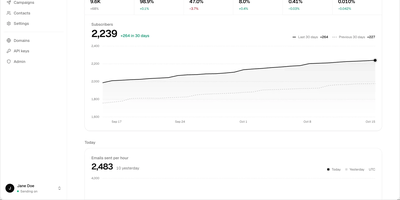
MailCheap is a newsletter app you host yourself that writes, sends, and publishes your issues while charging you only for the emails you actually send, not for subscribers who never open anything. Write in an editor with slash commands, images, and content boxes, or send Markdown and HTML emails through the API, then work through a pre-send review that flags subject, preview text, unsubscribe link, and sender problems first. Bring your audience with you: CSV exports from beehiiv, Substack, Mailchimp, Kit, MailerLite, Buttondown, Ghost, and EmailOctopus import with each reader's status and signup date intact. Imports clean themselves, dropping invalid, misspelled, duplicate, throwaway, and spam-trap addresses, and a server-wide never-email list keeps known bad addresses out of every future import, signup, and send. Sending protects your domain: new contacts receive issues in paced steps, sends pause when bounce or complaint rates climb, and Gmail spam rates are watched daily. Every issue becomes a page on your newsletter's website, with a signup form, author page, share images, and a sitemap. Run up to three newsletters per account, each with separate contacts and campaigns, and follow subscribers over time with open and click reports by inbox provider. AI agents can do anything the dashboard can through the MCP server, and scripts get the same reach through the REST API, with sending marked irreversible so agents ask first. Running on a dedicated VPS on RepoCloud with guaranteed CPU, RAM, and SSD, full root SSH access, and a browser serial console. AGPL-3.0 licensed.

HeyForm
Typeform's conversational format, self-hosted: HeyForm is the open-source form builder that presents one question at a time. Forms present one question at a time, which measurably improves completion rates compared to long static pages. It supports 40+ field types, from text, email, and phone inputs to picture choices, date pickers, star ratings, signatures, and file uploads. Conditional logic shows or hides questions based on earlier answers, routes respondents to different endings, and redirects to URLs, so a single form can serve multiple flows. Completed submissions land in a results dashboard with drop-off and completion analytics, and connect outward through webhooks or integrations with Zapier, Make, Google Sheets, Notion, Airtable, and Slack. Theming covers fonts, colors, backgrounds, and custom CSS, so embedded forms look native to your site rather than like a third-party widget; the JavaScript embed library renders them inline, as popups, or full-page, with shareable standalone links as the default. Team workspaces and projects with member management let multiple teams share one instance without mixing data. Self-hosting removes per-response pricing entirely - unlimited forms and submissions for flat hosting cost - and keeps lead data, feedback, and quiz answers in your own MongoDB, simplifying GDPR compliance. The stack is a NestJS server and React webapp backed by MongoDB and KeyDB, distributed under GPLv3 as a Docker image.
RankMe
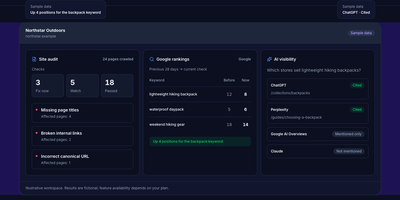
RankMe puts the whole SEO workbench on your own server: audits, rankings, keywords, backlinks, and AI visibility without a per-seat subscription deciding what you may check. Crawl a site and it runs 26 automated checks, returning a plain-language report sorted into Fix now, Watch, and Passed, where each finding names the page, explains in one sentence why it matters, and tells you how to fix it, with an optional AI summary on top. Rank tracking follows Google organic positions over time plus Bing, YouTube, and Amazon, watches SERP features, fires confirmed-drop alerts, and maps local rankings on a geogrid. Keyword research covers volume, difficulty, trends, and SERP-overlap clustering, while Search Console data feeds cannibalization reports and connects to GA4, PageSpeed Insights, and CrUX for performance context. Backlink profiles, link-gap analysis, toxic-link review, and competitor discovery show who links to rivals and which content earns it. A dedicated AI visibility module tracks prompts in AI Overviews and LLM answers and measures share of voice in a weekly digest. Agencies get PDF and CSV exports, scheduled white-label client reports, read-only share links, a REST API, and an MCP server, with alerts delivered by email, Slack, or signed webhook across seven interface languages. Running on a dedicated VPS on RepoCloud with guaranteed CPU, RAM, and SSD, full root SSH access, and a browser serial console. AGPL-3.0 licensed.
SerpBear
Unlimited domains, unlimited keywords, daily Google position checks with stored history and trend charts: SerpBear is an open-source search engine rank tracker. Retrieval works through your choice of third-party SERP APIs - ScrapingAnt, ScrapingRobot, SerpApi, SearchApi, HasData - or your own proxy IP pool, and a flexible scrape-strategy system (Basic, Custom, or Smart, set globally or per domain) works around Google's removal of the 100-results-per-page parameter by choosing how many pages to check per keyword. Google Search Console integration adds real visit counts, impressions, and click-through rates per tracked keyword and surfaces top-performing pages and countries; Google Ads integration supplies monthly search volumes and auto-generates keyword ideas from your site's content. Email notifications report position changes daily, weekly, or monthly, a built-in REST API feeds dashboards and reporting tools, and data exports to CSV. Built with Next.js on SQLite, deployed via Docker, installable as a PWA on mobile - with no per-keyword or monthly SaaS fees.
Posta
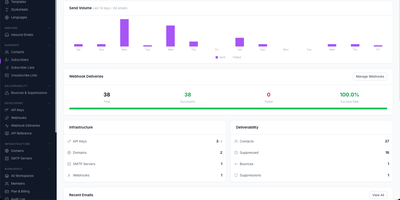
Built as a developer-first alternative to SendGrid, Mailgun, and Postmark, Posta delivers a complete self-hosted email infrastructure platform handling both outbound delivery and inbound reception through a single HTTP API with official SDKs for Go, PHP, and Java. The Go backend processes email through Redis and Asynq with automatic retries, priority queues, and async delivery while PostgreSQL stores templates, contacts, campaigns, and delivery analytics. Outbound features include versioned multi-language templates with variable substitution and stylesheet inlining, bulk campaigns with subscriber targeting and A/B testing per-variant metrics, scheduled timezone-aware delivery with draft/paused/cancelled lifecycle states, email address verification checking syntax, MX records, disposable domains, and role accounts, plus web view links with signed expiring URLs and one-click unsubscribe headers. The built-in SMTP receiver with TLS handles inbound email at your domains, parses messages and attachments, scores spam, and forwards structured payloads to your application via HMAC-verified webhooks with real-time SSE notification streams. The Vue-based dashboard manages templates, SMTP server pools, domains, contacts, API keys, campaigns, and email logs with dark and light mode support while admin-level platform metrics expose delivery rate trends, bounce rate graphs, and latency percentiles alongside Prometheus integration and daily health reports. Deploy via Docker with PostgreSQL and Redis. Running on a dedicated VPS on RepoCloud with guaranteed CPU, RAM, and SSD, full root SSH access, and a browser serial console. Apache 2.0 licensed.
BlogFactory
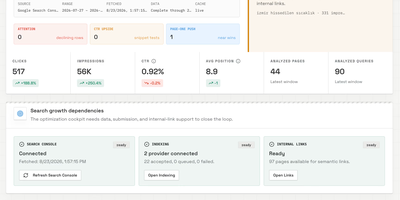
BlogFactory is the first open-source agent control plane purpose-built for multi-site content operations, shipping 16 distinct capabilities across four operational pillars — Operate, Grow, Control, and Deliver — in its v0.1.0 release. The platform keeps source evidence, AI-generated drafts, revisions, SEO metadata, human review, preflight checks, and CMS delivery destinations in one workspace while enforcing a server-side authority ceiling that prevents agents from ever publishing live content, accessing credentials, or performing administrative actions. AI agents connect through a Streamable HTTP MCP endpoint with OAuth authentication and site-scoped tool discovery, compatible with Codex, ChatGPT, and any MCP-capable client. Content creation supports single articles from keywords, titles, URLs, PDFs, text, or YouTube sources, batch campaigns, and programmatic content via reusable templates with structured data rows. The Search Growth module connects Google Search Console complete-day data to ranked optimization opportunities, 30-day growth plans, content classification by signal type (growing, low-CTR, almost-ranking, page-two, zero-click), indexing checks, and semantic internal-link suggestions. Brand Voice separates global voice rules, writer profiles, knowledge context, and brand guidelines from article mechanics. Approved drafts are delivered as CMS drafts to WordPress, Ghost, Wix, or Framer through idempotent, optimistic-locking-protected handoffs with explicit destination selection and preflight validation. The stack runs on React/Vite, a Hono/TypeScript API, PostgreSQL, and MinIO via Docker Compose, with providers including OpenRouter, OpenAI, and Google services under a bring-your-own-AI model. Running on a dedicated VPS on RepoCloud with guaranteed CPU, RAM, and SSD, full root SSH access, and a browser serial console. AGPL-3.0 licensed.
SendPortal
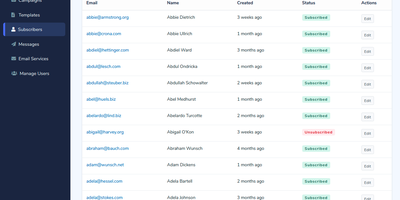
SendPortal is a self-hosted email marketing platform for building subscriber lists, sending campaigns, and tracking exactly what happens to every message after it leaves your server. Grow the list three ways: add contacts one by one, import them in bulk from CSV, or push them through the API, which creates or updates subscribers by email address and attaches tags. Tags and custom segments organize audiences, sending product updates to power users and sale announcements to everyone else. A campaign pairs a subject line, which can insert first name, last name, and email placeholders, with an optional HTML template holding content, unsubscribe, and browser view placeholders. Automatic CSS inlining at dispatch keeps designed emails rendering properly in inboxes that ignore style sheets. Send a test email to yourself before anything goes out, then choose immediate delivery or schedule the campaign for later. Pick Queue Draft to review messages before they leave, or Send Automatically when the audience and content are already right. Open and click tracking, bounce records, and unsubscribe events then flow back through provider webhooks into per campaign reports and a searchable message log. Run several brands or clients side by side in separate workspaces inside one interface. Delivery runs through Amazon SES, Postmark, SendGrid, Mailgun, Mailjet, or your own SMTP server, so deliverability stays with providers built for it. Running on a dedicated VPS on RepoCloud with guaranteed CPU, RAM, and SSD, full root SSH access, and a browser serial console. MIT licensed.
MillionSend
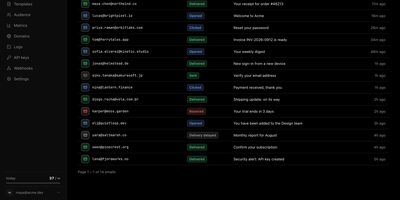
MillionSend is an open-source email platform you run yourself that sends transactional and marketing mail through your own AWS SES account behind a Resend-compatible API. Every message you send becomes a row in the dashboard, and every row opens into a timeline of SES events with the raw payload and the SMTP diagnostic when something bounces. Daily metrics chart sent, delivered, opened, clicked, bounced, and complained volumes against SES thresholds, and broadcasts stop on their own at five percent bounces or 0.1 percent complaints before Amazon can pause your account. Contacts live once for the whole team with custom properties and subscribe state, while segments and topics decide exactly who receives each broadcast. You compose broadcasts from reusable templates with per-contact merge fields, schedule them ahead, and cancel them while they wait. Applications that only speak SMTP send through the relay on port 2587 with an API key as the password, and HTTP integrations use idempotency keys, request logs with secrets redacted, and signed webhooks with a delivery history. Guided domain setup handles DKIM records, hard bounces and complaints are suppressed automatically, and every recipient gets an RFC 8058 one-click unsubscribe. Receiving and agent-ready inboxes are included in beta for mail sent to your verified domains. Running on a dedicated VPS on RepoCloud with guaranteed CPU, RAM, and SSD, full root SSH access, and a browser serial console. AGPL-3.0 licensed.
Talivia
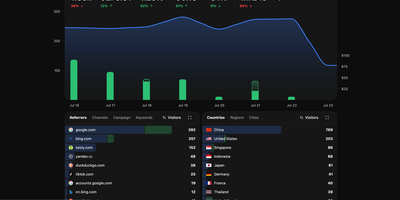
Founders do not need another chart of pageviews; they need to know which visit became money, and Talivia is a self-hosted, revenue-first analytics platform that fuses website traffic with payment data so every metric answers in dollars. Connect Stripe, LemonSqueezy, Polar, Dodo, or Yolfi, and the dashboard pairs visitor counts with revenue, conversion rate, revenue per visitor, refunds, and disputes, so a traffic spike that never buys anything stops masquerading as success. Referrers, campaigns, keywords, and countries are ranked by the money they produce, which reduces budget decisions to one question: which channel brought customers who actually paid? When a page underperforms, session replay shows what visitors actually did there and the moment they gave up, so you debug journeys instead of guessing from aggregates. Events and multi-step funnels trace the path from landing page to checkout, while bot traffic detection stops crawlers from inflating your conversion statistics. The live visitor feed shows who is browsing right now, with country, device, browser, acquisition source, events, and spend for each session as it unfolds. Public links publish any dashboard as a read-only page for investors or clients, and teammates join the workspace with their own accounts when they need to dig deeper. Visitors, replays, and payment records all stay in your own PostgreSQL database, so customer journeys never pass through a third-party analytics cloud. Running on a dedicated VPS on RepoCloud with guaranteed CPU, RAM, and SSD, full root SSH access, and a browser serial console. MIT licensed.
Animockup
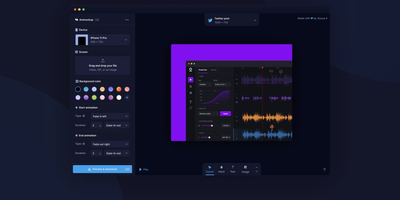
Product Hunt's Maker of the Year: Animockup delivers an alternative to expensive motion graphics tools for creating animated product teaser videos entirely in the browser. The FabricJS canvas engine provides a fully interactive editing surface where you import product videos or screenshots, place them inside device mockups ranging from iPhones and MacBooks to browser windows and smartwatches, and customize everything from background gradients to overlay text positioning. Anime.js powers the animation system with configurable start and end transitions, easing curves, and duration controls that produce smooth entrance and exit effects without timeline editors or keyframe knowledge. The built-in FFMPEG.wasm pipeline handles all video processing client-side — no server-side rendering required — exporting finished teasers to WebM, MP4, or GIF at custom framerates and resolutions up to 4K. The crop and reposition tool lets you precisely fit product footage into any device screen regardless of aspect ratio differences. Twenty-plus device frames cover phones, tablets, laptops, desktops, watches, and generic browser windows for maximum versatility. Firebase authentication handles user sessions while the optional Paddle integration manages subscriptions — or remove both for a fully free deployment. Self-hosting requires only a static web server with optional PHP for the payment webhook endpoint. Running on a dedicated VPS on RepoCloud with guaranteed CPU, RAM, and SSD, full root SSH access, and a browser serial console. MIT licensed.

Cited
Buyers now ask an AI assistant before they ever visit your website, and Cited tells you whether your brand made it into the answer. Verify your domain with a DNS record, choose the buyer-like prompts worth watching, and Cited checks them on schedule across ChatGPT, Claude, Gemini, Perplexity, Google AI Mode, and Google AI Overviews. Every meaningful appearance becomes a durable evidence note in your citation inbox: open one to see the exact prompt, the response snapshot, where your domain appeared, and the first-seen history. It distinguishes a true source citation from a brand mention without a link, an explicit recommendation, and the uncomfortable one, a missed opportunity where a competitor got cited and you did not. Competitor tracking runs continuously, so you see rivals earning answers in your category while there is still time to respond. Notes can be annotated, organized through new, seen, saved, and resolved states, and exported for reporting. Email alerts flag meaningful new events and a weekly digest summarizes what changed, so checking becomes a habit instead of another dashboard to babysit. Workspace roles and local credentials keep a small marketing team organized on your own PostgreSQL database. Running on a dedicated VPS on RepoCloud with guaranteed CPU, RAM, and SSD, full root SSH access, and a browser serial console. AGPL-3.0 licensed.