Suwayomi
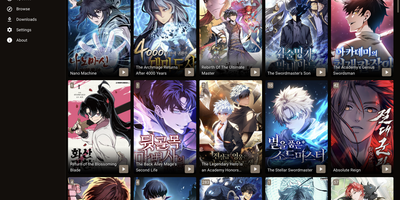
Manga collections tend to get trapped on a single phone; Suwayomi moves the library, downloads, and reading progress onto a server you run, so every browser and device sees the same shelf. In the browser, a built-in reader handles single page, double page, continuous vertical, continuous horizontal, and webtoon layouts, adding image filters, custom keybinds, auto scrolling, and separate desktop and mobile views. Content comes from Mihon (Tachiyomi) extensions, which can be searched, browsed, and sorted into categories, with custom extension stores loaded from JSON or Protobuf indexes. Downloads save chapters as CBZ archives for offline reading, and the server checks the library for new chapters every 12 hours by default, fetching them automatically if you allow it. Progress follows you through MyAnimeList, AniList, and MangaUpdates, a Suwayomi extension and tracker for Mihon, SyncYomi servers, and KOReader. E-reader apps connect over OPDS feeds, scheduled Mihon-compatible backups protect the library, and FlareSolverr or Byparr support handles Cloudflare-protected sources. Public instances can be locked down with basic authentication, a simple login page, or JWT-based UI login, and a PostgreSQL backend, still in beta, can replace the default file store. Running on a dedicated VPS on RepoCloud with guaranteed CPU, RAM, and SSD, full root SSH access, and a browser serial console. MPL-2.0 licensed.
Stump
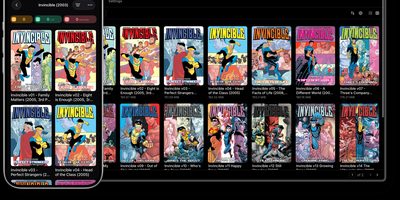
Curating digital comic archives, serialized manga, and electronic book libraries becomes effortless with Stump, a high-performance reading server that streams media collections over OPDS protocols directly to web browsers and e-reader hardware. Readers can organize extensive collections across CBZ, CBR, PDF, and EPUB formats, utilizing automated scanners that extract embedded ComicInfo XML and Calibre metadata tags. The built-in web reader renders high-resolution comic spreads, continuous vertical webtoon scrolls, and reflowable text with customizable color themes, font scaling, and reading direction toggles. Users can highlight passages, create persistent notes inside EPUB editions, and organize complex franchises into custom reading lists, oneshots, and smart filter collections. Bi-directional synchronization integrates with Kobo and KOReader hardware devices, maintaining page progression and bookmark states across handhelds and desktop sessions. Server administrators can configure multi-user access rules, enforce age restriction thresholds, and provision user-scoped API tokens for automated script pipelines and third-party companion tools. GraphQL and REST endpoints expose the entire catalog structure, allowing media collectors to integrate external metadata scrapers and trigger background library indexing tasks. Running on a dedicated VPS on RepoCloud with guaranteed CPU, RAM, and SSD, full root SSH access, and a browser serial console. MIT licensed.
KamiYomu
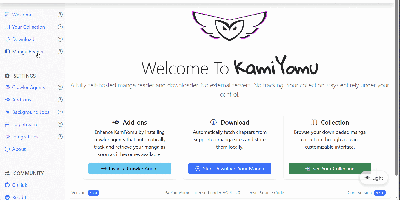
Manga readers use KamiYomu to build a private, self-hosted library: it fetches chapters from the websites they already follow, archives them locally, and serves everything back through a clean web reader on any device. The discovery flow runs on Crawler Agents, small plugins that teach KamiYomu how a particular source site lists series, chapters, and pages, so searching and fetching metadata happens inside the same interface as reading. Downloads land in a structured local archive, and reading picks up where you left off with history, filters for your library, and weekly views that surface new chapters and fresh releases. When a series is complete, export it as CBZ, PDF, or ZIP and take the files anywhere, no account or cloud library involved. Your e-reader and phone apps join through the built-in OPDS catalog, the same standard used by Moon+ Reader and KyBook, while a Swagger-documented API exposes the collection to your own scripts. Scheduled jobs keep watched series current in the background, checking sources and pulling new chapters without you babysitting tabs. Running on a dedicated VPS on RepoCloud with guaranteed CPU, RAM, and SSD, full root SSH access, and a browser serial console. AGPL-3.0 licensed.