2FAuth
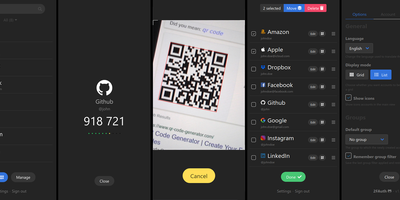
2FAuth generates TOTP, HOTP, and Steam Guard codes from any web browser, freeing your two-factor authentication from dependence on a single smartphone or app. Lose your phone, switch devices, or sit at a desktop computer, and your 2FA codes remain accessible through the web interface. The Laravel and Vue.js application stores account secrets in an encrypted SQLite database that backs up as a single file. Adding accounts works through camera-based QR scanning or manual secret key entry for services that only provide text codes. Group organization with drag-and-drop sorting keeps large collections navigable, categorized however you prefer. WebAuthn authentication with FIDO2 hardware keys protects vault access with phishing-resistant passwordless login, meaning the tool that secures your accounts is itself secured by the strongest available method. Automatic screen lock triggers after configurable idle time, and OTP obfuscation dots out generated codes until you tap to reveal them, preventing shoulder surfing in shared spaces. The REST API enables browser extensions and external applications to request codes programmatically. Import compatibility with Google Authenticator, Aegis, and 2FAS ensures painless migration without re-enrolling every account from scratch. PWA installation places 2FAuth on your device home screen for native-app-like instant access. Runs on a dedicated RepoCloud VPS with guaranteed resources and full root SSH access. AGPL-3.0 licensed.
Password Pusher
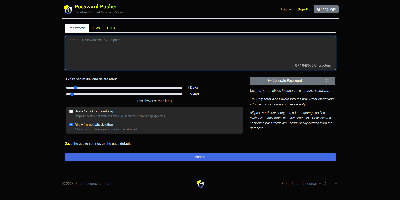
Credentials sitting forever in email threads and chat scrollback - Password Pusher solves that everyday security failure. Instead of pasting a password into Slack, you push it - a password, note, file, URL, or QR code - and share a unique one-time link that expires after a set number of views, a time limit, or both. Content is encrypted at rest with AES-GCM under a configurable master key, optionally guarded by a passphrase, and permanently deleted from the database the moment it expires; a retrieval-step option keeps URL-scanning bots from consuming views. Full audit logs record when each link was created and viewed (and by whom, with logins), and TOTP two-factor authentication can be required instance-wide. The delivery page is deliberately unbranded - no logos or confusing links for recipients - and the interface ships in 31 languages with light and dark themes. Automation runs through a JSON API (v2), an official CLI for pushing and expiring secrets from the terminal, a Chrome extension, and a catalog of third-party integrations. Apache-2.0 licensed Ruby on Rails, deployable via Docker, Kubernetes, or Helm, with SQLite or PostgreSQL storage - the sysadmin staple for sending credentials that clean up after themselves.