ScreenTinker
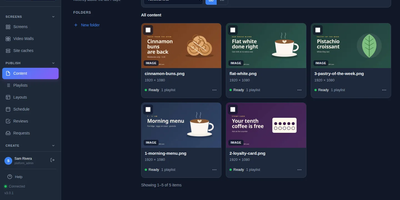
Run every TV, menu board, kiosk, and video wall from one browser dashboard with ScreenTinker, a digital signage CMS you host yourself, with no per-screen license fees. Players cover Android TV, Fire TV, Samsung Tizen, LG webOS, Amazon Vega OS, Roku, Raspberry Pi, Windows, ChromeOS, and any web browser. Upload images and video, turn each PDF page into a slide, or design animated decks in the slide editor with templates, optional voiceover, a music bed, and an optional AI designer that works from a prompt using your own model endpoint. Widgets add clocks, weather, RSS tickers, moderated social walls, live IPTV streams, and iCal or JSON data bound straight into a slide. A weekly calendar handles recurring schedules, priorities, and time zones, and Preview at shows what a given screen will play at any chosen moment. Group screens to push playlists and bulk commands, split displays into zones, or join several panels into a video wall with bezel compensation. Live remote control, CSV proof-of-play reports, and offline email alerts keep a fleet in check, while web and Android players cache content and keep playing through outages. Workspaces, six role levels, optional approval before publishing, OIDC single sign-on, white-label branding on your own domain, and a scoped REST API serve agencies and larger teams. Running on a dedicated VPS on RepoCloud with guaranteed CPU, RAM, and SSD, full root SSH access, and a browser serial console. MIT licensed.
MIND
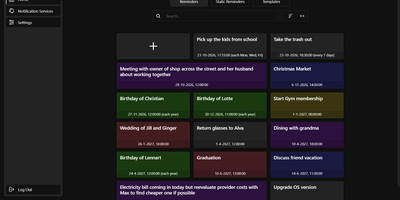
Unlike a calendar alert that rings on one phone, a MIND reminder reaches any of 100+ services, including email, Pushbullet, BlueSky, Cisco Webex Teams, and SMS gateways, from a self-hosted reminder app that you control. Normal reminders fire with second precision once or repeat every few days, once a year, on chosen weekdays, or on a custom cron schedule, while static reminders wait for a button press, so a single tap can tell the family that you are running late. Templates store colour, title, services, and text for fast creation, and the colour-coded library can be searched and sorted, with each reminder enabled, disabled, or tested on demand. Time zone changes, including daylight saving shifts, are accounted for, and sends that fail on a connection error are retried every two minutes until they succeed. Several users can share one instance: the admin panel handles accounts and registration, login lifetime, reverse-proxy URL prefix, debug logs, and scheduled database backups that can be exported and imported, and sign-in supports two-factor authentication. A documented REST API covers reminders, templates, notification services, and static triggers, and the web interface adapts to phone screens. Running on a dedicated VPS on RepoCloud with guaranteed CPU, RAM, and SSD, full root SSH access, and a browser serial console. GPL-3.0 licensed.
Grafana OnCall
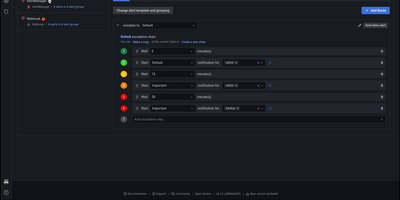
With 3,900 GitHub stars, 140 contributors, and 380 releases since its 2022 launch, Grafana OnCall delivers developer-friendly incident response that routes alerts from any monitoring system to the right engineer at the right time through the right channel. The platform accepts alerts via unique API URLs from Alertmanager, Grafana Alerting, Zabbix, Datadog, Pagerduty-compatible sources, Jira, inbound email, and generic HTTP webhooks, then applies routing templates to direct each alert to the appropriate escalation chain. Escalation chains define notification sequences — notify the primary on-call via Slack, wait 5 minutes, escalate to SMS and phone, wait 10 minutes, page the secondary on-call and notify the engineering manager — continuing until acknowledgment or resolution. On-call schedules support multi-layer rotations with overrides, shift swaps, and timezone-aware handoffs rendered directly inside Grafana dashboards. ChatOps integration publishes alert groups to Slack channels and Telegram groups with interactive buttons for acknowledge, resolve, and silence actions. Template engines based on Jinja2 control alert grouping, appearance rendering, and behavioral automation. The REST API enables programmatic management of integrations, schedules, and escalation policies. Deploy via Docker Compose with PostgreSQL, Redis, and Celery workers alongside your existing Grafana instance. Running on a dedicated VPS on RepoCloud with guaranteed CPU, RAM, and SSD, full root SSH access, and a browser serial console. GNU AGPL v3 licensed.