Cooktrace
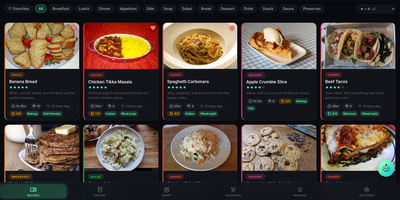
Every home cook keeps a graveyard of recipes scattered across bookmarks, screenshots, chat threads, and one stained index card, and CookTrace gathers the whole mess into one self-hosted library that knows what is in your pantry. Import recipes from URLs, files, or photos, or bring entire Mealie, Paprika, and Tandoor archives in bulk, then cook with live scaling that does fraction-aware ingredient math, per-step photos, and an inline unit converter. A pantry-match pill on every recipe card tells you at a glance what you can actually cook tonight, while barcode scanning and expiration digests keep stock honest. The cook diary and meal planner move from list to month calendar with drag-to-re-plan, and the shopping list generates itself from planned recipes, skipping items you already own and grouping the rest by aisle. Households organize into cookbooks and shared Kitchens with public links, and an optional conversational assistant can log a cook, plan a meal, or import a recipe for you. An opt-in MCP server even exposes your recipes and lists to external AI agents under token-scoped tool tiers. Running on a dedicated VPS on RepoCloud with guaranteed CPU, RAM, and SSD, full root SSH access, and a browser serial console. AGPL-3.0 licensed.

PrestaShop
Behind a storefront you own sits PrestaShop, an open-source e-commerce platform that runs the catalog, the checkout, and the order desk. Products carry size and color combinations, features, brands, suppliers, and categories, CSV import loads products and customers in bulk, and Extra Properties adds custom fields with their own types to products, customers, and orders. The bundled One Page Checkout module, switched on from the back office, puts every checkout step on a guest-first page, and the four-page flow stays available. Hummingbird, the default theme, presents a mobile-optimized, accessibility-minded storefront, and native WebP and AVIF image support helps pages load faster. Staff handle orders, invoices, credit slips, abandoned carts, and returns, create orders by hand, and answer shoppers from the customer service page. Carriers, payment methods, taxes, currencies, languages, and shipping zones are configured in the back office, multistore runs several shops with separate settings, and the Update Assistant guides upgrades through backup, update, and restore. In the Classic edition, an Ask AI assistant answers questions from real store data and runs plain-language requests after asking your approval, using the provider and API key you connect. The Admin API connects ERP, order management, PIM, and marketing automation tools through scoped OAuth clients, and Addons marketplace modules extend the shop. Running on a dedicated VPS on RepoCloud with guaranteed CPU, RAM, and SSD, full root SSH access, and a browser serial console. OSL-3.0 licensed.
Spree
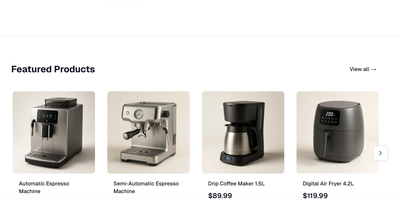
Spree Commerce provides a complete headless ecommerce backend where products, orders, payments, and promotions are managed through typed REST APIs with OpenAPI 3.0 specs and TypeScript SDKs providing autocomplete and type safety. Fifteen years of production history and 15,600+ GitHub stars back a mature ecosystem that ships a production-ready Next.js 16 storefront built with React 19 and Tailwind CSS 4, including multi-region URL routing and Stripe payments supporting Apple Pay, Google Pay, Klarna, and Affirm. Sales Channels model distinct contexts from a single instance: DTC storefronts, wholesale portals, mobile apps, and point-of-sale terminals, each with its own catalog, pricing, and checkout flow. The rules-based promotion engine supports coupon codes, multi-condition discounts, gift cards, and digital product fulfillment. Multi-warehouse inventory tracks stock across locations in real time with reservations and advanced order routing that splits shipments across fulfillment centers. B2B capabilities include customer-specific price lists, storefront access gating, wholesale portals with approval workflows, and quick order forms. The admin dashboard built with Tailwind CSS provides role-based permissions, product management, order processing with refunds, and scaffold generators for custom pages. BSD 3-Clause licensed with zero platform or transaction fees. Running on a dedicated VPS on RepoCloud with guaranteed CPU, RAM, and SSD, full root SSH access, and a browser serial console.
nopCommerce
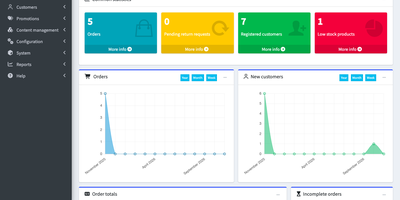
nopCommerce is a self-hosted shopping cart and merchant back office for selling physical goods, downloads, rentals, and gift cards from a storefront you fully control. The catalog covers simple, grouped, downloadable, rental, recurring, and gift card products, with categories, manufacturers, tier prices, product and specification attributes, stock tracking, and Excel import with Excel or XML export. Shoppers get a one-page checkout, wishlists, product comparison, reviews, reward points, gift card redemption, and return requests. Run several stores or outside vendors from a single back office; vendors can apply for accounts and manage their own products, orders, and shipments. Orders move through status changes, offline refunds, shipments, recurring payments, and PDF invoices, while built-in reports surface bestsellers, low stock, country sales, and top-spending customers. Multiple languages and currencies, tax and shipping providers, warehouses, pickup points, and EU Omnibus and GDPR settings support selling abroad. Discounts, affiliates, newsletters, campaigns, SEO-friendly page names, blog, news, forums, and polls cover promotion and content. Customer roles and an access control list set who can manage what, and multi-factor authentication protects sign-ins. Plugins and themes add payment gateways, social sign-in, search, and exchange rates, and the Web API plugin exposes store functions over REST for mobile apps, ERP, CRM, and accounting systems. Running on a dedicated VPS on RepoCloud with guaranteed CPU, RAM, and SSD, full root SSH access, and a browser serial console. nopCommerce Public License 4.0 licensed.

Vendure
Vendure is a headless ecommerce framework where TypeScript plugins extend every aspect of commerce without forking the core, backed by 8,200+ GitHub stars and powering stores processing over 10,000 daily transactions. Two distinct GraphQL APIs serve different audiences: the Shop API powers storefronts while the Admin API handles back-office operations, both introspectable and type-safe through Apollo Server. NestJS modules with Vendure decorators inject services, modify schemas, subscribe to events, and add dashboard components, making extensibility a first-class concern rather than an afterthought. The React admin dashboard built with TailwindCSS and Shadcn UI provides order fulfillment workflows, catalog management, tiered pricing, dynamic promotion rules with side-effect hooks for free gift injection, and role-based access control across 14+ languages. Multi-channel support runs D2C, B2B, marketplace, and omnichannel from a single instance with channel-specific products, pricing, currencies, sellers, and permissions. Asset management handles images, videos, and documents with pluggable backends including AWS S3 and Minio, plus built-in image transformation via the AssetServerPlugin. Custom fields propagate automatically into GraphQL schemas and admin forms on every core entity. A dedicated worker process handles search indexing, email dispatch, and integration jobs with independent horizontal scaling. Deploys on PostgreSQL, MySQL, or MariaDB. Running on a dedicated VPS on RepoCloud with guaranteed CPU, RAM, and SSD, full root SSH access, and a browser serial console. GPLv3 licensed.
ShopNex
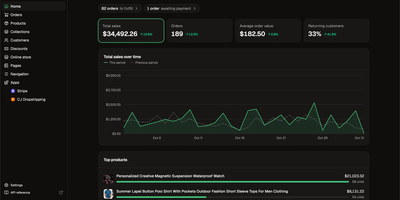
ShopNex is a self-hosted ecommerce platform that gives merchants a browser admin, themeable storefront, hosted checkout, and app integrations without paying a platform subscription or per-sale software fee. You manage products with options, variants, SKUs, stock per variant, collections, product images, and clean URLs, then sell through a bundled Astro storefront using Liquid themes or a custom frontend connected to the typed Storefront SDK. The hosted checkout collects shipping rates, manual payment methods, discount codes, and Stripe Checkout payments, while order records keep payment and fulfillment status, shipping lines, transactions, and price snapshots separate for clean operations. Customer accounts and guest orders are matched by email, staff access is invite-only with owner, admin, and staff roles, and discounts, shipping, taxes, and store settings are controlled from the admin. Integrations receive signed Standard Webhooks with retries and admin redelivery, scoped API tokens grant only the resources an app needs, and OAuth apps clean up tokens and webhooks when uninstalled. You can run one shop by default or switch to multi-shop by domain without migrating data, and every admin and storefront procedure is also exposed as REST under /api/v1 with a live OpenAPI document. Running on a dedicated VPS on RepoCloud with guaranteed CPU, RAM, and SSD, full root SSH access, and a browser serial console. MIT licensed.

Bagisto
Bagisto is an eCommerce framework for businesses demanding full ownership and zero recurring platform fees. Built on Laravel 12 and Vue.js, version 2.4 supports seven product types — simple, configurable, virtual, downloadable, grouped, bundle, and booking — with multi-channel inventory management across unlimited warehouses and sales channels. The multi-vendor marketplace module transforms a single store into a full marketplace with vendor dashboards, commission management, automated approval workflows, and seller-managed product catalogs supporting 10M+ SKUs through Elasticsearch and OpenSearch indexing. Payment processing handles Stripe, Razorpay, PayU, PhonePe, and PayPal v2 with secure checkout sessions and IPN processing. The headless commerce architecture exposes a GraphQL API via Laravel Lighthouse, enabling decoupled storefronts built with Next.js or any frontend framework, while the PWA module delivers mobile-optimized shopping experiences. AI integration through the Laravel AI SDK connects GPT-5, Gemini, Mistral, and other LLMs for automated product descriptions, chatbot support, and AI-powered image search with TensorFlow.js fallback. Enterprise security features include admin two-factor authentication, Google reCAPTCHA Enterprise, and EU-compliant online contract withdrawal per Directive 2023/673. Built-in SEO tools handle meta titles, descriptions, keywords, and channel-wise sitemap generation. Redis caching, Laravel queues for async operations, and horizontal scaling support containerized deployments across multiple application and database servers. Running on a dedicated VPS on RepoCloud with guaranteed CPU, RAM, and SSD, full root SSH access, and a browser serial console. MIT licensed.
Magento Open Source
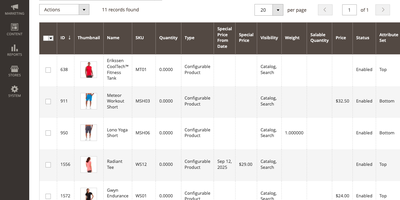
One admin panel, many storefronts: Magento Open Source is a free ecommerce platform for selling online under separate domains, category trees, languages, and currencies from a single install. Catalog managers create simple, configurable, grouped, virtual, bundle, and downloadable products and organize them with categories and attribute sets. Merchandisers assemble CMS pages, blocks, and product and category content in Page Builder by dragging rows, columns, tabs, banners, sliders, videos, and product lists onto a visual stage. Catalog price rules and cart price rules with coupon codes drive promotions, and customer groups such as Wholesale and Retailer can get targeted discounts and their own tax class. Shoppers browse the Luma storefront theme and check out as guests or with accounts. Staff then take each order through invoice, shipment, and credit memo, while Multi-Source Inventory tracks stock across warehouses, stores, and drop shippers. Built-in sales, customer, and product reports show what sells, and Login as Customer lets permitted staff view the storefront as an opted-in shopper sees it. Import and export tools move products and customers in bulk, and the REST and GraphQL APIs let ERPs, shipping tools, and headless front ends read and write store data. Running on a dedicated VPS on RepoCloud with guaranteed CPU, RAM, and SSD, full root SSH access, and a browser serial console. OSL-3.0 licensed.
PriceBuddy
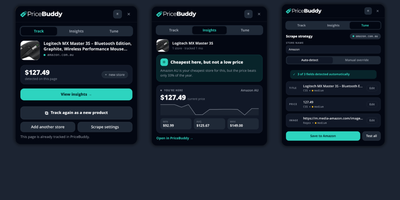
Waiting for the right moment to buy usually means refreshing product pages for weeks, so PriceBuddy does the refreshing for you and speaks up when the price is right. Paste a product URL and it fetches the details and price, then rechecks on a global schedule or a per-product interval from every 5 minutes to every 24 hours. Stores are scraped with CSS selectors, regular expressions, or JSONPath, a headless browser covers JavaScript-heavy shops, and an optional AI provider (OpenAI, Anthropic, Gemini, or local Ollama) can recover missing prices or repair broken selectors. Attach several URLs to one product to compare retailers or marketplace listings, with in-stock, pre-order, and discontinued states shown beside each source. Unit pricing reveals the real cost per tablet or bag when multi-packs distort shelf prices, while history charts show minimum, maximum, and average over time. Alerts fire on a target price, a drop threshold, or a back-in-stock event and arrive by in-app notice, email, Pushover, Gotify, Apprise, Telegram, Discord webhook, or ntfy. Tags sort products into draggable dashboard groups, with optional smart sections for what to buy now, recent drops, and failed checks. Each user keeps separate products and settings, a REST API with scoped tokens serves your scripts, and a Chrome and Edge extension tracks items from the page you are viewing. Running on a dedicated VPS on RepoCloud with guaranteed CPU, RAM, and SSD, full root SSH access, and a browser serial console. GPL-3.0 licensed.

GrandNode
GrandNode lets you run one shop, a dozen regional storefronts, or a full marketplace from a single installation, with a back office for every role involved. Each store gets its own domain, theme, currencies, languages, and settings, and a store manager panel limits staff to the catalog, orders, and customers of their own store. Outside sellers join through a vendor panel where they manage their own products and orders. The catalog handles attributes and combinations, bundles, grouped items, downloads, date-based reservations, and auctions. B2B selling adds customer groups, tier prices, sales employees, and approvals. Checkout accepts payments through plugins such as Stripe Checkout, Braintree, and cash on delivery, with shipping by fixed rate, weight, or pickup point and tax rules by country, state, or zip code. Marketing tools include coupon codes, discount rules, loyalty points, gift vouchers, customer segments, newsletter campaigns, and push notifications. Clean URLs, sitemaps, and structured data with price and availability help search engines read your products. Pages, blog posts, news, and sliders cover content, and a REST API serves headless storefronts and ERP or CRM integrations. Running on a dedicated VPS on RepoCloud with guaranteed CPU, RAM, and SSD, full root SSH access, and a browser serial console. GPL-3.0 licensed.
Shopware
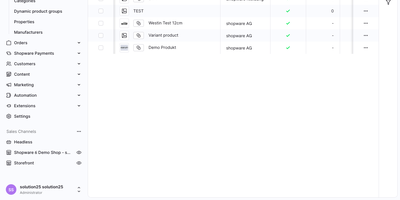
Shopware is where a merchant's products, prices, stock, orders, and customers live when the catalog must sell through a storefront, a headless front end, and marketplace feeds at once. Merchants manage products, variants, prices, stock, orders, and customers in a single administration, then publish them to any number of sales channels, from the classic storefront to comparison portals and social shopping feeds. Shopping Experiences gives the marketing team a drag-and-drop editor for landing pages, category layouts, and shop pages, so campaigns launch without a developer touching templates. The Rule Builder turns conditions about carts, customers, and products into living business logic that controls shipping costs, payment availability, advanced prices, and who qualifies for which promotion. Flow Builder acts on shop events automatically, sending order documents, changing order statuses, or calling external URLs when those rules match, removing hours of manual back-office work. Promotions support percentage and fixed discounts, voucher codes, usage limits, and validity windows, while cross-selling, reviews, tags, and configurable search help shoppers find and trust the catalog. Customer groups with net or gross pricing, multi-currency and tax handling, and unlimited languages let the same installation sell into several countries at once. The Store API can drive a custom headless storefront or a point-of-sale client while the standard storefront keeps running untouched, and 3,100+ community extensions add payment providers, shipping integrations, and marketing tools. Running on a dedicated VPS on RepoCloud with guaranteed CPU, RAM, and SSD, full root SSH access, and a browser serial console. MIT licensed.
Smartstore
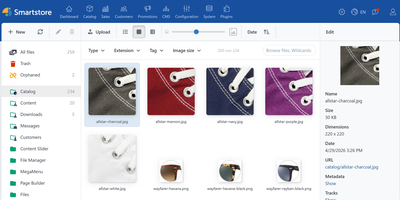
Smartstore is a self-hosted eCommerce platform that lets one install run several multilingual, multi-currency storefronts, with a drag-and-drop page builder and built-in AI writing tools. The catalog takes unlimited products and categories, with variants, bundles, grouped and downloadable products, tier pricing, and cross-selling, while faceted search keeps large assortments easy to filter. Shoppers get a responsive storefront with a streamlined checkout, reviews, wishlists, and wallet or gift-card payments; staff get order, shipment, and return handling plus a dashboard with sales statistics and bestseller lists. Marketing tools cover discounts, coupons, reward points, newsletters, affiliates, a blog, and forums, and the visual Rule Builder grants discounts, offers shipping and payment methods, and assigns customers to roles automatically. AI helpers draft product descriptions and meta tags with OpenAI, Gemini, Claude, DeepSeek, or a self-hosted Ollama model, and image tools create or edit pictures. A Media Manager organizes images and files in folders with filters and metadata. Import and export profiles move catalogs in and out on a schedule, a REST API connects other systems, and tree-based permissions decide which staff roles may do what. The Docker image starts a browser installer that connects to MySQL, PostgreSQL, or SQL Server. Running on a dedicated VPS on RepoCloud with guaranteed CPU, RAM, and SSD, full root SSH access, and a browser serial console. AGPL-3.0 licensed.
CookCLI
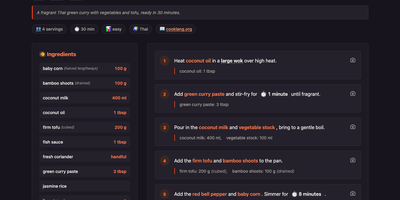
Plain-text recipes in, a phone-friendly recipe site out: CookCLI reads Cooklang files and serves them with scaling, search, shopping lists, meal plans, and pantry tracking. Write ingredients, cookware, and timers inline. Open any recipe from a phone or laptop on your network. Change the serving count and the quantities recalculate. Search by ingredient or by text. Plan a week in a .menu file and get one shopping list, merged across recipes, grouped by store aisle from your own aisle configuration, with pantry items already subtracted. The pantry file holds quantities, expiry dates, and low-stock thresholds. Ask which items are depleted or expiring, or which dishes you can cook right now, near matches included. In the terminal, print any recipe as Cooklang, JSON, or Markdown, run template-driven reports, and let a doctor command check your files. Import a recipe from a web page with an OpenAI API key. Switch on sign-in so everyone can browse but only signed-in users can edit recipes, the pantry, or the shopping list. A documented HTTP API feeds other tools. The whole collection also builds into a static website. Running on a dedicated VPS on RepoCloud with guaranteed CPU, RAM, and SSD, full root SSH access, and a browser serial console. MIT licensed.
HomeHub
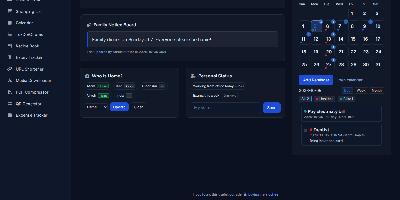
HomeHub gives a household one private page for the everyday coordination that usually scatters across chat threads, fridge notes, and five separate apps. Pin shared notes where everyone sees them, drop files into the shared cloud for the house, and keep one shopping list the whole family edits, with suggestions drawn from what you bought before. Chores become a shared checklist, the calendar holds the dates that matter, and a who's-home view answers the question every family group chat asks in the evening. The expense tracker follows family spending and handles recurring bills like the milk, the newspaper, and subscriptions, while the recipe book and expiry tracker keep the kitchen honest. Small utilities round it out: download media straight to the server, shorten URLs, compress PDFs, generate QR codes, and check the weather without leaving the hub. Every feature toggles on or off in one config file, themes recolor the interface, and there is no account system at all, because the hub trusts your home network instead of a password database. It runs happily on a Raspberry Pi, installs as a PWA on phones, and keeps uploads, media, and data in mounted folders you can back up with any file tool. Running on a dedicated VPS on RepoCloud with guaranteed CPU, RAM, and SSD, full root SSH access, and a browser serial console. MIT licensed.

OpenCart
An online store you own end to end: OpenCart bundles the storefront, product catalog, checkout, and admin panel into one self-hosted install with no monthly software fee. Products take options and attributes, and master products can spawn variants that override price, SKU, and stock level. Unlimited categories, filters, reviews and ratings, coupons, specials, and reward points help shoppers find items and return for more. Guests and registered customers can check out by bank transfer, cheque or money order, or cash on delivery; subscription plans with trial periods handle recurring orders, and more gateways and carriers install from the extension marketplace. Shipping rules include flat-rate, free, per-item, pickup, and weight-based options. Tax classes, geo zones, and multiple currencies with automatic rate updates support selling abroad. One admin interface manages several stores, each with its own theme, layout, and language settings, and user groups control who may edit what. A built-in blog adds topics, articles, and comments with anti-spam rules, and language packs cover more than 40 languages, right-to-left scripts included. Sales, tax, shipping, product, and customer reports, campaign tracking, an affiliate program, bulk customer mail, GDPR export and removal tools, and downloadable digital goods round out the business side. Running on a dedicated VPS on RepoCloud with guaranteed CPU, RAM, and SSD, full root SSH access, and a browser serial console. GPL-3.0 licensed.