AgenTerm
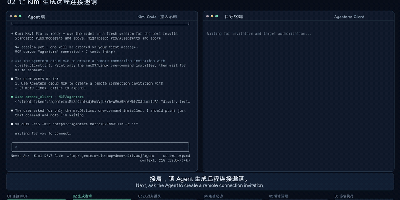
AgenTerm lets your AI agent work inside a remote computer's terminal with the owner's permission, through a relay server you host yourself. Your agent connects to the server over MCP and creates an invitation, single-use and expiring in fifteen minutes by default, or reusable across several devices; you privately share the generated connection command with the person who needs help. That person runs a small client on macOS, Linux, or Windows, reads what access means, and authorizes it; the client then dials out to your server, so the target computer needs no SSH service and no open inbound port. The agent can then run one-off commands with a chosen working directory, environment overrides, and timeouts, receiving stdout, stderr, and exit status, or hold an interactive session open, reading output as it arrives and typing answers to prompts. The person at the keyboard watches every command and its output in the client and can disconnect at any moment, and the client reconnects by itself after a network drop. Use it to troubleshoot a colleague's machine without swapping logs, help family through a terminal problem, or drive a development box with no agent or model account of its own. The relay itself is a single Go binary guarded by a management key, deployed with Docker Compose or systemd, with in-memory sessions and a health endpoint. Running on a dedicated VPS on RepoCloud with guaranteed CPU, RAM, and SSD, full root SSH access, and a browser serial console. Apache-2.0 licensed.
1Panel
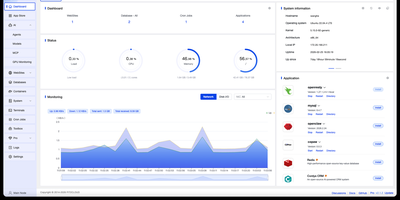
Backed by over 36,000 GitHub stars and 120 contributors with 123 releases since 2022, 1Panel has rapidly become the go-to open-source alternative to cPanel and Plesk for modern Linux server management. The platform delivers a clean Vue.js dashboard powered by a Go backend using the Gin framework, providing visual management of Docker containers, images, networks, and volumes without touching the command line. Its curated app marketplace offers one-click installation of 165+ trusted open-source applications including Nextcloud, Bitwarden, Umami analytics, WordPress, and NocoBase, each running in isolated containers for maximum security. Native AI capabilities set 1Panel apart from every competing panel: deploy Ollama LLMs directly from the dashboard, spin up OpenClaw personal agents, monitor GPU utilization, and manage AI models through a unified interface. Website management includes automatic domain binding, Let's Encrypt SSL certificate provisioning, and Nginx configuration with zero manual setup. Security runs deep with built-in firewall rules, fail2ban integration, container isolation, WAF protection, and comprehensive audit logging enabled from day one. Automated backups support AWS S3, Cloudflare R2, and local storage with one-click restore from any snapshot. The panel supports Debian, Ubuntu, CentOS, and Rocky Linux across x86_64, aarch64, armv7l, ppc64le, and s390x architectures. Running on a dedicated VPS on RepoCloud with guaranteed CPU, RAM, and SSD, full root SSH access, and a browser serial console. GPL-3.0 licensed.
Webmin
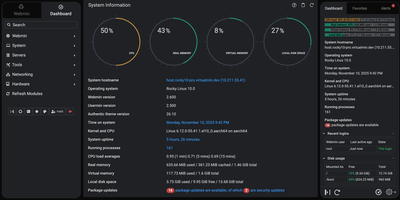
Skip the shell and the configuration file: Webmin handles user accounts, disk quotas, services, and server software on Linux and Unix machines from a browser tab. More than 100 standard modules sit under seven menus: Webmin, System, Servers, Tools, Networking, Hardware, and Cluster. System covers Users and Groups, Scheduled Cron Jobs, Running Processes, System Logs, Log File Rotation, Disk Quotas, Filesystem Backup, and systemd Bootup and Shutdown, plus Software Package Updates, which can hold selected packages on APT and DNF systems. Servers edits Apache, Nginx, BIND DNS, Postfix, Dovecot, MySQL and MariaDB, and PostgreSQL through forms. Networking brings an nftables firewall editor, Fail2Ban jails, and IPsec VPN settings. Tools adds File Manager, Custom Commands, and a Terminal that opens right in the browser. Hardware lists firmware, PCI, USB, storage, and sensor details. The dashboard keeps live CPU, memory, and disk gauges, stats history graphs, and a pending updates alert in view. Webmin Users limits each account to the modules it needs, while two-factor authentication, IP access control, and SSL settings guard the panel itself. Cluster modules reach other hosts registered in the Webmin Servers Index and run cron jobs, shell commands, and package installs on many servers at once. Running on a dedicated VPS on RepoCloud with guaranteed CPU, RAM, and SSD, full root SSH access, and a browser serial console. BSD-3-Clause licensed.
Numa
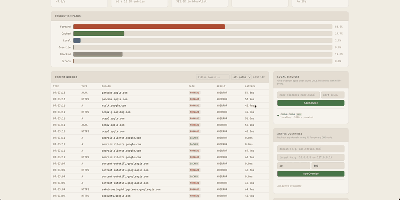
Numa is a DNS resolver you run yourself that gives every service on your network a real name, blocks ads and trackers before they load, and keeps your queries private with encrypted DNS. Register a frontend on port 5173 once, and https://frontend.numa opens in your browser with a valid certificate and WebSocket passthrough, no mkcert, no nginx, no editing hosts files. Path-based rules send app.numa/api to a backend on another port, so multi-service projects get one clean address instead of a spreadsheet of port numbers. Tracker and ad domains die at resolution time through the Hagezi Pro blocklist, refreshed daily, and every device that points its DNS at your instance inherits the filtering. Temporary overrides redirect any hostname for testing or debugging and revert on their own, and scripts can create them through the REST API. You choose how answers are found: forward to your existing DNS, resolve recursively from the root servers, or seal queries with Oblivious DNS over HTTPS so no single party sees both your address and your question. Phones and laptops connect over DNS-over-TLS on port 853, a QR-code flow points an iPhone at your resolver in minutes, and mDNS discovery lets one machine reach services registered on another. The dashboard on port 5380 manages services, overrides, and diagnostics, with token sign-in away from loopback. Running on a dedicated VPS on RepoCloud with guaranteed CPU, RAM, and SSD, full root SSH access, and a browser serial console. MIT licensed.
Wetty
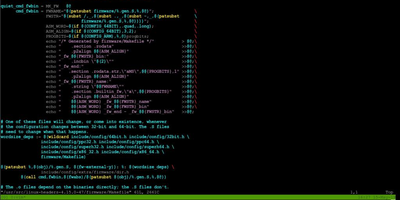
Open a browser tab and you are at a real login prompt on your server. Wetty puts a full terminal inside the web page, so SSH access survives firewalls, borrowed laptops, and networks where only HTTPS gets out. The emulator is a complete xterm.js implementation rather than a crippled web console, so colors, Unicode, mouse interaction, and full-screen programs like vim, top, and tmux behave the way they do in a desktop terminal. Websockets carry the session instead of Ajax polling, which keeps keystrokes responsive enough to forget you are in a browser. Point it at any SSH server with host, port, user, and key options, or let it launch the local login prompt when it runs on the machine itself. Visiting /ssh/yourname skips the username question and goes straight to the password prompt for that account. Serve it over HTTPS with your own certificates, restrict which browser origins may connect, run it on a Unix socket behind a reverse proxy, and confine it to a base path when it shares a domain with other tools. A YAML configuration file and environment friendly flags make the same setup reproducible across a fleet, and an official container image keeps installation to one command. Running on a dedicated VPS on RepoCloud with guaranteed CPU, RAM, and SSD, full root SSH access, and a browser serial console. MIT licensed.
Nexterm
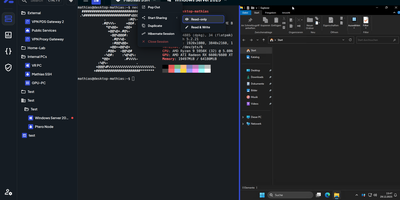
Terminals, remote desktops, and file browsers for every server you run: Nexterm opens them over SSH, VNC, RDP, Telnet, or SFTP from a self-hosted web page. Servers live in folders with tags and custom icons. Connections open as tabs or split views, keep running across browsers and devices, and can hibernate and resume later. The file manager handles SFTP and FTP: drag files in, upload whole folders, search, and edit in place with syntax highlighting. Live metrics track CPU, memory, disk, network, and processes for each host. Snippets store the commands you retype most. Scripts run whole maintenance jobs. Git repositories added as sources bring ready-made ones filtered by operating system. Organizations share servers through role-based permissions, and every action is logged. Record full terminal sessions for audits and training, or send a shared-session link so a colleague can join, read-only or writable. Authentication covers local accounts with TOTP and passkeys, OIDC providers such as Keycloak, Authentik, and Microsoft Entra ID, and LDAP or Active Directory. Saved passwords, SSH keys, and passphrases stay encrypted at rest. A Proxmox integration lists LXC containers and QEMU virtual machines and can start or stop them. An opt-in AI assistant drafts shell commands from plain-language requests. Running on a dedicated VPS on RepoCloud with guaranteed CPU, RAM, and SSD, full root SSH access, and a browser serial console. MIT licensed.
Fail2Ban UI
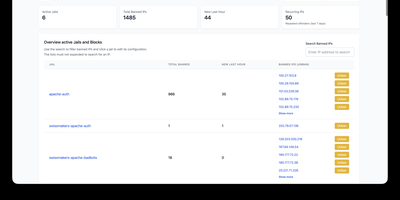
Manage Fail2Ban on every Linux server from one browser dashboard instead of logging into each host to check jails and unban addresses. The dashboard lists active jails and banned IPs and updates live as bans and unbans arrive, while one search box finds an address across every jail of every server so you can unban it in the right place. Servers connect through a local socket, key-based SSH, or a lightweight HTTP agent, and each one shows Healthy, Degraded, or Down status. Jails and filters are edited in the browser, with log path tests, a regex debugger that runs sample log lines through a filter, and a configuration check before Fail2Ban reloads. Ban Insights draws a zoomable ban and unban timeline, compares two incidents to expose repeat attackers, exports IP lists as CSV or JSON, and maps countries on an interactive 3D globe. Recurring offenders can be blocked permanently on MikroTik, pfSense, OPNsense, or UniFi Network firewalls. Alerts go out by email, webhook for ntfy, Slack, Mattermost, or Telegram, or Elasticsearch, filtered by country, and clicking any IP opens AbuseIPDB or AlienVault OTX reports. Sign-in works through Keycloak, Authentik, Pocket ID, or any OIDC provider, and the interface speaks nine languages. Running on a dedicated VPS on RepoCloud with guaranteed CPU, RAM, and SSD, full root SSH access, and a browser serial console. AGPL-3.0 licensed.
ServerKit
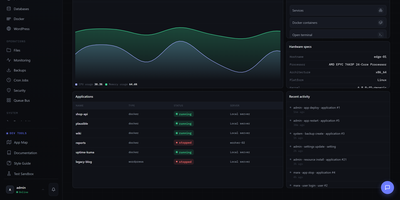
ServerKit delivers a server control panel that fits on a small VPS while managing everything from Docker containers to mail servers. The Python/Flask backend exposes 1,519 REST endpoints across 107 blueprints with full OpenAPI documentation at /api/v1/docs, while the React frontend spans 65 screens in a 1.75MB gzipped bundle served entirely from your own infrastructure. Docker management includes full container lifecycle control, Docker Compose project orchestration, real-time log streaming, and terminal access. Database panels cover MySQL/MariaDB and PostgreSQL with user management, browser-based query consoles, and automated backups to S3, Backblaze B2, or local storage. Nginx virtual host management automates Let's Encrypt certificate provisioning with hardened TLS 1.2+ configurations and Cloudflare-aware setups. The Go-based cross-platform agent enables multi-server fleet management with HMAC-SHA256 authentication over a WebSocket gateway, supporting Linux, Windows, and macOS across amd64 and ARM64 architectures. Fleet monitoring provides cross-server heatmaps, metric comparison charts, alert thresholds, anomaly detection, and capacity forecasting. A built-in marketplace distributes 106 one-click application templates using a declarative YAML schema with Docker Compose stacks. The extension system allows community plugins for Kubernetes management, Redis browsers, and WordPress site orchestration. Running on a dedicated VPS on RepoCloud with guaranteed CPU, RAM, and SSD, full root SSH access, and a browser serial console. MIT licensed.
Zerobyte
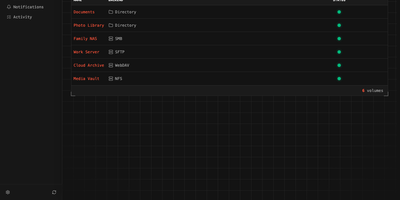
Replace fragile cron scripts and complex terminal commands with Zerobyte, a self-hosted web control center that schedules, monitors, and restores encrypted backups across any cloud or local storage infrastructure. System administrators can connect local drives, NFS shares, SMB exports, WebDAV mounts, and SFTP endpoints as backup sources with custom inclusion and exclusion rules. The visual interface lets you dispatch incremental, client-side encrypted snapshots to local directories, Amazon S3, Google Cloud Storage, Azure Blob, and forty cloud storage providers supported via rclone. You can schedule automated jobs using cron expressions, configure custom retention windows to automatically prune obsolete archives, and run repository health checks directly from the browser. Interactive file trees allow operators to inspect historical snapshot contents, download specific documents, or restore entire directory structures to their original locations in a single click. Configurable pre-backup and post-backup HTTP webhooks help pause databases before snapshots, execute dump commands, and alert teams through Discord, Slack, Telegram, or ntfy notifications. Multi-repository mirroring duplicates critical backups to secondary cloud providers for disaster recovery. Running on a dedicated VPS on RepoCloud with guaranteed CPU, RAM, and SSD, full root SSH access, and a browser serial console. AGPL-3.0 licensed.
SaltStack
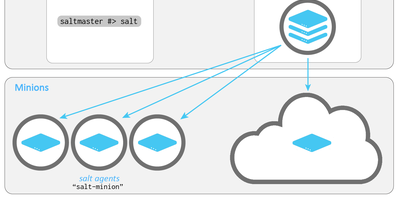
Type one command on the Salt master and ten thousand machines answer, because Salt publishes jobs to minions that subscribe, check whether the job targets them, and execute it in parallel before reporting results back. Configuration management describes the desired end state in YAML state files: which packages, files, services, and users should exist, and highstate runs converge every targeted minion toward that description with dependency ordering. Targeting goes far beyond hostnames, since grains describe each minion's operating system, hardware, and roles, and Pillar delivers per-minion secrets and settings rendered only for the machines that should receive them. Beacons watch services, load, disks, logins, and file changes on minions and emit events onto the bus, while reactors bind those events to prepared responses, so a failed service can restart itself and an administrator gets notified with the evidence attached. Orchestration runners coordinate multi-machine procedures in sequence, such as draining a load balancer pool, patching it, and returning it to service, and the master exposes HTTP APIs and pluggable returners that stream job results into your databases and dashboards. Machines that cannot run an agent are reached through Salt SSH, and Salt Resources target appliances and API endpoints that should be managed without a minion at all. Running on a dedicated VPS on RepoCloud with guaranteed CPU, RAM, and SSD, full root SSH access, and a browser serial console. Apache-2.0 licensed.
Cockpit
Cockpit puts Linux server administration in a web browser, rendering storage, networking, containers, and virtual machines as visual panels you click through instead of command-line syntax you memorize. It ships in every major Linux distribution and activates through systemd socket activation, consuming zero resources until someone connects on port 9090. What makes it different from other admin panels: every change through the web interface appears instantly at the command line, and every terminal change reflects in the browser in real time. No abstraction layer sits between the UI and the operating system, which means no configuration drift. Storage management covers disk partitioning, RAID arrays, LUKS encryption, LVM volumes, and NFS shares. Network configuration handles bonds, bridges, VLANs, and firewall zones through visual editors. Native Podman integration pulls images, creates containers, manages pods, and provides terminal access into running processes. KVM/libvirt support handles VM creation, cloning, snapshots, and live migration with console access. A built-in terminal provides shell access when the web interface is not enough, and the journal viewer filters systemd logs by severity and unit. Multi-server management connects additional hosts over SSH, presenting a unified dashboard across your entire infrastructure from one browser tab. Runs on a dedicated RepoCloud VPS with full root SSH access and browser serial console. LGPL licensed.
NUT WebGUI
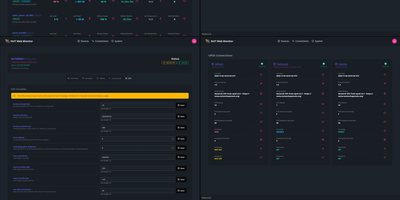
When the power blinks at 3 a.m., NUT WebGUI is the page that tells you whether the UPS in the closet is coasting or dying, without a serial cable in sight. Point it at one or several Network UPS Tools servers and it polls charge, load, input voltage, and estimated runtime, refreshing critical status every couple of seconds while background variables update on a calmer thirty-second cadence. The dashboard renders device cards, gauges, sparklines, and a topology view of how units chain together, and it stays readable on a phone when you are standing in front of a humming rack. Authorized users can issue instant commands, set variables, or trigger a forced shutdown from the browser, while everyone else gets a strictly read-only view. A JSON API under /api serves device lists, variables, and instant commands to your own scripts, health and readiness probes fit container orchestrators, and OpenMetrics output feeds Prometheus without extra exporters. The whole thing is a single small binary that runs happily on a Raspberry Pi, an old ARM board, or a RISC-V box, reads one TOML file, and supports multi-user sign-in with scoped API keys when you share it with a team. Running on a dedicated VPS on RepoCloud with guaranteed CPU, RAM, and SSD, full root SSH access, and a browser serial console. Apache-2.0 licensed.
Statainer
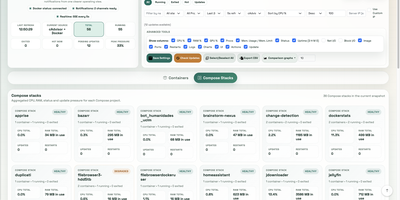
Monitoring and safeguarding Docker infrastructure without heavy enterprise software overhead is the primary mission of Statainer, an open-source management control center for container hosts. System operators inspect live CPU loads, memory consumption, network throughput, and disk I/O metrics across individual containers or comparative top-ranking charts. The interface groups containers by Compose projects, enabling administrators to start, stop, or restart entire application stacks and inspect real-time log streams without opening SSH sessions. The built-in Update Manager detects available image tags, executes single-click container updates, and maintains persistent deployment history with automated rollback capabilities for failed recreations. Custom alert configurations trigger instant notifications to Telegram, Discord, Slack, Pushover, or generic webhook endpoints whenever resource thresholds are breached or container health states change. Developers can provision scoped API keys with token authentication to automate container state transitions and export performance telemetry into custom monitoring workflows. Running on a dedicated VPS on RepoCloud with guaranteed CPU, RAM, and SSD, full root SSH access, and a browser serial console. MIT licensed.
SpatiumDDI
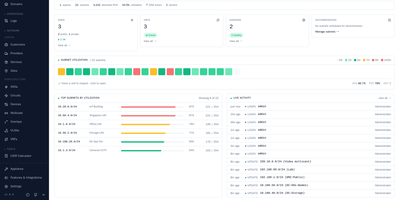
SpatiumDDI is the open alternative to commercial DDI platforms that charge by the IP, by the appliance, and by the feature, then lock every zone and subnet you own inside a renewal cycle. It does not just render configuration for servers somebody else runs, but deploys and operates BIND9, PowerDNS, Technitium, and Kea itself. Manage zones and records with per-server sync state, hand out DHCP scopes, pools, and static reservations per server group, and watch live leases reported back by the Kea agents. The IPAM side keeps spaces, blocks, and subnets in a tree with per-address DNS and DHCP sync, while the dashboard shows utilization, capacity, and platform health at a glance. Bring an existing estate with you through importers for BIND, Windows, PowerDNS, Technitium, Kea, ISC, and NetBox, and manage Windows DNS and DHCP agentlessly over WinRM when a full cutover is not on the table. Delegate safely with group-based roles over LDAP, OIDC, SAML, RADIUS, or TACACS+, search every object globally, and keep an append-only audit log of who changed what. Running on a dedicated VPS on RepoCloud with guaranteed CPU, RAM, and SSD, full root SSH access, and a browser serial console. Apache 2.0 licensed.