Aimeos
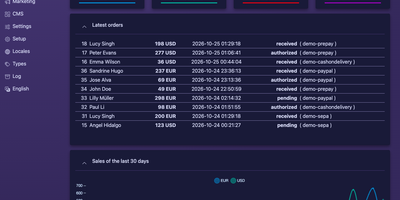
One admin backend can run a single online shop or a whole marketplace of independent sellers. The dashboard shows the latest orders and sales graphs. Panels cover products, stock, customers, subscriptions, orders, suppliers, and coupons. Aimeos handles bundle, voucher, virtual, configurable, custom, and event products. Block and tier pricing work out of the box. Discounts, vouchers, and a flexible basket rule system are built in. Subscriptions renew through recurring payments. Checkout offers more than 100 payment gateways. Storefronts come in 30+ languages, with full right-to-left support and AI-based text translation. Rich snippets help search engines read product pages, and layouts are optimized for phones and tablets. Switch on multi-vendor mode and sellers can register themselves, then manage their own site as administrators or as editors with limited rights. A JSON REST API following jsonapi.org feeds custom frontends, progressive web apps, and native mobile apps. A GraphQL API handles administration. The built-in MCP server lets AI assistants such as Claude or ChatGPT search, create, update, and delete products, orders, and customers within the permissions of the account that connects. Prisma brings AI into the admin interface to write product descriptions, translate content, generate images, and remove backgrounds with the provider you choose. Every component is modular, so any part can be extended or replaced. Running on a dedicated VPS on RepoCloud with guaranteed CPU, RAM, and SSD, full root SSH access, and a browser serial console. MIT and LGPLv3 licensed.
Shopware
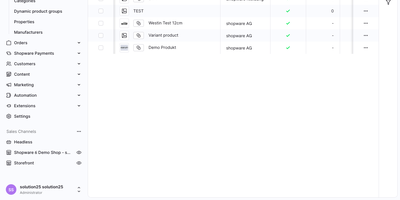
Shopware is where a merchant's products, prices, stock, orders, and customers live when the catalog must sell through a storefront, a headless front end, and marketplace feeds at once. Merchants manage products, variants, prices, stock, orders, and customers in a single administration, then publish them to any number of sales channels, from the classic storefront to comparison portals and social shopping feeds. Shopping Experiences gives the marketing team a drag-and-drop editor for landing pages, category layouts, and shop pages, so campaigns launch without a developer touching templates. The Rule Builder turns conditions about carts, customers, and products into living business logic that controls shipping costs, payment availability, advanced prices, and who qualifies for which promotion. Flow Builder acts on shop events automatically, sending order documents, changing order statuses, or calling external URLs when those rules match, removing hours of manual back-office work. Promotions support percentage and fixed discounts, voucher codes, usage limits, and validity windows, while cross-selling, reviews, tags, and configurable search help shoppers find and trust the catalog. Customer groups with net or gross pricing, multi-currency and tax handling, and unlimited languages let the same installation sell into several countries at once. The Store API can drive a custom headless storefront or a point-of-sale client while the standard storefront keeps running untouched, and 3,100+ community extensions add payment providers, shipping integrations, and marketing tools. Running on a dedicated VPS on RepoCloud with guaranteed CPU, RAM, and SSD, full root SSH access, and a browser serial console. MIT licensed.