webtrees
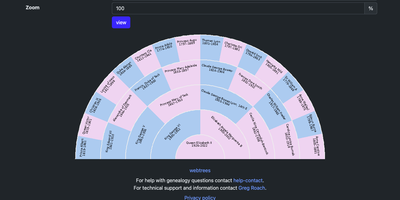
webtrees turns a GEDCOM family file into a private, collaborative genealogy website where relatives anywhere browse ancestors, add photos and sources, and edit together under privacy rules the owner controls. Import a file and each person gets a page of facts, events, and citations, with tabs for families, sources, places, media, and albums and a navigator that jumps to parents, spouses, children, and siblings. Pedigree, fan, hourglass, compact, descendant, interactive, lifespan, relationship, and timeline charts show the same people from different angles, and a pedigree map plots ancestors' birthplaces on OpenStreetMap. Lists sort and filter individuals, families, sources, notes, repositories, and media, with branches that group people by surname. A calendar surfaces births, deaths, marriages, and anniversaries for any day, month, or year, in Gregorian, Julian, Jewish, Hijri, or Jalali dates. Printable PDF reports cover Ahnentafel, family group, descendancy, birth, death, and cemetery records, and search offers general, advanced, and search-and-replace modes for authorized users. Privacy rules apply per site, tree, user, record, and fact, so only authorized users see living people and sensitive details. Editors propose changes, moderators approve them, one site hosts several trees, and the interface comes in more than 60 languages. GEDCOM export lets every tree move to desktop genealogy programs. Running on a dedicated VPS on RepoCloud with guaranteed CPU, RAM, and SSD, full root SSH access, and a browser serial console. GPL-3.0 licensed.
Gramps Web
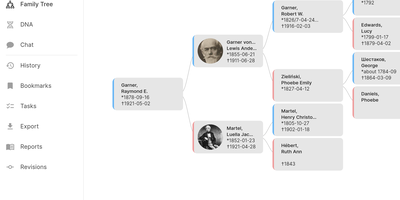
Together with relatives and fellow researchers anywhere in the world, family historians can build, visualize, and preserve shared ancestry databases using Gramps Web, a self-hosted collaborative genealogy platform. Interactive family tree charts let you explore ancestor, descendant, hourglass, relationship, and fan views across configurable generation depths, while inline editing buttons allow you to add parents, spouses, and children directly inside the graph and export finished diagrams as SVG files. When tracing where ancestors lived and migrated, the interactive map plots life events across OpenStreetMap and OpenHistoricalMap layers with a historical time slider and custom image overlays, complemented by a zoomable chronological timeline spanning centuries. Photograph collections become searchable archives through automated face detection that tags relatives in two clicks, alongside an integrated family history blog for publishing illustrated biographical stories. Researchers can also analyze autosomal DNA match segments in an interactive chromosome browser, determine patrilineal Y-DNA haplogroups locally without sending genetic data to third parties, and query people, places, citations, and notes using Gramps Query Language filters or a conversational AI assistant. Bidirectional synchronization with Gramps Desktop, full transaction history with undo, role-based privacy controls for living individuals, and pre-filled searches for FamilySearch and Ancestry keep every record accurate and protected. Running on a dedicated VPS on RepoCloud with guaranteed CPU, RAM, and SSD, full root SSH access, and a browser serial console. AGPL-3.0 licensed.