Xalgorix
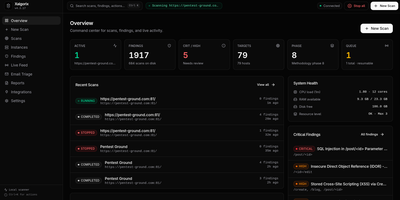
Xalgorix delivers AI-driven penetration testing that proves vulnerabilities exist rather than guessing, pairing an autonomous LLM agent with an independent exploit verifier that re-exploits every finding before it reaches your report. The 22-phase methodology mirrors how a skilled human pentester works through an engagement, covering reconnaissance, subdomain enumeration, port scanning, web crawling, parameter fuzzing, SQL injection testing, XSS detection, authentication bypass, API testing, and more. Select all phases or pick specific ones per target. The platform ships with 85+ offensive security tools preinstalled (nmap, nuclei, httpx, subfinder, katana, ffuf, gobuster, sqlmap, masscan, dalfox, feroxbuster) plus 14 built-in agent tools for browser automation, terminal execution, and note-taking. Connect your own LLM provider (OpenAI, Anthropic, DeepSeek, Gemini, Groq, Ollama, or MiniMax) so no scan data or target information leaves your infrastructure. The web dashboard on port 9137 provides live WebSocket telemetry showing tool calls, agent reasoning, and findings as scans progress. A findings index with CVSS scoring and severity filters organizes results, and branded PDF reports include your company name and logo. Wildcard and multi-target scans handle red team attack-surface mapping, while source-code scanning audits repositories directly without requiring a deployed target. A REST API enables scripted scans and SIEM pipeline integration, and webhooks push notifications to Discord or Telegram. Running on a dedicated VPS on RepoCloud with guaranteed CPU, RAM, and SSD, full root SSH access, and a browser serial console. Apache 2.0 licensed.
mitmproxy
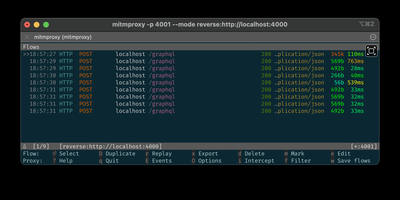
A man-in-the-middle proxy you run on purpose, mitmproxy lets developers and testers inspect, edit, and replay HTTP and HTTPS traffic from any client. Point a browser, phone, or script at it and every HTTP/1, HTTP/2, HTTP/3, WebSocket, and TLS-protected connection appears as a flow you can open, search, and filter. Content views turn payloads from HTML to Protobuf into readable text. Intercept a request or response before it moves on, change its headers, body, or status by hand, then release it, or save the flow and replay it to the client or the server later. Map local and map remote rules answer requests with files or other URLs, while blocklists, anticache, sticky cookies, and proxy authentication cover routine test chores. Choose the interface that fits the job: a keyboard-driven terminal console, mitmweb in the browser with a Capture tab that sets up WireGuard devices with a QR code, or mitmdump for unattended logging in scripts. Proxy modes include regular, local capture, WireGuard, transparent, reverse, upstream, SOCKS5, and DNS. Addons written in Python add custom rewriting, recording, and automation. Teams use it for debugging, testing, privacy measurements, and penetration testing. Running on a dedicated VPS on RepoCloud with guaranteed CPU, RAM, and SSD, full root SSH access, and a browser serial console. MIT licensed.